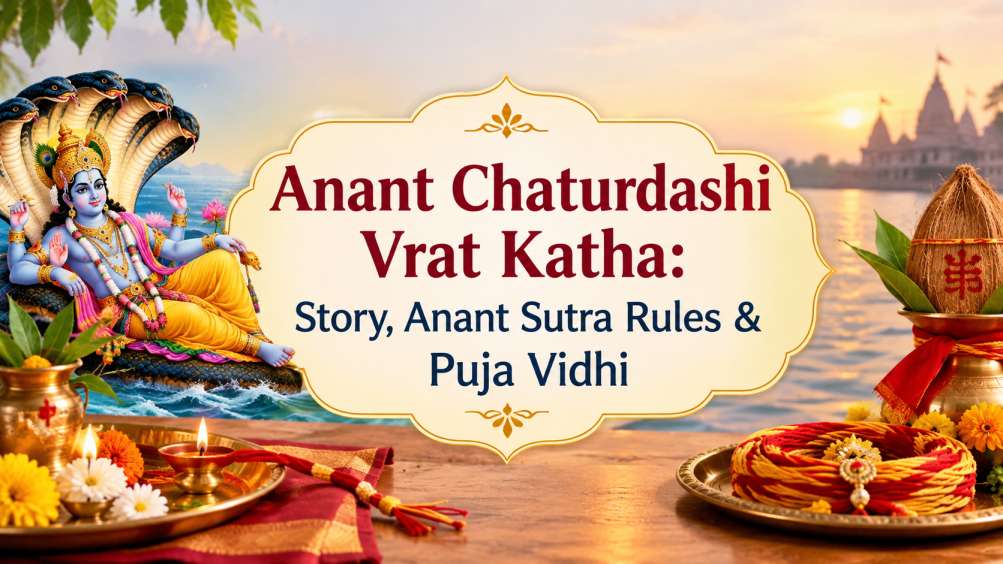
Anant Chaturdashi is an important Hindu observance dedicated to Lord Vishnu in his Ananta form, symbolising the eternal and infinite nature of the divine. It is observed on the Chaturdashi Tithi of Shukla Paksha in the month of Bhadrapada and is also widely associated with the concluding day of the Ganesh festival.
The central tradition of this vrat is the worship of Lord Ananta and tying the Anant Sutra, a sacred thread traditionally associated with protection, discipline and devotion. The Anant Chaturdashi Vrat Katha explains the spiritual importance of faith, commitment and righteous conduct.
From a traditional Jyotish perspective, the day can also be viewed as an opportunity for self-discipline and strengthening one’s connection with Vishnu tattva, Dharma and spiritual balance. The observance should, however, be understood as a religious practice rather than a guaranteed method of changing planetary outcomes.
What Is Anant Chaturdashi Vrat?
Anant Chaturdashi vrat is a devotional observance performed in honour of Lord Vishnu as Ananta, the infinite one.
The word Ananta means endless, eternal or without limit. The sacred thread and vrat therefore represent a devotee’s resolve to maintain faith and righteous conduct.
Many families traditionally observe the vrat with:
- A morning bath and clean clothes
- Sankalp for the vrat
- Lord Vishnu or Ananta Shesha puja
- Recitation or listening to the Anant Chaturdashi Vrat Katha
- Offering flowers, fruits and naivedya
- Tying the Anant Sutra
- Charity and feeding those in need, according to one’s capacity
Fasting practices vary between families and regions. People should follow their family tradition and consider their health before undertaking a strict fast.
Anant Chaturdashi Vrat Katha
The traditional story is associated with Koundinya Rishi and his wife Sushila.
According to the popular version of the katha, Sushila came across women performing the worship of Lord Ananta and learned about the significance of the sacred Anant Sutra. She followed the practice with devotion and tied the thread.
Afterwards, Koundinya noticed positive changes in their circumstances and became curious about the reason. When Sushila explained the observance and the Anant Sutra, Koundinya became doubtful and removed the thread.
The story describes how his actions were followed by difficulties and loss of prosperity. Realising his mistake, Koundinya eventually undertook sincere devotion to Lord Ananta and sought forgiveness.
The deeper message of the katha is not simply about material prosperity. It highlights faith, humility, perseverance and respect for a spiritual commitment. The story also reminds devotees that religious practices are meaningful when supported by sincere conduct rather than performed mechanically.
Anant Sutra Rules and Significance
The Anant Sutra is traditionally a sacred thread associated with Anant Chaturdashi worship.
In many traditions, it is prepared with multiple strands and is tied after the puja. Customs regarding its colour, number of knots and the hand or wrist on which it is worn can differ according to regional and family traditions.
Common Anant Sutra Practices
- Keep the thread clean and treat it respectfully.
- Tie it after completing the prescribed puja and katha.
- Follow the custom of your family or regional tradition regarding the wrist.
- Avoid treating the thread as a substitute for responsible action.
- If it becomes loose or breaks accidentally, avoid panic or fear; follow your family’s customary practice.
The thread is best understood as a symbol of devotion and sankalp, rather than as a magical object.
Anant Chaturdashi Puja Vidhi
A simple home puja can be performed with traditional items available to the family.
Step-by-Step Puja
- Clean the puja space:
Clean the worship area and place a clean cloth or puja chowki. - Establish Lord Vishnu:
Place an image or murti of Lord Vishnu or Ananta Shesha. - Take Sankalp:
With a calm mind, state your intention to observe Anant Chaturdashi vrat according to your tradition. - Offer basic puja samagri:
Offer water, flowers, sandalwood, fruits, incense and naivedya as appropriate. - Worship Lord Ananta:
Meditate on Lord Vishnu and offer prayers with sincerity.
A commonly recited Vishnu mantra is:
ॐ नमो भगवते वासुदेवाय।
- Listen to or read the Vrat Katha:
The Anant Chaturdashi Vrat Katha is an important part of the observance. - Tie the Anant Sutra:
After the puja, tie the sacred thread according to family tradition. - Complete the observance:
Offer a final prayer and, where possible, perform charity or share food with others.
Astrological and Spiritual Significance
Anant Chaturdashi is primarily a religious and devotional observance, not a specific planetary remedy. Still, its themes can be connected with broader Jyotish principles.
Lord Vishnu is traditionally associated with preservation, order and Dharma. In practical terms, devotees can use this occasion to reflect on areas of life where greater balance is needed.
For example:
- Career: Maintain consistency instead of seeking instant results.
- Money: Review unnecessary expenses and practise financial discipline.
- Relationships: Replace suspicion with communication and patience.
- Mental balance: Create time for prayer, reflection and reduced distractions.
- Family life: Continue meaningful traditions that encourage gratitude and togetherness.
These are practical applications of the festival’s values, rather than claims of guaranteed astrological results.
Anant Chaturdashi Remedies and Good Practices
For devotees wishing to make the day spiritually meaningful, simple practices are preferable to elaborate rituals.
- Chant Om Namo Bhagavate Vasudevaya.
- Read or listen to Vishnu-related devotional literature.
- Donate food, clothing or other useful items according to your ability.
- Avoid unnecessary arguments and harsh speech.
- Spend some quiet time reflecting on personal commitments.
- Practise gratitude towards family members and elders.
- Follow the vrat according to your physical capacity.
Pregnant women, children, elderly people and those with medical conditions should not undertake restrictive fasting without appropriate professional advice.
Conclusion
Anant Chaturdashi Vrat Katha carries a message that extends beyond ritual. The story of Koundinya and Sushila highlights the importance of faith, humility, perseverance and responsible conduct. The Anant Sutra serves as a traditional symbol of one’s devotional resolve, while the puja provides an opportunity to pause and reconnect with spiritual values.
From a Jyotish perspective, the day can be used for reflection on Dharma, discipline, stability and balanced living, rather than being viewed as a guaranteed planetary remedy. Whether you observe a complete fast or simply offer a sincere prayer, the deeper value lies in intention and conduct.
Anant Chaturdashi can therefore become a meaningful occasion to renew personal commitments, practise gratitude and bring greater balance into everyday life.
FAQs
1. What is the Anant Chaturdashi Vrat Katha?
The Anant Chaturdashi Vrat Katha is the traditional story of Koundinya and Sushila associated with devotion to Lord Ananta.
The story teaches the importance of faith, humility and keeping one’s spiritual commitments. It is traditionally heard or read during the Anant Chaturdashi puja.
Related practices:
- Listen to the katha during puja.
- Take a sincere sankalp.
- Follow family traditions respectfully.
2. What is the Anant Sutra?
Anant Sutra is a sacred thread traditionally tied during Anant Chaturdashi worship as a symbol of devotion and spiritual resolve.
Its specific preparation and tying customs vary across communities. The thread should be treated as a religious symbol rather than an object with guaranteed supernatural powers.
Tips:
- Keep it clean and respectfully handled.
- Follow your family’s traditional method.
- Do not panic if it becomes loose or breaks.
3. Which mantra can be chanted on Anant Chaturdashi?
The Vishnu mantra “ॐ नमो भगवते वासुदेवाय” is a simple traditional mantra suitable for devotional chanting.
Devotees can repeat it peacefully during the puja or personal prayer. Consistency and sincerity are more important than performing a large number of repetitions.
Simple practice:
- Sit quietly.
- Chant with concentration.
- Spend a few minutes in prayer or meditation.
4. What are the benefits of Anant Chaturdashi Vrat?
The traditional benefits are primarily understood in terms of devotion, discipline, spiritual reflection and seeking Lord Vishnu’s blessings.
Some traditions associate the vrat with stability and prosperity, but such outcomes should not be treated as guaranteed. The practical benefit can also come from developing patience, gratitude and self-discipline.
Good practices include:
- Charity according to one’s means.
- Avoiding unnecessary conflict.
- Maintaining a disciplined routine.
5. Can everyone observe Anant Chaturdashi fast?
Not everyone needs to observe a strict fast, and fasting should be adapted to individual health and family tradition.
Devotion does not require putting one’s health at risk. People who cannot fast can participate through prayer, puja, katha, charity or other suitable devotional practices.
Remember:
- Follow your family tradition.
- Avoid restrictive fasting when medically unsuitable.
- Focus on devotion and mindful conduct.
6. Is Anant Chaturdashi an astrological remedy?
Anant Chaturdashi is primarily a religious observance rather than a specific planetary remedy.
Its themes of Dharma, discipline, preservation and devotion can complement spiritual practices followed by people interested in Jyotish. However, a single ritual should not be presented as a guaranteed solution to complex planetary or life circumstances.
A balanced approach:
- Understand the birth chart before claiming a planetary issue.
- Combine spiritual practice with practical action.
- Avoid fear-based astrological advice.