
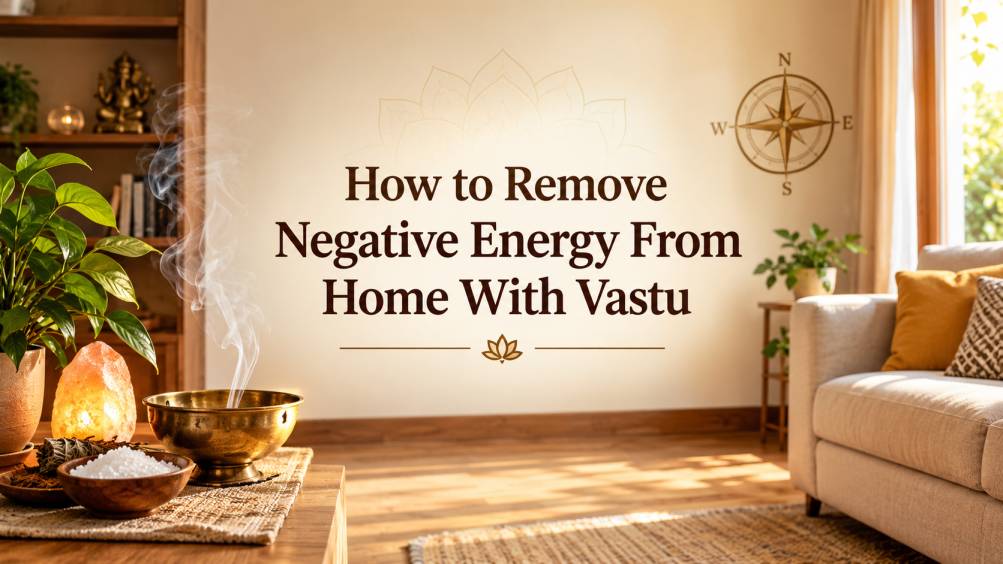
The idea of negative energy in the home is found in both Vastu Shastra and traditional astrology. In these systems, the home is considered more than a physical space—it is connected with the mental, emotional, and spiritual environment of the people living in it.
Vastu focuses mainly on directions, space, elements, cleanliness, and energy flow, while astrology examines planetary influences through the birth chart, houses, zodiac signs, and planetary periods. Together, these traditions offer practical ways to create a calmer and more balanced home environment.
It is important to approach these practices thoughtfully. Not every stressful situation or disagreement is necessarily caused by negative energy. Clean surroundings, adequate ventilation, healthy relationships, good sleep, and practical problem-solving also have an important role in household well-being.
Understanding Negative Energy According to Vastu and Astrology
In traditional Vastu, an uncomfortable home environment may be associated with blocked spaces, poor ventilation, clutter, unsuitable placement of objects, or an imbalance among the five elements: Earth, Water, Fire, Air, and Space.
Astrology approaches the subject differently. Certain planets are traditionally associated with particular areas of life:
- Sun: confidence, vitality, authority, and father figures
- Moon: emotions, peace of mind, and domestic comfort
- Mars: energy, courage, aggression, and conflicts
- Mercury: communication and reasoning
- Jupiter: wisdom, prosperity, and guidance
- Venus: relationships, comfort, and harmony
- Saturn: discipline, responsibility, delays, and hardship
- Rahu and Ketu: unconventional experiences, detachment, uncertainty, and sudden changes
These associations are part of the interpretive framework of Vedic astrology rather than scientifically established causes of household events.
Vastu Tips to Reduce Negative Energy at Home
1. Keep the Entrance Clean
The main entrance is traditionally considered an important energy point in Vastu. Keep the doorway clean, well-lit, and free from unnecessary objects.
Practical tips:
- Remove broken items near the entrance.
- Keep footwear organized.
- Ensure the door opens smoothly.
- Use adequate lighting, especially after sunset.
- Keep the entrance area uncluttered.
2. Declutter Regularly
Accumulated clutter can make a home feel crowded and stressful. From a practical perspective, organized surroundings can also make everyday activities easier.
Pay particular attention to:
- Broken furniture
- Unused electronics
- Torn clothing
- Damaged mirrors
- Excess paperwork
- Items stored under beds
Rather than treating every old object as spiritually harmful, focus on whether it is useful, functional, or emotionally comfortable to keep.
3. Improve Ventilation and Natural Light
Fresh air and sunlight are among the simplest ways to improve the atmosphere of a home. Traditionally, the east and northeast are considered important directions for light and openness in Vastu.
Open windows when weather conditions permit and allow natural daylight into commonly used rooms.
4. Use Salt as a Traditional Vastu Remedy
A bowl of rock salt (sendha namak) is sometimes recommended in traditional Vastu practices for absorbing unwanted energy.
If you follow this tradition, place a small bowl in a suitable corner and replace the salt regularly.
This should be understood as a traditional practice, not a scientifically proven method of removing an invisible energy field.
5. Keep the Northeast Area Light and Clean
The northeast, or Ishan corner, holds particular importance in traditional Vastu. It is generally recommended to keep this area clean, relatively open, and free from heavy storage.
A small meditation or prayer space can also be maintained here if it suits the household.
Astrological Remedies for a Peaceful Home
Astrological remedies should ideally be considered after examining an individual’s Kundli, rather than applying the same planetary remedy to everyone.
Strengthening the Moon
The Moon is traditionally connected with the mind, emotions, and sense of domestic comfort.
Helpful lifestyle practices include:
- Maintaining regular sleep
- Spending quiet time with family
- Practising meditation
- Spending time in natural surroundings
- Keeping the bedroom peaceful and uncluttered
Traditional Moon-related practices may include Monday prayers or meditation, depending on one’s beliefs.
Managing Mars-Related Conflict
Mars is associated with energy and assertiveness. In traditional astrology, a strongly afflicted Mars is sometimes considered relevant when examining recurring arguments or impulsive behaviour.
Practical approaches include:
- Regular physical exercise
- Avoiding arguments when emotions are high
- Taking a short pause before responding
- Maintaining an organized routine
Traditional Hanuman worship or recitation of Hanuman Chalisa is also followed by some people as a devotional practice.
Saturn and Household Discipline
Saturn is traditionally associated with discipline, responsibility, patience, and long-term effort. Instead of viewing Saturn-related symbolism only negatively, it can be approached as a reminder to establish structure.
Simple practices include:
- Keeping commitments
- Maintaining cleanliness
- Helping elderly or vulnerable people
- Following a consistent daily routine
- Avoiding unnecessary accumulation
Traditional Spiritual Practices
If they are meaningful to you, simple devotional practices can complement practical household habits.
For example, the traditional peace invocation:
ॐ शान्तिः शान्तिः शान्तिः
means an invocation for peace and is commonly recited at the conclusion of certain Hindu prayers.
Other practices may include:
- Morning prayer or meditation
- Lighting a diya safely
- Reading suitable spiritual texts
- Chanting a personally meaningful mantra
- Maintaining a peaceful prayer area
These practices can encourage mindfulness and a sense of routine, regardless of one’s interpretation of their spiritual effects.
What Should You Avoid?
Not every problem in a household should be attributed to Vastu or planetary influences.
Avoid:
- Fear-based claims about curses or supernatural forces
- Expensive remedies promised as guaranteed solutions
- Breaking or discarding valuable belongings unnecessarily
- Making major financial decisions solely on astrological advice
- Ignoring medical, psychological, relationship, or practical problems
If persistent conflict, anxiety, sleep problems, or other difficulties occur at home, addressing the underlying practical issue is more important than relying exclusively on Vastu or astrology.
Conclusion
Removing so-called negative energy from a home can be approached through a combination of Vastu principles, traditional astrological practices, and practical lifestyle improvements. Keeping the home clean, organized, ventilated, and well-lit is a useful starting point. Traditional practices such as prayer, meditation, mantra recitation, and maintaining a peaceful space may also provide personal comfort.
From an astrological perspective, planetary influences should be interpreted through an individual’s complete Kundli rather than assuming that one remedy works for everyone. The most balanced approach is to use Vastu and astrology as cultural or spiritual frameworks while also paying attention to communication, health, relationships, and everyday habits.
FAQs
1. How can I remove negative energy from my home according to Vastu?
Keeping the home clean, clutter-free, well-ventilated, and naturally lit is a simple starting point according to common Vastu practices.
Traditional Vastu also gives importance to the entrance, northeast direction, and balanced use of space. These principles can be combined with practical household organization.
Related tips:
- Keep the entrance clean.
- Remove broken or unused objects.
- Improve natural ventilation.
- Keep important living areas organized.
2. Which direction is considered important for positive energy in Vastu?
The northeast direction, traditionally called the Ishan corner, is considered particularly significant in Vastu.
It is generally associated with openness, clarity, and spiritual practices. Many traditional Vastu recommendations suggest keeping this area clean and relatively light.
Tips:
- Avoid unnecessary clutter.
- Keep the area clean.
- Use it for meditation or prayer if appropriate.
3. Can astrology explain negative energy in a house?
Vedic astrology can symbolically examine planetary and house influences, but it does not establish that planets scientifically create negative energy inside a home.
Astrologers may examine the Moon, Mars, Saturn, Rahu, Ketu, the fourth house, and relevant planetary periods when discussing emotional or domestic concerns.
Consider:
- The fourth house
- Moon’s condition
- Mars and Saturn influences
- Current Dasha and Antardasha
- The complete Kundli rather than one placement
4. Does rock salt remove negative energy?
Rock salt is traditionally used as a Vastu remedy, but there is no established scientific evidence that it removes an invisible negative energy field.
Some households place rock salt in bowls as part of their traditional routine. It can be used as a symbolic practice while maintaining realistic expectations.
Traditional approach:
- Use a small bowl of rock salt.
- Replace it periodically.
- Keep the surrounding area clean.
5. Which planet is associated with peace of mind in astrology?
The Moon is traditionally associated with the mind, emotions, mental comfort, and domestic happiness in Vedic astrology.
Astrologers may study the Moon’s sign, house, aspects, conjunctions, strength, and planetary periods before suggesting traditional remedies.
Supportive habits include:
- Maintaining regular sleep.
- Practising meditation.
- Spending quality time with family.
- Creating a calm bedroom environment.
6. Can prayer or mantra help create a peaceful home?
Prayer and mantra recitation may support a sense of calm, routine, and spiritual connection for people who follow these practices.
Traditional Hindu practices often include mantras, devotional reading, meditation, and diya lighting. Their personal or spiritual significance varies between individuals.
Simple practice:
- Choose a meaningful prayer or mantra.
- Maintain a regular routine.
- Keep the prayer area clean.
- Combine spiritual practice with practical efforts to resolve household problems.