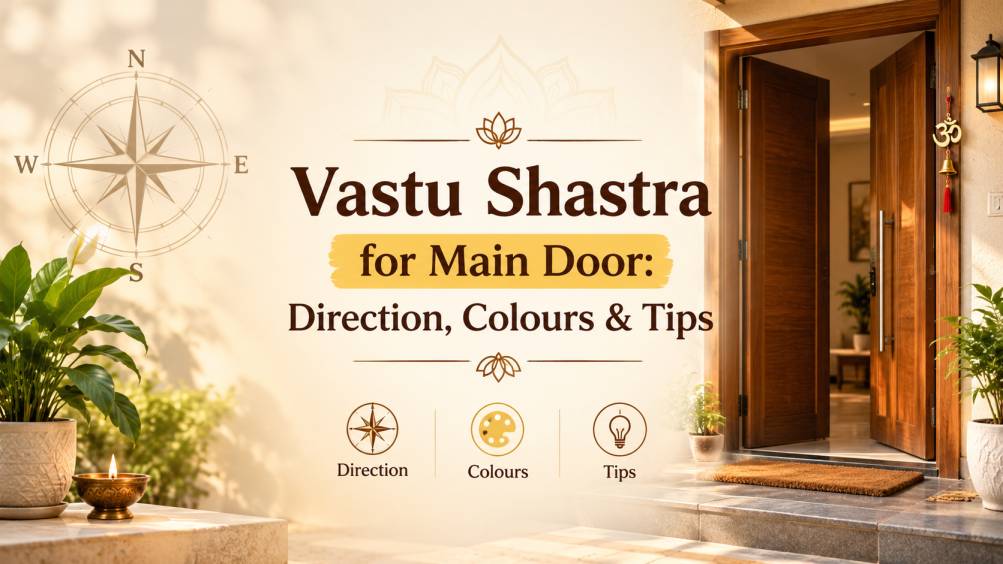
According to Vastu Shastra, the main entrance is an important part of a home’s design because it connects the indoor living space with the outside environment. Traditional Indian architecture considers the entrance’s direction, placement, lighting, cleanliness, and appearance when planning a house. These principles are also associated with ideas of prosperity, harmony, and positive energy.
Vastu Shastra for the main door is often discussed alongside Hindu astrological beliefs, particularly the traditional associations of directions with planetary influences and the five elements. However, Vastu and Vedic astrology are distinct systems: Vastu focuses on buildings and spatial arrangements, while astrology examines planetary positions and their traditional interpretations.
Understanding main door Vastu can help homeowners make thoughtful decisions about entrance design without unnecessary renovations or fear-based remedies. This guide explains suitable directions, colour choices, practical adjustments, and common mistakes to avoid.
1. Which Direction Is Best for the Main Door as per Vastu?
Traditional Vastu recommendations often favour entrances in certain parts of a home’s eastern, northern, or other direction-facing sides. The precise recommendation depends on the plot, building layout, entrance position, and the Vastu tradition being followed.
East-Facing Main Door
An east-facing entrance is traditionally associated with the rising Sun, new beginnings, vitality, and clarity. The Sun represents authority, confidence, and leadership in Vedic astrology.
Homeowners who prefer an east-facing entrance can focus on:
- Keeping the doorway clean and well-lit.
- Allowing natural daylight into the entrance where practical.
- Avoiding obstructions immediately outside the door.
- Choosing a well-maintained door that opens smoothly.
These practices can improve the entrance’s appearance and everyday usability, although the direction alone cannot guarantee success or prosperity.
North-Facing Main Door
North is traditionally associated with prosperity and, in many Vastu interpretations, the direction of Kubera, the deity connected with wealth. Mercury, associated with communication, commerce, and intelligence in Vedic astrology, is also linked with the north in some directional systems.
Practical suggestions include:
- Keeping the entrance uncluttered.
- Maintaining a clean entrance path.
- Ensuring adequate lighting and ventilation.
- Using a clear house number and accessible doorway.
A north-facing entrance is not a substitute for financial planning or sound household decisions.
West-Facing Main Door
West-facing entrances are not automatically considered inauspicious. Their suitability depends on the entrance’s exact position and the broader layout under the Vastu system being followed.
Homeowners should prioritise a safe approach, suitable lighting, weather protection, and convenient access rather than assuming every west-facing entrance needs correction.
South-Facing Main Door
Some Vastu traditions advise closer attention to the placement of south-facing entrances. However, a south-facing door does not automatically mean a house is unlucky.
Before making changes, consider the complete floor plan and seek a qualified professional’s assessment if you follow traditional Vastu principles. Avoid expensive structural alterations based only on general online advice.
2. Best Main Door Colours as per Vastu
Main door colours can influence the visual character of a home. Vastu traditions also assign symbolic meanings to different colours, although recommendations vary by direction and school of practice.
Commonly Suggested Colours
- Wooden brown: Represents natural materials, stability, and warmth.
- Light cream or beige: Creates a calm, understated entrance.
- White or off-white: Associated with simplicity, brightness, and cleanliness.
- Light green: Traditionally linked with growth and freshness.
- Muted yellow: Symbolically associated with optimism and auspiciousness in some traditions.
- Natural wood finish: Offers a timeless appearance and suits many architectural styles.
The most appropriate choice should complement the house’s exterior, climate, material, and maintenance requirements.
Colours to Choose Carefully
Very dark shades, bright red, or highly reflective finishes are sometimes discouraged for particular entrances in certain Vastu interpretations. These are not universal prohibitions. A well-designed entrance can use darker or stronger colours successfully when they suit the architecture.
Practical tip: If you are unsure, choose a durable natural wood finish or a neutral shade. Check that the paint is suitable for the door material and local weather conditions.
3. Main Door Design and Placement: Important Vastu Principles
Direction and colour are only parts of traditional entrance planning. Several everyday design features deserve equal attention.
Door Size and Condition
A main entrance should be proportionate to the house and comfortable to use. Some Vastu traditions prefer the main entrance to be more prominent than internal doors, but exact dimensions depend on architectural requirements.
Check that:
- Hinges and handles work properly.
- The door does not scrape the floor.
- Locks provide adequate security.
- Cracks, peeling paint, and damaged frames are repaired.
- The entrance remains accessible to children, older adults, and visitors.
Lighting and Cleanliness
A bright, clean entrance is welcoming and helps people navigate safely. Keep the area free from unnecessary footwear, rubbish, broken objects, and unused furniture.
Useful improvements include:
- Installing a suitable entrance light.
- Using a clean, slip-resistant doormat.
- Maintaining a clear walking path.
- Ensuring drainage prevents water from collecting near the threshold.
Nameplates and Decorations
A readable nameplate can help visitors and delivery personnel identify the home. Traditional households may also use torans, rangoli, or other festive decorations.
Choose decorations that are secure, weather-resistant, and easy to maintain. Avoid placing objects where they block the doorway or create a tripping hazard.
4. Common Main Door Vastu Mistakes
Homeowners often focus on symbolic corrections while overlooking practical problems.
Mistake 1: Assuming One Direction Is Always Bad
A south- or west-facing entrance is not automatically harmful. General directional rules may not account for the complete building layout.
Better approach: Assess the entrance’s precise placement before considering changes.
Mistake 2: Keeping the Entrance Dark
Poor lighting can make a doorway less welcoming and increase the risk of trips or falls.
Remedy: Add appropriate lighting and keep the entrance visible after sunset.
Mistake 3: Ignoring a Damaged Door
A broken lock, loose handle, or warped frame affects security and everyday comfort.
Remedy: Repair the door promptly rather than relying on decorative or ritual remedies.
Mistake 4: Placing Clutter Near the Threshold
Shoes, storage boxes, waste bins, and unused items can obstruct movement.
Remedy: Create a designated storage area that does not interfere with the entrance.
Mistake 5: Making Costly Changes Based on Fear
Some online claims suggest that a particular direction or colour will inevitably cause financial loss, illness, or relationship problems. Such outcomes are not established by reliable scientific evidence.
Remedy: Avoid rushed renovations, expensive products, or gemstones marketed as guaranteed solutions. Seek a second opinion before making major structural changes.
5. Simple Main Door Vastu Remedies Without Renovation
If you want to follow traditional Vastu practices, begin with low-cost adjustments that also make practical sense.
- Clean the entrance regularly: Maintain the door, threshold, and surrounding floor.
- Improve lighting: Use safe, energy-efficient fixtures suitable for the location.
- Repair damage: Fix broken handles, loose hinges, and damaged paint.
- Keep the path clear: Remove obstacles that restrict access.
- Use traditional decorations thoughtfully: A toran or rangoli can mark festivals and cultural occasions.
- Maintain ventilation: Where possible, ensure the entrance area does not trap dampness or unpleasant odours.
- Avoid fear-driven remedies: Treat rituals as personal or cultural practices rather than guaranteed ways to change material outcomes.
Vastu adjustments should complement good architecture, safety, and household maintenance.
6. How Vastu and Vedic Astrology Relate to the Main Door
Vastu Shastra and Vedic astrology are sometimes used together in traditional consultations, but they answer different questions. Vastu examines the relationship between a building’s layout and its directions, while Jyotish interprets planetary placements in a birth chart.
The Sun is traditionally associated with vitality and authority, Mercury with communication and trade, and Jupiter with wisdom and growth. These symbolic associations may influence how practitioners discuss a home’s entrance, but there is no universally accepted astrological formula that establishes one main door direction as beneficial for every person.
If consulting a Vastu practitioner or astrologer, ask them to explain the tradition and reasoning behind their recommendations. Personal beliefs can be respected while keeping practical decisions evidence-informed.
Conclusion
Vastu Shastra for the main door combines traditional ideas about direction, colours, spatial balance, and the entrance’s symbolic role in a home. East- and north-facing entrances are often discussed favourably in popular Vastu guidance, but the best arrangement depends on the building and the specific tradition being followed. No direction or colour can guarantee wealth, health, or happiness.
For most homeowners, the best starting points are straightforward: keep the entrance clean, well-lit, secure, accessible, and free from clutter. Choose a durable colour that suits the home’s design, and address structural problems before considering symbolic remedies. If you follow Vastu principles, use them as a guide rather than a source of anxiety. A comfortable, well-maintained entrance is a practical foundation for a welcoming home.
Frequently Asked Questions (FAQs)
1. Which direction is best for the main door as per Vastu?
East and north are commonly recommended in popular Vastu guidance, but the suitability of an entrance depends on its precise position and the overall layout.
Traditional interpretations associate the east with the rising Sun and the north with prosperity. These are cultural and symbolic associations, not guarantees of a home’s future.
Tips:
- Assess the complete layout rather than direction alone.
- Keep the entrance clean and well-lit.
- Avoid costly alterations based on generic advice.
2. Which colour is best for the main door as per Vastu?
Natural wood, brown, cream, beige, and other understated colours are commonly suggested for main doors.
Colour recommendations differ among Vastu traditions, so choose a shade that complements the building and is suitable for the door material. There is no reliable evidence that a particular entrance colour guarantees good fortune.
Tips:
- Consider natural wood or neutral shades.
- Use weather-resistant paint.
- Coordinate the door with the exterior design.
3. Is a south-facing main door bad as per Vastu?
No, a south-facing main door is not automatically bad or unlucky.
Some traditional Vastu systems recommend checking the exact placement of a southern entrance, but the complete layout matters. A safe, functional entrance should remain the priority.
Tips:
- Check access, lighting, and security.
- Consult a qualified practitioner if traditional assessment matters to you.
- Avoid unnecessary structural changes without a clear reason.
4. Can I correct main door Vastu without renovation?
Yes, many simple entrance improvements can be made without major renovation.
Cleaning the threshold, improving lighting, repairing damaged fittings, and removing clutter can make the entrance more functional. Traditional decorations may also be used if they are meaningful to the household.
Tips:
- Repair hinges and locks.
- Keep the entrance path clear.
- Add suitable lighting and a secure nameplate.
5. Should the main door open inward or outward as per Vastu?
Many Vastu recommendations traditionally favour a main door that opens inward, but the correct arrangement also depends on building design, safety, and local requirements.
Ensure the door does not obstruct a shared corridor, create a hazard, or interfere with emergency access. Follow applicable building and fire-safety rules.
Tips:
- Check the available clearance.
- Ensure smooth operation.
- Prioritise safe and accessible movement.
6. Should there be a mirror directly opposite the main door?
Some Vastu traditions advise against placing a mirror directly opposite the entrance, although interpretations vary.
From a practical design perspective, a mirror may be useful if it does not cause glare, obstruct movement, or create unwanted reflections. There is no established scientific evidence that an entrance-facing mirror causes financial or personal problems.
Tips:
- Place mirrors where they are convenient and safe.
- Avoid sharp or damaged mirror edges.
- Follow traditional preferences if they are important to your household.
7. Can the main door direction affect wealth and prosperity?
Vastu traditions associate certain entrance directions with prosperity, but scientific evidence does not establish that door direction determines financial outcomes.
Financial stability is influenced by factors such as income, expenses, savings, opportunities, and planning. A pleasant entrance may contribute to comfort and a sense of order, but it cannot replace practical financial decisions.
Tips:
- Maintain the entrance and home.
- Plan household spending carefully.
- Treat Vastu as a cultural or personal framework rather than a financial guarantee.