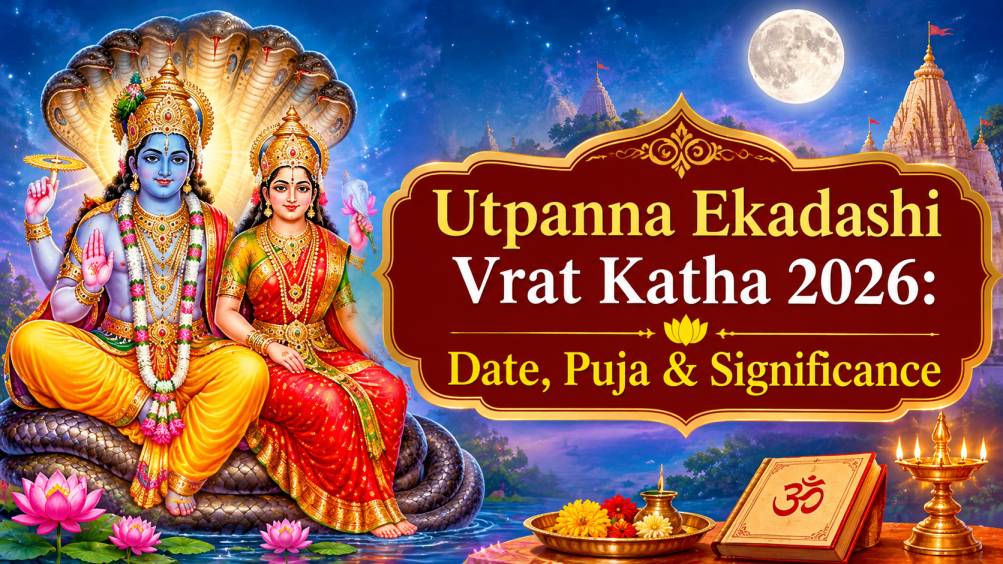
Utpanna Ekadashi is an important Hindu fasting day dedicated to Lord Vishnu and Goddess Ekadashi. It commemorates the divine appearance of Goddess Ekadashi, who emerged from Lord Vishnu’s divine energy to defeat the demon Murasura. Observed during the Krishna Paksha (waning phase of the Moon) in the month of Margashirsha, this Ekadashi holds special importance in Hindu religious traditions.
Utpanna Ekadashi 2026 is particularly significant for devotees seeking spiritual discipline, inner purification and devotion to Lord Vishnu. According to the Padma Purana, this sacred day marks the origin of the Ekadashi vrat tradition. Observing the fast, listening to the vrat katha and performing Vishnu puja are considered meaningful ways to cultivate self-control, gratitude and positive values.
Utpanna Ekadashi 2026 Date and Tithi Timings
Utpanna Ekadashi will be observed on Friday, 4 December 2026.
According to the New Delhi Panchang:
- Ekadashi Tithi Begins: 11:03 PM, 3 December 2026
- Ekadashi Tithi Ends: 11:44 PM, 4 December 2026
- Vrat Day: Friday, 4 December 2026
- Parana Date: Saturday, 5 December 2026
- Parana Time: 6:59 AM to 9:04 AM IST
Timings are based on the New Delhi Panchang and may vary slightly by location. Devotees should consult their local Panchang for accurate fasting and Parana timings.
Utpanna Ekadashi Vrat Katha: The Birth of Goddess Ekadashi
According to the traditional account described in the Padma Purana, a powerful demon named Murasura once created havoc in the three worlds. He defeated Lord Indra and other deities and occupied their heavenly kingdom.
Unable to defeat the demon, the gods approached Lord Shiva, who advised them to seek help from Lord Vishnu.
Lord Vishnu accepted their request and engaged Murasura in a fierce battle. Despite using divine weapons, including the Sudarshan Chakra, Vishnu could not easily defeat the demon. After a prolonged struggle, the Lord travelled to a cave in Badrikashram to rest.
Murasura followed Him and attempted to attack Him while He was resting. At that moment, a powerful divine feminine energy emerged from Lord Vishnu’s body.
The celestial maiden challenged Murasura and defeated him, protecting Lord Vishnu from danger.
When Lord Vishnu awakened, He was pleased with her extraordinary courage and asked her to request a boon. The maiden requested that devotees observing a fast on her sacred day should receive spiritual merit and progress towards liberation.
Lord Vishnu granted her wish and named her Goddess Ekadashi, as she had appeared on the Ekadashi Tithi.
This event is remembered as the origin of Ekadashi fasting. The story symbolically represents the victory of divine awareness, discipline and righteousness over negative tendencies.
Spiritual and Astrological Significance of Utpanna Ekadashi
Utpanna Ekadashi has a connection with the Hindu lunar calendar because its observance is determined by Ekadashi Tithi, the eleventh lunar day.
In traditional Hindu astrology, the Moon represents the mind, emotions and mental stability. Ekadashi fasting is therefore often associated with mental discipline and the conscious regulation of desires.
From a spiritual perspective, the observance offers several lessons:
- Mental purification: Fasting and prayer encourage control over unnecessary desires and distractions.
- Emotional balance: Meditation, mantra chanting and silence can support calmness and self-awareness.
- Spiritual development: Worshipping Lord Vishnu represents the pursuit of righteousness and devotion.
- Self-discipline: Avoiding excessive food consumption and negative behaviour encourages mindful living.
It is important to understand that Ekadashi is a lunar-calendar observance, not a planetary transit or a specific astrological yoga. Its spiritual significance should not be confused with guaranteed changes in an individual’s horoscope.
Lord Vishnu Puja Vidhi on Utpanna Ekadashi 2026
Devotees can follow a simple traditional puja procedure at home.
1. Morning Preparation
Wake up early, preferably before sunrise, take a bath and wear clean clothes. Clean the puja area and prepare an image or idol of Lord Vishnu.
2. Take the Vrat Sankalp
Offer water and flowers before the deity and take a sincere resolution to observe the fast according to your capacity.
3. Perform Vishnu Puja
Offer the following items:
- Tulsi leaves
- Yellow flowers
- Fruits
- Incense and a diya
- Chandan and seasonal offerings
4. Chant Vishnu Mantras
Devotees may chant:
ॐ नमो भगवते वासुदेवाय।
This simple mantra is traditionally associated with devotion to Lord Vishnu.
5. Read the Vrat Katha
Read or listen to the Utpanna Ekadashi vrat katha and remember Goddess Ekadashi’s victory over Murasura.
6. Night Worship
Devotees may perform bhajan, kirtan, meditation or Vishnu Sahasranama recitation. Staying awake throughout the night is a traditional practice but is not compulsory for everyone.
Fasting Rules and Practical Remedies
Ekadashi fasting can be observed according to individual health, family traditions and religious capacity.
Common fasting practices include:
- Nirjala Vrat: Fasting without food or water.
- Phalahar Vrat: Consuming fruits, milk and permitted fasting foods.
- Partial Fasting: Eating suitable vrat food once or twice during the day.
Avoid rice, wheat, regular grains and pulses according to customary Ekadashi dietary restrictions.
Simple Spiritual Remedies
Devotees may follow these practices:
- Offer Tulsi leaves to Lord Vishnu with devotion.
- Donate food, clothes or essential supplies to people in need.
- Feed animals where appropriate and safe.
- Avoid anger, dishonesty and unnecessary arguments.
- Spend time reading the Bhagavad Gita or other sacred texts.
People with medical conditions, elderly devotees, pregnant women and those taking regular medication should avoid strict fasting without appropriate medical guidance.
Importance of Parana on Dwadashi
Parana means breaking the Ekadashi fast on the following Dwadashi Tithi. It is an important part of the traditional vrat procedure.
On 5 December 2026, devotees observing the fast should break it within the prescribed Parana period. According to the New Delhi Panchang, the recommended window is 6:59 AM to 9:04 AM IST.
Local sunrise and Tithi calculations can affect the exact timing, so checking the regional Panchang is advisable.
Conclusion
Utpanna Ekadashi 2026 is an opportunity to understand the spiritual importance of devotion, self-control and righteousness. The story of Goddess Ekadashi reminds devotees that divine strength can overcome even the most challenging negative forces.
By observing the vrat, worshipping Lord Vishnu, chanting sacred mantras and practising charity, devotees can make the occasion meaningful. Rather than focusing only on fasting, the deeper purpose of Utpanna Ekadashi lies in improving one’s thoughts, actions and daily conduct. A sincere prayer and a commitment to positive living can make this sacred observance valuable throughout the year.
Frequently Asked Questions (FAQs)
1. When is Utpanna Ekadashi in 2026?
Utpanna Ekadashi will be observed on Friday, 4 December 2026, according to the Indian Panchang.
The Ekadashi Tithi begins at 11:03 PM on 3 December and ends at 11:44 PM on 4 December 2026 (New Delhi timings).
Devotees should:
- Observe the vrat on 4 December.
- Perform Lord Vishnu puja.
- Check local Panchang timings for regional variations.
2. Why is Utpanna Ekadashi celebrated?
Utpanna Ekadashi celebrates the divine appearance of Goddess Ekadashi from Lord Vishnu’s energy.
According to the Padma Purana, she defeated the demon Murasura when he attempted to attack Lord Vishnu. Pleased with her courage, Lord Vishnu granted her a boon and established the spiritual importance of Ekadashi fasting.
Related practice: Read the Utpanna Ekadashi vrat katha and worship Lord Vishnu with Tulsi leaves.
3. Which God should be worshipped on Utpanna Ekadashi?
Lord Vishnu and Goddess Ekadashi are the principal deities associated with Utpanna Ekadashi.
Devotees traditionally offer yellow flowers, Tulsi leaves, fruits and a diya during worship. Chanting the Vishnu mantra and reading the Bhagavad Gita are also considered meaningful devotional practices.
A simple mantra to chant is:
ॐ नमो भगवते वासुदेवाय।
4. Can we eat fruits during Utpanna Ekadashi fast?
Yes, devotees observing a Phalahar vrat can consume fruits and other permitted fasting foods.
Traditional fasting practices vary between families and communities. Some devotees observe a complete fast, while others consume milk, fruits, nuts or suitable vrat preparations.
Fasting tips:
- Avoid regular grains and pulses.
- Drink sufficient water if following a non-Nirjala fast.
- Choose a fasting method suitable for your health.
5. What is the Parana time for Utpanna Ekadashi 2026?
According to the New Delhi Panchang, Parana will be performed on Saturday, 5 December 2026, between 6:59 AM and 9:04 AM IST.
Parana is the traditional ritual of breaking the Ekadashi fast on Dwadashi. Its timing should be followed carefully according to the local Panchang.
Devotees can:
- Offer prayers to Lord Vishnu.
- Break the fast within the prescribed window.
- Begin with suitable light food.
6. What are the benefits of observing Utpanna Ekadashi vrat?
According to Hindu religious traditions, observing Utpanna Ekadashi is associated with spiritual purification, devotion and progress towards moksha.
The practice also encourages self-discipline, mindful eating, charity and control over negative thoughts. These values can have practical relevance in everyday life.
Suggested practices: Chant Vishnu mantras, donate food, practise meditation and avoid negative behaviour.
7. Is Utpanna Ekadashi suitable for beginning the Ekadashi vrat?
Yes, Utpanna Ekadashi is traditionally regarded as an auspicious occasion to begin observing the Ekadashi fasting practice.
Its significance comes from the story of Goddess Ekadashi’s appearance and Lord Vishnu’s blessing. Devotees can begin with a simple, manageable fasting routine and gradually follow their family or spiritual traditions.