Introduction
Indian spirituality has long connected personal development with social responsibility. From the teachings of the Vedas and Upanishads to the philosophy of the Bhagavad Gita, ancient Indian traditions encourage individuals to develop discipline, wisdom, compassion, and a sense of duty. These principles also offer a framework for thinking about leadership, public service, and nation-building.
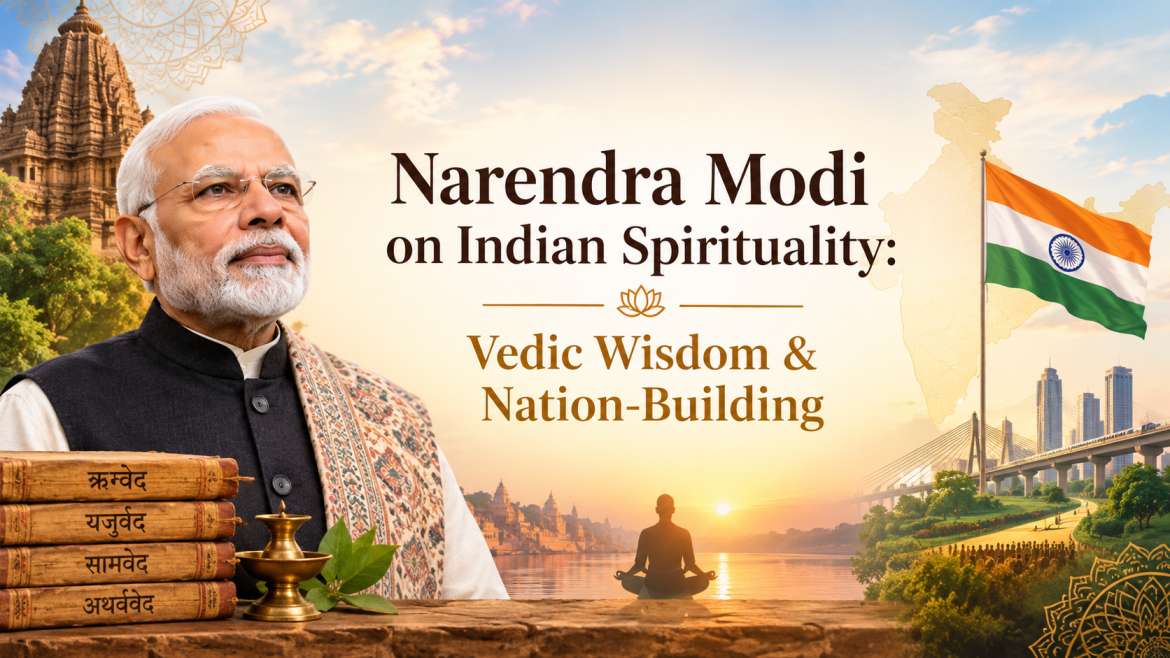
Narendra Modi frequently highlights India’s spiritual heritage, yoga, meditation, cultural traditions, and the idea of Vasudhaiva Kutumbakam, meaning “the world is one family.” His public emphasis on these themes provides a contemporary context for examining how traditional Indian wisdom can influence personal conduct and collective progress.
From a Vedic astrology perspective, the relationship between individual growth and national development can be explored through the symbolic roles of the Sun, Jupiter, Saturn, and the ninth and tenth houses. These associations belong to traditional astrological interpretation, rather than scientifically established explanations of political or economic outcomes.
Narendra Modi and the Relevance of Indian Spirituality
Indian spirituality is not limited to rituals or religious observances. It also encompasses ethical conduct, self-discipline, service, knowledge, and responsibility toward society.
Several traditional ideas help explain this connection:
- Dharma: Fulfilling responsibilities ethically and according to one’s circumstances.
- Karma Yoga: Performing duties sincerely without becoming excessively attached to personal rewards.
- Atma-vikas: Developing self-awareness, emotional balance, and inner discipline.
- Lokasangraha: Contributing to social stability and the welfare of the wider community.
- Vasudhaiva Kutumbakam: Recognising humanity’s interconnectedness and encouraging cooperation.
Modi’s public references to yoga, India’s cultural heritage, and global cooperation bring these themes into contemporary discussions about leadership and national identity. However, spiritual principles should be distinguished from political policies: their practical value depends on how they are interpreted and implemented in everyday life.
Ancient Vedic Wisdom and Nation-Building
Nation-building involves more than infrastructure, technology, or economic growth. It also depends on education, public trust, responsible citizenship, social cooperation, and ethical leadership.
Ancient Indian philosophy offers several principles that can be applied to these responsibilities.
1. Dharma and Responsible Leadership
Dharma emphasises appropriate conduct, integrity, and the fulfilment of responsibilities. In public life, this can translate into transparent decision-making, accountability, fairness, and a commitment to public welfare.
At an individual level, the same principle encourages people to act honestly at work, fulfil family responsibilities, and respect the rights of others.
2. Karma Yoga and Consistent Action
The Bhagavad Gita discusses disciplined action without excessive attachment to its results. This teaching is particularly relevant to personal growth because meaningful progress often requires patience and consistent effort.
For example, students can focus on learning rather than only examination results, entrepreneurs can prioritise customer value alongside profit, and public servants can concentrate on delivering reliable services.
The principle does not suggest ignoring outcomes or accountability. Instead, it encourages people to combine sincere effort with thoughtful evaluation.
3. Vasudhaiva Kutumbakam and Global Cooperation
The phrase Vasudhaiva Kutumbakam is associated with the Maha Upanishad and expresses the idea that the world is one family. Modi has used this concept in discussions of India’s global outlook, including India’s G20 presidency in 2023.
In practical terms, the principle encourages cooperation across cultures, humanitarian responsibility, and dialogue on shared challenges such as climate change, public health, and sustainable development.
Vedic Astrology: Planets Associated with Personal Growth and Leadership
Vedic astrology, or Jyotish, uses planetary symbolism and horoscope houses to interpret areas of life such as purpose, knowledge, responsibility, and professional activity. These interpretations can provide a cultural framework for reflection, but they should not be treated as verified causes of leadership ability or national success.
The Sun: Leadership and Self-Discipline
In traditional Jyotish, the Sun represents authority, vitality, self-confidence, and leadership. It is also associated with government and public responsibility.
Practical application: Develop confidence without arrogance, make decisions carefully, and accept responsibility for their consequences.
Traditional spiritual practices associated with the Sun include offering water to the rising Sun and reciting the Aditya Hridayam. These practices may support personal reflection and routine, but there is no reliable scientific evidence that they guarantee career advancement or political success.
Jupiter: Knowledge, Wisdom, and Ethical Guidance
Jupiter, known as Guru or Brihaspati, is associated with wisdom, learning, teaching, ethics, and spiritual development.
A constructive way to apply this symbolism is to pursue lifelong learning, seek guidance from experienced mentors, and evaluate decisions through ethical reasoning.
Practical practices include:
- Reading a philosophical or educational text regularly.
- Learning from qualified teachers and credible sources.
- Sharing knowledge without expecting immediate rewards.
Saturn: Discipline, Service, and Accountability
Saturn, or Shani, traditionally represents discipline, patience, limitations, perseverance, and responsibility. Its symbolism offers a useful reminder that sustainable development requires long-term effort.
For individuals, this may mean maintaining a consistent work routine, managing commitments responsibly, and respecting the dignity of workers.
Traditional remedies associated with Saturn sometimes include charitable service, helping disadvantaged people, and reciting Shani prayers. Ethical conduct and genuine service are valuable in their own right, regardless of astrological belief.
The Ninth and Tenth Houses: Principles and Public Work
In Vedic astrology, the ninth house is associated with dharma, higher learning, teachers, and philosophical beliefs. The tenth house represents career, action, reputation, and public responsibilities.
Astrologers examine these houses alongside their lords, planetary placements, aspects, and the overall birth chart when interpreting professional direction.
However, a general discussion of these houses cannot establish the astrological causes of Narendra Modi’s leadership or India’s development. Such an interpretation would require a clearly stated chart methodology and should remain an astrological interpretation rather than a factual explanation of political events.
Practical Ways to Apply Vedic Wisdom in Daily Life
Ancient Indian teachings become most relevant when translated into consistent, realistic actions.
- Begin with self-reflection: Spend five to ten minutes each morning observing your thoughts and setting priorities.
- Practise disciplined action: Complete important responsibilities before seeking recognition or rewards.
- Learn continuously: Read reliable books, study traditional texts in context, and remain open to evidence.
- Serve your community: Volunteer, mentor a student, or help someone access education or essential services.
- Make ethical decisions: Consider the long-term effects of your choices on family, colleagues, and society.
- Use spiritual remedies mindfully: Prayer, mantra recitation, yoga, or meditation may support a meaningful routine, but should complement rather than replace practical action.
These habits do not require a particular horoscope or religious identity. They can be adopted according to individual beliefs and circumstances.
Conclusion
Narendra Modi’s public emphasis on Indian spirituality provides an opportunity to examine how traditional values can inform modern discussions about personal growth, leadership, and nation-building. Concepts such as dharma, Karma Yoga, and Vasudhaiva Kutumbakam encourage responsibility, disciplined action, and cooperation.
Vedic astrology adds a symbolic perspective through the Sun’s association with leadership, Jupiter’s connection with wisdom, Saturn’s emphasis on discipline, and the ninth and tenth houses’ links with dharma and professional responsibilities. These interpretations can inspire reflection, but they do not scientifically establish why individuals become leaders or why nations prosper.
Ultimately, the practical message is simple: personal development and collective progress are strengthened by ethical conduct, education, accountability, and service. Rather than relying solely on astrological predictions or rituals, individuals can put these values into action in their homes, workplaces, and communities.