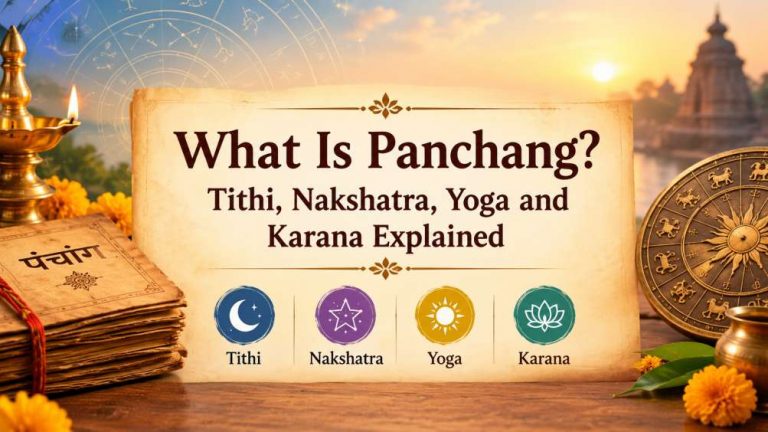
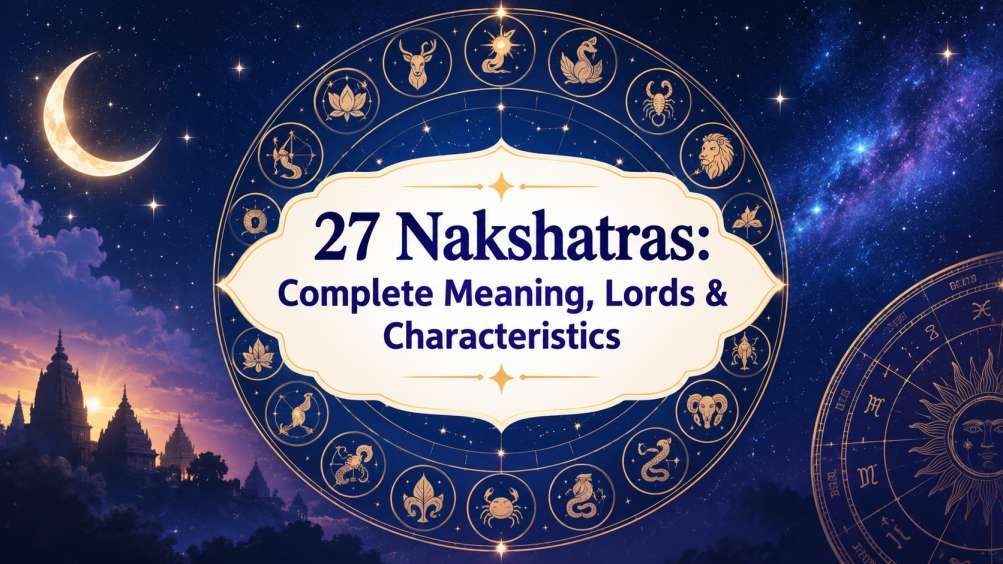
In Vedic astrology, the 27 Nakshatras, or lunar constellations, provide a deeper layer of understanding beyond the 12 zodiac signs. Each Nakshatra spans 13°20′ and is further divided into four padas of 3°20′ each. Since the Moon moves through these Nakshatras during its monthly journey, the birth Nakshatra is especially important for understanding the mind, emotions, habits and behavioural tendencies.
Each Nakshatra has a planetary lord, deity, symbol, nature and specific qualities. Astrologers use these factors along with the Lagna, Moon sign, houses, planetary placements and dashas while interpreting a birth chart.
The Nakshatra system is also relevant to Vimshottari Dasha, marriage matching, naming traditions, Muhurta and spiritual practices. Rather than treating a Nakshatra as a fixed prediction, it is more useful to view it as one of several interpretive tools in Jyotish.
The 27 Nakshatras: Meaning, Lord and Characteristics
1. Ashwini
Lord: Ketu | Symbol: Horse’s head | Deity: Ashwini Kumaras
Ashwini represents speed, healing, initiative and new beginnings. People influenced by it may be energetic, independent and quick to act.
2. Bharani
Lord: Venus | Symbol: Yoni | Deity: Yama
Bharani is associated with responsibility, transformation, endurance and creativity. It can indicate strong determination and an ability to handle demanding situations.
3. Krittika
Lord: Sun | Symbol: Razor or flame | Deity: Agni
Krittika signifies purification, courage, sharp judgment and discipline. Its fiery quality can support leadership but may also create a direct communication style.
4. Rohini
Lord: Moon | Symbol: Chariot | Deity: Prajapati
Rohini is linked with beauty, growth, fertility, creativity and material development. It is traditionally considered a productive and attractive Nakshatra.
5. Mrigashira
Lord: Mars | Symbol: Deer’s head | Deity: Soma
Mrigashira represents curiosity, exploration and searching for knowledge. Its natives may enjoy travel, learning and discovering new possibilities.
6. Ardra
Lord: Rahu | Symbol: Teardrop | Deity: Rudra
Ardra is connected with transformation, intensity, research and emotional depth. It can encourage analytical thinking and resilience after difficult experiences.
7. Punarvasu
Lord: Jupiter | Symbol: Quiver of arrows | Deity: Aditi
Punarvasu represents renewal, optimism and returning to a better path. It is associated with adaptability, wisdom and the ability to rebuild.
8. Pushya
Lord: Saturn | Symbol: Flower or udder | Deity: Brihaspati
Pushya is traditionally associated with nourishment, learning, protection and spiritual development. It often emphasises responsibility and constructive growth.
9. Ashlesha
Lord: Mercury | Symbol: Coiled serpent | Deity: Nagas
Ashlesha represents depth, intuition, strategy and psychological insight. It can produce strong observational abilities and an interest in hidden subjects.
10. Magha
Lord: Ketu | Symbol: Throne | Deity: Pitris
Magha is connected with ancestors, heritage, authority and tradition. It can create respect for family lineage, status and established values.
11. Purva Phalguni
Lord: Venus | Symbol: Front legs of a bed | Deity: Bhaga
This Nakshatra relates to pleasure, relationships, creativity and relaxation. It encourages enjoyment of life’s comforts while requiring balance and responsibility.
12. Uttara Phalguni
Lord: Sun | Symbol: Bed | Deity: Aryaman
Uttara Phalguni signifies commitment, friendship, agreements and social responsibility. It supports stable partnerships and dependable behaviour.
13. Hasta
Lord: Moon | Symbol: Hand | Deity: Savitar
Hasta represents skill, craftsmanship, communication and practical intelligence. It is often associated with the ability to organise, create and manage situations effectively.
14. Chitra
Lord: Mars | Symbol: Jewel | Deity: Tvashtar
Chitra signifies beauty, design, individuality and creative expression. It can encourage ambition and a desire to create something distinctive.
15. Swati
Lord: Rahu | Symbol: Young plant or sword | Deity: Vayu
Swati represents independence, flexibility and movement. People influenced by it may value freedom and prefer developing through their own experiences.
16. Vishakha
Lord: Jupiter | Symbol: Triumphal arch | Deities: Indra and Agni
Vishakha is associated with ambition, determination and goal-oriented behaviour. Its energy can support persistence when directed toward constructive objectives.
17. Anuradha
Lord: Saturn | Symbol: Lotus | Deity: Mitra
Anuradha represents friendship, devotion, discipline and cooperation. It can support loyalty and the ability to maintain meaningful relationships.
18. Jyeshtha
Lord: Mercury | Symbol: Earring or circular talisman | Deity: Indra
Jyeshtha signifies seniority, protection, responsibility and strategic intelligence. It may create a strong sense of duty and self-reliance.
19. Mula
Lord: Ketu | Symbol: Roots | Deity: Nirriti
Mula represents roots, investigation and fundamental transformation. It encourages going beneath the surface to understand the actual cause of a problem.
20. Purva Ashadha
Lord: Venus | Symbol: Fan | Deity: Apah
Purva Ashadha is associated with confidence, persuasion, enthusiasm and emotional strength. It can support determination and the desire to overcome obstacles.
21. Uttara Ashadha
Lord: Sun | Symbol: Elephant tusk | Deities: Vishvedevas
Uttara Ashadha represents lasting achievement, leadership and integrity. Its qualities become particularly meaningful when ambition is combined with ethical conduct.
22. Shravana
Lord: Moon | Symbol: Ear | Deity: Vishnu
Shravana is connected with listening, learning, communication and knowledge. It can favour education, tradition and learning through observation.
23. Dhanishtha
Lord: Mars | Symbol: Drum | Deities: Ashta Vasus
Dhanishtha represents rhythm, resources, social connection and achievement. It can support organisational ability and interest in material or artistic pursuits.
24. Shatabhisha
Lord: Rahu | Symbol: Circle | Deity: Varuna
Shatabhisha is associated with healing, research, independence and unconventional thinking. It often encourages investigation and a scientific or analytical approach.
25. Purva Bhadrapada
Lord: Jupiter | Symbol: Front legs of a funeral cot | Deity: Aja Ekapada
This Nakshatra represents intensity, idealism, transformation and philosophical thinking. It can create strong convictions and interest in deeper questions of life.
26. Uttara Bhadrapada
Lord: Saturn | Symbol: Back legs of a funeral cot | Deity: Ahir Budhnya
Uttara Bhadrapada signifies patience, depth, stability and inner maturity. It supports thoughtful decision-making and long-term perspectives.
27. Revati
Lord: Mercury | Symbol: Fish | Deity: Pushan
Revati represents nourishment, safe journeys, compassion and completion. It is traditionally associated with kindness, adaptability and supportive relationships.
Why Nakshatras Matter in Vedic Astrology
The Nakshatra occupied by the Moon at birth is called the Janma Nakshatra. It plays an important role in determining the starting point of the Vimshottari Dasha system.
Nakshatras are also considered while analysing:
- Marriage compatibility and Guna Milan
- Vimshottari Mahadasha and Antardasha
- Muhurta for important activities
- Naming traditions for newborns
- Emotional and behavioural tendencies
- Planetary strength and house-based results
However, an accurate horoscope interpretation should not depend on Nakshatra alone. The Lagna, Moon sign, planetary dignity, aspects, conjunctions, houses and dashas must also be considered.
Practical Nakshatra Remedies
Traditional remedies should be selected according to the complete birth chart rather than only the Nakshatra.
Some generally followed practices include:
- Reciting prayers associated with the Nakshatra’s deity.
- Practising meditation and mindful communication.
- Donating food or useful items according to one’s capacity.
- Respecting elders, teachers and family traditions where relevant.
- Following disciplined routines during challenging planetary periods.
- Consulting a qualified astrologer before using gemstones or intensive remedies.
These practices can be approached as spiritual or cultural disciplines rather than guaranteed solutions to life problems.
Conclusion
The 27 Nakshatras in Vedic astrology offer a detailed framework for understanding lunar influences, personality patterns and timing techniques. From Ashwini’s initiative and Rohini’s creativity to Shravana’s learning and Revati’s compassionate nature, every Nakshatra carries a distinct symbolic framework.
For meaningful horoscope analysis, however, Nakshatra should always be interpreted alongside the Lagna, houses, planetary placements, yogas and dasha periods. Understanding your Janma Nakshatra can be a useful first step toward exploring your Vedic birth chart with greater depth and context.
FAQs
1. What is a Nakshatra in Vedic astrology?
A Nakshatra is one of 27 lunar divisions of the zodiac, with each covering 13°20′.
The Moon’s position at birth determines the Janma Nakshatra, which is used in several Jyotish techniques.
Related tip: Check the Nakshatra together with the Moon sign and complete birth chart.
2. Which Nakshatra is ruled by Ketu?
Ashwini, Magha and Mula are traditionally ruled by Ketu.
These Nakshatras are associated with themes such as beginnings, heritage, investigation and transformation.
Related tip: Ketu’s results should be assessed from its complete horoscope placement rather than Nakshatra lordship alone.
3. Which Nakshatra is ruled by Venus?
Bharani, Purva Phalguni and Purva Ashadha are ruled by Venus.
They commonly emphasise themes of relationships, creativity, enjoyment, confidence and personal values.
Related tip: Venus-related practices may be considered only after examining Venus’s overall chart position.
4. Why is the Janma Nakshatra important?
The Janma Nakshatra is important because it helps determine the Moon’s lunar constellation at birth and is used in systems such as Vimshottari Dasha.
It is also considered in traditional marriage matching, naming customs and Muhurta selection.
Related tip: Do not judge marriage or career outcomes from Janma Nakshatra alone.
5. Are Nakshatras more important than zodiac signs?
Neither system should automatically be considered more important; Nakshatras and zodiac signs provide different layers of astrological interpretation.
The zodiac sign gives broader qualities, while the Nakshatra can provide additional lunar, symbolic and timing-related detail.
Related tip: For a complete reading, combine Nakshatra, Lagna, houses, planets, yogas and dashas.