
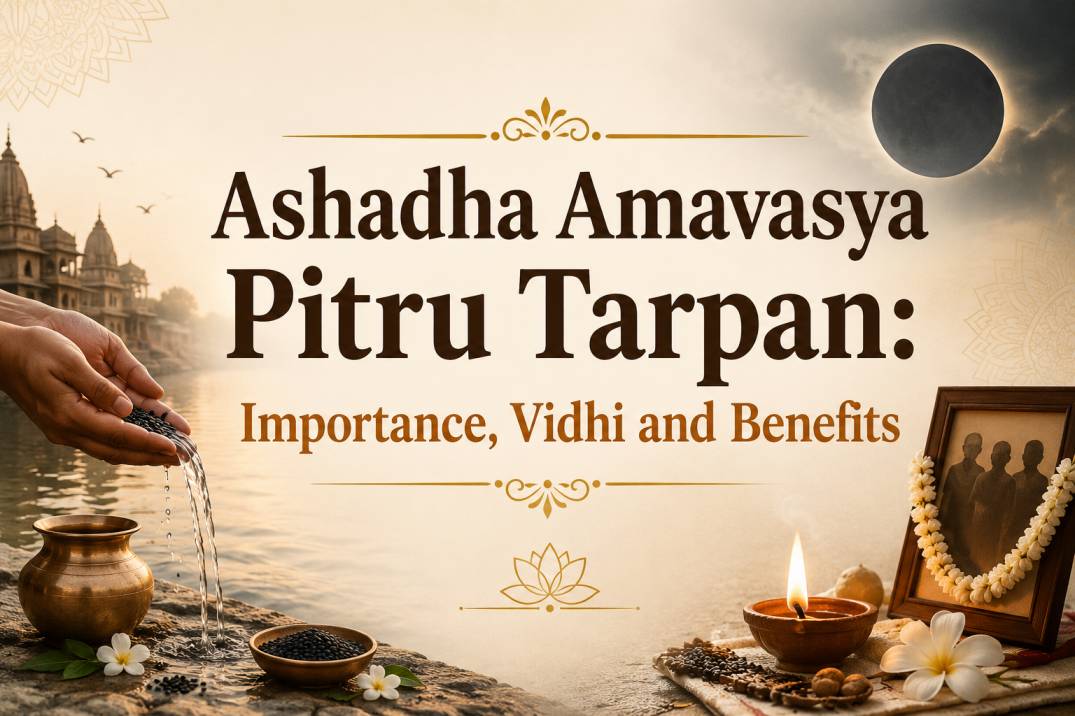
Ashadha Amavasya is one of the most spiritually significant New Moon days in the Hindu calendar. It falls during the Krishna Paksha of the Ashadha month and is traditionally associated with honoring departed ancestors through Pitru Tarpan. According to Vedic traditions, this day is considered highly favorable for expressing gratitude toward one’s forefathers and seeking their blessings for family harmony, prosperity, and spiritual growth.
In Vedic astrology, ancestral energies are often linked with the Ninth House, Sun, Moon, and karmic influences represented by Rahu and Ketu. Performing Pitru Tarpan on Ashadha Amavasya is believed to help balance ancestral karmas and strengthen family lineage. Beyond astrology, the practice serves as a meaningful reminder of gratitude, remembrance, and continuity between generations.
What is Pitru Tarpan?
Pitru Tarpan is a sacred ritual performed to offer water, sesame seeds (til), and prayers to departed ancestors. The word “Tarpan” comes from the Sanskrit root Trip, meaning satisfaction or contentment.
The ritual symbolizes:
- Respect for ancestors
- Gratitude for family lineage
- Prayer for ancestral peace
- Acknowledgment of inherited karmic connections
Traditional texts such as the Garuda Purana and Dharmashastras emphasize the importance of remembering and honoring ancestors through Tarpan and Shraddha rituals.
Astrological Significance of Ashadha Amavasya
Why is Amavasya Important for Ancestors?
In Vedic astrology, Amavasya represents the conjunction of the Sun and Moon. The Moon governs emotions, memory, and lineage, while the Sun represents the soul and paternal heritage.
During Amavasya:
- Lunar energy becomes inward-focused.
- Spiritual practices are believed to become more effective.
- Ancestor-related rituals gain greater significance.
- Introspection and karmic reflection are encouraged.
Ashadha Amavasya is particularly important because it occurs before the onset of the sacred Chaturmas period, a time dedicated to spiritual discipline and self-reflection.
Planetary Connections with Ancestors
Certain planetary combinations are traditionally associated with ancestral influences:
Sun (Surya)
- Represents father and paternal lineage.
- Strengthens family values and traditions.
- Linked to blessings from forefathers.
Moon (Chandra)
- Governs family memories and emotional inheritance.
- Connects individuals with maternal ancestry.
Rahu and Ketu
- Often associated with unresolved karmic patterns.
- Their influence may indicate ancestral lessons requiring attention.
Ninth House
- Represents blessings from ancestors, dharma, and family heritage.
- A strong Ninth House is traditionally considered beneficial for fortune and spiritual growth.
Ashadha Amavasya Pitru Tarpan Vidhi
Preparation
Before beginning the ritual:
- Wake up early and take a bath.
- Wear clean and preferably light-colored clothes.
- Maintain a calm and prayerful mindset.
- Choose a clean place facing south, traditionally considered the direction associated with ancestors.
Required Materials
- Clean water
- Black sesame seeds (Kala Til)
- Kush grass (if available)
- Copper vessel
- White flowers
- Rice grains
Step-by-Step Procedure
1. Sankalp (Intention)
Take a solemn vow remembering your ancestors and state your intention to perform Tarpan.
2. Offer Water with Sesame Seeds
Mix black sesame seeds in water and offer it slowly while remembering departed family members.
3. Recite Ancestor Prayers
One commonly recited mantra is:
“ॐ पितृभ्यः स्वधा नमः”
This simple invocation is offered with reverence and gratitude toward the ancestors.
4. Pray for Peace and Blessings
Offer sincere prayers for the well-being and peace of departed souls.
5. Charity and Donation
Conclude the ritual with charity according to your capacity.
Recommended donations include:
- Food grains
- Clothes
- Fruits
- Water distribution
- Feeding cows, birds, or needy individuals
Benefits of Performing Pitru Tarpan
While spiritual practices should not be viewed as guaranteed solutions to life’s problems, traditional beliefs associate Pitru Tarpan with several benefits.
Spiritual Benefits
- Cultivates gratitude and humility.
- Strengthens connection with family heritage.
- Encourages karmic awareness.
- Promotes inner peace and emotional healing.
Family Benefits
- Reinforces family traditions.
- Encourages remembrance of elders.
- Creates a sense of continuity between generations.
Astrological Benefits
According to traditional beliefs:
- Helps reduce the effects of ancestral karmic imbalances.
- Supports harmony in family relationships.
- Strengthens positive influences of the Sun and Ninth House.
- May contribute to greater mental clarity and emotional stability.
Signs Traditionally Associated with Pitru Dosha
Some astrologers associate the following patterns with ancestral karmic concerns:
- Repeated family disputes
- Delays in important life events
- Recurring obstacles despite effort
- Lack of family harmony across generations
However, such situations can arise due to many practical reasons as well. A qualified astrologer should always analyze the complete birth chart before drawing conclusions.
Additional Remedies on Ashadha Amavasya
Besides Pitru Tarpan, devotees may perform:
Lighting a Deepak
- Light a sesame oil lamp in memory of ancestors.
- Offer silent prayers for peace and gratitude.
Feeding Living Beings
- Feed cows, crows, dogs, or birds.
- Donate food to the needy.
Chanting Sacred Texts
Reading or listening to:
- Bhagavad Gita
- Vishnu Sahasranama
- Aditya Hridayam
is considered spiritually beneficial.
Meditation and Reflection
Spend a few minutes reflecting on:
- Family values
- Lessons inherited from elders
- Ways to honor their legacy through actions
Conclusion
Ashadha Amavasya Pitru Tarpan is a meaningful Vedic tradition that combines spirituality, gratitude, and ancestral remembrance. Astrologically, it is associated with the Sun, Moon, Ninth House, and karmic lineage, making it an important day for honoring family roots and seeking blessings from departed ancestors.
Whether viewed through the lens of astrology, culture, or personal reflection, the ritual encourages respect for one’s heritage and a deeper understanding of life’s interconnectedness. Observing Ashadha Amavasya with sincerity, charity, and gratitude can become a valuable opportunity for spiritual growth and family harmony.
FAQs
1. What is the main purpose of Pitru Tarpan on Ashadha Amavasya?
The primary purpose of Pitru Tarpan is to honor and remember departed ancestors through prayers and water offerings.
The ritual reflects gratitude toward previous generations and acknowledges their role in shaping family lineage. Traditional scriptures regard it as a sacred act of remembrance and respect.
Helpful Practices:
- Offer water with black sesame seeds.
- Recite simple ancestor prayers.
- Donate food or essentials to the needy.
2. Can Pitru Tarpan be performed at home?
Yes, Pitru Tarpan can be performed at home with proper sincerity and basic ritual materials.
While many people visit rivers or temples, traditional guidelines also allow the ritual to be performed in a clean and peaceful environment at home.
Tips:
- Face south while offering water.
- Use clean utensils.
- Maintain a prayerful mindset.
3. Is Pitru Tarpan necessary if Shraddha is performed during Pitru Paksha?
Yes, many families perform both according to tradition.
Ashadha Amavasya and Pitru Paksha serve different ritual occasions in the Hindu calendar. Observing both is considered a way to maintain regular ancestral remembrance throughout the year.
Common Observances:
- Tarpan on Amavasya days.
- Shraddha during Pitru Paksha.
- Charity in memory of ancestors.
4. What should be donated on Ashadha Amavasya?
Food, clothes, grains, fruits, and water-related donations are commonly recommended.
Charity is considered an important part of ancestral rituals because it combines remembrance with compassionate action.
Suggested Donations:
- Rice and wheat
- Seasonal fruits
- Clothes for the needy
- Drinking water arrangements
5. Does Pitru Tarpan help reduce Pitru Dosha?
According to traditional astrology, Pitru Tarpan is one of the remedies often recommended for ancestral karmic concerns.
However, Pitru Dosha analysis requires a complete horoscope assessment. Rituals should be viewed as spiritual practices rather than guaranteed solutions.
Additional Remedies:
- Regular ancestor prayers
- Amavasya Tarpan
- Charity and service
- Worship of Surya and Vishnu