
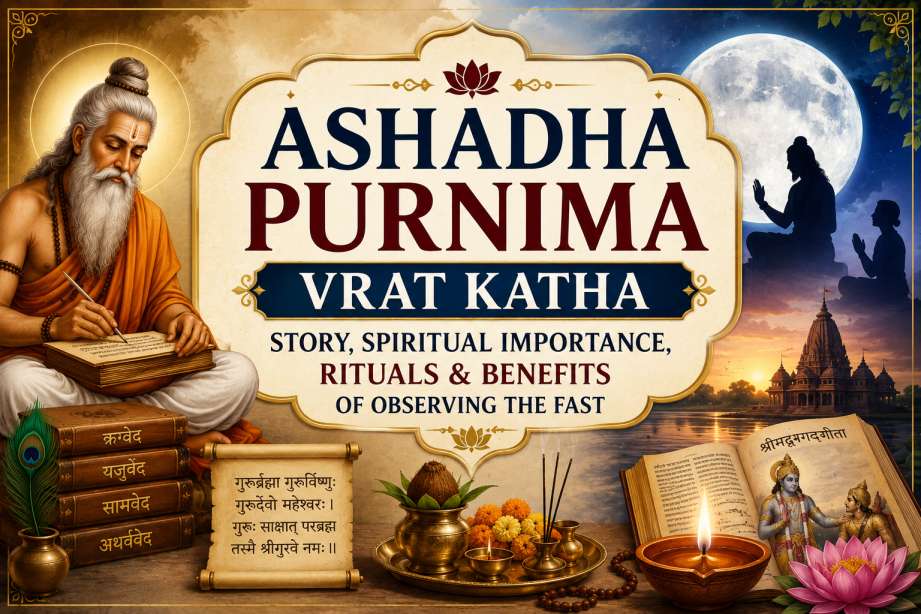
Ashadha Purnima, also widely celebrated as Guru Purnima, is one of the most sacred Full Moon (Purnima) observances in the Hindu calendar. Falling during the Ashadha month, this auspicious day is dedicated to expressing gratitude toward teachers (Gurus), sages, and spiritual guides. It is also associated with the birth anniversary of Maharishi Ved Vyasa, the revered sage who compiled the Vedas and authored the Mahabharata.
In Vedic astrology, the Full Moon symbolizes emotional clarity, wisdom, and spiritual awakening. Observing the Ashadha Purnima Vrat is believed to promote inner peace, enhance knowledge, and strengthen the blessings of Guru (Jupiter), the planet of wisdom and higher learning. While the exact vrat timings vary each year, devotees should always refer to the official Panchang for their city and follow all timings in IST (Indian Standard Time).
What is Ashadha Purnima Vrat?
Ashadha Purnima Vrat is a sacred fast observed on the Full Moon day of the Ashadha month. It is primarily dedicated to:
- Maharishi Ved Vyasa
- One’s Guru or spiritual teacher
- Lord Vishnu
- Lord Shiva in certain traditions
- Divine knowledge and wisdom
The observance combines fasting, prayers, charity, scripture reading, and Guru worship, making it one of the most spiritually significant Purnima fasts of the year.
Ashadha Purnima Vrat Katha (Sacred Story)
The most widely accepted Ashadha Purnima Vrat Katha revolves around Maharishi Ved Vyasa, one of the greatest sages in Hindu tradition.
According to ancient scriptures, Maharishi Ved Vyasa divided the original Vedas into four parts—Rigveda, Yajurveda, Samaveda, and Atharvaveda—to make divine knowledge easier for humanity to understand and preserve. He also composed the Mahabharata, the eighteen Puranas, and the Brahma Sutras, leaving an extraordinary spiritual legacy.
To honor his immense contribution, sages and disciples began celebrating his birth anniversary on Ashadha Purnima. Over time, this tradition evolved into Guru Purnima, a day dedicated to expressing gratitude toward all teachers who illuminate the path of knowledge.
The scriptures emphasize that a Guru removes the darkness of ignorance and guides the seeker toward truth. This idea is beautifully expressed in the famous Sanskrit verse:
गुरुर्ब्रह्मा गुरुर्विष्णुः गुरुर्देवो महेश्वरः।
गुरुः साक्षात् परब्रह्म तस्मै श्रीगुरवे नमः॥
This shloka highlights the Guru as the embodiment of divine wisdom and reminds devotees of the importance of humility and lifelong learning.
Spiritual Importance of Ashadha Purnima
Ashadha Purnima is considered highly auspicious because it marks a period of spiritual reflection and self-improvement.
According to Vedic tradition, this day is ideal for:
- Seeking the blessings of teachers and elders
- Beginning spiritual studies
- Reading sacred scriptures
- Practicing meditation
- Performing charity (Daan)
- Cultivating gratitude and discipline
The Full Moon is believed to enhance emotional awareness, making it an ideal time for introspection and positive transformation.
Astrological Significance of Ashadha Purnima
From a Vedic astrology perspective, Ashadha Purnima is closely associated with the influence of the Moon (Chandra) and Jupiter (Guru/Brihaspati).
Moon’s Influence
The Full Moon represents:
- Emotional balance
- Mental clarity
- Compassion
- Intuition
- Inner peace
When the Moon is strong, individuals often experience greater emotional stability and confidence.
Jupiter’s Influence
Since Guru Purnima honors spiritual teachers, Jupiter’s symbolism becomes especially significant.
Jupiter governs:
- Wisdom
- Education
- Ethics
- Spiritual growth
- Prosperity
Devotional practices on this day are traditionally believed to strengthen qualities associated with Guru.
Ashadha Purnima Vrat Rituals (Puja Vidhi)
Devotees may follow these traditional rituals with sincerity.
Morning Preparations
- Wake up during Brahma Muhurta if possible.
- Take a bath and wear clean, light-colored clothes.
- Clean the home and puja area.
Sankalp (Vow)
Take a sincere resolve to observe the fast with devotion and gratitude.
Worship
Offer prayers to:
- Maharishi Ved Vyasa
- Your Guru
- Lord Vishnu
- Lord Shiva (according to family tradition)
Offer:
- Flowers
- Fruits
- Tulsi leaves (for Lord Vishnu)
- Incense
- Ghee lamp
Read Sacred Texts
Many devotees recite or study:
- Bhagavad Gita
- Vishnu Sahasranama
- Guru Gita
- Mahabharata passages
Charity
Acts of charity are considered highly meritorious.
Common donations include:
- Food
- Clothes
- Books
- Grains
- Dakshina to teachers or priests
Benefits of Observing Ashadha Purnima Vrat
Traditional beliefs associate this observance with several spiritual and personal benefits.
Spiritual Benefits
- Deepens devotion
- Encourages humility
- Promotes self-discipline
- Enhances gratitude
Personal Benefits
- Supports emotional balance
- Inspires lifelong learning
- Strengthens respect for teachers and elders
- Encourages positive thinking
These benefits should be understood as outcomes of sincere spiritual practice rather than guaranteed material rewards.
Simple Remedies for Ashadha Purnima
The following practices are traditionally recommended:
- Offer yellow flowers to Lord Vishnu.
- Donate educational materials to students.
- Feed cows or birds.
- Respect parents and teachers.
- Meditate under moonlight for a few minutes in a calm environment.
- Chant:
ॐ बृं बृहस्पतये नमः।
This mantra is traditionally associated with Guru (Jupiter) and wisdom.
Practical Relevance in Modern Life
Ashadha Purnima continues to hold relevance beyond religious rituals.
Its teachings encourage:
- Respect for mentors
- Continuous learning
- Emotional maturity
- Gratitude
- Ethical living
Whether one follows religious traditions or not, the values celebrated on Guru Purnima remain meaningful in education, professional life, and personal development.
Conclusion
Ashadha Purnima Vrat is much more than a traditional fast—it is a celebration of knowledge, gratitude, and spiritual growth. Through the inspiring story of Maharishi Ved Vyasa, devotees are reminded of the timeless value of wisdom and the guiding role of teachers in every stage of life.
From an astrological perspective, the combined symbolism of the Full Moon and Jupiter makes this day especially suitable for introspection, prayer, and self-improvement. By observing the vrat with sincerity, practicing charity, and honoring one’s Guru, individuals cultivate qualities that contribute to inner peace and personal growth. Before performing any rituals, always consult your local Panchang for the correct IST timings and follow your family’s traditions where applicable.
FAQs
1. Why is Ashadha Purnima also called Guru Purnima?
Ashadha Purnima is known as Guru Purnima because it commemorates Maharishi Ved Vyasa and honors all spiritual teachers.
The day recognizes the invaluable role of Gurus in preserving knowledge and guiding individuals toward wisdom. It is observed by students, spiritual seekers, and devotees across India.
Helpful tips:
- Seek blessings from teachers.
- Read spiritual literature.
- Express gratitude sincerely.
2. What is the main message of the Ashadha Purnima Vrat Katha?
The Vrat Katha emphasizes gratitude, knowledge, humility, and respect for one’s Guru.
The story of Maharishi Ved Vyasa reminds us that wisdom should be preserved, shared, and practiced with responsibility.
Its teachings remain relevant for education, ethics, and personal growth.
Helpful tips:
- Practice humility.
- Continue lifelong learning.
- Honor those who guide you.
3. Can anyone observe the Ashadha Purnima fast?
Yes, anyone may observe the vrat according to their health, family traditions, and personal beliefs.
Some devotees observe a full-day fast, while others consume fruits or sattvic food. Those with medical conditions should prioritize their health and seek appropriate advice.
Devotion and sincerity are considered more important than the strictness of the fast.
Helpful tips:
- Follow your physical capacity.
- Stay hydrated if appropriate.
- Consult family traditions.
4. Which planet is associated with Guru Purnima?
Jupiter (Guru or Brihaspati) is the primary planet associated with Guru Purnima.
Jupiter represents wisdom, education, ethics, spirituality, and guidance in Vedic astrology. Worship and charitable acts performed on this day are traditionally connected with cultivating these qualities.
The Full Moon also symbolizes emotional clarity and reflection.
Helpful tips:
- Chant Jupiter’s mantra.
- Donate books.
- Study sacred texts.
5. What are the benefits of observing Ashadha Purnima Vrat?
The vrat is traditionally believed to promote spiritual growth, gratitude, emotional balance, and devotion.
Its practices encourage discipline, charity, self-reflection, and respect for teachers. These values contribute to inner development regardless of one’s religious background.
Rather than focusing only on rituals, devotees are encouraged to embody the principles of wisdom and compassion in everyday life.
Helpful tips:
- Practice meditation.
- Perform acts of charity.
- Apply your Guru’s teachings in daily life.