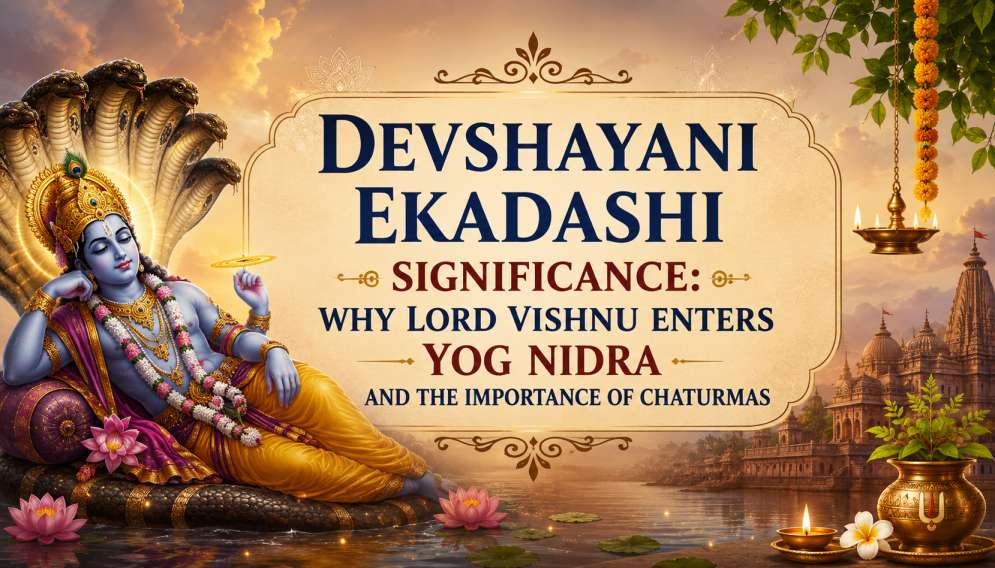
Devshayani Ekadashi, also known as Ashadhi Ekadashi or Hari Shayani Ekadashi, is one of the most significant Ekadashis in the Hindu calendar. Observed during the Shukla Paksha of Ashadha month, this sacred day marks the beginning of Chaturmas, the four holy months dedicated to spiritual discipline, devotion, and self-reflection.
According to Vedic tradition, Lord Vishnu enters Yog Nidra (divine cosmic sleep) on this day and awakens on Prabodhini Ekadashi in the month of Kartik. Rather than representing ordinary sleep, Yog Nidra symbolizes the divine rhythm of preservation, inner transformation, and cosmic balance. For devotees, Devshayani Ekadashi is an ideal occasion to begin fasting, chanting, charity, and spiritual practices that help cultivate mental peace and positive karma.
What is Devshayani Ekadashi?
Devshayani Ekadashi is observed on the 11th lunar day (Ekadashi Tithi) of the bright fortnight (Shukla Paksha) in Ashadha month. It holds special importance in Vaishnavism, where Lord Vishnu is worshipped as the sustainer of the universe.
Traditionally, devotees observe:
- Ekadashi fasting (Vrat)
- Vishnu Sahasranama chanting
- Tulsi worship
- Charity and food donation
- Night-long devotional singing (Jagran)
In India, this day also coincides with the famous Pandharpur Wari, where thousands of devotees walk to seek the blessings of Lord Vitthal, a revered form of Lord Vishnu.
Why Does Lord Vishnu Enter Yog Nidra?
The Spiritual Meaning of Yog Nidra
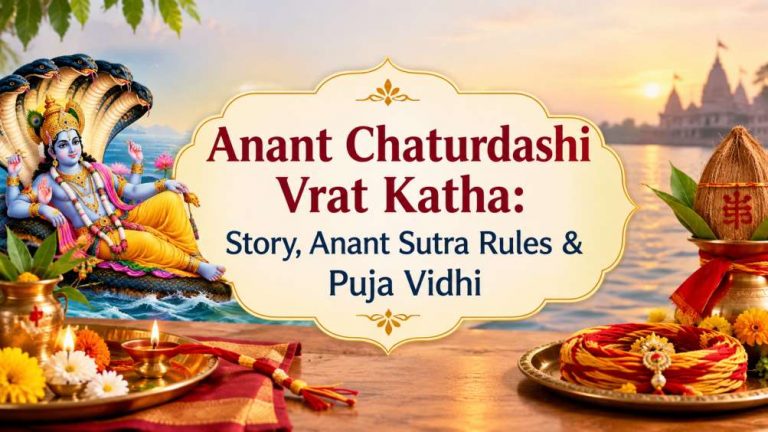
Unlike human sleep, Yog Nidra represents conscious divine rest. Hindu scriptures describe that Lord Vishnu reclines on Sheshnag in the Kshira Sagara (Ocean of Milk), maintaining cosmic balance while appearing to rest.
This period symbolizes:
- Inner reflection rather than external activity
- Preservation of cosmic order
- Spiritual purification
- Preparation for renewal after Chaturmas
The concept reminds devotees that periods of silence and introspection are essential for growth.
A popular verse associated with Lord Vishnu is:
शान्ताकारं भुजगशयनं पद्मनाभं सुरेशम्।
विश्वाधारं गगनसदृशं मेघवर्णं शुभाङ्गम्॥
This hymn describes Lord Vishnu resting peacefully on Sheshnag while sustaining the entire universe.
What is Chaturmas?
The Four Sacred Months
Chaturmas begins on Devshayani Ekadashi and concludes on Devutthana (Prabodhini) Ekadashi approximately four months later.
Traditionally, this period is dedicated to:
- Spiritual discipline
- Simplicity in lifestyle
- Charity
- Pilgrimage
- Scriptural study
- Meditation
- Increased devotion
Many saints and spiritual teachers remain in one place during Chaturmas to conduct discourses and guide devotees.
Astrological Significance of Devshayani Ekadashi
Planetary Symbolism
Although Ekadashi is primarily a lunar observance, several planetary energies are traditionally associated with this sacred period.
Moon (Chandra)
Ekadashi falls according to the lunar calendar. Fasting is believed to help regulate emotional fluctuations associated with the Moon and encourage mental clarity.
Jupiter (Guru)
Lord Vishnu is closely associated with Jupiter, the planet representing:
- Wisdom
- Dharma
- Prosperity
- Higher learning
- Spiritual knowledge
Worship during Devshayani Ekadashi is traditionally believed to strengthen qualities represented by Jupiter.
Saturn (Shani)
Chaturmas teaches patience, discipline, and self-control—qualities commonly linked with Saturn in Vedic astrology.
Why Is Chaturmas Spiritually Important?
The monsoon season naturally encourages reduced travel and greater time indoors. Ancient sages used this period to focus on:
- Meditation
- Self-discipline
- Scriptural learning
- Charity
- Simplicity
Even today, many devotees begin positive habits during Chaturmas, such as:
- Daily mantra chanting
- Reading the Bhagavad Gita
- Donating food regularly
- Avoiding unnecessary anger and negativity
- Practising gratitude
These practices help improve emotional stability and spiritual awareness.
Zodiac-Wise Relevance
Although Devshayani Ekadashi benefits everyone, certain zodiac signs may especially appreciate its symbolic lessons.
Fire Signs (Aries, Leo, Sagittarius)
Focus on patience rather than immediate action.
Earth Signs (Taurus, Virgo, Capricorn)
Build stable routines and strengthen financial discipline.
Air Signs (Gemini, Libra, Aquarius)
Improve communication and avoid unnecessary conflicts.
Water Signs (Cancer, Scorpio, Pisces)
Meditation and devotional practices can help maintain emotional balance.
These are general Vedic astrology interpretations and should not replace an individual birth-chart analysis.
Practical Remedies for Devshayani Ekadashi
The following traditional practices are widely observed:
- Wake up early and take a sattvic bath.
- Offer yellow flowers to Lord Vishnu.
- Worship Tulsi with a ghee lamp.
- Chant “Om Namo Bhagavate Vasudevaya” 108 times.
- Read Vishnu Sahasranama if possible.
- Donate food, clothes, or grains.
- Observe Ekadashi fast according to your health and family traditions.
- Avoid anger, gossip, and unnecessary arguments.
These remedies promote mindfulness and align with the spiritual purpose of Chaturmas.
Devshayani Ekadashi and Daily Life
The symbolism of Lord Vishnu’s Yog Nidra teaches that life requires both action and reflection.
In modern life, this message remains highly relevant:
- Slow down before making major decisions.
- Build healthier routines.
- Focus on long-term goals instead of instant results.
- Strengthen relationships through patience and compassion.
- Reduce mental clutter through prayer or meditation.
These timeless principles continue to make Devshayani Ekadashi meaningful across generations.
Conclusion
Devshayani Ekadashi is much more than the beginning of a religious observance. It marks the start of a sacred period dedicated to inner transformation, discipline, and spiritual growth. Lord Vishnu’s Yog Nidra reminds devotees that silence, patience, and self-reflection are powerful aspects of personal development.
Whether you observe a complete fast, perform Vishnu Puja, chant sacred mantras, or simply spend time in quiet reflection, the essence of this festival lies in cultivating purity of thought and positive action. As Chaturmas begins, it offers an opportunity to pause, reassess priorities, and nurture a balanced spiritual life rooted in devotion and wisdom.
FAQs
1. Why does Lord Vishnu enter Yog Nidra on Devshayani Ekadashi?
Lord Vishnu enters Yog Nidra to symbolically begin the sacred period of Chaturmas dedicated to spiritual discipline and inner transformation.
According to Hindu tradition, Yog Nidra represents divine meditation rather than ordinary sleep. It signifies that while external activity slows down, the cosmic order continues under Lord Vishnu’s protection.
Tips:
- Chant Vishnu mantras.
- Read Vishnu Sahasranama.
- Begin a positive spiritual habit during Chaturmas.
2. What is the importance of Chaturmas?
Chaturmas is considered an auspicious four-month period for spiritual growth, self-discipline, and devotion.
Many saints, devotees, and householders use this time to practise fasting, meditation, scriptural study, and charity. The season encourages introspection and mindful living.
Helpful practices:
- Daily meditation
- Charity
- Sattvic diet
- Regular prayers
- Self-reflection
3. Is fasting compulsory on Devshayani Ekadashi?
No, fasting is a personal spiritual practice and should be observed according to one’s health, age, and family traditions.
The deeper purpose of Ekadashi is self-control and devotion rather than strict dietary restrictions. Those unable to fast can participate through prayers and charitable acts.
Alternative observances:
- Eat sattvic food.
- Chant Vishnu mantras.
- Donate food.
- Avoid negative habits.
4. Which mantra is best for Devshayani Ekadashi?
The mantra “Om Namo Bhagavate Vasudevaya” is among the most widely chanted on Devshayani Ekadashi.
Regular chanting is traditionally believed to cultivate devotion, mental peace, and spiritual focus. Many devotees also recite the Vishnu Sahasranama on this day.
Suggested practice:
- Chant 108 times.
- Light a ghee lamp.
- Offer Tulsi leaves.
- Meditate quietly afterward.
5. Does Devshayani Ekadashi have astrological significance?
Yes, Devshayani Ekadashi is traditionally associated with strengthening spiritual qualities represented by the Moon, Jupiter, and Saturn.
While Ekadashi is based on the lunar calendar, Vedic astrology links this period with emotional balance, wisdom, patience, and disciplined living. Individual results depend on one’s birth chart.
Traditional remedies:
- Worship Lord Vishnu.
- Strengthen Jupiter through charity and learning.
- Practise patience during Chaturmas.
- Follow a disciplined daily routine.