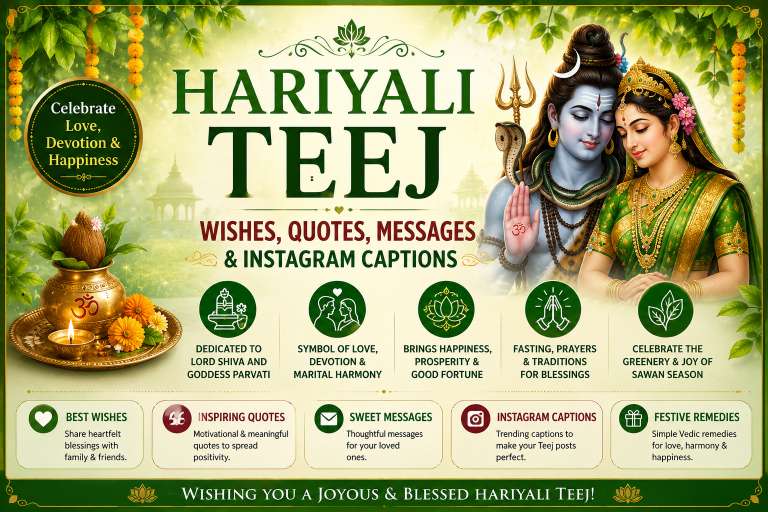
Hariyali Teej is a significant Hindu festival observed on Shravana Shukla Paksha Tritiya, particularly across North India. It is dedicated to Goddess Parvati and Lord Shiva and is traditionally associated with marital harmony, devotion, emotional balance, and family well-being. In 2026, Hariyali Teej falls on Saturday, August 15. Panchang calculations can vary by location, so devotees should follow their regional Panchang for exact tithi and puja timings.
The vrat is especially popular among married women, although unmarried women may also observe it according to family tradition. Hariyali Teej is also known as Sindhara Teej, Chhoti Teej, and Shravana Teej. The festival represents the traditional symbolism of Shiva-Parvati’s reunion and is therefore connected with the aspiration for a harmonious married life.
Hariyali Teej 2026: Date and Tithi
According to the North Indian lunar calendar, Hariyali Teej 2026 will be observed on August 15, 2026. It falls during Shravana Shukla Tritiya.
Because Tritiya Tithi and sunrise timings differ by location, the exact puja and fasting schedule should be checked for your city. All timings in a personalised Panchang should be read in IST (Indian Standard Time) when referring to Indian locations.
Hariyali Teej Puja Samagri
A simple Shiva-Parvati puja can be performed at home with commonly available items.
Essential Puja Items
- Idol or image of Lord Shiva and Goddess Parvati
- Clean puja chowki and red or green cloth
- Gangajal or clean water
- Roli, kumkum and turmeric
- Akshat (uncooked rice)
- Flowers, especially fresh seasonal flowers
- Belpatra for Lord Shiva
- Durva, where traditionally used
- Incense sticks and diya
- Cotton wicks and ghee/oil
- Fruits and traditional sweets
- Mehendi
- Green bangles and traditional ornaments
- Sindoor for married women
- Coconut and betel nuts
- Kalash with water
- Panchamrit ingredients
- Sindhara, according to family tradition
Sindhara traditionally consists of gifts such as sweets, mehendi and bangles sent to a married daughter and her in-laws. This custom is one reason Hariyali Teej is also called Sindhara Teej.
Hariyali Teej Vrat Vidhi
The vrat can be performed according to one’s family tradition, health condition, and regional customs.
1. Sankalp and Morning Routine
Wake up early, bathe, wear clean clothes and prepare the puja area. Take a simple sankalp expressing your intention to observe the vrat with devotion and discipline.
2. Shiva-Parvati Puja
Place Lord Shiva and Goddess Parvati on the puja chowki. Light a diya and incense, followed by invocation, purification, offerings and prayers.
Offer:
- Water or Gangajal
- Panchamrit
- Flowers
- Belpatra to Shiva
- Kumkum and traditional offerings to Parvati
- Fruits and sweets
The focus should be on bhakti and mindful prayer rather than the number or cost of offerings.
3. Vrat Katha and Mantra
Read or listen to the Hariyali Teej vrat katha and recite Shiva-Parvati prayers.
A simple mantra suitable for devotional practice is:
ॐ नमः शिवाय।
Om Namah Shivaya.
You may also chant:
ॐ पार्वत्यै नमः।
Om Parvatyai Namah.
For a combined Shiva-Parvati prayer, devotees may repeat Om Namah Shivaya with concentration while remembering the qualities traditionally associated with the divine couple—commitment, patience, balance and mutual respect.
Hariyali Teej Vrat Rules
Fasting traditions vary considerably. Some devotees observe nirjala vrat, while others take water, fruits or permitted foods.
Important practical rules include:
- Decide your fasting method before beginning the vrat.
- Avoid unnecessary arguments, anger and negative speech.
- Maintain cleanliness around the puja space.
- Avoid overeating before or after the fast.
- Pregnant women, elderly people and those with medical conditions should not undertake a strict fast without appropriate medical advice.
- Children should not be pressured to observe rigorous fasting.
- Religious observance should remain compatible with basic health and safety.
The purpose of a vrat is traditionally connected with self-discipline and focused devotion, not physical suffering.
Astrological Significance of Hariyali Teej
From a Vedic astrology perspective, Hariyali Teej offers an opportunity to reflect on themes represented by the Moon, Venus and the seventh house.
The Moon signifies emotions, mental peace and nurturing tendencies. Venus represents relationships, affection, harmony and marital happiness. The seventh house is traditionally examined for marriage and partnerships in a birth chart.
Therefore, devotees can use the occasion for simple spiritual practices that encourage:
- Emotional stability
- Better communication
- Relationship harmony
- Patience within marriage
- Respect between partners
However, Hariyali Teej should not be treated as a guaranteed method for changing a person’s horoscope. A proper astrological assessment requires the Lagna chart, planetary dignity, aspects, conjunctions and relevant dashas.
Practical Remedies on Hariyali Teej
Along with puja, simple traditional remedies can be incorporated.
For Relationship Harmony
Offer fresh flowers to Goddess Parvati and pray for mutual understanding rather than focusing only on specific outcomes.
For Emotional Balance
Spend a few minutes chanting Om Namah Shivaya peacefully instead of continuously engaging with distractions.
For Venus-Related Harmony
Keep the puja environment clean and beautiful, wear clean traditional clothes and practice generosity toward women, family members or those in need.
For Shiva Blessings
Offer belpatra and water to Lord Shiva, according to local temple or household tradition.
These practices are best understood as spiritual disciplines and symbolic remedies rather than scientifically guaranteed results.
Hariyali Teej Parana: When and How?
Parana means concluding the fast. There is no single universal parana rule because regional traditions differ. In many households, the fast is concluded after completing the prescribed puja and following the family’s established Panchang tradition.
The safest approach is to:
- Complete Shiva-Parvati puja.
- Confirm the relevant tithi and local parana rule.
- Offer prayers before breaking the fast.
- Start with water or a light nourishing item.
- Gradually return to a normal diet.
Do not assume that every Teej tradition requires the same parana timing. Regional Panchang and family tradition should take priority.
Conclusion
Hariyali Teej Vrat is more than a fasting ritual. Its deeper cultural significance lies in devotion to Shiva and Parvati, self-discipline, emotional balance and the traditional aspiration for harmonious relationships. The 2026 festival will be observed on August 15, with exact local timings depending on the Panchang followed.
From an astrological perspective, the festival provides a meaningful occasion to work consciously on Moon- and Venus-related themes such as emotional maturity, affection and relationship harmony. Rather than approaching the vrat with fear or superstition, devotees can use it as a day for prayer, reflection, gratitude and positive action.
For personalised astrological guidance, the individual’s birth chart and planetary periods should always be considered rather than relying on a festival alone.
FAQs
1. When is Hariyali Teej 2026?
Hariyali Teej 2026 will be observed on Saturday, August 15, 2026.
It falls on Shravana Shukla Tritiya and is traditionally dedicated to Shiva and Parvati. Exact tithi-related timings can differ according to location.
Related tip: Check your city’s Panchang before fixing the puja and parana schedule.
2. What should be included in Hariyali Teej Puja Samagri?
The main puja samagri includes Shiva-Parvati idols, flowers, belpatra, roli, kumkum, rice, diya, incense, fruits, sweets and Gangajal.
Mehendi, bangles, sindoor and Sindhara are also associated with traditional Teej celebrations.
Simple tip: Use clean, fresh and easily available offerings rather than treating expensive items as essential.
3. Which mantra should be chanted on Hariyali Teej?
“Om Namah Shivaya” is a simple and widely used Shiva mantra suitable for devotional chanting on Hariyali Teej.
Devotees may also recite “Om Parvatyai Namah” while praying to Goddess Parvati. The value of mantra practice traditionally lies in focused repetition and devotion.
Practice: Chant slowly and attentively rather than focusing only on the number of repetitions.
4. Is nirjala fasting compulsory on Hariyali Teej?
No, a strict nirjala fast should not be considered compulsory for everyone.
Fasting customs vary by family and region, while health and safety should remain important considerations. People who cannot safely fast should choose a suitable alternative.
Practical approach: Follow a fruit-based or light fasting routine when appropriate, and seek medical guidance if you have health concerns.
5. When should Hariyali Teej vrat be broken?
Hariyali Teej parana should follow the applicable regional Panchang and family tradition after the prescribed puja and fasting observance.
There is no need to apply one universal parana rule to every location because lunar tithi timings can vary. Confirm the local Panchang before concluding the vrat.
Tip: Break the fast gently with water and light food rather than a heavy meal.
6. What is the astrological significance of Hariyali Teej?
Hariyali Teej symbolically connects with astrological themes of the Moon, Venus and the seventh house, which relate respectively to emotions, relationship harmony and partnerships.
However, the festival itself does not replace a complete horoscope analysis. Marriage-related questions require examination of the seventh house, its lord, Venus, Jupiter where relevant, planetary aspects and dashas.
Astrological practice: Use Teej as an opportunity for prayer, emotional reflection and improving communication within relationships.