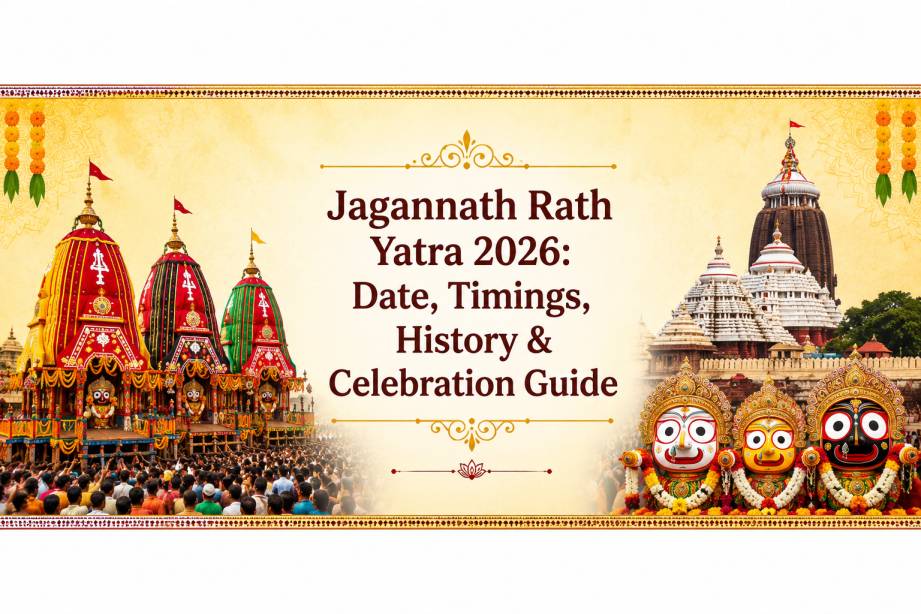
Jagannath Rath Yatra is one of India’s grandest and most revered Hindu festivals, celebrated annually in Puri, Odisha. During this sacred festival, Lord Jagannath, accompanied by his elder brother Lord Balabhadra and sister Goddess Subhadra, embarks on a ceremonial journey from the Jagannath Temple to the Gundicha Temple in beautifully decorated wooden chariots. Millions of devotees gather to witness this divine procession, making it one of the world’s largest religious events.
From the perspective of Vedic astrology, Rath Yatra falls during Ashadha Shukla Dwitiya, a spiritually significant period that encourages devotion, self-discipline, charity, and inner transformation. Rather than being viewed as a remedy for planetary afflictions, the festival inspires devotees to cultivate virtues such as humility, compassion, and surrender to divine will. Its spiritual message continues to remain relevant in modern life, reminding us to combine faith with righteous actions.
Jagannath Rath Yatra 2026 Date & Timings (IST)
According to the Hindu Panchang, Jagannath Rath Yatra 2026 will be celebrated on:
- Date: Thursday, 16 July 2026
- Tithi: Ashadha Shukla Dwitiya
- Shubh Muhurat (New Delhi): 05:33 AM to 12:00 PM IST
- Sunrise: Around 05:33 AM IST
- Main Chariot Procession: Begins after the completion of the traditional temple rituals such as Pahandi Bije and Chhera Pahanra, continuing throughout the day.
Important: Visitors planning to attend the festival in Puri should also check the official schedule released by the Shri Jagannath Temple Administration, as ceremonial timings may vary slightly.
History of Jagannath Rath Yatra
The history of Jagannath Rath Yatra dates back several centuries and is deeply rooted in the traditions of Jagannath culture in Odisha. Lord Jagannath, regarded as a form of Lord Krishna, annually visits the Gundicha Temple, believed to be the home of His maternal aunt.
According to the Skanda Purana, Brahma Purana, and Padma Purana, witnessing the Rath Yatra is considered highly auspicious. The journey symbolizes the Lord stepping out of His sanctum to bless everyone equally, irrespective of caste, social status, or background.
The festival also reflects the inclusive philosophy of Jagannath worship, which has welcomed devotees from diverse communities for centuries. The Jagannath Temple itself has remained a major pilgrimage centre since the 12th century and is one of the revered Char Dham pilgrimage sites.
Spiritual and Astrological Significance
Why is Rath Yatra Spiritually Important?
Rath Yatra represents the divine journey of Lord Jagannath among His devotees. It reminds us that spirituality extends beyond temple walls and encourages compassion, equality, and service to humanity.
From a Vedic astrology perspective, Ashadha Shukla Paksha is considered favourable for:
- Spiritual growth
- Charity (Daan)
- Self-discipline
- Prayer and meditation
- Positive karma
The waxing Moon during this phase symbolizes increasing optimism, emotional balance, and spiritual progress.
Planetary Symbolism
Although Rath Yatra is primarily a religious festival rather than an astrological remedy, its observances align with qualities represented by several planets.
Sun (Surya)
- Encourages righteousness and leadership
- Strengthens confidence
- Promotes responsibility
Moon (Chandra)
- Brings emotional stability
- Enhances devotion
- Encourages inner peace
Jupiter (Guru)
- Represents wisdom and dharma
- Inspires learning and spiritual knowledge
- Supports ethical decision-making
The festival emphasizes developing these qualities through devotion instead of relying on superstition or guaranteed material outcomes.
The Sacred Rath Yatra Route
The iconic procession follows the historic Bada Danda (Grand Road) in Puri.
Traditional Route:
- Jagannath Temple
- Bada Danda (Grand Road)
- Gundicha Temple
The distance is approximately 3 kilometres. Due to the enormous gathering of devotees and elaborate rituals, the procession continues throughout the day as thousands pull the sacred chariots with thick ropes while chanting devotional hymns.
The Three Magnificent Chariots
Fresh wooden chariots are constructed every year according to centuries-old traditions.
Nandighosha
- Dedicated to Lord Jagannath
- About 45 feet high
- Decorated with red and yellow cloth
Taladhwaja
- Dedicated to Lord Balabhadra
- Decorated with red and green cloth
Darpadalana (Devadalana)
- Dedicated to Goddess Subhadra
- Decorated with black and red cloth
The construction of these chariots begins months before the festival and follows strict traditional guidelines.
Important Rituals of Rath Yatra 2026
The Jagannath festival extends over several days with multiple sacred ceremonies.
| Ritual | Date (2026) |
| Netrotsava & Nabajaubana Darshan | 15 July |
| Jagannath Rath Yatra | 16 July |
| Hera Panchami | 20 July |
| Bahuda Yatra (Return Journey) | 24 July |
| Suna Besha | 25 July |
| Adhara Pana | 26 July |
| Niladri Bije | 27 July |
Simple Spiritual Practices During Rath Yatra
Devotees can observe the festival through simple acts of devotion:
- Offer seasonal fruits and flowers to Lord Jagannath.
- Chant the Mahamantra:
हरे कृष्ण हरे कृष्ण कृष्ण कृष्ण हरे हरे।
हरे राम हरे राम राम राम हरे हरे॥
- Read the Bhagavad Gita or Vishnu Sahasranama.
- Donate food, clothes, or essential items.
- Spend time in meditation and gratitude.
- Avoid anger, harsh speech, and unnecessary conflicts.
These practices nurture inner peace and spiritual awareness.
How Rath Yatra is Celebrated Across India
While Puri hosts the largest celebration, Rath Yatra is observed across India with equal enthusiasm.
Major celebrations take place in:
- Ahmedabad
- Kolkata
- Delhi
- Mumbai
- Bengaluru
- Hyderabad
- Chennai
Many ISKCON temples organize colourful chariot processions, Harinam Sankirtan, Bhagavad Gita discourses, cultural performances, and free prasadam distribution.
Practical Tips for Devotees Visiting Puri
If you are planning to witness Rath Yatra in Puri:
- Reach the city at least one day in advance.
- Wear light cotton clothing suitable for July weather.
- Carry drinking water and essential medicines.
- Follow instructions issued by temple authorities and local police.
- Use designated viewing areas for safety.
- Respect local customs and avoid overcrowding.
Conclusion
Jagannath Rath Yatra 2026, celebrated on Thursday, 16 July 2026, is much more than a magnificent chariot festival. It is a timeless celebration of devotion, equality, compassion, and spiritual awakening. The annual journey of Lord Jagannath reminds devotees that divine grace reaches everyone without distinction and that true spirituality lies in humility, selfless service, and righteous living.
Whether you participate in the grand procession at Puri or celebrate from home through prayer and charity, Rath Yatra offers an opportunity to reconnect with timeless values and deepen your spiritual journey. May Lord Jagannath bless you and your family with peace, wisdom, and prosperity.
FAQs
1. When is Jagannath Rath Yatra 2026?
Jagannath Rath Yatra 2026 will be celebrated on Thursday, 16 July 2026.
The festival falls on Ashadha Shukla Dwitiya according to the Hindu lunar calendar. The grand procession begins from the Jagannath Temple in Puri and proceeds to the Gundicha Temple, attracting millions of devotees from India and abroad.
Helpful Tips
- Plan accommodation well in advance.
- Arrive early to avoid heavy crowds.
- Follow official temple and police advisories.
2. Why is Jagannath Rath Yatra celebrated?
Jagannath Rath Yatra commemorates Lord Jagannath’s annual journey to the Gundicha Temple.
The festival symbolizes the Lord’s compassion and accessibility to all devotees. It also celebrates equality, devotion, and the idea that divine blessings are available to everyone regardless of social status.
Key Highlights
- Represents divine compassion.
- Encourages devotion and humility.
- Promotes community participation and service.
3. What is the astrological significance of Rath Yatra?
Rath Yatra coincides with a spiritually auspicious phase of the Hindu lunar calendar.
Ashadha Shukla Paksha is traditionally associated with spiritual practices, charity, and self-improvement. While the festival is not prescribed as an astrological remedy, participating in prayers and righteous actions aligns with positive qualities represented by benefic planets like Jupiter and the Moon.
Recommended Practices
- Chant Vishnu mantras.
- Donate food or clothes.
- Read sacred scriptures.
- Practice meditation.
4. Can anyone pull the Jagannath chariot?
Yes, devotees traditionally participate in pulling the sacred chariots under official supervision.
Pulling the ropes is considered a sacred act of devotion rather than a guarantee of worldly success. Due to the massive crowds, security personnel carefully regulate public participation.
Safety Suggestions
- Follow official instructions.
- Avoid pushing in crowded areas.
- Wear comfortable footwear.
5. How can devotees celebrate Rath Yatra at home?
Devotees can celebrate Rath Yatra at home through prayer, chanting, charity, and devotional reading.
If visiting Puri is not possible, offering flowers, preparing simple sattvic food, listening to bhajans, and chanting the Hare Krishna Mahamantra are meaningful ways to observe the festival with sincerity.
Simple Home Observances
- Offer fruits and flowers.
- Chant the Hare Krishna Mahamantra.
- Read the Bhagavad Gita.
- Donate to the needy.
- Spend time in prayer and gratitude.