Janmashtami fasting is observed by devotees to commemorate the birth of Lord Krishna, traditionally celebrated at midnight. In Hindu tradition, the vrat is associated with devotion, self-discipline, prayer, and purification of the body and mind. For many devotees, fasting continues through the day and is broken after the prescribed Parana time, depending on the regional Panchang.
From an astrological perspective, fasting is traditionally viewed as a practice that supports mental discipline and spiritual focus. However, the exact rules can vary according to family tradition, Sampradaya, health needs, and regional Panchang calculations.
Therefore, Janmashtami vrat should not be treated simply as food restriction. The purpose is to reduce distractions, maintain sattvic habits, remember Shri Krishna, and approach the celebration with devotion and awareness.
Janmashtami Fasting Rules
The most common Janmashtami vrat involves avoiding regular grains and certain foods during the fasting period. Some devotees observe Nirjala fasting, while others take fruits, milk, nuts, or vrat-friendly meals.
The appropriate method depends on one’s health, age, tradition, and ability to fast safely.
What Can You Eat During Janmashtami Fast?
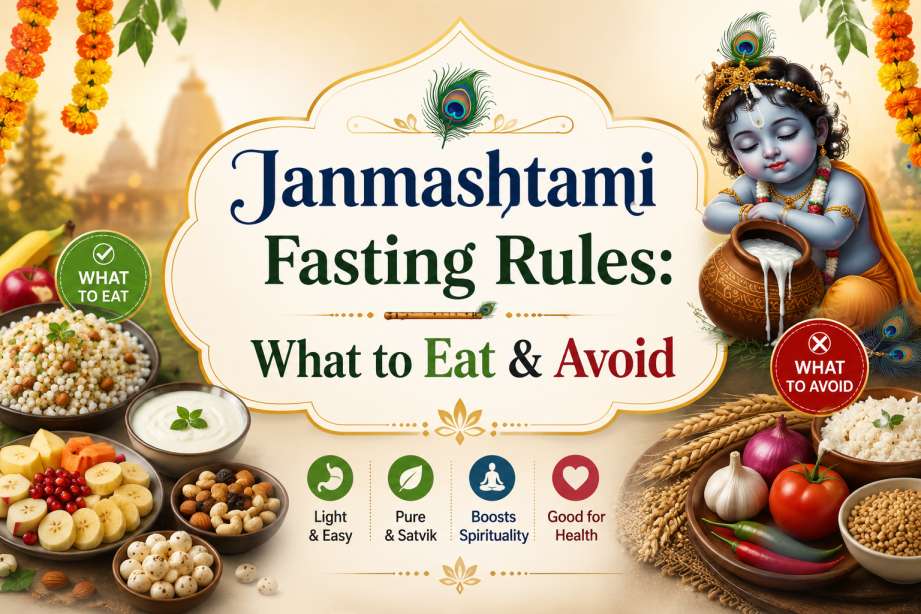
If your tradition permits a fruit-based or falahari vrat, commonly consumed foods include:
- Fresh fruits such as bananas, apples, pomegranate and papaya
- Milk, curd and other permitted dairy products
- Coconut water
- Makhana
- Nuts and seeds
- Sabudana
- Samak rice or vrat rice
- Kuttu flour
- Singhara atta
- Sendha namak
- Potatoes and certain other permitted vegetables
Keep preparations simple. Excessive fried food can make fasting uncomfortable and may defeat the practical purpose of maintaining lightness and concentration.
What Should You Avoid?
During a traditional Janmashtami vrat, devotees commonly avoid:
- Regular rice and wheat
- Pulses and legumes
- Common table salt, where the family tradition requires sendha namak instead
- Meat, fish and eggs
- Alcohol and tobacco
- Onion and garlic, particularly in sattvic fasting traditions
- Packaged foods containing grains or prohibited ingredients
Food rules are not identical everywhere. Always follow the fasting tradition prescribed by your family or local Panchang rather than assuming that one rule applies to every devotee.
Astrology and the Significance of Fasting
Vedic astrology associates the Moon with the mind, emotions and mental fluctuations. Since fasting involves restraint and a change in one’s normal routine, devotees traditionally use the practice to cultivate greater awareness and concentration.
Janmashtami is particularly connected with devotion toward Lord Krishna. In a spiritual context, the vrat can therefore become an opportunity to observe one’s thoughts, reduce unnecessary indulgence, and spend more time in japa, meditation and prayer.
Rather than claiming that fasting automatically removes planetary doshas, it is more reasonable to view it as a disciplined spiritual practice that may complement traditional remedies.
Simple Spiritual Practices
During the vrat, devotees may:
- Chant “Om Namo Bhagavate Vasudevaya.”
- Read or listen to selected passages from the Bhagavad Gita or Shrimad Bhagavatam.
- Perform Krishna puja according to family tradition.
- Offer tulsi leaves, fruits and other permitted offerings.
- Spend a few quiet minutes in meditation.
- Practice kindness, charity or food donation.
These practices connect the physical discipline of fasting with its devotional purpose.
How to Break Janmashtami Fast
Breaking the fast is known as Parana. It should generally be done according to the prescribed Parana time in the relevant Panchang and according to one’s fasting tradition.
Do not assume that the fast should automatically be broken immediately after midnight. Janmashtami celebrations often include Nishita Kaal worship, and the appropriate Parana rules can differ based on the type of vrat and regional tradition.
When Parana is permitted:
- Wash your hands and face and complete the relevant prayer or puja.
- Take a small quantity of water or another traditionally permitted item.
- Begin with light food such as fruit, milk or a simple vrat preparation.
- Avoid immediately consuming a very heavy or oily meal.
- Gradually return to your normal diet.
Why Parana Timing Matters
The exact timing of Janmashtami Parana depends on the Panchang, location and fasting tradition. Therefore, devotees should check the date-specific timings for their city rather than using a generic midnight or morning time.
All timings should be considered in IST (Indian Standard Time) when preparing a schedule for an Indian audience.
Practical Tips for a Safe Vrat
Fasting should be approached responsibly. People with medical conditions, children, elderly individuals, pregnant women, and those taking regular medicines should seek appropriate medical advice before undertaking restrictive fasting.
For a more comfortable vrat:
- Stay adequately hydrated if your tradition permits water.
- Choose simple, nutritious vrat foods.
- Avoid overeating during permitted meals.
- Rest adequately.
- Stop fasting if you feel seriously unwell.
- Keep devotion and mindfulness more important than food-related restrictions.
Conclusion
Janmashtami fasting is traditionally about devotion, discipline and remembrance of Lord Krishna rather than simply avoiding food. Fruits, milk, makhana, sabudana, kuttu and other permitted vrat foods can be used according to individual tradition, while grains, pulses and other prohibited foods are generally avoided.
The most important point is to follow the local Panchang and family tradition for fasting and Parana timings, because observances can vary by location and Sampradaya. From a practical and spiritual perspective, a balanced vrat combines dietary restraint with prayer, self-control, charity and reflection.
Janmashtami can therefore be an opportunity to bring greater awareness into everyday life—not merely for one festival, but as a reminder of disciplined living and devotion.
FAQs
1. What can I eat during the Janmashtami fast?
You can eat permitted falahari foods such as fruits, milk, makhana, nuts, sabudana, kuttu and samak rice, depending on your tradition.
These foods are commonly used during Hindu fasting because regular grains and pulses are generally avoided. However, individual families and Sampradayas may follow different rules.
Tips:
- Prefer fresh, simple foods.
- Use sendha namak where traditionally permitted.
- Avoid excessive fried food.
2. What should be avoided during Janmashtami vrat?
Devotees generally avoid grains, pulses, meat, eggs and other foods prohibited by their fasting tradition.
Onion, garlic, alcohol and tobacco are also commonly avoided in sattvic observances. Always check packaged ingredients if you are following a strict vrat.
Related practice: Keep both food and daily activities simple and focused on devotion.
3. Can I drink water during Janmashtami fasting?
Yes, many forms of Janmashtami fasting permit water, although some devotees traditionally observe a stricter Nirjala vrat.
Nirjala fasting is physically demanding and should not be undertaken casually. Health and individual circumstances should take priority over strict observance.
Remember: Hydrate appropriately whenever your chosen fasting tradition permits it.
4. When should the Janmashtami fast be broken?
The fast should be broken during the prescribed Parana period according to the relevant Panchang and local tradition, rather than relying on a universal clock time.
Janmashtami includes midnight worship, but midnight celebration and Parana are not necessarily the same thing. City-specific Panchang calculations are therefore important.
Best practice: Check the Parana timing for your location and follow your family tradition.
5. Can I eat sabudana during Janmashtami vrat?
Yes, sabudana is commonly considered a vrat-friendly food, provided it is prepared according to your fasting tradition.
Sabudana khichdi or similar preparations can provide carbohydrates during a fruit-based fast, but large quantities of oil, peanuts or fried ingredients may make digestion uncomfortable.
Better choice: Keep sabudana preparations light and consume moderate portions.