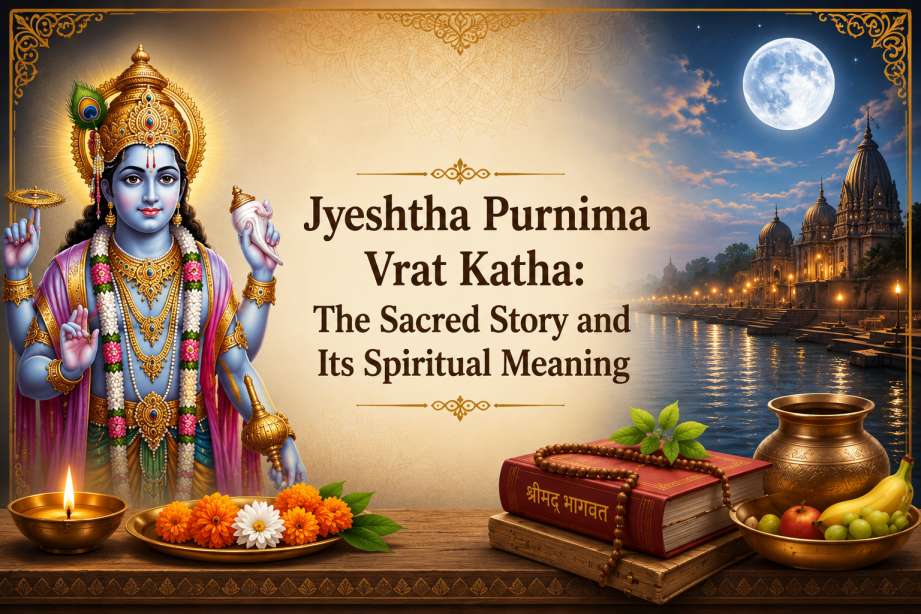
Jyeshtha Purnima is one of the most sacred Full Moon (Purnima) observances in the Hindu calendar. Falling in the Hindu month of Jyeshtha (May–June), this auspicious day is dedicated to worship, charity, fasting, and spiritual reflection. The festival holds special significance in Vedic traditions because the Full Moon is believed to amplify mental clarity, devotion, and positive spiritual vibrations.
The Jyeshtha Purnima Vrat Katha forms the heart of this observance, teaching values such as faith, charity, truthfulness, and devotion to Lord Vishnu and other deities. From an astrological perspective, Purnima is associated with the Moon (Chandra), which governs emotions, intuition, and mental balance. Observing this vrat is believed to help devotees cultivate inner peace, strengthen positive karmas, and align themselves with spiritual growth.
What is Jyeshtha Purnima?
Jyeshtha Purnima marks the Full Moon day of the Jyeshtha month according to the Hindu lunar calendar. It is widely observed across India through fasting, prayers, holy bathing (snan), donations (daan), and recitation of sacred stories.
Traditionally, devotees visit rivers, lakes, or temples and offer prayers seeking prosperity, good health, and spiritual advancement. The day is also linked with various regional traditions and charitable acts, particularly donating water, food, clothing, and essentials during the hot summer season.
The Sacred Jyeshtha Purnima Vrat Katha
The Story of Devotion and Divine Blessings
According to traditional Hindu narratives, there once lived a poor but deeply devoted Brahmin who worshipped Lord Vishnu with unwavering faith. Despite facing financial hardships, he continued performing daily prayers, observing fasts, and helping others whenever possible.
One year, during Jyeshtha Purnima, the Brahmin observed a strict fast and spent the day chanting the names of Lord Vishnu. He offered water to travelers suffering from the intense summer heat and donated whatever little food he possessed to the needy.
Pleased by his selfless devotion and compassion, Lord Vishnu appeared in his dream and blessed him. The deity explained that true worship is not measured by wealth or grand rituals but by sincerity, kindness, and faith.
Soon after, the Brahmin’s life gradually improved. His hardships reduced, his family prospered, and he earned respect within society. More importantly, he attained spiritual satisfaction and inner peace.
Spiritual Message of the Katha
The story highlights several important teachings:
- Faith is more powerful than material offerings.
- Charity performed with pure intentions creates positive karma.
- Selfless service pleases the Divine.
- Spiritual wealth often leads to emotional and material well-being.
- Compassion toward others is an essential aspect of dharma.
These values continue to make the Jyeshtha Purnima Vrat relevant in modern life.
Astrological Significance of Jyeshtha Purnima
Influence of the Moon
In Vedic astrology, the Moon represents:
- Emotions
- Mental stability
- Intuition
- Motherly energy
- Public image
A Full Moon signifies the peak strength of lunar energy. Therefore, Jyeshtha Purnima is considered an ideal time for meditation, prayer, and emotional cleansing.
Connection with the Jyeshtha Nakshatra
The month derives its name from the powerful Jyeshtha Nakshatra, associated with leadership, responsibility, protection, and maturity. This creates a favorable atmosphere for self-reflection and spiritual discipline.
Beneficial Zodiac Signs
While the observance benefits everyone, it may be especially meaningful for individuals experiencing:
- Moon-related afflictions in their horoscope
- Emotional instability or stress
- Challenges related to family harmony
- Lack of mental focus or confidence
Regular worship and meditation on Purnima can encourage emotional balance and inner strength.
Rituals Observed on Jyeshtha Purnima
Morning Practices
Devotees typically begin the day with:
- Early morning bath
- Clean white or light-colored clothing
- Sankalp (spiritual resolve)
- Worship of Lord Vishnu and Goddess Lakshmi
Recitation and Prayer
Popular chants include:
ॐ नमो भगवते वासुदेवाय नमः
This mantra is traditionally associated with Lord Vishnu and is recited to cultivate devotion and mental peace.
Charity and Donations
Donations are considered especially meritorious on this day:
- Water pots
- Food grains
- Fruits
- Clothes
- Umbrellas
- Cooling beverages
These acts reflect the spiritual lesson of serving others selflessly.
Practical Remedies Associated with Jyeshtha Purnima
For Mental Peace
- Offer water to the Moon during evening prayers.
- Practice meditation for 10–15 minutes.
- Recite Vishnu mantras regularly.
For Family Harmony
- Donate white rice or milk products.
- Respect elders and seek their blessings.
- Participate in collective prayers.
For Positive Karma
- Feed birds and animals.
- Help those in need without expecting rewards.
- Support charitable causes.
These remedies are rooted in traditional practices and emphasize ethical living rather than superstition.
Relevance of Jyeshtha Purnima in Modern Life
The teachings of the Jyeshtha Purnima Vrat Katha remain highly relevant today. In an age of stress, competition, and material pursuits, the story reminds us that kindness, humility, and gratitude are essential for lasting happiness.
The vrat encourages individuals to slow down, reflect on their actions, strengthen relationships, and contribute positively to society. Whether viewed through a spiritual, cultural, or psychological lens, the observance promotes balance and personal growth.
Conclusion
Jyeshtha Purnima is much more than a religious observance; it is a celebration of faith, compassion, and spiritual wisdom. The Jyeshtha Purnima Vrat Katha teaches that sincere devotion, ethical conduct, and generosity are among the most powerful tools for creating a meaningful life.
From an astrological perspective, the Full Moon’s influence encourages emotional clarity and inner awareness. By observing the vrat, practicing charity, and reflecting on its teachings, devotees can cultivate peace, gratitude, and spiritual progress.
As you observe Jyeshtha Purnima, take a moment to reflect on how simple acts of kindness and devotion can create profound changes in your life and the lives of others.
FAQs
1. What is the main message of the Jyeshtha Purnima Vrat Katha?
The main message is that sincere devotion, charity, and compassion are more valuable than material wealth in spiritual practice.
The story emphasizes that divine blessings arise from faith, selfless service, and ethical living rather than expensive rituals. The devotee’s humility and kindness become the foundation of his spiritual success.
Helpful practices:
- Perform charity with pure intentions.
- Help those in need.
- Maintain regular prayer and gratitude.
2. Which deity is primarily worshipped on Jyeshtha Purnima?
Lord Vishnu is commonly worshipped on Jyeshtha Purnima, although regional traditions may honor other deities as well.
Devotees seek protection, prosperity, and spiritual growth through Vishnu worship. Many also offer prayers to Goddess Lakshmi for abundance and harmony.
Traditional observances:
- Vishnu Sahasranama recitation
- Chanting Vishnu mantras
- Offering Tulsi leaves
3. How does Jyeshtha Purnima relate to astrology?
Jyeshtha Purnima is associated with the heightened influence of the Moon, which governs emotions and mental well-being.
The Full Moon phase symbolizes completeness, illumination, and emotional awareness. Astrologers often recommend meditation and spiritual practices during this period.
Suggested remedies:
- Moon worship
- Meditation
- Charity related to Moon-associated items such as rice or milk
4. Can anyone observe the Jyeshtha Purnima fast?
Yes, people of all ages and backgrounds can observe the vrat according to their health and capacity.
Some devotees observe a complete fast, while others follow a partial fast with fruits and simple foods. The intention behind the observance is considered more important than strict austerity.
Practical tips:
- Stay hydrated.
- Follow health requirements.
- Focus on prayer and positive actions.
5. What donations are considered auspicious on Jyeshtha Purnima?
Donating water, food, clothing, and essential items is traditionally considered highly auspicious.
Since Jyeshtha falls during the hot summer season in many parts of India, providing relief to others through water and cooling items holds special significance.
Common donations include:
- Water pots
- Fruits
- Food grains
- Umbrellas
- Clothing
- Cooling drinks
These charitable acts align with the spiritual teachings of the vrat and promote compassion in daily life.