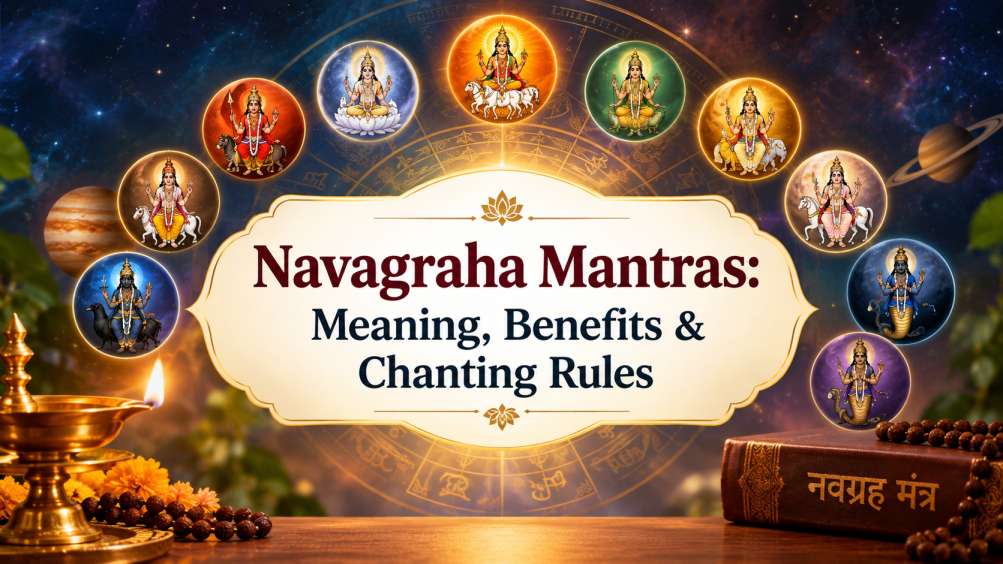
In Vedic astrology, the Navagraha refers to the nine planetary forces that influence different areas of life. These include Surya (Sun), Chandra (Moon), Mangal (Mars), Budh (Mercury), Guru (Jupiter), Shukra (Venus), Shani (Saturn), Rahu and Ketu. Astrology associates these grahas with areas such as health, confidence, emotions, career, relationships, finances, discipline and spiritual development.
Navagraha mantras are traditional Sanskrit prayers recited to seek the positive expression of planetary energies and cultivate discipline, focus and devotion. They are commonly used alongside other Vedic remedies such as charity, meditation, fasting and puja.
Rather than treating mantras as a guaranteed solution to problems, it is more useful to understand them as a spiritual practice connected with graha shanti (planetary pacification) and mindful living.
What Are Navagraha Mantras?
Navagraha mantras are sacred invocations dedicated to the nine grahas. In traditional Jyotisha, a person’s birth chart is examined to understand planetary placements, strengths, aspects, house positions and Mahadasha-Antardasha periods.
A mantra may be selected according to the planet requiring attention. For example, someone experiencing difficulties traditionally associated with Saturn may follow a Shani mantra practice under appropriate guidance.
The Nine Navagraha Mantras
| Graha | Common Mantra | Traditional Association |
| Surya | Om Hraam Hreem Hraum Sah Suryaya Namah | Vitality, confidence, authority |
| Chandra | Om Shraam Shreem Shraum Sah Chandraya Namah | Mind, emotions, calmness |
| Mangal | Om Kraam Kreem Kraum Sah Bhaumaya Namah | Courage, energy, determination |
| Budh | Om Braam Breem Braum Sah Budhaya Namah | Communication, intellect, learning |
| Guru | Om Graam Greem Graum Sah Gurave Namah | Wisdom, knowledge, guidance |
| Shukra | Om Draam Dreem Draum Sah Shukraya Namah | Relationships, comforts, creativity |
| Shani | Om Praam Preem Praum Sah Shanaischaraya Namah | Discipline, patience, responsibility |
| Rahu | Om Bhraam Bhreem Bhraum Sah Rahave Namah | Desires, uncertainty, worldly ambition |
| Ketu | Om Sraam Sreem Sraum Sah Ketave Namah | Detachment, spirituality, intuition |
Mantra traditions can vary by lineage, text and purpose. Pronunciation and initiation requirements may also differ.
Benefits of Chanting Navagraha Mantras
The traditional purpose of planetary mantra practice is graha shanti, or creating a more balanced relationship with planetary influences.
Possible practical benefits include:
- Improved concentration and mental discipline
- A regular spiritual routine
- Greater patience and emotional awareness
- Increased self-reflection
- Support for meditation and mindfulness
- A devotional approach to challenging planetary periods
- Greater awareness of personal habits and decision-making
It is important to distinguish traditional astrological belief from scientifically established effects. Mantra chanting should not replace medical treatment, financial planning, professional advice or other practical action.
How to Chant Navagraha Mantras Correctly
1. Choose the Mantra Carefully
The appropriate mantra can depend on the birth chart, planetary dignity, house placement, aspects, conjunctions and current dasha period.
A qualified Vedic astrologer may assess whether a particular planet should actually be strengthened or pacified. This distinction matters because traditional astrology does not necessarily recommend strengthening every weak planet.
2. Maintain a Regular Routine
Consistency is generally more useful than occasional excessive chanting.
Choose a fixed time that you can maintain comfortably. Morning practice after bathing is traditionally preferred for many spiritual practices, but there is no universal requirement that every mantra must be chanted at a particular clock time.
If a muhurta or planetary hora is prescribed, calculate it according to the local location and Panchang in IST.
3. Use a Mala
A 108-bead mala is traditionally used for mantra repetition. Beginners can start with a smaller, manageable number of repetitions and gradually establish a consistent practice.
Keep the mala clean and use it specifically for spiritual practice when possible.
4. Focus on Pronunciation and Intention
Correct pronunciation is traditionally considered important, particularly for Sanskrit mantras. If you are unsure about pronunciation, learn from a reliable teacher or authentic textual source rather than relying on an unfamiliar audio version.
More repetitions do not automatically mean better results. Attention, sincerity and consistency are important elements of the practice.
Simple Planetary Remedies Alongside Mantras
Mantra chanting can be combined with practical and traditional remedies.
- Sun: Offer water to Surya in the morning and maintain a disciplined routine.
- Moon: Practise meditation and maintain emotional balance.
- Mars: Channel energy into exercise and constructive action.
- Mercury: Develop communication and learning habits.
- Jupiter: Support education, mentoring and charitable activities.
- Venus: Cultivate gratitude, cleanliness and respectful relationships.
- Saturn: Practise patience, responsibility and service to others.
- Rahu: Avoid impulsive decisions and excessive attachment to material outcomes.
- Ketu: Encourage meditation, introspection and spiritual study.
These remedies work best when combined with real-world behavioural changes rather than being treated as magical shortcuts.
Navagraha Mantras and Kundli Analysis
A common mistake is to assume that every planetary problem requires a corresponding mantra. Vedic astrology considers the entire horoscope.
For example, a planet may be naturally beneficial but temporarily challenged by house placement, conjunctions or dasha influences. Similarly, a planet that appears weak may not always need strengthening.
Therefore, Lagna, Moon sign, planetary strength, house ownership, aspects, yogas and Mahadasha-Antardasha should ideally be considered before adopting intensive remedial measures.
Conclusion
Navagraha mantras hold an important place in the traditional practice of Vedic astrology and Hindu spiritual culture. Their primary value can be understood through devotion, disciplined repetition, meditation and conscious self-reflection.
The nine grahas symbolically represent different dimensions of human experience, from confidence and emotions to discipline, relationships, ambition and spirituality. Choosing a mantra according to one’s horoscope can make the practice more personally meaningful, but it should be approached thoughtfully rather than fearfully.
A balanced approach combines mantra chanting with ethical conduct, practical effort, charity, meditation and appropriate professional guidance. The goal is not to become dependent on remedies, but to develop greater awareness and steadiness while navigating life’s planetary cycles.
FAQs
1. What are Navagraha mantras?
Navagraha mantras are traditional Sanskrit invocations dedicated to the nine planetary forces in Vedic astrology.
They are used as part of traditional graha shanti practices and are associated with cultivating qualities represented by each graha. The specific mantra and method may vary according to the person’s horoscope and spiritual tradition.
Related tips:
- Learn pronunciation properly.
- Maintain regular practice.
- Consider the complete birth chart before selecting intensive remedies.
2. Can I chant all nine Navagraha mantras?
Yes, people traditionally may chant prayers for all nine grahas, but a personalized practice is often preferable when addressing a specific astrological concern.
A general Navagraha prayer can be used as a devotional practice, while targeted planetary mantras are traditionally selected after examining the horoscope.
Simple approach:
- Begin with a general Navagraha practice.
- Avoid randomly strengthening planets.
- Consult an experienced astrologer for chart-specific remedies.
3. How many times should Navagraha mantras be chanted?
108 repetitions are traditionally common, although the appropriate count can vary according to the mantra, purpose and lineage.
Beginners do not necessarily need to start with a large number. Establishing a sustainable routine is generally more practical than forcing a high repetition count.
Practical tip: Start with a manageable count and gradually increase it if your routine permits.
4. What is the best time to chant Navagraha mantras?
Morning is traditionally considered suitable for many mantra practices, while specific planetary timings may be selected according to Panchang or astrological guidance.
There is no single universal clock time applicable to every Navagraha mantra. If a specific muhurta, tithi or hora is recommended, use the local Panchang and express timings in IST for India.
Remember:
- Choose a quiet environment.
- Maintain consistency.
- Prioritize correct pronunciation and concentration.
5. Can Navagraha mantras remove all problems?
Traditional astrology does not provide a reliable basis for claiming that mantras will automatically remove every problem.
Mantras are better approached as spiritual and remedial practices that may support discipline, reflection and devotion. Practical problems still require practical solutions.
Best approach:
- Combine spiritual practice with appropriate action.
- Do not stop medical or professional treatment because of astrology.
- Use remedies without fear or excessive dependence.
6. Which mantra is traditionally associated with Shani?
The Shani mantra is traditionally associated with Saturn and is used in practices intended to cultivate patience, discipline and steadiness.
Saturn is particularly associated in Jyotisha with responsibility, delays, perseverance, service and karmic lessons. Its interpretation depends heavily on its position in the individual birth chart.
Traditional supportive practices include:
- Serving people in need
- Maintaining discipline
- Fulfilling responsibilities
- Practising patience and humility