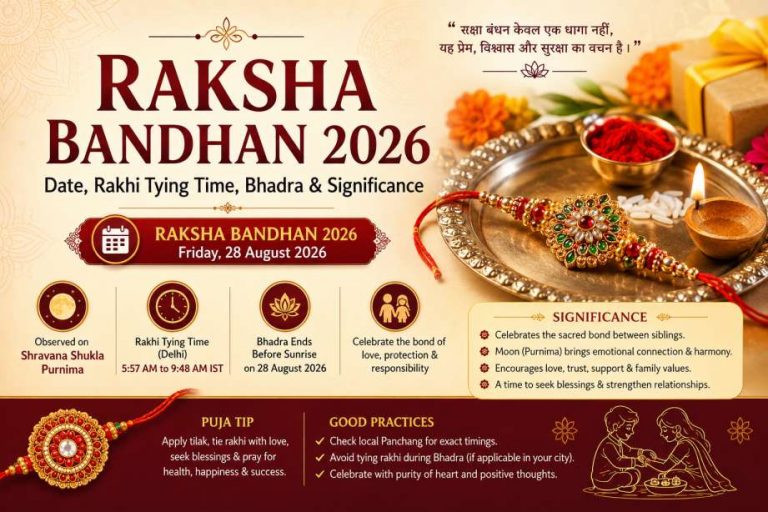
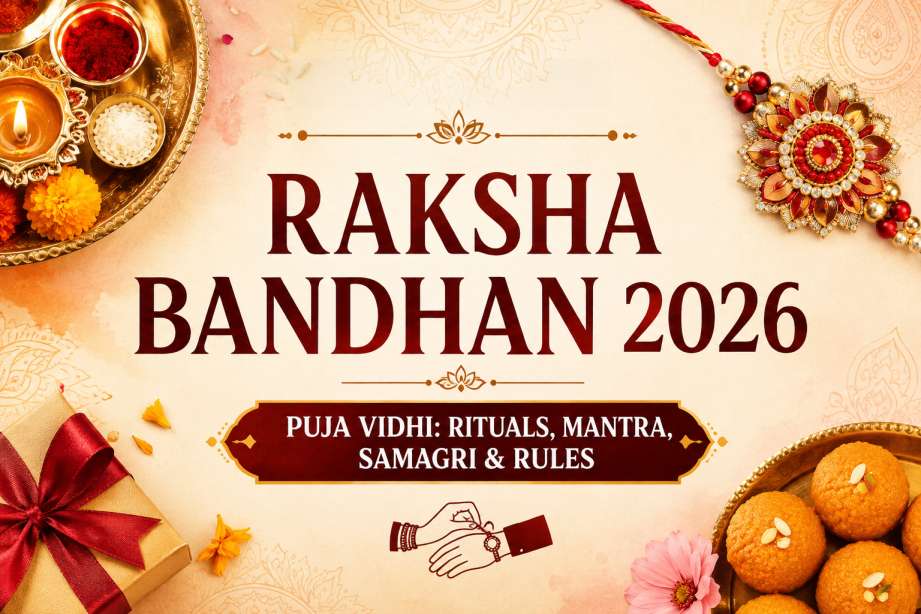
Raksha Bandhan is one of India’s most cherished festivals celebrating the bond of love, protection and responsibility between siblings. In 2026, Raksha Bandhan will be observed on Friday, 28 August 2026, according to the traditional Hindu calendar. The festival is marked by tying Rakhi, performing a simple puja and exchanging blessings and gifts.
From a Vedic astrology perspective, Raksha Bandhan also carries symbolic importance. The Moon represents emotions, nurturing relationships and family connections, while Jupiter is traditionally associated with blessings, wisdom and dharma. Performing the rituals with sincerity can therefore become an opportunity to strengthen family harmony and gratitude.
This guide explains Raksha Bandhan 2026 puja vidhi, samagri, rituals, mantras and important rules, while keeping the practices simple and relevant to modern Indian families.
Raksha Bandhan 2026: Puja Samagri
Before beginning the Raksha Bandhan ceremony, keep the essential puja items ready.
Rakhi Puja Samagri
- Rakhi
- Roli or kumkum
- Akshat (uncooked rice)
- Diya and cotton wick
- Ghee or oil
- Incense sticks
- Flowers
- Sweets or mithai
- Fruits
- Kalash with clean water
- Sandalwood paste
- Coconut, if traditionally used
- A small puja thali
- Clean cloth or decorative thali
- Dakshina or a symbolic gift
The list does not need to be elaborate. Cleanliness, devotion and family participation are more important than expensive arrangements.
Raksha Bandhan 2026 Puja Vidhi
The ceremony can be performed at home using a simple traditional sequence.
1. Clean the Puja Space
Clean the area where the Raksha Bandhan ritual will be performed. Take a bath and wear clean clothes before beginning the puja.
Place the puja thali in front of the family deity or in a clean, peaceful location.
2. Light the Diya
Light a diya and incense. Offer flowers and mentally remember Lord Ganesha and the family deity before starting the ceremony.
A simple mantra such as “Om Gam Ganapataye Namah” may be chanted before the ritual.
3. Perform Tilak
The sister traditionally applies roli or kumkum tilak to her brother’s forehead and places a few grains of akshat over it.
The tilak represents auspiciousness and blessings, while rice traditionally symbolises prosperity and stability.
4. Tie the Rakhi
After the tilak, the sister ties the Rakhi around her brother’s wrist.
A traditional Raksha Bandhan mantra is:
“येन बद्धो बलिराजा दानवेन्द्रो महाबलः।
तेन त्वामनुबध्नामि रक्षे मा चल मा चल॥”
The mantra invokes the traditional symbolism of protection and is associated with the story of King Bali and the sacred protective thread.
5. Perform Aarti
Perform aarti of the brother with a diya and offer sweets afterward.
The brother traditionally gives a gift or dakshina to his sister and expresses his commitment to supporting and respecting her.
6. Seek Family Blessings
If elders are present, both siblings can seek their blessings. This simple step reinforces the festival’s deeper message of family unity, mutual respect and emotional support.
Raksha Bandhan Rules and Things to Remember
Traditional customs can vary between regions and families, but some commonly followed practices include:
- Avoid performing the ceremony during Bhadra, unless the relevant regional Panchang permits otherwise.
- Follow the local Panchang for the most appropriate Rakhi-tying time.
- Keep the puja area and materials clean.
- Avoid rushing through the ceremony merely for formality.
- Use a fresh Rakhi and clean puja items.
- Perform the ritual with positive intentions rather than fear or superstition.
- Respect regional traditions regarding fasting, food and Rakhi timings.
Because muhurat and Bhadra timings can vary according to location, families should verify the exact Raksha Bandhan 2026 timing for their city before beginning the ceremony.
Astrology and Raksha Bandhan
Raksha Bandhan is primarily a cultural and religious festival rather than an astrological remedy. However, its symbolism can be understood through Vedic astrology.
Moon and Family Bonds
The Moon is associated with emotions, nurturing, mental peace and family connections. A peaceful Raksha Bandhan celebration can therefore be viewed as a practical way of nurturing emotional relationships.
Jupiter and Blessings
Jupiter represents wisdom, dharma, blessings and guidance. Seeking blessings from elders and maintaining respectful family relationships reflects these Jupiterian qualities.
Third House and Siblings
In Vedic astrology, the 3rd house is traditionally associated with younger siblings, courage, communication and personal effort. Raksha Bandhan provides an opportunity to consciously strengthen communication and emotional support between siblings.
The exact astrological significance depends on an individual’s birth chart, so general festival practices should not be treated as personalised predictions.
Simple Astrology-Inspired Remedies for Raksha Bandhan
Those who wish to make the occasion spiritually meaningful can follow simple, non-harmful practices:
- Offer prayers to Lord Ganesha before beginning the ceremony.
- Donate food or useful items to someone in need.
- Seek blessings from parents and elders.
- Avoid arguments and harsh speech on the festival day.
- Spend some peaceful family time without excessive focus on phones or social media.
- If traditionally appropriate, offer prayers to your family deity.
- Maintain gratitude toward siblings and acknowledge their support.
These practices focus on positive behaviour, charity and family harmony rather than promising guaranteed astrological results.
Conclusion
Raksha Bandhan 2026 is more than the ritual of tying a sacred thread. It represents trust, affection, responsibility and the continuing bond between siblings. A simple puja with tilak, Rakhi, aarti, sweets and heartfelt blessings is sufficient to preserve the essence of the festival.
From an astrological perspective, the festival offers a meaningful reminder to nurture the qualities represented by the Moon, Jupiter and the 3rd house—emotional understanding, wisdom, communication and sibling relationships. Rather than focusing on superstition, families can use Raksha Bandhan as an opportunity to strengthen genuine relationships and practise gratitude.
Before performing the ceremony, check the local Panchang for the exact Rakhi-tying muhurat and Bhadra considerations in IST. The most meaningful ritual is ultimately one performed with cleanliness, sincerity and affection.
FAQs
1. When is Raksha Bandhan 2026?
Raksha Bandhan 2026 will be celebrated on Friday, 28 August 2026.
The festival falls on the full moon day, or Purnima, of the Hindu month of Shravana. The exact Rakhi-tying muhurat should be checked according to the local Panchang and location.
Related tip: Verify the local IST timing and Bhadra period before starting the ceremony.
2. What items are needed for Raksha Bandhan puja?
Rakhi, roli or kumkum, akshat, diya, flowers, sweets, incense and a puja thali are the basic items.
Additional items such as fruits, sandalwood, coconut and dakshina may be included according to family tradition. There is no need to make the ceremony unnecessarily elaborate.
Simple remedy: Keep the puja space clean and perform the ritual with sincere intentions.
3. Which mantra can be recited while tying Rakhi?
The traditional Raksha Bandhan mantra beginning with “येन बद्धो बलिराजा” can be recited while tying the Rakhi.
The mantra symbolically invokes protection and is traditionally connected with the story of King Bali. Families unfamiliar with Sanskrit may simply offer a sincere prayer for their sibling’s wellbeing.
Related practice: You may also begin the puja with “ॐ गं गणपतये नमः”
4. What should be avoided during Raksha Bandhan puja?
Families traditionally avoid tying Rakhi during Bhadra and prefer an appropriate local muhurat.
Other than timing considerations, it is sensible to avoid arguments, disrespectful speech and unnecessary stress during the celebration. Regional customs can differ, so the family’s traditional practices should also be considered.
Tip: Check your city-specific Panchang before finalising the ceremony time.
5. What is the astrological significance of Raksha Bandhan?
Raksha Bandhan symbolically relates to the Moon, Jupiter and the 3rd house because they represent emotional bonds, blessings and sibling relationships.
The Moon is associated with emotions and family nurturing, Jupiter with wisdom and blessings, and the 3rd house with siblings and communication. These associations provide a traditional astrological framework but do not guarantee specific outcomes.
Practical remedy: Strengthen these themes through kindness, communication, charity and respect for elders.
6. Can Raksha Bandhan rituals be performed at home?
Yes, Raksha Bandhan puja can be performed easily at home with a clean space and basic puja materials.
A simple ceremony involving prayer, tilak, Rakhi, aarti and sweets is sufficient. The spiritual value of the festival comes primarily from intention, family connection and respect rather than elaborate arrangements.
Tip: Keep the ritual simple, peaceful and meaningful for everyone involved.