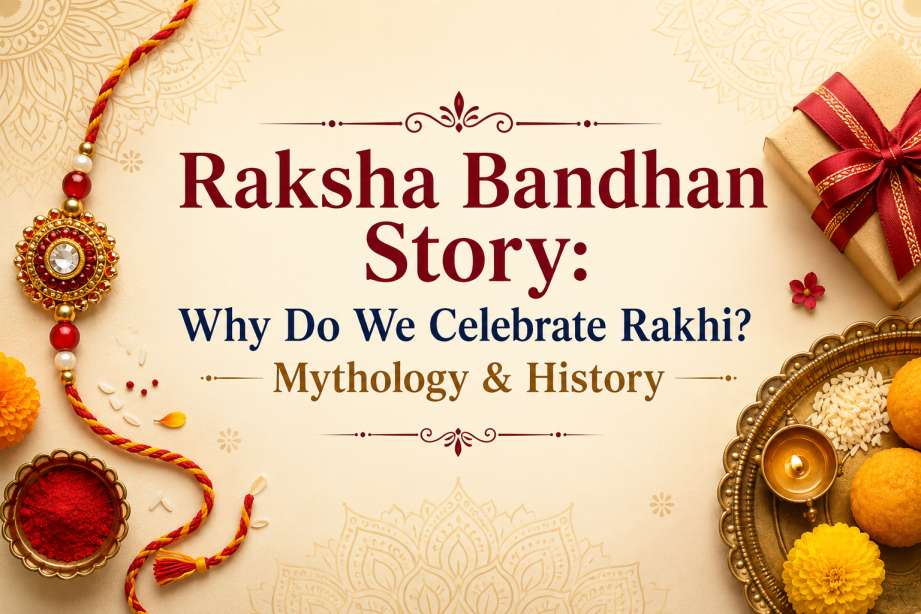
Raksha Bandhan, popularly known as Rakhi, is one of India’s most cherished festivals celebrating the bond of love, protection and mutual respect between siblings. Traditionally, sisters tie a sacred thread called Rakhi around their brothers’ wrists, while brothers promise love, support and protection. Today, the festival has expanded beyond a simple brother-sister ritual and represents emotional bonds, family responsibility and goodwill.
The Raksha Bandhan story has several layers in Hindu tradition. Ancient scriptures and popular legends connect the sacred thread with protection from negative influences and divine blessings. Stories involving Indra and Indrani, Lord Krishna and Draupadi, and Yama and Yamuna are often associated with the festival.
From a Vedic perspective, Raksha Bandhan can also be viewed symbolically through the Moon, Jupiter, Venus and the third house of the birth chart, which relate to emotions, wisdom, affection and sibling relationships.
Why Do We Celebrate Rakhi?
The word Raksha Bandhan comes from two Sanskrit words: Raksha, meaning protection, and Bandhan, meaning bond or connection.
The central idea is not merely that a brother protects his sister. It is a reciprocal relationship in which siblings stand by one another during difficult and important phases of life.
The Rakhi ceremony generally includes:
- Applying roli or kumkum on the forehead.
- Performing an aarti.
- Tying the sacred Rakhi.
- Offering sweets.
- Exchanging gifts.
- Seeking blessings from elders.
- Praying for the wellbeing and prosperity of the family.
The exact Raksha Bandhan muhurat changes every year according to the Hindu lunar calendar, so the regional Panchang should be consulted for the correct date and auspicious timing.
Raksha Bandhan Story in Hindu Mythology
Lord Krishna and Draupadi
One of the best-known Rakhi legends involves Lord Krishna and Draupadi from the Mahabharata tradition.
According to the popular story, Draupadi tore a piece of cloth from her saree and tied it around Krishna’s injured finger. Krishna is believed to have accepted her affection and promised to protect her.
The story is frequently remembered as an example of unconditional affection and protection, although the specific Raksha Bandhan ritual associated with this episode comes primarily from later traditional retellings rather than a direct description of the modern Rakhi ceremony in the Mahabharata.
Indra and Indrani
Another traditional reference appears in the story of Indra and Indrani. During a conflict between the Devas and Asuras, Indrani is said in later traditional accounts to have tied a protective sacred thread around Indra’s wrist after prayers for his safety.
This story connects the sacred thread with protection, prayer and divine strength and is particularly relevant to understanding the older ritual meaning behind raksha sutra.
Yama and Yamuna
A popular Hindu legend tells of Yama, the deity associated with death, and his sister Yamuna. Yamuna welcomed her brother, performed traditional rituals and expressed her affection toward him.
Moved by her devotion, Yama is traditionally said to have granted her a blessing. The story emphasizes the importance of maintaining loving family relationships and remembering one’s siblings.
Raksha Bandhan History: How Did Rakhi Evolve?
The history of Raksha Bandhan is not limited to a single origin story. The practice of tying protective threads has connections with broader Hindu traditions involving raksha sutra, sacred threads and ritual protection.
Over centuries, Rakhi evolved into a festival strongly associated with siblings. Regional traditions also developed their own customs.
A frequently repeated historical story concerns Alexander and King Porus, in which Alexander’s wife is said to have sent a sacred thread to Porus. However, this account is not established as a firmly documented historical fact and is better treated as a popular historical tradition.
Similarly, the association of Rakhi with Rabindranath Tagore and the Bengal partition movement of 1905 is an important cultural memory. Tagore encouraged people to use the tying of threads as a symbol of unity and brotherhood. This illustrates how Rakhi gradually acquired meanings beyond family relationships.
Astrological Significance of Raksha Bandhan
Although Raksha Bandhan is primarily a cultural and religious festival, its symbolism can be understood through Vedic astrology.
Moon and Emotional Bonds
The Moon represents emotions, nurturing, family attachment and the mind. A peaceful lunar influence is traditionally associated with emotional stability and harmonious relationships.
Raksha Bandhan provides an opportunity to strengthen emotional connections through gratitude and meaningful communication.
Jupiter and Blessings
Jupiter (Guru) represents wisdom, blessings, dharma and guidance. Seeking blessings from elders and praying for a sibling’s growth reflects these Jupiterian qualities.
Third House and Siblings
In Vedic astrology, the third house is traditionally associated with younger siblings, courage, communication and personal initiative. Its lord and planetary influences can provide insights into sibling dynamics in an individual horoscope.
This does not mean that Rakhi rituals can automatically change a birth chart. Rather, the festival offers a meaningful occasion to practice qualities such as forgiveness, communication and responsibility.
Simple Raksha Bandhan Remedies
For those who like to combine traditional practices with astrology, Raksha Bandhan can be observed with simple, non-harmful remedies:
- Offer prayers to Lord Ganesha before beginning the ceremony.
- Light a clean ghee lamp during the family prayer.
- Seek blessings from parents and elders.
- Avoid arguments or harsh speech during the festival.
- Donate food, clothes or useful items to someone in need.
- If appropriate for your family tradition, chant “Om Gan Ganapataye Namah” before the Rakhi ceremony.
- Make a sincere effort to resolve an old sibling misunderstanding.
The most meaningful remedy is often simple: express gratitude and strengthen the relationship through genuine actions.
Modern Relevance of Rakhi
Today, siblings may live in different cities or countries, and many families celebrate Raksha Bandhan through video calls, couriered Rakhis and online gifts.
The essence, however, remains unchanged: remembering someone, wishing them well and maintaining the bond despite physical distance.
Rakhi can also be tied between cousins, close family members or people who share a sibling-like relationship. This reflects the festival’s broader message of trust, care and social harmony.
Conclusion
The Raksha Bandhan story combines mythology, cultural history and the timeless human idea of protecting and caring for loved ones. Stories of Krishna and Draupadi, Indra and Indrani, and Yama and Yamuna help explain why the sacred thread became associated with affection, blessings and protection.
From a Vedic astrology perspective, the festival symbolically connects with the Moon’s emotional nature, Jupiter’s blessings and the third house of sibling relationships. However, its deeper value lies in real-life action rather than superstition.
This Raksha Bandhan, instead of focusing only on gifts, take a moment to express gratitude, forgive past misunderstandings and strengthen the bond with your siblings. A Rakhi is ultimately a reminder that true protection begins with love, respect and responsibility.
FAQs
1. Why do we celebrate Raksha Bandhan?
Raksha Bandhan is celebrated to honour the bond of affection, care and protection between siblings.
The traditional ceremony involves tying a Rakhi, performing aarti and praying for the sibling’s wellbeing. In modern families, the relationship is understood as mutual support rather than one-sided protection.
Related tips:
- Express gratitude to your sibling.
- Seek blessings from elders.
- Avoid unnecessary arguments on the festival day.
2. What is the most famous Raksha Bandhan story?
The story of Lord Krishna and Draupadi is one of the most popular traditional stories associated with Rakhi.
According to the popular retelling, Draupadi tied a piece of cloth around Krishna’s injured finger, and Krishna responded with a promise of protection. The story represents affection, loyalty and an emotional bond.
Key lesson: Genuine care does not depend on the size or monetary value of a gift.
3. What is the historical origin of Raksha Bandhan?
Raksha Bandhan developed over time from older Hindu traditions involving sacred protective threads and later became strongly associated with sibling relationships.
There is no single universally accepted historical event that can be identified as the sole origin of modern Rakhi. Different regions and historical periods contributed to its present form.
Remember: Treat popular historical stories as traditions unless supported by reliable historical evidence.
4. What does Rakhi mean in Hindu tradition?
Rakhi traditionally represents protection, affection, blessings and the commitment to maintain a meaningful relationship.
The sacred thread is connected with the broader concept of raksha sutra, or a protective thread used in Hindu rituals. Its modern family-centered meaning has developed through generations.
Simple practice: Tie the Rakhi with a sincere prayer for health, happiness and harmony.
5. Which planets are associated with sibling relationships in Vedic astrology?
The third house is the primary astrological house associated with siblings, communication and courage.
The Moon can represent emotional bonding, while Jupiter represents blessings, wisdom and guidance. Planetary combinations should always be interpreted in the context of the complete birth chart rather than through one placement alone.
Astrological approach:
- Examine the third house.
- Consider its lord.
- Study relevant planetary aspects.
- Assess the overall birth chart before drawing conclusions.
6. Can Rakhi rituals change someone’s horoscope?
Rakhi rituals should not be viewed as a guaranteed method of changing a birth chart.
Vedic spiritual practices are traditionally understood as ways of cultivating positive intentions, discipline and devotion. Their practical value can be found in strengthening relationships and encouraging constructive behaviour.
Best remedy: Combine prayer with respectful communication, forgiveness and genuine support for your sibling.