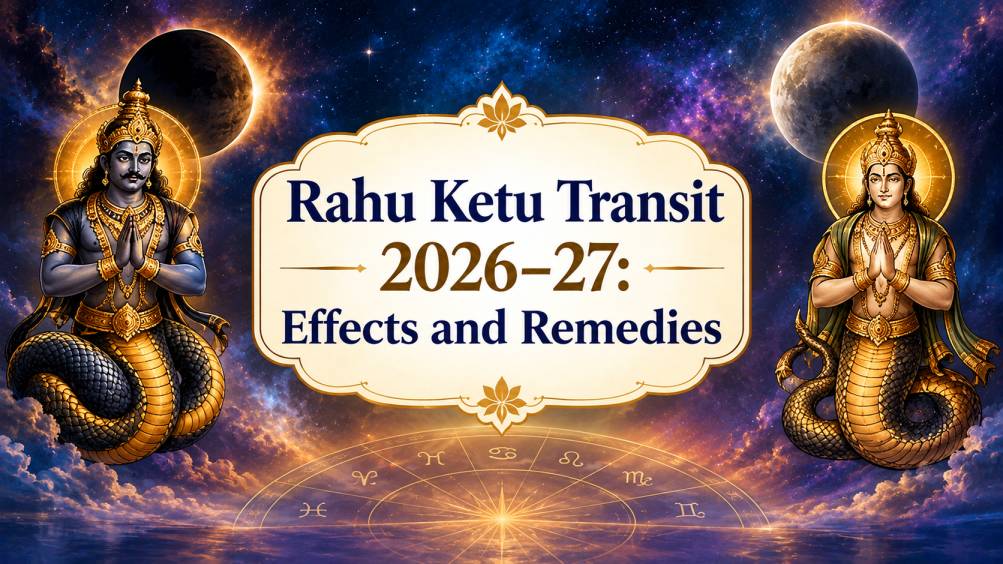
In Vedic astrology, Rahu and Ketu are known as the lunar nodes, or Chhaya Grahas (shadow planets). Although they are not physical planets, they hold an important place in traditional Jyotish because they represent the two points where the Moon’s orbital path intersects the Sun’s apparent path.
Rahu is traditionally associated with ambition, material desires, innovation, foreign connections, and unconventional thinking. Ketu represents detachment, introspection, spirituality, and the desire to move beyond familiar patterns. Their transit, known as Rahu Ketu Gochar, is interpreted through the zodiac signs and houses they occupy in a birth chart.
The Rahu Ketu Transit 2026–27 period may bring changing priorities and opportunities for reflection, according to traditional astrological interpretations. However, predictions depend on the calculation system, Moon sign, ascendant, and individual birth chart. These interpretations are best used for reflection rather than as guaranteed forecasts.
Rahu Ketu Transit 2026–27: Dates and Planetary Changes
According to the sidereal zodiac using the Lahiri ayanamsha, Rahu and Ketu occupy Aquarius and Leo, respectively, for most of 2026. They shift to Capricorn and Cancer around the end of the year, remaining in these signs through 2027. The exact date depends on whether a panchang uses the mean or true lunar nodes.
Kundly
+2
- Most of 2026: Rahu in Aquarius and Ketu in Leo.
- Late 2026: Rahu moves to Capricorn and Ketu to Cancer.
- 2027: Rahu remains in Capricorn and Ketu in Cancer under the commonly used mean-node calculation.
One commonly used mean-node panchang gives 5 December 2026 at approximately 10:32 PM IST for the sign change. True-node calculations can give a date in late November instead. Check the chosen panchang before publishing an exact transit time.
Kundly
+1
Rahu Ketu Transit 2026–27 Effects for All Zodiac Signs
The following interpretations focus on the main 2027 transit, with Rahu in Capricorn and Ketu in Cancer, viewed from the Moon sign. These are traditional astrological themes, not certain predictions.
1. Aries (Mesh Rashi)
Rahu in the 10th house emphasises ambition, career visibility, and professional growth, while Ketu in the 4th house may encourage reassessment of home and emotional priorities.
- Career: Pursue opportunities while maintaining ethical standards.
- Family: Make time for domestic responsibilities.
- Tip: Balance professional ambition with personal well-being.
2. Taurus (Vrishabh Rashi)
Rahu in the 9th house highlights higher education, travel, and new perspectives. Ketu in the 3rd house encourages independent thinking and selective communication.
- Education: Explore useful qualifications.
- Travel: Verify plans and documentation.
- Tip: Stay open-minded without accepting every claim uncritically.
3. Gemini (Mithun Rashi)
Rahu in the 8th house draws attention to shared resources, uncertainty, and research. Ketu in the 2nd house may prompt reflection on family values and spending habits.
- Finance: Review loans, taxes, and joint accounts.
- Relationships: Communicate clearly about money.
- Tip: Maintain emergency savings and avoid poorly understood risks.
4. Cancer (Kark Rashi)
Rahu in the 7th house focuses on partnerships, while Ketu in the 1st house may encourage self-reflection and a reassessment of personal identity.
- Marriage: Discuss expectations openly.
- Business: Review agreements carefully.
- Tip: Preserve individuality while respecting commitments.
5. Leo (Singh Rashi)
Rahu in the 6th house traditionally relates to competition, work routines, and problem-solving. Ketu in the 12th house emphasises solitude and introspection.
- Career: Organise workloads and address pending tasks.
- Well-being: Maintain healthy routines.
- Tip: Avoid neglecting rest while pursuing goals.
6. Virgo (Kanya Rashi)
Rahu in the 5th house highlights creativity, education, and romance. Ketu in the 11th house may encourage reassessment of social networks and long-term ambitions.
- Education: Follow a consistent study plan.
- Relationships: Avoid assumptions about others’ intentions.
- Tip: Evaluate financial risks before speculative investments.
7. Libra (Tula Rashi)
Rahu in the 4th house draws attention to home, property, and domestic priorities. Ketu in the 10th house may encourage reflection on career direction.
- Property: Check legal documents and costs.
- Career: Reconsider priorities before making major changes.
- Tip: Balance family needs with professional goals.
8. Scorpio (Vrishchik Rashi)
Rahu in the 3rd house emphasises initiative, communication, and practical skills. Ketu in the 9th house encourages independent exploration of beliefs and learning.
- Career: Develop communication and technical skills.
- Education: Compare sources before accepting advice.
- Tip: Turn ambitious ideas into achievable steps.
9. Sagittarius (Dhanu Rashi)
Rahu in the 2nd house highlights earnings, speech, and family finances. Ketu in the 8th house encourages careful consideration of shared resources and uncertainty.
- Finance: Budget and track spending.
- Relationships: Speak thoughtfully during disagreements.
- Tip: Read financial terms before committing to an agreement.
10. Capricorn (Makar Rashi)
Rahu in the 1st house focuses on identity, ambition, and personal direction. Ketu in the 7th house may prompt a review of partnership expectations.
- Career: Pursue goals without compromising integrity.
- Relationships: Give equal attention to cooperation.
- Tip: Avoid making every decision solely around personal advancement.
11. Aquarius (Kumbh Rashi)
Rahu in the 12th house highlights foreign connections, expenses, and reflection. Ketu in the 6th house encourages a reassessment of routines and responsibilities.
- Finance: Monitor recurring expenses.
- Career: Review overseas or remote-work opportunities carefully.
- Tip: Maintain structure even when working independently.
12. Pisces (Meen Rashi)
Rahu in the 11th house emphasises networks, income goals, and aspirations. Ketu in the 5th house may encourage a more reflective approach to creativity, romance, and learning.
- Career: Build genuine professional connections.
- Education: Focus on understanding rather than quick results.
- Tip: Set realistic goals and avoid comparing your progress with others.
These house-based interpretations describe the main 2027 configuration. During most of 2026, the nodes occupy different houses for each Moon sign, so the emphasis may differ before the late-year transit.
Practical Rahu Ketu Remedies for 2026–27
In Vedic astrology, Rahu and Ketu remedies are traditionally intended to encourage self-awareness, discipline, and spiritual balance. They should complement practical action rather than replace professional advice or sound decision-making.
1. Chant Traditional Mantras
Devotees may chant the following mantras as part of their spiritual practice:
- Rahu mantra: “Om Raam Rahave Namah.”
- Ketu mantra: “Om Kem Ketave Namah.”
You can recite them on days traditionally associated with these grahas or follow your family’s devotional practice. Consistency and personal faith matter more than treating a specific repetition count as a guarantee.
2. Practise Charity and Compassion
Traditional remedies include donating food or essential supplies and helping people in need. Acts of kindness can provide a meaningful way to practise detachment and responsibility.
3. Avoid Impulsive Decisions
Rahu is associated with strong desires and unconventional ambitions, while Ketu symbolises detachment in traditional interpretations. Practical ways to work with these themes include:
- Researching financial decisions before investing.
- Avoiding unnecessary arguments and misleading claims.
- Reviewing major career or relationship decisions calmly.
- Maintaining a balanced daily routine.
4. Follow Spiritual Practices Safely
Meditation, prayer, quiet reflection, and reading spiritual texts may help people develop patience and clarity. Gemstones and elaborate rituals are not necessary for everyone; consult a knowledgeable practitioner before spending money on personalised remedies.
Conclusion
The Rahu Ketu Transit 2026–27 marks an important transition in Vedic astrology, moving the lunar nodes from Aquarius–Leo to Capricorn–Cancer in late 2026. The traditional interpretation focuses on the balance between ambition and responsibility, public goals and private life, and material priorities and inner reflection.
The effects described for each zodiac sign are general and depend on whether the reading is based on the Moon sign, ascendant, or complete birth chart. No transit guarantees a particular financial, professional, or relationship outcome.
Use this period to review your goals, strengthen your decision-making, and maintain healthy boundaries. Traditional Rahu Ketu remedies may support spiritual reflection, while consistent effort and informed choices remain essential in everyday life.
Frequently Asked Questions (FAQs)
1. When is Rahu Ketu Transit in 2026?
Under the commonly used mean-node calculation, Rahu enters Capricorn and Ketu enters Cancer on 5 December 2026, at approximately 10:32 PM IST. True-node calculations may give a different date.
Kundly
+1
The nodes remain in these signs through 2027 under the mean-node calculation.
- Check a reliable panchang for the calculation method.
- Use IST when publishing Indian transit timings.
2. What are the effects of Rahu Ketu Transit 2026–27?
In traditional Vedic astrology, this transit is interpreted through the houses occupied by Rahu and Ketu from an individual’s Moon sign or ascendant.
Possible themes include career ambitions, financial priorities, partnerships, family responsibilities, and spiritual reflection. These interpretations are not scientifically established predictions of future events.
- Identify your Moon sign.
- Consider the complete birth chart for a more detailed interpretation.
3. Which zodiac signs will benefit from Rahu Ketu Transit 2026–27?
The transit is traditionally interpreted differently for each zodiac sign, so there is no universally favourable sign for every individual.
The same placement may be associated with opportunities in one area and a need for greater attention in another. Personal circumstances and choices remain important.
- Avoid judging outcomes from your zodiac sign alone.
- Focus on preparation and realistic goals.
4. What is the best remedy for Rahu and Ketu?
Traditional remedies include mantra chanting, charity, meditation, prayer, and disciplined behaviour.
These practices may provide spiritual meaning and encourage reflection, but there is no reliable scientific evidence that they guarantee changes in planetary effects or life outcomes.
- Choose practices consistent with your beliefs.
- Avoid fear-based or expensive remedies.
5. Will Rahu Ketu Transit affect marriage and relationships?
According to Vedic astrology, the transit may draw attention to partnership expectations, communication, and personal boundaries, depending on the relevant houses and birth-chart placements.
However, a relationship’s future cannot be determined from a transit alone. Mutual respect, communication, and compatibility are important practical considerations.
- Discuss expectations openly.
- Avoid making major relationship decisions based only on astrology.
6. How will Rahu Ketu Transit affect career and finances?
Traditional interpretations associate the nodes with ambition, professional networks, spending habits, and changing priorities, depending on their house positions.
Rather than assuming a guaranteed gain or loss, use this period to strengthen your financial planning and professional skills.
- Maintain a budget and emergency fund.
- Research career opportunities carefully.
- Seek qualified financial advice when needed.
7. Should I wear a gemstone for Rahu or Ketu?
A gemstone is not essential for navigating Rahu Ketu Transit 2026–27, and its benefits are not scientifically established.
In traditional Jyotish, gemstone recommendations are personalised according to the birth chart and the practitioner’s approach. Avoid purchasing expensive stones solely because of a general transit prediction.
- Request a clear explanation before buying.
- Never let gemstone advice replace practical or professional guidance.