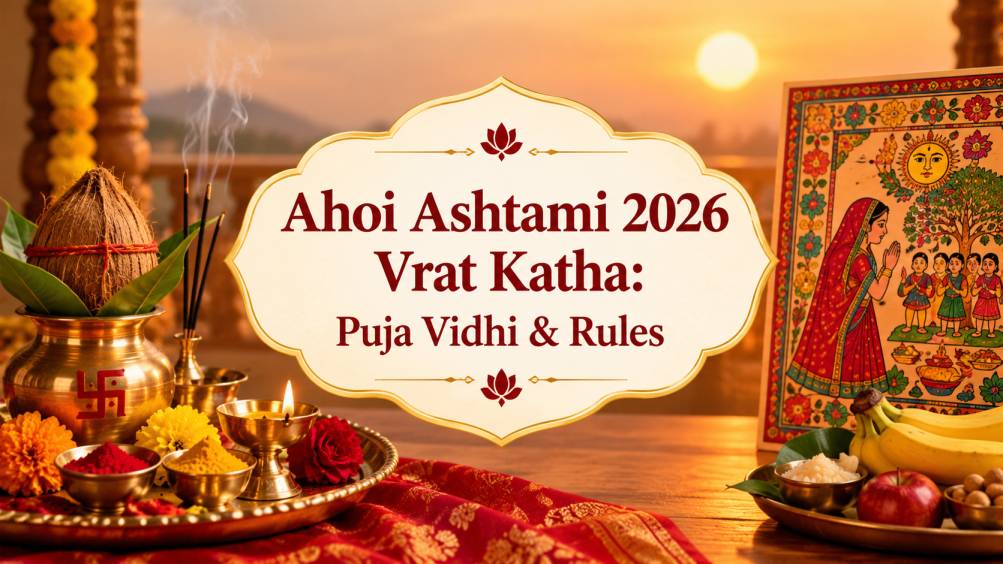
Ahoi Ashtami is an important Hindu festival observed by many mothers for the well-being, prosperity, and long life of their children. The festival falls during Krishna Paksha Ashtami in the Hindu month of Kartik and is traditionally observed about four days before Diwali. Devotees worship Ahoi Mata, observe a fast, listen to the Ahoi Ashtami Vrat Katha, and offer prayers in the evening.
From a Vedic astrology perspective, the festival’s themes of motherhood, protection, and family well-being connect symbolically with the Moon, the fourth house, and Jupiter, which are traditionally associated with emotional security, family life, children, and wisdom. However, these associations are interpretive traditions, not guarantees of specific outcomes. Ahoi Ashtami 2026 offers an opportunity to honour family bonds, practise gratitude, and participate in meaningful cultural rituals.
Ahoi Ashtami 2026: Date and Significance
Ahoi Ashtami in 2026 is expected to fall on Monday, 2 November 2026, according to commonly published Hindu festival calendars. Before planning the observance, check a reliable local Panchang for the Ashtami tithi, evening puja muhurat, and the relevant star-viewing time.
The festival is particularly significant in North Indian Hindu households. Traditionally, many mothers observe a fast and pray for their children’s health, happiness, and future well-being.
Its main themes include:
- Ahoi Mata worship: Seeking blessings for children’s welfare and family happiness.
- Fasting and discipline: Following a devotional routine according to one’s capacity.
- Family traditions: Passing down stories, prayers, and cultural values across generations.
- Gratitude and charity: Remembering the importance of compassion and responsibility.
Observances differ between communities. Some families conclude the fast after sighting stars, while others follow customs involving the Moon or specific family rituals.
Ahoi Ashtami Vrat Katha
The Ahoi Ashtami Vrat Katha explains the traditional significance of the festival and the importance of devotion, repentance, and compassion.
The Story of Ahoi Mata
According to a widely told version of the story, a woman travelled to the forest to collect soil before a festival. While digging, she accidentally injured or killed a young animal, often described as a cub of a wild animal. The mother animal became distressed, and the woman later experienced sorrow connected with the incident.
Seeking forgiveness and relief, the woman prayed sincerely and followed the prescribed observance associated with Ahoi Mata. In the traditional narrative, her devotion and repentance eventually brought blessings and relief from her difficulties.
Details vary across regional retellings, including the animal involved and the consequences described. The central message is the importance of acknowledging one’s actions, seeking forgiveness, and approaching worship with sincerity.
Moral and Spiritual Meaning
The Vrat Katha can be understood as a reminder to:
- Treat animals and other living beings with care.
- Accept responsibility for mistakes and learn from them.
- Pray with sincerity rather than fear.
- Express gratitude for family and children’s well-being.
The story is a traditional religious narrative, not a historical or scientific account of how fasting affects health or life outcomes.
Ahoi Ashtami Puja Vidhi
Ahoi Mata puja can be performed at home using simple, traditional materials.
Step-by-Step Ritual
- Prepare the puja area: Clean the space and place an image or drawing of Ahoi Mata, traditionally depicted with her children.
- Take a sankalp: Make a personal resolution to observe the fast according to your family custom and health.
- Prepare the offerings: Arrange flowers, a diya, roli, rice, water, and suitable food offerings.
- Perform the puja: Light the diya and offer prayers to Ahoi Mata with devotion.
- Listen to the Vrat Katha: Read or listen to the traditional story with family members.
- Chant the mantra: Recite a traditional prayer or a simple devotional invocation to Ahoi Mata.
- View the stars or follow the customary concluding ritual: Many families offer prayers after stars appear. Follow the timing and procedure prescribed by your local tradition.
- Complete the fast: Conclude the observance and take food according to your family’s custom and personal health needs.
There is no need for expensive materials. Cleanliness, sincerity, and respect for tradition are more important than elaborate arrangements.
Ahoi Mata Mantra and Prayers
There are regional variations in Ahoi Mata prayers, and not every household follows one universally standardised Sanskrit mantra.
A simple devotional invocation is:
ॐ अहोई मातायै नमः।
Om Ahoi Matayai Namah.
This invocation expresses reverence for Ahoi Mata. Devotees may repeat it 11, 21, or 108 times, according to their preference and family tradition.
You may also pray in your own words for your children’s health, safety, education, and happiness. The purpose is to cultivate devotion and gratitude rather than to treat a particular number of repetitions as a guarantee of results.
Ahoi Ashtami Fasting Rules
Fasting customs differ by family and region. Some devotees observe a strict fast, while others consume permitted foods or modify the observance for health reasons.
Common practices include:
- Beginning the day according to the family’s customary fasting procedure.
- Avoiding foods prohibited by the chosen tradition.
- Performing evening puja and reciting the Vrat Katha.
- Concluding the fast after the customary star sighting or other prescribed ritual.
- Sharing prasad and, where possible, helping people in need.
Health guidance: Fasting is not suitable for everyone. People with diabetes, pregnant or breastfeeding individuals, older adults, and anyone taking medicines that require food should consult a healthcare professional before fasting. Avoid dehydration and do not stop prescribed medication to complete a religious fast.
Ahoi Ashtami Astrology: Moon, Jupiter and the Fourth House
Vedic astrology offers a symbolic framework for understanding the themes associated with Ahoi Ashtami.
The Moon and Emotional Security
The Moon is traditionally associated with the mind, nurturing, and emotional responses. The fourth house represents home, comfort, and family foundations. Together, these symbols can encourage reflection on the emotional environment in which children grow.
Practical expressions include listening to children, maintaining consistent routines, and creating a supportive home environment.
Jupiter and Children
Jupiter, or Guru, is traditionally associated with wisdom, learning, guidance, and children in Vedic astrology. Astrologers may consider Jupiter’s placement and aspects when interpreting matters involving education, growth, and family life.
However, no single planetary placement determines a child’s future. Children’s development depends on many factors, including healthcare, education, nutrition, family support, and personal circumstances.
Traditional Remedies for Ahoi Ashtami
- For family harmony: Offer prayers together and make time for meaningful conversations.
- For children’s education: Encourage reading, curiosity, and consistent study habits.
- For gratitude: Donate food, books, or useful supplies according to your means.
- For emotional well-being: Practise calm communication and avoid placing unrealistic expectations on children.
- For spiritual reflection: Chant the Ahoi Mata invocation and read the Vrat Katha.
These practices combine cultural observance with practical actions that support family well-being.
Conclusion
Ahoi Ashtami 2026 is an occasion to honour Ahoi Mata, remember traditional teachings, and pray for children’s well-being. Reciting the Ahoi Ashtami Vrat Katha, chanting a devotional invocation, performing evening puja, and observing suitable fasting rules help families preserve meaningful traditions.
From a Vedic astrology perspective, the Moon, Jupiter, and fourth house symbolically relate to emotional security, wisdom, and family life. These associations can inspire reflection, but they cannot guarantee health, academic success, or specific future outcomes.
Before observing the festival on 2 November 2026, confirm the local Panchang for the tithi and puja timings. Choose fasting practices that suit your health and circumstances, and let the festival inspire patience, kindness, and thoughtful care for children.
Frequently Asked Questions (FAQs)
1. When is Ahoi Ashtami in 2026?
Ahoi Ashtami 2026 is expected to be observed on Monday, 2 November 2026.
The exact Ashtami tithi and puja timings should be confirmed through a reliable local Panchang. Star visibility and the customary time for concluding the fast may differ by location and family tradition.
Tips:
- Confirm the local puja muhurat in IST.
- Check the customary star-viewing time.
- Prepare the puja items in advance.
2. What is the significance of Ahoi Ashtami Vrat Katha?
The Ahoi Ashtami Vrat Katha conveys traditional lessons about devotion, repentance, compassion, and responsibility.
Families recite the story during the puja to honour Ahoi Mata and reflect on their prayers for children’s well-being. Details of the narrative vary across regional traditions.
Tips:
- Read the story during the evening puja.
- Explain its moral lessons to children in an age-appropriate way.
- Include an act of kindness as part of the observance.
3. Which mantra should be chanted on Ahoi Ashtami?
Devotees may chant the simple devotional invocation “Om Ahoi Matayai Namah” while praying to Ahoi Mata.
There are regional variations in Ahoi Mata prayers, so families may also use their customary devotional songs or prayers. Mantra chanting is a spiritual practice and does not guarantee specific outcomes.
Tips:
- Chant 11, 21, or 108 times if convenient.
- Pray in a quiet, comfortable space.
- Focus on gratitude and the well-being of your family.
4. What are the fasting rules for Ahoi Ashtami?
Fasting rules vary by region and household, with some devotees observing a strict fast and others following modified practices.
Many families perform evening puja, recite the Vrat Katha, and conclude the fast after the customary star sighting or another prescribed ritual. Personal health should always take priority over strict fasting.
Tips:
- Follow your family’s established tradition.
- Avoid dehydration and unsafe food restrictions.
- Consult a healthcare professional if fasting may affect your health or medication.
5. Why are stars worshipped on Ahoi Ashtami?
Many North Indian families conclude the Ahoi Ashtami fast after sighting stars and offering prayers according to their tradition.
The practice is part of the festival’s customary observance, although the precise procedure varies between households. Some families follow additional rituals involving the Moon or other traditional offerings.
Tips:
- Check the local star-viewing time.
- Follow your family’s customary concluding ritual.
- Perform the observance from a safe and comfortable place.
6. Which planets are associated with Ahoi Ashtami in Vedic astrology?
The Moon, Jupiter, and the fourth house are symbolically relevant to themes of emotional security, wisdom, nurturing, and family life.
Astrologers may examine Jupiter and other chart factors when interpreting matters concerning children. However, astrology cannot reliably establish a child’s health, future success, or life outcomes.
Tips:
- Treat astrological interpretations as traditional perspectives.
- Support children’s education, nutrition, and healthcare.
- Avoid making important decisions based solely on a horoscope.
7. Can women observe Ahoi Ashtami without fasting?
Yes, women who cannot or do not wish to fast may participate in the puja and prayers according to their family traditions.
Religious observance can include listening to the Vrat Katha, chanting a prayer, offering flowers, or practising charity. A strict fast is not worth compromising personal health.
Tips:
- Choose an observance suited to your circumstances.
- Participate in prayer or charity if appropriate.
- Seek medical advice when fasting poses a health concern.
8. What should be offered to Ahoi Mata during puja?
Common offerings include flowers, a diya, roli, rice, water, and suitable food items, depending on regional and family customs.
Devotees may also prepare prasad and distribute it among family members. Elaborate or expensive offerings are not necessary for a simple home puja.
Tips:
- Keep the puja area clean.
- Prepare offerings according to your family tradition.
- Share prasad respectfully and avoid food wastage.