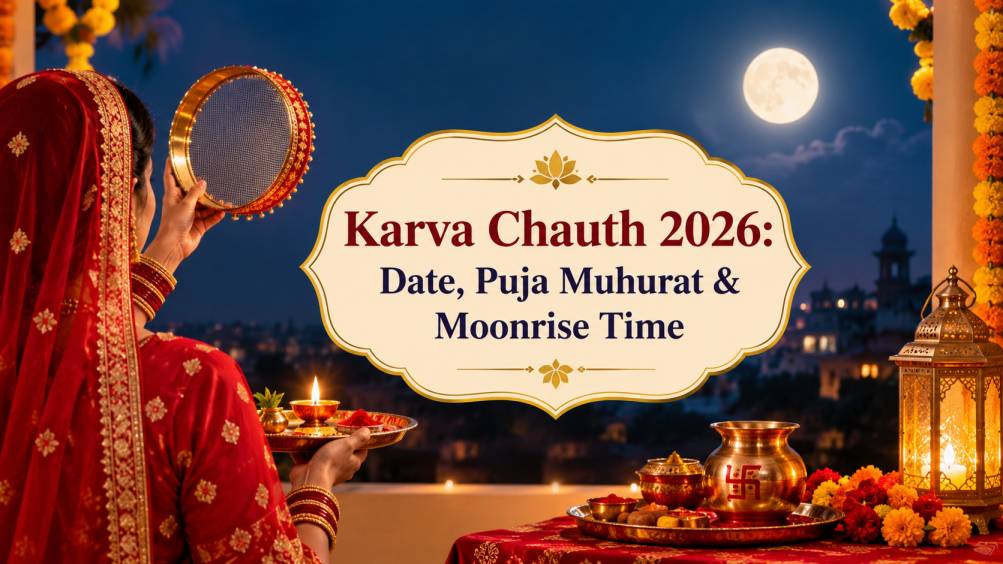
Karva Chauth is an important Hindu festival observed by many married women for the well-being and longevity of their spouses. The festival includes a traditional fast, evening worship, the Karva Chauth Vrat Katha and Moon worship before the fast is completed.
In Vedic astrology, the Moon represents the mind, emotions and inner security, while Venus is associated with love, affection and marital comforts. These traditional associations make the festival meaningful for devotees seeking to reflect on their relationships and family life.
Karva Chauth 2026 falls on Thursday, 29 October. The exact puja muhurat and moonrise time depend on the location. Understanding the local Panchang, traditional fasting rules and customary rituals can help families prepare for the occasion while making informed choices about health and well-being.
Karva Chauth 2026 Date and Puja Muhurat
Karva Chauth is observed on Krishna Paksha Chaturthi in the Hindu lunar calendar. The festival is also known as Karak Chaturthi because of the traditional earthen pot used during the worship.
The following timings are for New Delhi and should not be applied to every Indian city. <Cite refs={[“turn720624search0″,”turn831872search10”]}/>
| Festival detail | Date and time |
| Karva Chauth date | Thursday, 29 October 2026 |
| Chaturthi Tithi begins | 1:06 AM, 29 October |
| Chaturthi Tithi ends | 10:09 PM, 29 October |
| Evening puja muhurat | 5:38 PM–6:56 PM |
| Expected moonrise | Around 8:17 PM |
All times are in Indian Standard Time (IST). Timings are Panchang-based estimates and may differ slightly between sources.
Why Is Puja Muhurat Important?
The puja muhurat is the traditionally preferred period for performing the evening worship. Devotees commonly pray to Lord Shiva, Goddess Parvati, Lord Ganesha and Karva Mata during this time.
The Chaturthi Tithi and the evening puja window are separate calendar details. Check both before planning your observance.
Karva Chauth 2026 Moonrise Time
Moonrise is an essential part of the traditional Karva Chauth vrat because many devotees complete the fast after sighting the Moon and offering arghya.
The Moon’s rising time differs across cities because of geographical location and astronomical conditions.
For example, published estimates for 29 October 2026 place moonrise in New Delhi at approximately 8:17 PM, while Mumbai’s expected moonrise is around 9:00 PM. <Cite refs={[“turn831872search10″,”turn720624search8”]}/>
How to Check Your Local Moonrise Time
Before the festival, check:
- The expected moonrise time for your city.
- The evening puja muhurat.
- The local sunrise time for planning Sargi.
- The beginning and ending of Chaturthi Tithi.
If clouds obscure the Moon, follow your family’s customary practice or consult a trusted priest. Rituals may vary by region and household.
Karva Chauth Fasting Rules and Puja Vidhi
1. Sargi Before Sunrise
Sargi is a traditional pre-dawn meal, often prepared by the mother-in-law for the daughter-in-law. It may include fruits, nuts, milk, sweets and other foods according to family customs.
Eating a balanced meal and drinking sufficient water before the fast can help support hydration and energy levels.
2. Observe the Vrat According to Your Tradition
Many devotees observe a nirjala vrat, avoiding food and water until the Moon is sighted. Others follow modified fasting practices.
A strict fast is not suitable for everyone. People with diabetes, kidney or heart conditions, pregnancy, breastfeeding or medication requirements should seek medical advice before fasting. Do not stop prescribed medication or restrict fluids against medical advice.
3. Perform the Evening Puja
Prepare a clean puja area and arrange the traditional items according to your family customs.
Common Karva Chauth puja samagri includes:
- Karva or an earthen pot.
- Diya, flowers, roli and rice.
- Sweets and other traditional offerings.
- Images or idols of Lord Shiva, Goddess Parvati and Lord Ganesha.
- A sieve and a copy of the Karva Chauth Vrat Katha, if used in your tradition.
During the evening, devotees listen to or recite the vrat katha and offer prayers for family well-being.
4. Moon Worship and Breaking the Fast
After the Moon becomes visible, many devotees offer arghya using water and perform the customary Moon-sighting ritual. In several households, the Moon and the spouse are viewed through a sieve before the fast is completed.
The fast is then broken according to family tradition, often beginning with water and followed by a meal.
Karva Chauth Astrology: Moon, Venus and the Seventh House
Vedic astrology associates different planetary factors with emotional life and relationships.
Moon: Emotions and Mental Peace
The Moon represents the mind, feelings and emotional security in traditional astrology. Moon worship on Karva Chauth can be an occasion to reflect on patience, calm communication and emotional understanding.
Venus: Love and Marital Harmony
Venus is associated with affection, attraction, comfort and relationships. Its placement is traditionally examined alongside other chart factors when interpreting partnership themes.
Seventh House: Marriage and Partnership
The seventh house in a Kundli is traditionally associated with marriage and committed partnerships. Astrologers may consider its ruler, planetary aspects and relevant placements when assessing relationship themes.
These interpretations belong to traditional astrological practice and are not scientifically established methods of predicting marriage outcomes.
Simple Remedies and Spiritual Practices for Karva Chauth
Devotees may follow these practices according to their beliefs:
- Worship Goddess Parvati: Offer prayers for mutual respect, understanding and family harmony.
- Offer arghya to the Moon: Follow the customary Moon-worship ritual after moonrise.
- Practise gratitude: Appreciate your spouse’s efforts and discuss shared responsibilities.
- Donate essentials: Offer food or other useful items to people in need.
- Maintain emotional balance: Make time for calm conversation and resolving disagreements respectfully.
No ritual guarantees a particular marital outcome. Spiritual observances are best approached as expressions of faith and opportunities for reflection rather than substitutes for communication, mutual respect or professional support.
Conclusion
Karva Chauth 2026 will be observed on Thursday, 29 October. The festival brings together traditional fasting, evening puja, the Karva Chauth Vrat Katha and Moon worship. Checking the local puja muhurat and moonrise time can help families plan their observance accurately.
From a Vedic astrology perspective, the Moon symbolises emotions, Venus represents affection and the seventh house is associated with marriage. These traditional concepts offer a framework for reflecting on relationships, but they do not guarantee specific results.
Observe the vrat according to your family traditions and personal circumstances. Prioritise health when deciding whether to fast, and avoid practices that conflict with medical advice. Most importantly, let Karva Chauth be an occasion to celebrate care, trust, understanding and shared happiness.
FAQs: Karva Chauth 2026
1. When is Karva Chauth in 2026?
Karva Chauth will be observed on Thursday, 29 October 2026, according to the published Hindu calendar listings.
It falls on Krishna Paksha Chaturthi and is traditionally observed with fasting, evening prayers and Moon worship.
– Tip: Confirm your local Panchang before planning the rituals.
2. What is the Karva Chauth 2026 puja muhurat?
For New Delhi, the published evening puja muhurat is approximately 5:38 PM to 6:56 PM IST.
The recommended time varies by location because local sunrise, sunset and Panchang calculations differ.
– Tip: Use the timings for your own city rather than relying on Delhi’s schedule.
3. What is the Karva Chauth 2026 moonrise time?
The expected moonrise in New Delhi is approximately 8:17 PM IST on 29 October 2026.
Moonrise can occur earlier or later in other cities. Cloud cover may also affect visibility, so check the local forecast and your family’s customary procedure.
– Tip: Confirm the local moonrise time before beginning the vrat.
4. What should be eaten during Sargi?
Sargi is traditionally eaten before sunrise and may include fruit, nuts, milk, sweets and other foods prepared according to family customs.
A balanced pre-fast meal and adequate hydration may help support energy and hydration during the day.
– Tip: Choose foods that suit your dietary needs and avoid overeating.
5. Can unmarried women observe Karva Chauth?
Yes, some unmarried women observe Karva Chauth according to personal beliefs or family traditions, although the festival is primarily associated with married women.
The reasons and rituals may vary, and there is no universal requirement for unmarried women to observe the fast.
– Tip: Follow your own family or regional tradition without feeling pressured.
6. Which planets are associated with Karva Chauth in Vedic astrology?
The Moon, Venus and the seventh house are commonly discussed in traditional astrological interpretations of emotions, affection and marriage.
Astrologers may examine these factors alongside the complete Kundli rather than interpreting one planet in isolation.
– Tip: Treat astrological interpretations as traditional guidance, not guaranteed predictions.
7. Is a waterless fast compulsory on Karva Chauth?
No, a waterless fast should not be treated as compulsory for everyone regardless of health or medical needs.
Although nirjala vrat is traditional in many families, prolonged restriction of food and water may be unsafe for some people. Medical advice should take priority over fasting customs.