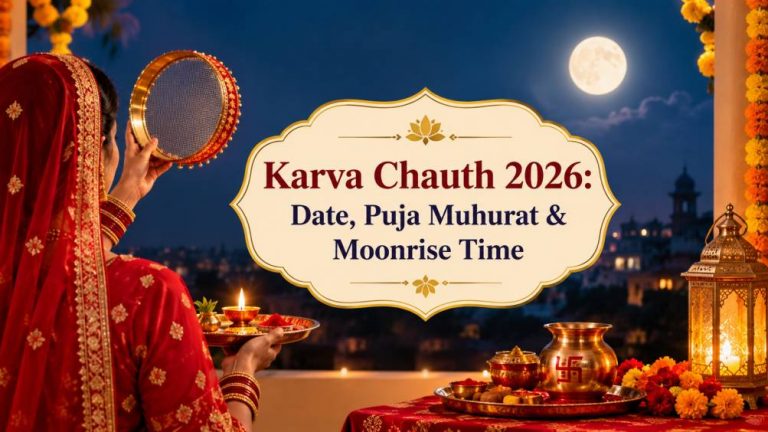
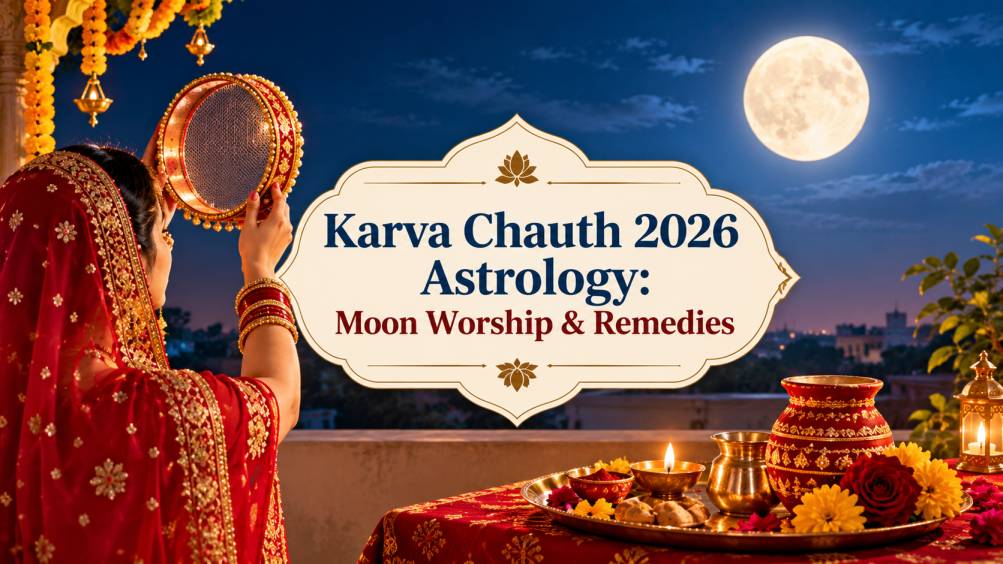
Karva Chauth is a significant Hindu festival observed by many married women for the well-being, longevity, and happiness of their husbands. In 2026, the festival falls on Friday, 30 October, according to commonly published Hindu festival calendars. The observance includes fasting, evening puja, and worship of the Moon after moonrise.
From a Vedic astrology perspective, Karva Chauth holds special significance because the Moon, or Chandra, represents the mind, emotions, mental peace, and nurturing relationships. The festival provides an opportunity to reflect on emotional understanding, commitment, and harmony in married life.
Karva Chauth astrology also draws attention to the traditional roles of Venus, Jupiter, and the seventh house in relationship interpretations. However, planetary positions alone cannot guarantee marital happiness. Communication, mutual respect, health, and shared responsibilities remain essential to a strong relationship.
Karva Chauth 2026: Date and Astrological Significance
Karva Chauth is observed on Krishna Paksha Chaturthi during the Hindu lunar month of Kartik in many North Indian traditions. Some regional calendars follow different month-naming conventions.
In 2026, devotees should verify the local Panchang for the Chaturthi tithi, puja muhurat, and moonrise time. All local timings should be interpreted in Indian Standard Time (IST), as moonrise varies by city.
The festival is traditionally associated with three important themes:
- Moon worship: Chandra Dev is honoured as a symbol of emotional balance and mental calmness.
- Marital well-being: The fast expresses devotion, commitment, and prayers for a spouse’s well-being.
- Spiritual discipline: Fasting and prayer encourage reflection, patience, and gratitude.
The astrological significance is symbolic and traditional rather than a guarantee of a particular outcome.
Role of the Moon in Karva Chauth Astrology
In Vedic astrology, the Moon represents the mind, feelings, instinctive reactions, and emotional security. Its placement in a birth chart is traditionally interpreted alongside other planetary positions and house relationships.
1. Moon and Emotional Balance
A well-supported Moon is traditionally associated with emotional steadiness, adaptability, and a sense of security. Astrologers may interpret an afflicted or weak Moon as indicating a need to pay attention to emotional reactions or mental rest.
These interpretations are part of astrological tradition and are not clinical diagnoses.
During Karva Chauth, Moon worship can serve as a reminder to practise patience, listen carefully, and approach disagreements calmly.
2. The Moon and the Fourth House
The fourth house in Vedic astrology relates to home, inner comfort, family environment, and emotional security. Astrologers examine the fourth house and its ruler when interpreting these themes.
For married couples, maintaining a peaceful home often depends on practical habits such as sharing responsibilities, managing finances transparently, and resolving disagreements respectfully.
3. The Moon and the Seventh House
The seventh house is traditionally associated with marriage and partnerships. Astrologers may consider its ruler, Venus, Jupiter, the Moon, and relevant planetary periods when interpreting relationship matters.
No single planet or placement determines the success of a marriage. A complete chart interpretation considers multiple factors, and real-life relationship outcomes also depend on the choices and circumstances of both partners.
Chandra Remedies for Karva Chauth 2026
Traditional Chandra remedies focus on prayer, discipline, generosity, and peaceful conduct. These practices can be included in the festival without expensive rituals.
1. Chant a Chandra Mantra
Devotees may chant the traditional mantra:
ॐ सोम सोमाय नमः।
Om Som Somaya Namah.
Repeat it 11, 21, or 108 times according to your preference. The practice is intended to encourage concentration and devotional reflection.
2. Offer Prayers to the Moon
After moonrise, devotees traditionally look toward the Moon and offer prayers according to their family customs. Some rituals include offering water through a traditional vessel.
- Check the local moonrise time in advance.
- Perform the ritual in a safe, comfortable place.
- Follow the customs practised by your family or community.
3. Practise Charity
White-coloured items, rice, milk, or other useful essentials are sometimes donated as traditional Moon-related offerings.
Choose donations according to your means and the recipient’s needs. Charity should be voluntary and practical, not driven by fear of planetary consequences.
4. Strengthen Emotional Awareness
A meaningful modern remedy is to practise mindful communication with your spouse.
- Make time for an uninterrupted conversation.
- Express appreciation for each other’s efforts.
- Discuss responsibilities and concerns without blame.
- Seek professional support when relationship difficulties persist.
These actions directly support the emotional security symbolised by the Moon in Vedic astrology.
Karva Chauth Puja Vidhi and Moon Worship
Karva Chauth rituals vary by region and family tradition, but the general observance includes the following steps.
- Prepare for the fast: Follow your family’s customary fasting practice and make a personal resolution to observe the day.
- Perform evening puja: Clean the worship area, prepare the puja thali, and pray to Goddess Parvati, Lord Shiva, Lord Ganesha, and other deities as prescribed by your tradition.
- Listen to the Karva Chauth Katha: Recite or listen to the traditional story associated with the festival.
- Wait for moonrise: Confirm the local moonrise time in IST.
- Offer Moon prayers: Perform the customary ritual using a sieve, diya, or water offering if these are part of your tradition.
- Complete the fast: Follow your family’s prescribed sequence for prayers and breaking the fast.
The festival should be observed with care for personal health. People with diabetes, pregnant or breastfeeding individuals, and those taking medicines that require food should consult a healthcare professional before fasting. Avoid dehydration and do not change prescribed medication without medical advice.
Conclusion
Karva Chauth 2026 combines devotion, Moon worship, and reflection on marital relationships. From a Vedic astrology perspective, Chandra represents emotional balance, while the fourth and seventh houses provide traditional frameworks for interpreting home life and partnerships.
Chanting the Chandra mantra, offering prayers after moonrise, practising charity, and making time for honest communication are meaningful ways to observe the occasion. These customs can strengthen a sense of connection with cultural traditions, but they cannot guarantee specific astrological or relationship outcomes.
Before observing Karva Chauth on 30 October 2026, check a reliable local Panchang for the exact puja muhurat and moonrise time. Choose a fasting practice appropriate for your health, respect your family’s customs, and remember that lasting marital harmony grows through care, trust, and mutual understanding.
Frequently Asked Questions (FAQs)
1. When is Karva Chauth in 2026?
Karva Chauth will be observed on Friday, 30 October 2026, according to commonly published Hindu festival calendars.
The exact Chaturthi tithi, puja muhurat, and moonrise time should be verified using a reliable local Panchang. Moonrise differs by location, so a timing published for one city may not apply elsewhere.
Tips:
- Check your city’s moonrise time in IST.
- Prepare your puja items in advance.
- Follow your regional calendar and family customs.
2. Why is the Moon worshipped on Karva Chauth?
The Moon is worshipped because Chandra Dev traditionally represents the mind, emotions, and mental peace in Vedic astrology.
Moon worship is an important part of the customary Karva Chauth ritual, symbolising prayers for well-being and relationship harmony. It does not guarantee a particular outcome in marriage or health.
Tips:
- Offer prayers after the Moon becomes visible.
- Chant a Chandra mantra if it is part of your tradition.
- Use the occasion to practise patience and gratitude.
3. Which Chandra mantra is suitable for Karva Chauth?
The traditional mantra “Om Som Somaya Namah” is one option for devotees who wish to pray to Chandra Dev on Karva Chauth.
You may chant it quietly during your evening prayers. Repetition can provide a structured opportunity for concentration and reflection, although specific astrological effects are not scientifically established.
Tips:
- Chant 11, 21, or 108 times if convenient.
- Sit comfortably in a quiet place.
- Focus on the meaning and intention of your prayer.
4. What are the best Chandra remedies for marital harmony?
Traditional Chandra remedies include mantra chanting, Moon worship, charity, and practices that encourage emotional balance.
In everyday life, listening carefully, expressing appreciation, and resolving disagreements respectfully can help couples maintain a healthier relationship. Astrology should not replace practical efforts to address relationship difficulties.
Tips:
- Offer prayers according to your family tradition.
- Donate food or useful essentials within your means.
- Make time for open, respectful communication.
5. Which houses in Kundli are important for marriage?
The seventh house is traditionally associated with marriage and partnerships, while the fourth house relates to home life and emotional security.
Vedic astrologers may also examine Venus, Jupiter, the Moon, planetary aspects, and relevant planetary periods when interpreting relationship matters. No single placement determines whether a marriage will succeed.
Tips:
- Consider the complete birth chart rather than one placement.
- Avoid making major relationship decisions based solely on astrology.
- Prioritise compatibility, trust, and shared values.
6. Can unmarried women observe Karva Chauth?
Yes, some unmarried women observe Karva Chauth according to family or regional traditions, while others follow different customs.
The festival is widely associated with married women’s prayers for their husbands, but individual observances vary. Anyone choosing to participate can follow a meaningful devotional practice without assuming that fasting guarantees marriage or a particular partner.
Tips:
- Ask about your family’s customary observance.
- Choose a fasting practice appropriate for your health.
- Focus on prayer, gratitude, and personal reflection.
7. Is fasting compulsory for Karva Chauth?
No, fasting is a traditional part of Karva Chauth for many devotees, but participation should take individual health and circumstances into account.
Some people follow a strict fast, while others choose modified observances or participate in the puja without fasting. People with medical conditions, pregnant or breastfeeding individuals, and those taking medicines that require food should seek medical guidance before fasting.
Tips:
- Do not compromise your health to follow a ritual.
- Avoid dehydration and unsafe food restrictions.
- Consult a healthcare professional when necessary.
8. What should be checked before Karva Chauth Moon worship in 2026?
Check the local Chaturthi tithi, evening puja muhurat, and moonrise time before planning the ritual.
Because these timings vary by city and calendar convention, use a trusted local Panchang rather than relying on a generic national timing. Keep the puja simple and follow the customary sequence used by your family.
Tips:
- Confirm timings for 30 October 2026.
- Keep the puja thali ready beforehand.
- Plan a safe and comfortable place for Moon worship.