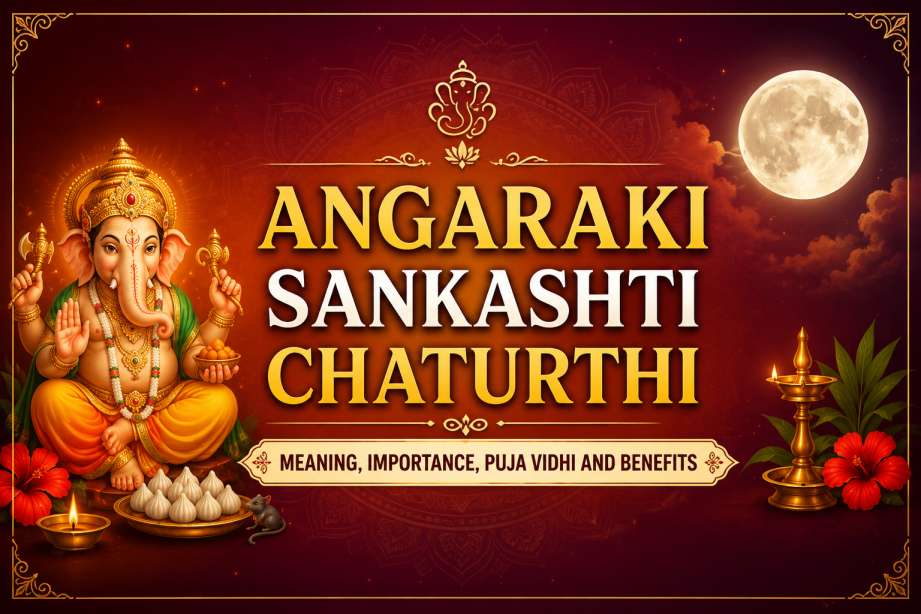
Angaraki Sankashti Chaturthi is considered a particularly significant form of Sankashti Chaturthi when the monthly Chaturthi falls on a Tuesday. In Hindu tradition, Sankashti Chaturthi is dedicated to Lord Ganesha, the remover of obstacles, while Tuesday is associated with Mars (Mangal). The combination gives this vrat a distinct astrological and spiritual importance.
The word Angarak is traditionally associated with Mars, whose qualities include courage, energy, determination and action. Devotees observe a fast, perform Ganesha Puja and offer prayers for the removal of difficulties and greater clarity in decision-making.
From a Vedic astrology perspective, Angaraki Sankashti is also viewed as an opportunity to channel strong Martian energy constructively. Rather than treating the observance as a guaranteed solution to problems, it can be understood as a disciplined spiritual practice combining devotion, fasting, prayer and self-control.
What Is Angaraki Sankashti Chaturthi?
Sankashti Chaturthi occurs on the fourth lunar day (Chaturthi) of the Krishna Paksha, or waning phase, of each Hindu lunar month. When this Chaturthi falls on Tuesday, it is traditionally known as Angaraki Sankashti Chaturthi.
Lord Ganesha is worshipped because he represents wisdom, discrimination, auspicious beginnings and obstacle removal. Tuesday brings the symbolism of Mars, making the observance especially relevant to themes such as courage, discipline and controlled action.
Why Is Tuesday Important?
In Vedic astrology, Mars is known as Mangal and is associated with:
- Courage and physical energy
- Initiative and determination
- Land and property matters
- Siblings and competitive spirit
- Discipline in action
- Assertiveness and confidence
When Mars is poorly placed or under challenging influences in a birth chart, traditional astrology may associate it with impatience, aggression, conflicts or impulsive decisions. Angaraki Sankashti observance is therefore traditionally regarded as a way of cultivating patience and directing energy toward constructive purposes.
Angaraki Sankashti Chaturthi Puja Vidhi
The exact Sankashti Chaturthi tithi and Moonrise time vary by location and lunar calendar, so devotees should check a reliable regional Panchang for the correct date and timings. All local timings should be followed in IST for India.
Step-by-Step Puja
- Begin with a morning Sankalp: Take a bath and make a simple intention to observe the vrat sincerely.
- Clean the Puja area: Place an image or idol of Lord Ganesha on a clean altar.
- Offer traditional items: Use flowers, durva grass, fruits, modak or other suitable offerings.
- Light a diya: Offer incense and perform Ganesha Puja with devotion.
- Chant Ganesha Mantras: Recite Om Gan Ganapataye Namah or another traditional Ganesha prayer.
- Read Sankashti Vrat Katha: Listening to or reading the traditional vrat story adds devotional significance.
- Perform Moon worship: On Sankashti Chaturthi, the fast is traditionally completed after sighting and worshipping the Moon at the prescribed Moonrise time.
- Complete Parana: After the prescribed rituals, devotees break the fast according to their family tradition and regional Panchang.
Fasting Rules and Food Choices
Fasting practices differ among families and communities. Some devotees observe a strict fast, while others consume fruits, milk, water or permitted fasting foods.
A practical approach is to follow a fasting method suitable for your health and established family tradition. Avoid turning the vrat into an extreme physical challenge.
Common fasting foods may include:
- Fruits
- Milk and dairy products
- Coconut
- Sabudana preparations
- Potatoes and other vrat-friendly foods
- Nuts and dry fruits
People with medical conditions, those taking regular medication, children and older adults should follow appropriate dietary guidance rather than undertaking restrictive fasting without professional advice.
Astrological Significance of Angaraki Sankashti
Angaraki Sankashti combines Ganesha symbolism with Mars symbolism. Ganesha represents बुद्धि (buddhi), discrimination and obstacle management, while Mars represents action, courage and energy.
This creates a useful practical lesson: strong action becomes more effective when guided by wisdom.
From a horoscope perspective, Mars is particularly relevant when analysing the 1st, 3rd, 4th, 6th, 7th, 8th, 10th and 12th houses, depending on the question and overall chart. Its results cannot be judged from Mars alone. Sign placement, house ownership, aspects, conjunctions, dignity, divisional charts and the running Mahadasha and Antardasha all matter.
Therefore, Angaraki Sankashti should not be presented as a universal remedy for every Mars-related issue. Traditional remedies are best considered alongside a complete horoscope analysis.
Traditional Remedies for Angaraki Sankashti
Devotees may consider these simple practices:
- Offer durva grass to Lord Ganesha.
- Chant “Om Gan Ganapataye Namah” with concentration.
- Read or listen to the Sankashti Vrat Katha.
- Offer red flowers according to family tradition.
- Donate food or useful items to someone in need.
- Practise patience and avoid unnecessary arguments on Tuesday.
- Use the day for disciplined, purposeful activity rather than impulsive decisions.
The deeper value of these remedies lies in regularity, intention and self-discipline, rather than expecting instant results.
Benefits of Angaraki Sankashti Chaturthi
Traditionally, devotees associate the vrat with:
- Seeking Lord Ganesha’s blessings for obstacle removal
- Improved mental focus and discipline
- Greater courage to face challenges
- Better control over anger and impulsiveness
- Spiritual purification through fasting and prayer
- Strengthening devotion and personal resolve
- A positive framework for handling difficult situations
These should be understood as traditional spiritual benefits, not guaranteed material outcomes.
Conclusion
Angaraki Sankashti Chaturthi holds a special place in the Hindu lunar calendar because it combines the devotional importance of Sankashti Chaturthi and Lord Ganesha with the Tuesday symbolism of Mars. Its central message is not simply about removing obstacles but about developing the wisdom and discipline needed to face them.
A sincere fast, Ganesha Puja, Moon worship, mantra chanting and charitable activity can make the observance meaningful. From an astrological perspective, the day can also serve as a reminder to balance Mars-like courage with Ganesha-like wisdom. For personalised guidance, the strength and condition of Mars should always be assessed through the complete birth chart rather than a single planetary placement.
FAQs
1. What is Angaraki Sankashti Chaturthi?
Angaraki Sankashti Chaturthi is the Sankashti Chaturthi that falls on a Tuesday.
It is dedicated to Lord Ganesha, while Tuesday is traditionally associated with Mars or Mangal. This combination gives the vrat additional significance in Hindu religious and astrological traditions.
Tips: Observe the vrat according to your regional Panchang, worship Ganesha and complete the fast after the prescribed Moonrise ritual.
2. Why is Angaraki Sankashti considered important?
It is considered important because it combines Ganesha worship with the traditional symbolism of Mars.
Ganesha represents wisdom and obstacle management, whereas Mars represents courage, energy and action. The observance therefore symbolically encourages disciplined action guided by intelligence.
Related practices: Ganesha mantra chanting, charity, meditation and avoiding impulsive behaviour.
3. What should be done during Angaraki Sankashti Puja?
Devotees generally worship Lord Ganesha, observe a fast, recite prayers and perform Moon worship after Moonrise.
The Puja can include durva grass, flowers, fruits, modak and a diya. The Sankashti Vrat Katha may also be read or heard as part of the traditional observance.
Simple routine: Sankalp → Ganesha Puja → Mantra/Katha → Moon worship → Parana.
4. Can Angaraki Sankashti help with Mangal-related problems?
Traditional astrology considers the observance a supportive spiritual practice, but it should not be treated as a guaranteed remedy for every Mars-related issue.
Mars-related results depend on its house, sign, dignity, aspects, conjunctions, house lordship and running planetary periods. A complete Kundli analysis is more appropriate for personalised guidance.
Traditional support: Ganesha worship, Tuesday discipline, charity and mantra practice.
5. What is the main mantra for Angaraki Sankashti Chaturthi?
“Om Gan Ganapataye Namah” is a simple and widely used mantra dedicated to Lord Ganesha.
Devotees may repeat it with concentration during Puja or meditation. The value of mantra practice traditionally comes from sincerity, regularity and focused attention rather than merely counting repetitions.
Practice: Chant calmly, maintain a clean Puja space and combine mantra with prayer and positive conduct.