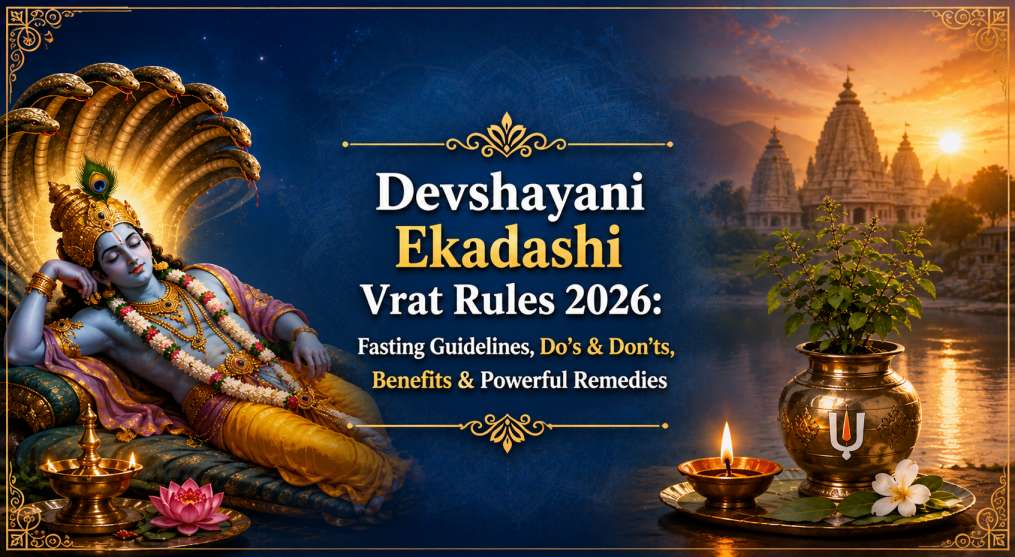
Devshayani Ekadashi, also known as Ashadhi Ekadashi or Hari Shayani Ekadashi, is one of the most significant Ekadashis in the Hindu calendar. It marks the beginning of Chaturmas, the sacred four-month period during which Lord Vishnu is believed to enter Yoga Nidra (cosmic sleep). In 2026, devotees across India will observe this auspicious fast with prayers, fasting, charity, and Vishnu worship to seek peace, prosperity, and spiritual growth.
From an astrological perspective, Devshayani Ekadashi is considered an excellent day for strengthening the positive influence of Jupiter (Guru) and reducing negative karmic tendencies. Observing the vrat with sincerity is believed to improve mental discipline, attract positive energy, and encourage spiritual progress. While traditions may vary across regions, the core principles remain rooted in devotion, self-control, and compassion.
What is Devshayani Ekadashi?
Devshayani Ekadashi falls during the Shukla Paksha of Ashadha month and signifies the beginning of Lord Vishnu’s divine rest until Prabodhini Ekadashi in the Kartik month.
According to the Padma Purana and Bhavishya Purana, this day marks the start of Chaturmas, a period dedicated to:
- Spiritual practices
- Charity
- Simplicity in lifestyle
- Increased prayer and meditation
- Religious observances
Many devotees also begin special vratas or spiritual disciplines during these four months.
Devshayani Ekadashi 2026 (IST)
Date: Saturday, 25 July 2026 (IST)
Devotees should always verify the exact Ekadashi Tithi, Parana timing, and local sunrise according to their city through their regional Panchang before observing the fast, as timings may differ slightly across locations in India.
Astrological Significance of Devshayani Ekadashi
Jupiter’s Spiritual Influence
In Vedic astrology, Lord Vishnu is closely associated with Jupiter (Guru), the planet of:
- Wisdom
- Dharma
- Knowledge
- Prosperity
- Divine blessings
Worshipping Lord Vishnu on Devshayani Ekadashi is traditionally believed to strengthen Jupiter’s positive qualities, especially when supported by one’s birth chart.
Moon and Mental Discipline
Ekadashi occurs during a phase when the Moon’s energy influences emotions and habits.
Many astrologers believe fasting on Ekadashi helps:
- Improve emotional stability
- Develop self-control
- Reduce unnecessary desires
- Increase focus during meditation
Although these benefits are rooted in traditional beliefs, many devotees also experience improved mindfulness through disciplined fasting and prayer.
Beginning of Chaturmas
Chaturmas is considered a spiritually powerful period for:
- Daily mantra chanting
- Charity
- Reading sacred scriptures
- Avoiding unnecessary indulgence
- Personal discipline
Many saints and spiritual teachers traditionally remain in one place during these four months for teaching and worship.
Devshayani Ekadashi Vrat Rules 2026
Following the vrat sincerely is considered more important than performing elaborate rituals.
Before the Fast
- Wake up during Brahma Muhurta if possible.
- Take a bath and wear clean clothes.
- Clean the home temple.
- Take a sankalp (spiritual resolve) for the fast.
- Offer flowers, Tulsi leaves, incense, and fruits to Lord Vishnu.
During the Fast
Devotees may observe:
- Nirjala Vrat (without water)
- Water-only fast
- Fruit fast (Phalahar)
- Satvik fasting according to health and age
Spend time in:
- Vishnu Sahasranama recitation
- Bhagavad Gita reading
- Meditation
- Bhajans and kirtan
- Charity
A commonly recited Vishnu mantra is:
ॐ नमो भगवते वासुदेवाय।
This mantra symbolizes surrender and devotion to Lord Vishnu.
Parana (Breaking the Fast)
The fast should be broken during the prescribed Dwadashi Parana time after sunrise, according to the local Panchang.
Traditionally, devotees begin with:
- Water
- Tulsi leaves
- Fruits
- Satvik food
Avoid breaking the fast outside the recommended Parana period.
Do’s and Don’ts on Devshayani Ekadashi
Do’s
- Worship Lord Vishnu sincerely.
- Offer fresh Tulsi leaves.
- Donate food or clothes to those in need.
- Practice forgiveness and kindness.
- Maintain positive thoughts.
- Read Vishnu-related scriptures.
Don’ts
- Avoid tamasic food.
- Avoid alcohol and intoxicants.
- Avoid anger, gossip, and harsh speech.
- Avoid unnecessary arguments.
- Avoid overeating after the fast.
- Avoid harming animals or wasting food.
These practices emphasize discipline and compassion rather than fear-based beliefs.
Benefits of Observing Devshayani Ekadashi
Traditional scriptures associate the vrat with several spiritual and personal benefits:
- Encourages self-discipline
- Enhances devotion
- Promotes mental peace
- Strengthens positive karmic actions
- Supports spiritual growth
- Inspires charity and compassion
- Marks an ideal beginning for Chaturmas spiritual practices
Many devotees also find fasting helpful for developing mindfulness and gratitude.
Powerful Remedies for Devshayani Ekadashi
1. Offer Tulsi to Lord Vishnu
Tulsi is considered especially sacred in Vishnu worship and symbolizes purity.
2. Chant Vishnu Mantras
Recite:
Om Namo Bhagavate Vasudevaya
108 times with devotion.
3. Donate Yellow Items
Offering yellow clothes, turmeric, gram dal, or bananas is traditionally linked with strengthening Jupiter’s positive qualities.
4. Light a Ghee Lamp
Lighting a pure ghee lamp during evening prayers symbolizes wisdom and positivity.
5. Feed the Needy
Annadan (food donation) is regarded as one of the highest forms of charity during Ekadashi and Chaturmas.
Conclusion
Devshayani Ekadashi 2026 is more than a fasting ritual—it marks the beginning of a spiritually significant period that encourages discipline, devotion, and self-reflection. The vrat combines prayer, mindful eating, charity, and positive conduct, helping devotees reconnect with values that remain relevant in everyday life.
Whether you observe a complete fast or follow a simple satvik routine based on your health, sincerity of intention remains the heart of the observance. Use this sacred occasion to cultivate gratitude, strengthen your spiritual practices, and begin Chaturmas with renewed purpose and inner balance.
FAQs
1. What are the main Devshayani Ekadashi Vrat rules?
The vrat mainly involves fasting, worshipping Lord Vishnu, observing discipline, and breaking the fast during the prescribed Dwadashi Parana.
Different devotees follow Nirjala, fruit-only, or satvik fasting depending on health, age, and family tradition. The emphasis is on devotion rather than physical hardship.
Helpful tips:
- Follow your local Panchang.
- Maintain a peaceful mindset.
- Perform charity along with prayers.
- Break the fast at the correct Parana time.
2. Can we drink water during Devshayani Ekadashi fast?
Yes, many devotees observe a water-only or fruit-based fast if a Nirjala fast is not suitable.
Traditional practices differ, and individuals should choose a fasting method appropriate for their health and consult a healthcare professional if they have medical conditions.
Helpful tips:
- Stay hydrated if required.
- Avoid processed foods.
- Eat light satvik meals before and after the fast.
3. Why is Tulsi important on Devshayani Ekadashi?
Tulsi is traditionally regarded as the most beloved offering to Lord Vishnu.
Offering fresh Tulsi leaves symbolizes purity, devotion, and surrender. It is an integral part of Vishnu worship in many Hindu traditions.
Helpful tips:
- Offer clean Tulsi leaves.
- Water the Tulsi plant respectfully.
- Avoid plucking leaves at prohibited times according to local customs.
4. What should be avoided on Devshayani Ekadashi?
Devotees traditionally avoid tamasic food, intoxicants, unnecessary anger, gossip, and negative actions.
The purpose of these restrictions is to encourage self-discipline, compassion, and mindful living throughout the day.
Helpful tips:
- Eat satvik food.
- Speak politely.
- Practice patience.
- Spend time in prayer or scripture reading.
5. What is the significance of Chaturmas after Devshayani Ekadashi?
Chaturmas is regarded as a sacred four-month period dedicated to spiritual practices, self-discipline, and devotion.
Many devotees increase their focus on meditation, charity, mantra chanting, and simple living during this period, considering it especially auspicious for inner growth.
Helpful tips:
- Start a daily mantra routine.
- Read the Bhagavad Gita.
- Donate regularly.
- Follow a disciplined lifestyle.