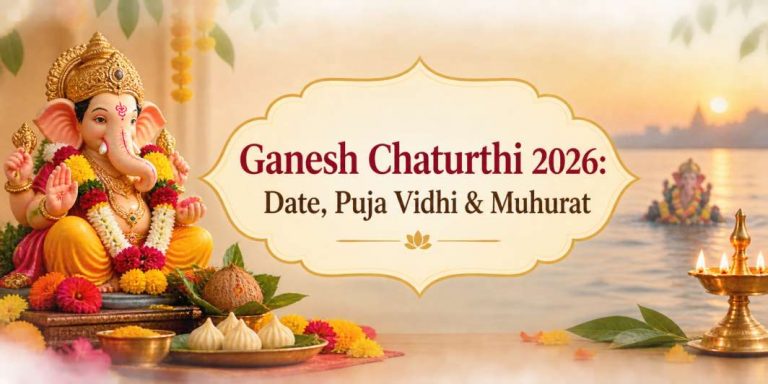
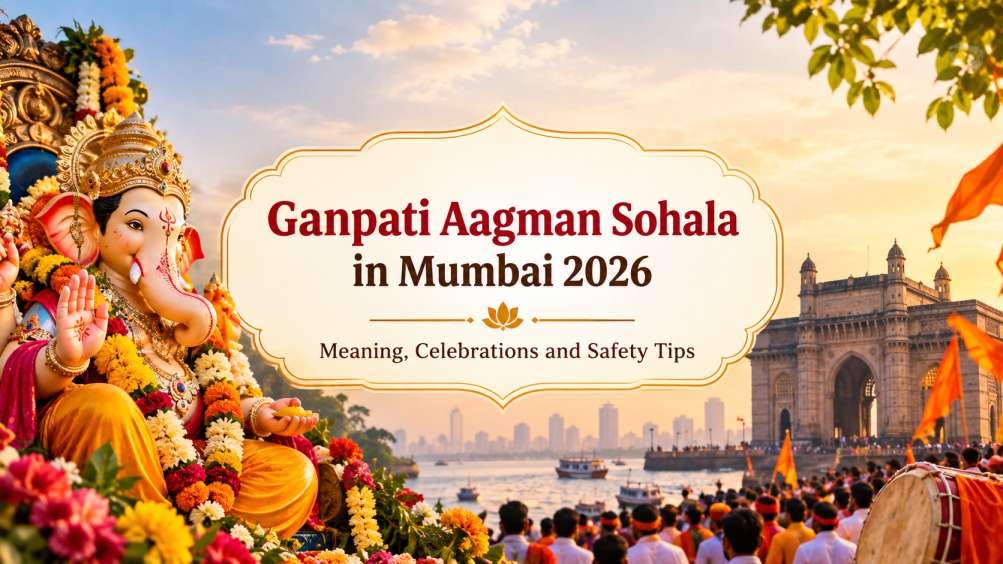
Ganpati Aagman Sohala is one of the most vibrant traditions associated with Mumbai’s Ganeshotsav. It marks the ceremonial arrival of Lord Ganesha into homes, public pandals and community spaces before or around Ganesh Chaturthi. In 2026, Ganesh Chaturthi falls on Monday, September 14, while Anant Chaturdashi, traditionally associated with the grand visarjan, falls on Friday, September 25. For Mumbai, Drik Panchang lists the Madhyahna Ganesh Puja Muhurat on September 14 from 11:20 AM to 1:48 PM IST.
Beyond the drums, decorations and processions, Ganpati Aagman carries a deeper spiritual idea: welcoming wisdom, discipline and auspicious beginnings into everyday life. In Hindu tradition, Ganesha is invoked before important undertakings as Vighnaharta, the remover of obstacles.
What Is Ganpati Aagman Sohala?
Ganpati Aagman Sohala literally refers to the ceremonial welcome or arrival of Ganpati Bappa. In Mumbai, the occasion can become a major community celebration involving decorated vehicles, dhol-tasha groups, devotional music, flowers and traditional rituals.
The significance is not simply about grandeur. The arrival represents:
- Welcoming positive beginnings
- Seeking clarity before important decisions
- Building community participation
- Expressing devotion through seva and discipline
- Preparing spiritually for Ganeshotsav
Large public celebrations also require careful coordination because processions can affect traffic, pedestrian movement, emergency access and neighbourhood noise levels.
Ganpati Aagman 2026 and Ganesh Chaturthi
For Mumbai, Ganesh Chaturthi 2026 is on September 14. The Chaturthi Tithi begins at 7:06 AM IST on September 14 and ends at 7:44 AM IST on September 15. The traditional Madhyahna worship period is considered particularly appropriate for Ganapati Puja.
The broader Ganeshotsav traditionally continues toward Anant Chaturdashi on September 25, 2026, although individual families and mandals may follow shorter visarjan traditions such as 1.5, 3, 5 or 7 days.
Why Is Madhyahna Important?
Traditional Hindu timekeeping divides the daytime into different periods, including Madhyahna. Ganapati Puja is associated with this period because Ganesha’s birth is traditionally connected with Madhyahna Kala.
Therefore, devotees planning home Sthapana can consult a location-specific Panchang rather than relying on a generic internet timing.
Astrological Significance of Ganpati Aagman
From a Vedic astrology perspective, Ganesha worship is particularly relevant to themes represented by Mercury and Jupiter.
Mercury: Intelligence and Decision-Making
Mercury represents intellect, communication, learning, analytical ability and practical decision-making. Ganesha is traditionally associated with wisdom and discrimination, making Ganapati worship meaningful when someone wants to cultivate clearer thinking.
This can be especially relevant for:
- Students preparing for examinations
- Professionals facing difficult decisions
- Entrepreneurs starting a new project
- People dealing with communication problems
- Individuals seeking better concentration
Jupiter: Wisdom and Guidance
Jupiter signifies knowledge, ethics, teachers, counsel and higher understanding. The spiritual symbolism of Ganesha encourages people to combine intelligence with wisdom rather than acting impulsively.
This is why Ganpati Aagman can be treated as a personal reminder to begin a new phase with clarity, humility and responsible action.
Simple Ganpati Remedies for Aagman
Astrological remedies should be approached as traditional spiritual practices rather than guaranteed solutions.
1. Chant a Simple Ganesha Mantra
Devotees can chant:
“Om Gam Ganapataye Namah.”
Repeating the mantra calmly for a few minutes can become a simple daily practice of concentration and devotion.
2. Offer Durva and Modak
Durva grass, flowers, fruits and modak are traditionally associated with Ganapati worship. The focus should be on cleanliness, sincerity and devotion rather than expensive offerings.
3. Start One Important Task
Use Ganpati Aagman as an opportunity to begin one practical improvement—organising finances, completing pending work, improving studies or resolving a communication issue.
4. Practise Seva
Helping an elderly person, supporting community arrangements or contributing responsibly to cleanliness can bring the social spirit of Ganeshotsav into everyday life.
Ganpati Aagman Sohala in Mumbai: Safety Tips
Mumbai’s Ganesh celebrations involve large crowds and processions, so practical planning is as important as devotion. Recent preparations around the wider Ganesh festival have highlighted the need for coordination involving traffic, parking, permissions, noise control and public safety.
For Devotees
- Prefer public transport where practical.
- Carry only essential belongings.
- Keep children close in crowded areas.
- Decide on a meeting point if travelling in a group.
- Keep emergency contacts accessible.
- Follow police, traffic and mandal instructions.
- Avoid standing in restricted procession areas.
- Do not push through dense crowds for photographs.
For Ganpati Mandals
- Keep emergency and ambulance access clear.
- Use properly installed electrical equipment.
- Ensure the procession route is planned responsibly.
- Avoid excessive sound that may disturb residents or obstruct communication.
- Provide adequate volunteers for crowd management.
- Follow local permissions and civic guidelines.
- Prefer environmentally responsible decorations and immersion practices.
Traffic management becomes particularly important around major processions and immersion days. In the wider Mumbai region, authorities have also been preparing for increased festival-related road traffic and parking pressure.
Eco-Friendly Ganpati Aagman
A meaningful celebration does not require excessive decoration or a very large idol. Clay or shadu mati idols, reusable decorations, controlled lighting and responsible waste management can reduce environmental impact.
Devotion and environmental responsibility can go together. Choosing a sustainable celebration also reflects the broader idea of respecting nature and the community.
Conclusion
Ganpati Aagman Sohala Mumbai 2026 is more than a spectacular procession. It represents the welcoming of Lord Ganesha as a symbol of wisdom, auspicious beginnings and the ability to face obstacles with intelligence and patience.
With Ganesh Chaturthi falling on September 14, 2026, devotees can prepare both spiritually and practically. Traditional Ganesha worship, mantra chanting and seva can add personal meaning, while crowd awareness, responsible celebrations and eco-friendly choices can make the festival safer for everyone.
The true spirit of Ganpati Aagman lies not only in saying “Ganpati Bappa Morya”, but also in carrying the values of wisdom, discipline and community into everyday life.
Ganpati Bappa Morya!
FAQs
1. When is Ganpati Aagman Sohala in Mumbai in 2026?
Ganpati Aagman celebrations take place around the arrival of Ganpati idols before and around Ganesh Chaturthi, which falls on September 14, 2026.
The exact Aagman procession date and timing can differ between individual Ganpati mandals and locations. Devotees should therefore check the announcement of the specific mandal they plan to visit.
Useful tips:
- Check the mandal’s official announcement.
- Plan transport in advance.
- Follow local traffic instructions.
2. When is Ganesh Chaturthi 2026 in Mumbai?
Ganesh Chaturthi will be celebrated in Mumbai on Monday, September 14, 2026.
For Mumbai, the Chaturthi Tithi begins at 7:06 AM IST on September 14 and ends at 7:44 AM IST on September 15. Panchang lists the Madhyahna Ganesh Puja Muhurat from 11:20 AM to 1:48 PM IST.
Related practices:
- Perform Sthapana according to the local Panchang.
- Keep the puja area clean.
- Offer traditional items such as Durva and modak.
3. What is the astrological significance of worshipping Ganesha?
Ganesha worship is traditionally associated with wisdom, intellect, auspicious beginnings and overcoming obstacles.
Astrologically, these themes can be related symbolically to Mercury’s intelligence and communication and Jupiter’s wisdom and guidance. However, astrology should not be presented as a guarantee of specific outcomes.
Simple practice:
- Chant “Om Gam Ganapataye Namah.”
- Begin important tasks with a clear plan.
- Avoid impulsive decisions.
4. What mantra can be chanted during Ganpati Aagman?
“Om Gam Ganapataye Namah” is a simple and widely used Ganesha mantra suitable for devotional practice.
It can be repeated quietly during personal prayer or meditation. The value of mantra practice is best understood as a way to cultivate concentration, devotion and a calm mindset rather than as an instant solution to problems.
You can combine it with:
- A clean prayer space
- Durva or flowers
- A short period of silent meditation
- A sincere intention for the festival
5. How can devotees stay safe during Ganpati Aagman processions?
The safest approach is to plan ahead, avoid overcrowded areas and follow police, traffic and mandal instructions.
Mumbai’s large-scale Ganesh celebrations can create substantial pedestrian and traffic movement, making crowd discipline particularly important. Authorities and organisers have increasingly focused on traffic management, parking and public safety during the festival period.
Remember:
- Keep children close.
- Carry minimal valuables.
- Do not block emergency routes.
- Avoid pushing in crowded areas.
- Follow official route diversions.
6. Is an eco-friendly Ganpati idol suitable for Ganeshotsav?
Yes, an eco-friendly clay or shadu-mati idol can be a meaningful choice for devotees who want to combine tradition with environmental responsibility.
The spiritual significance of Ganpati worship does not depend on the size or extravagance of the idol. Responsible decorations, reduced waste and appropriate immersion practices can make the celebration more sustainable.
Consider:
- Natural clay idols
- Reusable decorations
- Minimal plastic
- Responsible immersion
- Proper waste segregation