Introduction
Hariyali Teej is one of the most celebrated festivals dedicated to Lord Shiva and Goddess Parvati, especially among married women and unmarried girls across North India. Observed during the Shravan (Sawan) month, this auspicious vrat symbolizes marital harmony, devotion, prosperity, and the reunion of Shiva and Parvati after years of penance.
According to Vedic traditions, Hariyali Teej is observed when the Moon transits favourable positions during the monsoon season, making it an ideal day for spiritual practices and prayers. The festival is not merely about fasting—it is also about performing the puja with the correct Hariyali Teej Puja Samagri. Having all the required items ready helps devotees perform the rituals smoothly while preserving the traditional significance of the festival.
This guide provides a complete Hariyali Teej Puja Samagri List along with the spiritual importance of each item, practical tips, and simple remedies based on Vedic traditions.
Why Is Puja Samagri Important in Hariyali Teej?
In Sanatan Dharma, every puja item carries symbolic meaning. Rather than being considered magical objects, these materials represent different aspects of nature and devotion.
During Hariyali Teej, devotees worship the divine union of Shiva and Parvati, which represents:
- Love and commitment
- Patience and devotion
- Family harmony
- Prosperity and happiness
- Spiritual growth
Preparing the puja materials beforehand allows devotees to perform every ritual mindfully without interruptions.
Complete Hariyali Teej Puja Samagri List
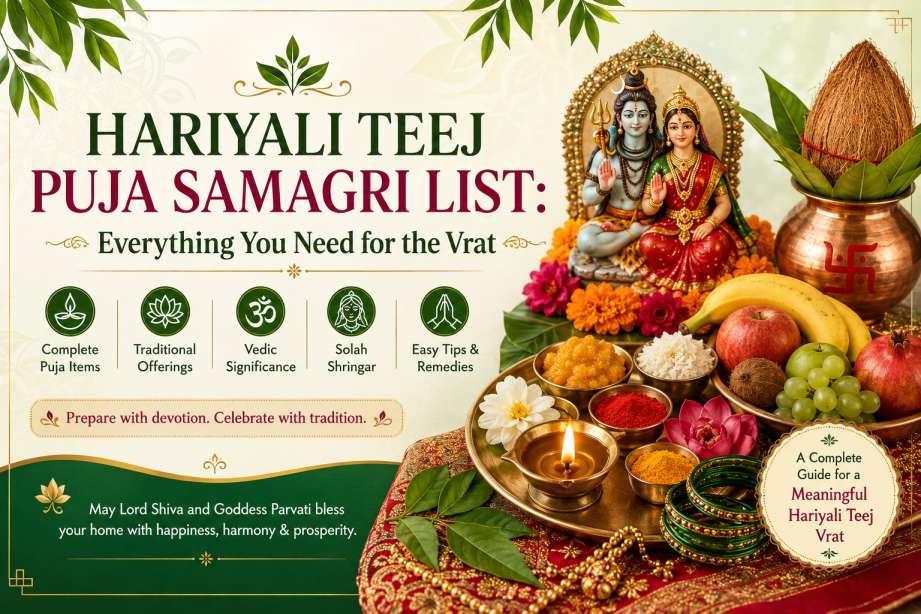
Below is the commonly used Hariyali Teej Puja Samagri list.
Essential Puja Items
- Idol or picture of Lord Shiva
- Idol or picture of Goddess Parvati
- Small idol or Shivling (if available)
- Clean wooden chowki
- Red or green cloth
- Kalash filled with clean water
- Mango leaves
- Coconut
- Kumkum (Roli)
- Haldi (Turmeric)
- Akshat (Unbroken rice)
- Chandan (Sandalwood paste)
Flowers and Leaves
Fresh flowers play an important role in Teej worship.
Recommended flowers include:
- Lotus (if available)
- Marigold
- Jasmine
- Rose
- Bela flowers
Sacred leaves:
- Bilva (Bel Patra) for Lord Shiva
- Durva grass (optional)
- Tulsi leaves (generally not offered to Shiva but may be kept separately for Vishnu worship if required)
Fruits for Offering
Offer seasonal fresh fruits such as:
- Banana
- Apple
- Pomegranate
- Sweet lime
- Coconut
- Pear
- Grapes
Fresh fruits symbolize abundance and gratitude.
Prasad Items
Traditional offerings include:
- Ghevar
- Malpua
- Kheer
- Dry fruits
- Mishri
- Panchamrit
- Homemade sweets
Many families also prepare local festive delicacies according to regional customs.
Puja Essentials
Keep these ready before beginning the puja:
- Ghee diya
- Cotton wicks
- Camphor
- Incense sticks
- Dhoop
- Matchbox
- Bell
- Puja thali
- Water pot
- Spoon
- Aarti book or printed prayers
Solah Shringar Items
Hariyali Teej celebrates feminine grace and auspiciousness.
Traditional Solah Shringar may include:
- Green bangles
- Bindi
- Sindoor
- Mehendi
- Alta
- Kajal
- Earrings
- Necklace
- Nose ring
- Anklets
- Toe rings
- Hair accessories
- Saree or traditional attire
- Perfume
- Kumkum
- Flowers for hair
These are generally offered to Goddess Parvati before devotees adorn themselves.
Astrological Significance of Hariyali Teej
From a Vedic astrology perspective, Hariyali Teej coincides with the spiritually vibrant Shravan month, which is closely associated with Lord Shiva.
Important planetary associations include:
Moon (Chandra)
The Moon governs emotions, relationships, nurturing, and mental peace.
Worshipping Shiva is traditionally believed to help devotees cultivate emotional balance and inner stability.
Venus (Shukra)
Venus represents:
- Marriage
- Beauty
- Relationships
- Luxury
- Harmony
The observance of Hariyali Teej is often connected with prayers for a happy married life and harmonious partnerships.
Jupiter (Guru)
Jupiter signifies:
- Dharma
- Wisdom
- Family blessings
- Prosperity
Listening to Hariyali Teej Katha and offering sincere prayers aligns with the values represented by Jupiter in Vedic astrology.
Traditional Hariyali Teej Mantra
One of the most widely recited Shiva mantras is:
ॐ नमः शिवाय
This Panchakshari Mantra is traditionally chanted with devotion during the puja.
Another popular prayer is:
वक्रतुण्ड महाकाय सूर्यकोटि समप्रभ।
निर्विघ्नं कुरु मे देव सर्वकार्येषु सर्वदा॥
Many devotees also recite Shiva Chalisa or Parvati Stuti depending on family traditions.
Practical Tips for Hariyali Teej Vrat
To prepare for the vrat:
- Arrange all puja materials one day in advance.
- Use fresh flowers and fruits.
- Wear clean traditional clothes, preferably green.
- Keep the puja area neat and peaceful.
- Follow your family’s traditional rituals whenever possible.
- Avoid wasting food offered as prasad.
- Perform the puja with sincerity rather than focusing only on elaborate arrangements.
Simple Spiritual Remedies on Hariyali Teej
These remedies are rooted in traditional beliefs and should be viewed as acts of devotion rather than guaranteed outcomes.
For Marital Harmony
- Offer Bilva leaves to Lord Shiva.
- Recite “Om Namah Shivaya” 108 times.
For Peace at Home
- Light a pure ghee lamp during evening prayers.
- Donate food or clothes to those in need.
For Positive Energy
- Water a sacred plant.
- Avoid arguments on the festival day.
- Spend time in prayer or meditation.
Conclusion
Hariyali Teej is much more than a fasting festival—it is a celebration of devotion, faith, and the sacred bond between Lord Shiva and Goddess Parvati. Preparing the complete Hariyali Teej Puja Samagri List in advance helps devotees perform the rituals with focus and respect for tradition.
Whether you are observing the vrat for the first time or continuing a cherished family custom, the essence of Hariyali Teej lies in sincere prayers, disciplined worship, and gratitude. By combining traditional rituals with mindful devotion, devotees can celebrate the festival in a spiritually meaningful and culturally authentic manner.
May Lord Shiva and Goddess Parvati bless every home with happiness, harmony, and prosperity.
FAQs
1. What is the complete Hariyali Teej Puja Samagri List?
The essential Hariyali Teej Puja Samagri includes idols of Lord Shiva and Goddess Parvati, kalash, flowers, fruits, prasad, diya, incense, kumkum, haldi, and Solah Shringar items.
The exact list may vary slightly across regions and family traditions, but the core items remain largely the same. Preparing the materials a day before the festival helps ensure a smooth and focused puja.
Helpful tips:
- Keep fresh flowers and fruits.
- Arrange the puja thali beforehand.
- Use clean, traditional utensils.
2. Why are green bangles worn on Hariyali Teej?
Green bangles symbolise prosperity, fertility, growth, and marital happiness.
The colour green also reflects the lush greenery of the Shravan season and is traditionally associated with joy and renewal. Wearing green is considered a cultural expression of the festival rather than a mandatory religious rule.
Related traditions:
- Wear green attire.
- Apply mehendi.
- Offer green bangles to Goddess Parvati.
3. Can unmarried women observe Hariyali Teej Vrat?
Yes, unmarried women may observe Hariyali Teej Vrat while praying for a suitable life partner and personal well-being.
In many communities, young women participate in the vrat inspired by the devotion of Goddess Parvati, who is revered for her determination and faith.
Suggested practices:
- Chant “Om Namah Shivaya”.
- Listen to the Hariyali Teej Katha.
- Offer sincere prayers with devotion.
4. Which flowers are best for Hariyali Teej Puja?
Fresh flowers such as marigold, jasmine, rose, lotus, and bela are commonly offered during Hariyali Teej Puja.
Flowers symbolise purity, beauty, and devotion. If a specific flower is unavailable, any fresh and clean flower offered with reverence is generally considered appropriate.
Best choices:
- Marigold
- Rose
- Jasmine
- Lotus
- Bela flowers
5. What is the significance of Bilva leaves in Hariyali Teej Puja?
Bilva leaves are traditionally offered to Lord Shiva as a symbol of devotion and purity.
According to Shaivite traditions, Bilva leaves hold a special place in Shiva worship and are commonly included in rituals throughout the Shravan month. Devotees offer them respectfully while reciting Shiva mantras.
Tips for offering Bilva leaves:
- Use fresh, undamaged leaves.
- Rinse them with clean water.
- Offer them while chanting “Om Namah Shivaya”.