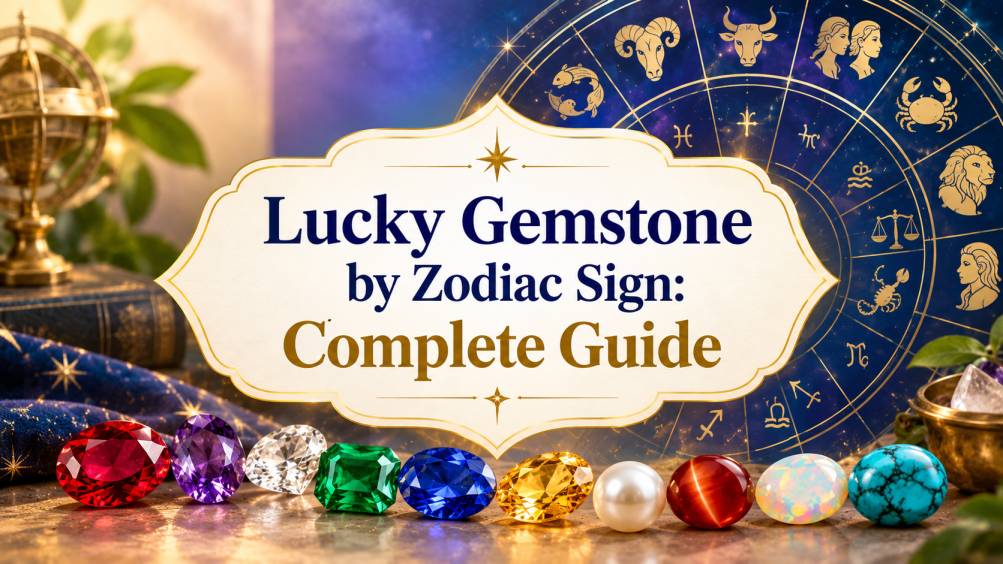
In Vedic astrology, gemstones are traditionally associated with planets and are believed to symbolically strengthen or support planetary influences. A lucky gemstone by zodiac sign can provide a simple starting point for understanding which stones are traditionally connected with your Rashi.
However, gemstone selection in Jyotish is more detailed than simply matching a stone with a zodiac sign. An astrologer may consider the Ascendant (Lagna), Moon sign, planetary strength, houses, Nakshatra, Mahadasha and Antardasha, and whether a planet is functionally beneficial or challenging in the birth chart.
This distinction is important because a gemstone traditionally associated with a particular sign may not be suitable for everyone born under that sign. Therefore, gemstones are best approached as an astrological practice rather than a guaranteed method for changing fortune.
Lucky Gemstone by Zodiac Sign
1. Aries (Mesha Rashi) – Red Coral
Ruling planet: Mars (Mangal)
Traditional gemstone: Red Coral (Moonga)
Mars represents courage, initiative, physical energy and determination in Vedic astrology. Red Coral is traditionally associated with Mars.
Common traditional associations:
- Courage and confidence
- Initiative and determination
- Physical vitality
- Leadership and action
Important: Red Coral should ideally be recommended after checking Mars’ placement and role in the individual Kundli.
2. Taurus (Vrishabha Rashi) – Diamond
Ruling planet: Venus (Shukra)
Traditional gemstone: Diamond (Heera)
Venus represents beauty, relationships, comforts, creativity and artistic expression. Diamond is traditionally associated with Venus.
Traditional associations include:
- Creativity and aesthetics
- Relationships
- Luxury and comforts
- Artistic interests
White sapphire is sometimes considered an alternative Venus gemstone, depending on the astrological approach.
3. Gemini (Mithuna Rashi) – Emerald
Ruling planet: Mercury (Budha)
Traditional gemstone: Emerald (Panna)
Mercury is associated with communication, intellect, learning, commerce and analytical abilities. Emerald is its traditional gemstone.
It is traditionally associated with:
- Communication skills
- Learning and reasoning
- Business and calculation
- Adaptability
A complete birth chart should be checked before wearing an emerald as a planetary remedy.
4. Cancer (Karka Rashi) – Pearl
Ruling planet: Moon (Chandra)
Traditional gemstone: Pearl (Moti)
The Moon represents emotions, mental patterns, nurturing qualities and sensitivity. Pearl is traditionally associated with the Moon.
Traditional associations:
- Emotional balance
- Calmness
- Nurturing qualities
- Mental sensitivity
Moon-related gemstone recommendations can vary considerably depending on the Moon’s house, sign and aspects.
5. Leo (Simha Rashi) – Ruby
Ruling planet: Sun (Surya)
Traditional gemstone: Ruby (Manikya)
The Sun represents vitality, self-expression, authority and confidence. Ruby is traditionally connected with Surya.
Traditional associations include:
- Confidence
- Leadership
- Recognition
- Vitality and self-expression
Ruby is considered a strong planetary gemstone, so personalised chart analysis is particularly relevant before wearing it.
6. Virgo (Kanya Rashi) – Emerald
Ruling planet: Mercury (Budha)
Traditional gemstone: Emerald (Panna)
Virgo is traditionally ruled by Mercury and is associated with analysis, organisation, communication and practical thinking.
Emerald is therefore the traditional Mercury gemstone for Virgo.
Potentially relevant areas include:
- Study and education
- Communication
- Business
- Analytical work
7. Libra (Tula Rashi) – Diamond
Ruling planet: Venus (Shukra)
Traditional gemstone: Diamond (Heera)
Libra is ruled by Venus, making diamond its traditional planetary gemstone.
It is associated in Jyotish with Venusian themes such as relationships, artistic expression, refinement and material comforts.
White sapphire may also be considered as an alternative in some traditions.
8. Scorpio (Vrishchika Rashi) – Red Coral
Ruling planet: Mars (Mangal)
Traditional gemstone: Red Coral (Moonga)
Scorpio is traditionally ruled by Mars. Red Coral is therefore associated with Mars-related qualities such as determination, courage and assertiveness.
Traditional themes include:
- Willpower
- Initiative
- Physical energy
- Determination
Its suitability should still be evaluated from the complete Kundli.
9. Sagittarius (Dhanu Rashi) – Yellow Sapphire
Ruling planet: Jupiter (Guru)
Traditional gemstone: Yellow Sapphire (Pukhraj)
Jupiter represents wisdom, learning, ethics, guidance and expansion. Yellow Sapphire is traditionally connected with Jupiter.
Traditional associations include:
- Education and knowledge
- Wisdom
- Spiritual learning
- Guidance and optimism
Because Jupiter’s functional role varies between charts, professional assessment is preferable.
10. Capricorn (Makara Rashi) – Blue Sapphire
Ruling planet: Saturn (Shani)
Traditional gemstone: Blue Sapphire (Neelam)
Saturn represents discipline, responsibility, patience, structure and long-term effort. Blue Sapphire is traditionally associated with Saturn.
Neelam is considered particularly significant in Jyotish and is generally not recommended solely on the basis of a person’s zodiac sign.
11. Aquarius (Kumbha Rashi) – Blue Sapphire
Ruling planet: Saturn (Shani)
Traditional gemstone: Blue Sapphire (Neelam)
Aquarius also has Saturn as its traditional ruler. Blue Sapphire is therefore traditionally connected with this sign.
However, Saturn’s house placement, dignity, aspects and overall role in the birth chart matter when considering this gemstone.
12. Pisces (Meena Rashi) – Yellow Sapphire
Ruling planet: Jupiter (Guru)
Traditional gemstone: Yellow Sapphire (Pukhraj)
Pisces is traditionally ruled by Jupiter, making Yellow Sapphire its associated gemstone.
It is traditionally linked with Jupiterian themes such as knowledge, spirituality, teaching, wisdom and ethical development.
How to Choose a Gemstone According to Your Kundli
Your zodiac sign alone is not enough to determine the most appropriate gemstone. A traditional Jyotish assessment may consider:
- Lagna: Determines the functional role of planets.
- House placement: Shows the areas of life influenced by a planet.
- Planetary strength: Examines dignity and condition.
- Nakshatra: Provides additional lunar-based information.
- Mahadasha and Antardasha: Indicates the planetary periods currently operating.
- Yogas: Certain planetary combinations can modify interpretation.
- Planetary aspects: Other planets can influence the gemstone’s associated planet.
This is why two people with the same zodiac sign may receive different gemstone recommendations.
Practical Gemstone Guidelines
If you are considering wearing a gemstone traditionally recommended in Jyotish, approach it carefully.
Check the Birth Chart
Do not select an expensive gemstone simply because an online list calls it your zodiac gemstone. A Kundli-based assessment provides more context.
Consider Quality and Authenticity
Natural gemstones can vary significantly in quality, treatment and value. Certification from a credible gemological laboratory can help establish authenticity and characteristics.
Understand the Setting
Traditional practices may specify the metal, finger and day for wearing a gemstone. These recommendations differ according to the gemstone and astrological school being followed.
Avoid Guaranteed Claims
Statements such as “this gemstone will definitely bring wealth” or “this stone will remove every problem” are not appropriate substitutes for astrological analysis or practical decision-making.
Simple Planetary Alternatives
If you do not want to wear gemstones, traditional astrology also includes simpler practices.
- Sun: Surya Namaskar, morning sunlight and disciplined routines
- Moon: Meditation, adequate rest and peaceful routines
- Mars: Physical exercise and constructive use of energy
- Mercury: Reading, learning and communication practice
- Jupiter: Education, charity and respect for teachers
- Venus: Artistic activities and maintaining harmonious relationships
- Saturn: Discipline, service and responsibility
These practices can be followed without assuming that they guarantee a particular outcome.
Conclusion
A lucky gemstone by zodiac sign provides a useful introduction to the traditional relationship between gemstones and planetary energies in Vedic astrology. Red Coral is associated with Mars, Emerald with Mercury, Ruby with the Sun, Pearl with the Moon, Yellow Sapphire with Jupiter, Diamond with Venus and Blue Sapphire with Saturn.
However, your Rashi should be considered only a starting point. The Ascendant, houses, planetary strength, Dashas and other Kundli factors can change whether a gemstone is considered suitable. Instead of choosing a gemstone solely because it is labelled “lucky,” use astrology as a framework for reflection and seek a qualified interpretation when making an important gemstone decision.
FAQs
1. Which gemstone is lucky for my zodiac sign?
Each zodiac sign has a traditionally associated gemstone based primarily on its ruling planet, but suitability should ideally be checked through the complete Kundli.
For example, Aries and Scorpio are traditionally associated with Red Coral because Mars rules these signs, while Gemini and Virgo are associated with Emerald through Mercury. Sagittarius and Pisces are traditionally connected with Yellow Sapphire through Jupiter.
Quick reference:
- Aries – Red Coral
- Taurus – Diamond
- Gemini – Emerald
- Cancer – Pearl
- Leo – Ruby
- Virgo – Emerald
- Libra – Diamond
- Scorpio – Red Coral
- Sagittarius – Yellow Sapphire
- Capricorn – Blue Sapphire
- Aquarius – Blue Sapphire
- Pisces – Yellow Sapphire
2. Can I wear a gemstone based only on my Rashi?
Rashi can provide a general indication, but traditional Jyotish usually considers the full birth chart before recommending a planetary gemstone.
The same gemstone can be interpreted differently for different people because planetary house ownership, placement, aspects and Dashas vary.
Before wearing one:
- Check the Ascendant.
- Examine the planet’s house placement.
- Consider its strength and aspects.
- Review the current Mahadasha and Antardasha.
3. Which gemstone is considered most powerful in Vedic astrology?
Blue Sapphire, or Neelam, is traditionally regarded as a particularly strong Saturn gemstone, but “powerful” does not mean universally suitable.
Its traditional use depends heavily on Saturn’s role in an individual’s Kundli. It is therefore better to avoid choosing Blue Sapphire solely because Saturn rules your zodiac sign.
Practical tip: Get the gemstone recommendation evaluated against your complete birth chart before making a significant purchase.
4. Can gemstones really change your luck?
Gemstones are traditionally believed to support planetary influences, but there is no reliable scientific evidence that wearing a gemstone directly changes a person’s fortune.
From a Jyotish perspective, gemstones are considered one type of planetary remedy. They should complement—not replace—practical actions such as financial planning, education, medical care or professional advice.
A balanced approach includes:
- Astrological reflection
- Practical decision-making
- Consistent effort
- Appropriate professional guidance
5. Which gemstone is associated with the Sun in astrology?
Ruby, or Manikya, is the traditional gemstone associated with the Sun in Vedic astrology.
The Sun represents themes such as vitality, authority, confidence and self-expression. Whether Ruby is appropriate depends on the Sun’s role and placement in the individual’s Kundli.
Traditional alternatives may include:
- Surya Namaskar
- Morning prayers
- Maintaining disciplined routines
- Respecting responsibilities and authority appropriately
6. What should I check before buying a lucky gemstone?
Before purchasing an expensive gemstone, check its astrological suitability, authenticity, quality and certification.
A gemstone should not be selected only from a generic zodiac chart, particularly when the stone is expensive or traditionally considered strong.
Buying checklist:
- Confirm the gemstone type.
- Check natural versus synthetic or treated status.
- Request credible laboratory certification.
- Compare quality and pricing.
- Obtain personalised astrological guidance when appropriate.