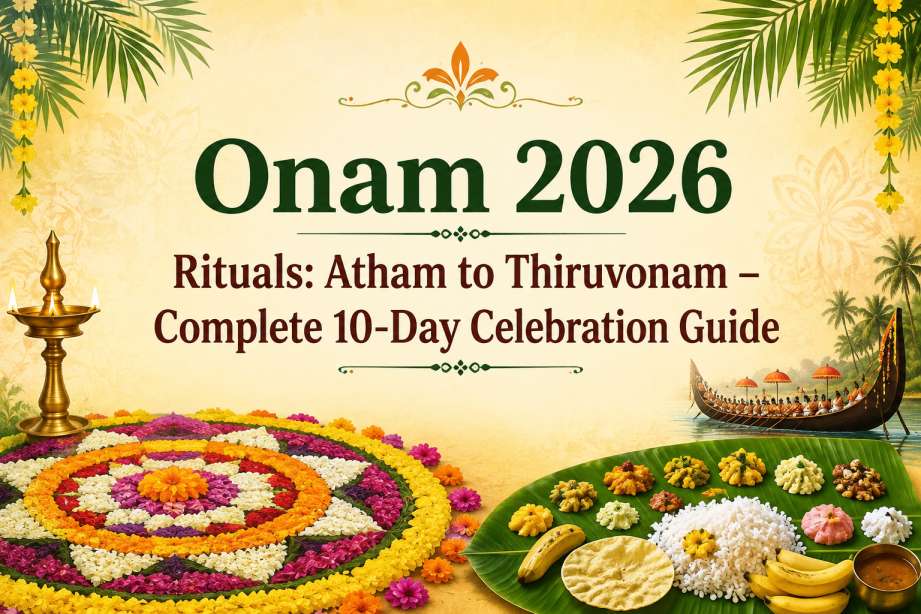
Onam 2026 is a ten-day cultural and spiritual celebration associated with Kerala’s harvest season, the legendary homecoming of King Mahabali and the Vamana tradition connected with Lord Vishnu. The festival culminates on Thiruvonam, Wednesday, 26 August 2026. According to Kerala Tourism, the celebrations traditionally begin with Atham and develop through a sequence of floral, household, temple and community rituals.
From an astrological perspective, Onam is especially interesting because its ten-day sequence follows nakshatras, beginning with Atham (Hasta) and culminating in Thiruvonam (Shravana). Shravana is traditionally associated with Lord Vishnu, while its ruling planet is the Moon. This gives the festival a symbolic connection with nourishment, listening, family harmony, devotion and emotional balance.
The following guide explains the Onam 2026 rituals from Atham to Thiruvonam, while keeping astrology in its proper traditional context rather than treating it as a guarantee of material results.
Onam 2026: Atham to Thiruvonam
There is a small calendar nuance in 2026: some Panchang systems mark Atham on 16 August, because the Atham nakshatra begins at 03:25 AM on 16 August and ends at 03:50 AM on 17 August. Other festival calendars present the ten-day sequence from 17 August. The main Thiruvonam date remains 26 August 2026. Therefore, devotees should follow their regional Malayalam Panchang for exact local observance.
1. Atham – Beginning of the Celebration
Atham marks the beginning of the traditional Onam sequence. The first Athapookkalam, or floral carpet, is kept relatively simple.
Kerala Tourism describes the first Pookkalam as traditionally using flowers such as thumba, with the design gradually becoming larger and more elaborate each day.
Astrological insight: Atham corresponds to Hasta nakshatra, ruled by the Moon. Symbolically, this is a suitable day for beginning household preparations, improving routines and creating emotional harmony.
Simple practice: Clean the entrance of the home and begin the festival with a calm intention rather than excessive spending.
2. Chithira – Cleanliness and Preparation
The second stage traditionally adds another layer to the Pookkalam. White flowers are particularly associated with this stage in traditional descriptions.
Chithira corresponds to Chitra nakshatra, traditionally ruled by Mars. Its symbolism can be connected with creativity, structure and purposeful action.
Practical focus: Organise the home, complete pending household tasks and prepare a realistic Onam budget.
3. Chodhi – Colour and Expansion
As the Pookkalam grows, brighter flowers begin to appear. Kerala’s traditional descriptions note that colourful flowers such as hibiscus may be introduced from Chothi.
Chothi corresponds to Swati, associated with Rahu. Rather than viewing Rahu negatively, this can be interpreted symbolically as flexibility and independence.
Practical focus: Avoid unnecessary comparison with other families’ decorations or celebrations.
4. Vishakam – Community and Sharing
Vishakam is associated with Vishakha nakshatra, traditionally ruled by Jupiter. Jupiter represents learning, generosity and guidance in classical astrology.
This makes the day a useful reminder to share resources, knowledge and food. Onam’s broader cultural emphasis on community reinforces this message.
5. Anizham – Togetherness
Anizham corresponds to Anuradha nakshatra, ruled by Saturn. Traditional Onam celebrations around this period may include community events and preparations for cultural activities.
From an astrological perspective, Saturn can symbolically represent discipline, responsibility and cooperation.
Practical remedy: Help an elderly family member, worker or someone who needs practical assistance. Charity should be voluntary and useful rather than performed only for a promised astrological result.
6. Thriketta – Respect and Responsibility
Thriketta corresponds to Jyeshtha nakshatra, ruled by Mercury. This stage can be viewed as a reminder to communicate carefully and respect family experience.
Use the day for planning, communication and completing preparations for the main celebration.
7. Moolam – Deeper Traditions
Moolam corresponds to Mula nakshatra, ruled by Ketu. Mula carries themes of roots and going deeper into fundamentals.
This is an appropriate symbolic day to reconnect with the cultural roots of Onam rather than focusing only on decoration and food.
Reflection: Ask what values Onam represents for your family—generosity, equality, gratitude, hospitality or togetherness.
8. Pooradam – Preparing for the Main Day
Pooradam corresponds to Purva Ashadha, ruled by Venus. Families traditionally move closer to the main celebration, with Pookkalam designs becoming more elaborate.
Kerala Tourism notes that the Pookkalam continues to expand through the days and develops distinctive forms at different stages.
Practical focus: Finalise groceries, clothing, decorations and family arrangements without creating unnecessary financial pressure.
9. Uthradam – First Onam
Uthradam is popularly regarded as First Onam and is the immediate preparation day for Thiruvonam. The Pookkalam traditionally reaches one of its largest and most elaborate forms around this time.
Uthradam corresponds to Uttara Ashadha, traditionally ruled by the Sun. Its symbolism can be connected with responsibility, dignity and completing commitments.
Remedy: Offer food to someone in need, support a community meal or contribute useful household supplies to a charitable cause.
10. Thiruvonam – The Main Celebration
Thiruvonam falls on Wednesday, 26 August 2026. The Thiruvonam nakshatra begins at 10:51 PM IST on 25 August and ends at 12:48 AM IST on 27 August for Thiruvananthapuram.
Thiruvonam is identified with Shravana nakshatra, traditionally ruled by the Moon and associated with Lord Vishnu. In the traditional narrative, Mahabali’s annual homecoming is remembered through hospitality, equality and abundance.
Major practices include:
- Creating the final Pookkalam.
- Wearing Onakkodi, or new festive clothes.
- Visiting temples according to family tradition.
- Preparing Onasadya, the traditional vegetarian feast.
- Spending time with family and community.
- Offering prayers and expressing gratitude.
- In some traditions, worshipping Thrikkakara Appan or related forms.
At the Sree Padmanabhaswamy Temple, the ceremonial Onavillu tradition is also associated with Thiruvonam.
Astrological Meaning of Onam
Onam should not be reduced to a collection of planetary remedies. Its astrological value is primarily symbolic.
The journey from Hasta to Shravana can be viewed as a progression from action and preparation toward listening, devotion and emotional connection. The Moon’s traditional rulership of both Hasta and Shravana also provides a meaningful theme of home, family and nourishment.
For a simple spiritual practice, devotees can:
- Maintain a peaceful home environment.
- Pray to Lord Vishnu according to personal tradition.
- Share food without discrimination.
- Practise gratitude.
- Avoid unnecessary arguments.
- Donate useful items rather than making extravagant offerings.
These practices are culturally meaningful and do not require belief in guaranteed astrological outcomes.
Conclusion
Onam 2026 is more than a single festival day. The journey from Atham to Thiruvonam gradually builds a sense of beauty, preparation, community and gratitude. Pookkalam represents this progression visually, while Onasadya and family gatherings express the festival’s emphasis on abundance and sharing. Kerala Tourism describes Onam as a celebration rooted in both mythology and agrarian life.
Astrologically, the sequence of nakshatras offers an additional traditional lens through which devotees can reflect on discipline, creativity, generosity, family relationships and spiritual awareness. The most meaningful Onam remedy is therefore not excessive ritual—it is sharing, gratitude and responsible living.
May Onam 2026 bring greater harmony, generosity and positive beginnings into your home.
FAQs
1. When is Thiruvonam in 2026?
Thiruvonam will be celebrated on Wednesday, 26 August 2026.
It is the main day of the traditional ten-day Onam celebration. The Thiruvonam nakshatra begins at 10:51 PM IST on 25 August and ends at 12:48 AM IST on 27 August in Thiruvananthapuram.
Related tips:
- Follow the local Panchang for rituals.
- Keep the main celebration focused on family and gratitude.
- Avoid treating a single muhurta as universally applicable.
2. What is the first ritual of Onam?
The first major household ritual is preparing the Athapookkalam on Atham.
The floral carpet begins simply and traditionally becomes larger and more elaborate during the following days. Kerala Tourism notes that Pookkalams are associated with welcoming Mahabali and symbolising prosperity and joy.
Simple practice: Keep the entrance clean and create the first Pookkalam with locally available flowers where practical.
3. What is the astrological significance of Thiruvonam nakshatra?
Thiruvonam corresponds to Shravana nakshatra, traditionally ruled by the Moon and associated with Lord Vishnu.
In Jyotisha symbolism, Shravana is connected with listening, learning and receptivity. This makes Thiruvonam a meaningful occasion for prayer, family conversations and reflection.
Suggested practice:
- Listen patiently to elders.
- Read or hear Vishnu-related prayers.
- Practise gratitude.
- Share food with others.
4. What should be done on Thiruvonam?
Families traditionally prepare Pookkalam and Onasadya, wear festive clothes, offer prayers and celebrate together.
Regional customs vary considerably. Some households also worship Thrikkakara Appan, while temple traditions may include additional ceremonies.
Keep it simple: Follow your family tradition, avoid waste and include people who may otherwise be left out of the celebration.
5. Is there a special Onam remedy for prosperity?
A traditional and practical Onam remedy for prosperity is sharing food and supporting someone genuinely in need.
Astrology does not provide a scientifically guaranteed formula for financial prosperity. Within traditional Jyotisha practice, charity and disciplined conduct are valued as spiritual practices rather than instant solutions.
Useful options:
- Donate groceries.
- Support a community meal.
- Share your Onasadya.
- Avoid unnecessary festive debt.
- Begin the new season with a disciplined financial plan.