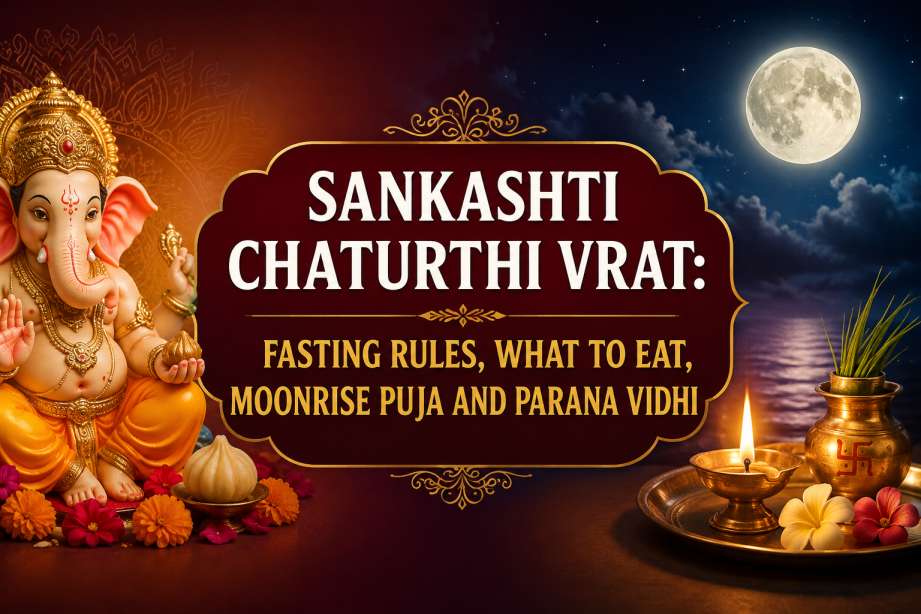
Sankashti Chaturthi Vrat is an important monthly Hindu fasting observance dedicated to Lord Ganesha, the remover of obstacles and deity associated with wisdom, intellect and auspicious beginnings. It is observed on the Chaturthi Tithi of Krishna Paksha, after the full moon, every lunar month.
The most important part of this vrat is the Moonrise Puja, because devotees traditionally offer prayers to Lord Ganesha and then perform the concluding rituals after sighting the Moon. The exact Chandrodaya or Moonrise time varies according to location, so devotees should follow the local Panchang and use IST (Indian Standard Time) for Indian cities.
Sankashti fasting is not merely about avoiding food. It is traditionally viewed as a discipline for controlling the senses, developing patience and seeking clarity in difficult situations.
Sankashti Chaturthi Astrological Significance
In Vedic tradition, Lord Ganesha is connected with Budha (Mercury) through qualities such as intelligence, communication, calculation and analytical ability. Therefore, Ganesh worship is often considered especially meaningful when a person wants to improve concentration, learning ability or decision-making.
From an astrological perspective, the houses associated with intellect, communication, obstacles and practical decision-making can be considered while assessing the personal significance of Ganesh worship.
However, a Sankashti Chaturthi vrat should not be treated as a guaranteed remedy for a particular planetary problem. Its value lies in combining spiritual discipline, prayer, mindful fasting and positive conduct.
Sankashti Chaturthi Fasting Rules
Fasting rules can differ between families and regional traditions. The safest approach is to follow the customs prescribed by your family Panchang while keeping the fast suitable for your health.
Common Fasting Practices
Devotees may observe one of the following forms:
- Nirjala Vrat: Complete fast without food or water, traditionally practiced by those accustomed to it.
- Phalahar Vrat: Fruits, milk and permitted fasting foods are consumed.
- Satvik Vrat: Light fasting meals prepared without regular grains and certain prohibited ingredients.
- Partial Fast: Suitable for elderly people, children or those unable to observe a strict fast.
A strict fast is not compulsory for everyone. People with medical conditions, pregnant women, children and elderly devotees should prioritize health and follow appropriate professional advice.
What to Avoid During Sankashti Vrat
Depending on the tradition, devotees generally avoid:
- Regular grains and cereals
- Non-vegetarian food
- Alcohol and tobacco
- Onion and garlic in strict sattvic practices
- Heavy, fried or excessively spicy food
- Negative speech, arguments and unnecessary anger
The purpose is to maintain a calm and disciplined body and mind throughout the day.
What to Eat During Sankashti Chaturthi Vrat
Those following a phalahar or light fasting routine can choose simple foods.
Vrat-Friendly Food Options
- Fresh seasonal fruits
- Milk and curd
- Coconut water
- Makhana
- Sabudana preparations
- Samak rice
- Rajgira
- Singhara flour
- Peanuts and selected nuts
- Potatoes or sweet potatoes
- Homemade vrat-friendly preparations
Keep portions moderate. A fasting meal should support the body rather than become a heavy feast.
For people who experience weakness, dehydration or other symptoms during fasting, continuing a strict vrat may not be appropriate.
Sankashti Chaturthi Moonrise Puja Vidhi
The Moonrise Puja is one of the most significant parts of Sankashti Chaturthi.
The exact Moonrise time should always be checked for your specific Indian location in IST, because Chandrodaya can differ between cities.
Step-by-Step Puja
- Take a bath and wear clean clothes.
- Clean the puja area and place an idol or image of Lord Ganesha.
- Light a diya and offer flowers.
- Offer durva grass, fruits and other traditional naivedya.
- Chant a Ganesha mantra such as “Om Gan Ganapataye Namah.”
- Read or listen to the Sankashti Chaturthi Vrat Katha.
- Perform Ganesha aarti.
- After Moonrise, offer arghya to Chandra Dev according to your family tradition.
- Pray to Lord Ganesha for wisdom, peace and removal of obstacles.
- Complete the vrat through the traditional parana procedure.
Sankashti Chaturthi Parana Vidhi
Parana means concluding the fast. Traditionally, devotees complete the vrat after the prescribed Moonrise rituals and prayers.
A simple parana may include:
- Offering water to the Moon.
- Completing Ganesha Puja and aarti.
- Offering naivedya.
- Taking prasad.
- Eating a light sattvic meal according to one’s family tradition.
There can be regional differences regarding whether the fast is broken immediately after Moonrise, after Chandra Puja, or after another prescribed ritual. Therefore, the local Panchang and family tradition should take priority.
Practical Remedies for Sankashti Chaturthi
Along with fasting, devotees may use the day for simple spiritual practices.
For Better Concentration
Chant “Om Gan Ganapataye Namah” with a calm mind and spend a few minutes in silent meditation.
For Removing Obstacles
Before beginning an important task, pray to Lord Ganesha and consciously identify one practical step that can help resolve the problem.
For Family Harmony
Avoid arguments and harsh speech on the vrat day. Ganesh worship can be combined with a deliberate effort to communicate patiently.
For Students
Offer durva to Ganesha and spend some quiet time reviewing studies instead of relying only on ritual remedies. Spiritual discipline works best alongside consistent effort.
Why Moonrise Matters in Sankashti Vrat
The Moon has an important place in the ritual structure of Sankashti Chaturthi. The fast is traditionally concluded after Chandra Darshan, making the Moonrise timing particularly important.
Because Moonrise changes with geographical location, devotees in Delhi, Mumbai, Bengaluru, Kolkata, Chennai and other cities may observe different Chandrodaya timings. Always check the timing for the city where you are actually performing the vrat.
Conclusion
Sankashti Chaturthi Vrat combines fasting, Lord Ganesha worship, Moonrise rituals and self-discipline. Its deeper purpose is not simply to remain without food but to cultivate patience, clarity and devotion.
A balanced approach is important: follow your regional Panchang, observe the fasting method suitable for your body, perform the Moonrise Puja with sincerity and complete parana according to your tradition. From an astrological perspective, Ganesh worship can be used as a spiritual practice for cultivating intellect, discipline and obstacle-management rather than as a substitute for practical action.
The most meaningful Sankashti observance is one that brings greater awareness, calmness and positive conduct into everyday life.
FAQs
1. Can we drink water during Sankashti Chaturthi Vrat?
Yes, devotees can drink water when following a phalahar or partial fast, while Nirjala fasting traditionally avoids water.
Fasting practices vary according to family tradition and individual capacity. There is no need to force a strict fast if it causes weakness or health concerns.
Tips:
- Keep yourself adequately hydrated if your vrat permits water.
- Choose coconut water or other permitted fluids if appropriate.
- Prioritize health over a rigid fasting method.
2. What can I eat during Sankashti Chaturthi?
Fruits, milk, makhana, sabudana, samak rice, rajgira and other permitted vrat foods are commonly consumed.
The exact list varies by regional and family customs. Avoid turning the fast into a heavy meal by limiting fried and excessively processed vrat foods.
Simple choices: fruits, milk, makhana, nuts, sabudana and light vrat preparations.
3. When should Sankashti Chaturthi fast be broken?
Traditionally, the fast is concluded after Moonrise, Chandra Darshan and the prescribed Ganesha-Moon worship rituals.
The precise procedure can differ according to regional customs. The local Moonrise timing should be checked for the city of observance and expressed in IST for Indian locations.
Remember: Moonrise time varies by city, so do not rely on a generic timing.
4. Why is Moonrise important on Sankashti Chaturthi?
Moonrise is important because traditional Sankashti observance includes Chandra Darshan before concluding the fast.
Devotees generally offer prayers and arghya to Chandra Dev according to their tradition after sighting the Moon. This gives the vrat a distinctive ritual structure compared with many other fasting observances.
Useful practice: Check the local Panchang for the exact Chandrodaya time.
5. Which mantra is suitable during Sankashti Chaturthi?
“Om Gan Ganapataye Namah” is a simple and widely used mantra for Lord Ganesha worship.
It can be chanted peacefully during meditation or puja. Devotees may also recite traditional Ganesha stotras or the Sankashti Vrat Katha according to their family practice.
For a simple routine:
- Light a diya.
- Chant the mantra with concentration.
- Offer durva and flowers.
- Conclude with aarti and prayer.
6. Can children and elderly people observe Sankashti Chaturthi fasting?
Yes, but they should follow a suitable and less restrictive fasting method rather than forcing a strict fast.
Fasting requirements should be adjusted according to age, routine and physical needs. Devotion does not depend on enduring physical discomfort.
A practical option: follow a light, nutritious vrat diet and focus on prayer, discipline and mindful conduct.