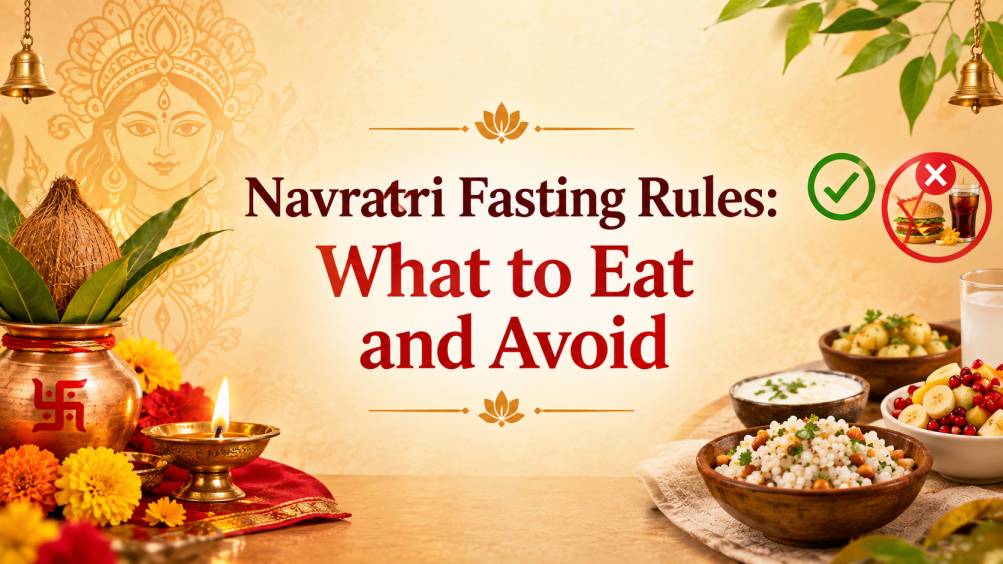
Navratri fasting, or Navratri vrat, is an important tradition observed by many devotees during the nine-day worship of Goddess Durga. Fasting is commonly practised during Chaitra Navratri and Sharad Navratri, although customs can differ between families and regions of India.
The purpose of the vrat is traditionally connected with devotion, self-discipline and purification. From a practical perspective, fasting also changes everyday eating habits by limiting certain grains, pulses and commonly used ingredients.
There is no single fasting menu followed across India. Rules can vary according to family traditions, regional customs and individual health needs. Understanding what is traditionally permitted and choosing simple, balanced meals can make Navratri fasting easier to follow.
Common Navratri Fasting Rules
During Navratri, devotees may avoid regular grains and certain foods while eating ingredients traditionally considered suitable for vrat.
Commonly permitted foods include:
- Fruits
- Milk and dairy products
- Potatoes and sweet potatoes
- Sabudana
- Singhara (water chestnut) flour
- Kuttu (buckwheat) flour
- Rajgira (amaranth)
- Samak rice
- Peanuts
- Makhana
- Rock salt or sendha namak
- Selected vegetables, depending on family tradition
The exact rules may differ. Some people follow a phalahar diet consisting mainly of fruits, milk and selected vrat foods, while others eat one or two cooked meals during the fasting period.
What to Eat During Navratri Vrat
1. Fruits and Fresh Foods
Fruits are among the simplest fasting foods. Bananas, apples, oranges, papaya, guava and seasonal fruits can be used for snacks or part of a meal.
Fresh coconut and coconut water are also popular during Navratri.
For variety, fruits can be combined with plain yoghurt or used in a simple fruit bowl.
2. Kuttu and Singhara Flour
Kuttu atta and singhara atta are widely used as alternatives to regular wheat flour during vrat.
They can be prepared as:
- Kuttu roti
- Kuttu cheela
- Singhara puri
- Singhara roti
Because these dishes can become heavy when deep-fried, lighter cooking methods can be preferred for everyday meals.
3. Sabudana
Sabudana is a popular fasting ingredient and is commonly prepared as sabudana khichdi or sabudana vada.
For a lighter version, use moderate amounts of peanuts and oil and pair the meal with yoghurt or vegetables permitted during the fast.
4. Samak Rice
Samak rice, sometimes called vrat rice, is commonly used instead of regular rice during fasting.
It can be prepared as:
- Samak pulao
- Samak khichdi
- Simple samak rice with yoghurt
Its use depends on the fasting tradition being followed.
5. Makhana and Nuts
Makhana, almonds, walnuts and peanuts can provide convenient snack options.
Roasted makhana can be prepared with a small amount of ghee and sendha namak. Nuts can also be added to milk or yoghurt.
What to Avoid During Navratri Fasting
The foods avoided during Navratri vary by tradition, but commonly restricted foods include:
- Wheat and wheat-based products
- Regular rice
- Most pulses and legumes
- Maida
- Common table salt
- Certain spices and packaged seasoning mixes
- Meat and fish
- Eggs
- Alcohol
Some devotees also avoid onion and garlic during the fasting period.
Packaged foods require particular attention because they may contain ingredients that are not considered vrat-friendly. Checking the ingredient label can help avoid accidentally consuming restricted ingredients.
Navratri Prasad Ideas
Prasad is an important part of Navratri worship and can be kept simple.
Easy Prasad Options
- Makhana Prasad:
Roast makhana lightly in ghee and add a small amount of sendha namak or serve it plain. - Fruit Prasad:
Use fresh seasonal fruits and coconut for a simple offering. - Sabudana Kheer:
Cook soaked sabudana with milk, cardamom and a moderate amount of sugar or another traditionally used sweetener. - Singhara Halwa:
Singhara flour can be cooked with ghee, milk and sugar to prepare a traditional-style sweet. - Coconut and Dry Fruits:
Coconut pieces with almonds, raisins or other permitted dry fruits can make a simple offering.
Before preparing prasad, follow the specific ingredients permitted by your family’s Navratri tradition.
Spiritual and Astrological Significance
Navratri is traditionally associated with the worship of Shakti, or divine feminine energy, through different forms of Goddess Durga.
From an astrological and spiritual perspective, fasting is often viewed as a practice of self-control, discipline and focused devotion, rather than simply dietary restriction.
The nine-day observance is also connected with prayer, meditation, mantra recitation and charitable activities.
A simple practice may include:
- Morning prayer
- Durga mantra or stotra recitation
- Meditation
- Keeping the home and puja space clean
- Offering traditional prasad
- Charity or helping someone in need
How to Follow a Healthy Navratri Fast
Fasting does not have to mean eating very little. Frequent consumption of fried vrat foods, sweets and high-calorie snacks can make the diet unnecessarily heavy.
For a more balanced approach:
- Drink sufficient water.
- Include fresh fruits and permitted vegetables.
- Use moderate amounts of ghee and oil.
- Include milk, yoghurt or other suitable protein sources if part of your diet.
- Avoid relying entirely on fried foods.
- Eat according to your body’s needs.
People with diabetes, kidney disease, eating disorders, pregnancy, or other medical conditions should seek individual medical advice before fasting or significantly changing their diet.
Conclusion
Following Navratri fasting rules is a personal and cultural practice, and the exact customs can differ across Indian families and regions. Kuttu, singhara, sabudana, samak rice, fruits, makhana and dairy products are among the commonly used vrat foods, while grains, pulses, meat, eggs and certain ingredients are generally avoided.
Prasad can be equally simple, with options such as fruit, makhana, sabudana kheer and singhara halwa. The deeper purpose of Navratri fasting traditionally centres on devotion, discipline and mindful living.
Rather than focusing only on restrictions, devotees can use the nine days as an opportunity for prayer, self-control and thoughtful eating while respecting their family’s traditions and individual health requirements.
FAQs
1. What can I eat during Navratri fasting?
Common Navratri vrat foods include fruits, potatoes, sabudana, kuttu, singhara, samak rice, makhana, dairy products and sendha namak.
The permitted food list depends on regional and family traditions. Some people follow phalahar, while others have cooked vrat meals once or twice a day.
Simple options:
- Fruits and coconut
- Kuttu roti
- Sabudana khichdi
- Samak rice
- Makhana
- Yoghurt
2. What should I avoid during Navratri vrat?
Wheat, regular rice, most pulses, meat, fish, eggs and alcohol are commonly avoided during Navratri fasting.
Many devotees also avoid onion, garlic and regular table salt. However, specific restrictions vary between traditions, so family or regional practices should be considered.
Check before eating:
- Packaged snacks
- Ready-made sauces
- Spice mixes
- Processed foods
- Foods containing regular grains
3. Can I eat rice during Navratri fasting?
Regular rice is generally avoided during Navratri vrat, while samak rice is commonly used as a fasting alternative.
Samak is popularly known as vrat rice, although the exact foods permitted during fasting depend on individual traditions.
Try:
- Samak khichdi
- Samak pulao
- Samak rice with yoghurt
4. Is sabudana allowed during Navratri?
Yes, sabudana is traditionally considered suitable for many types of Navratri fasting.
It is commonly prepared as sabudana khichdi, sabudana vada or kheer. Since some preparations contain substantial oil, ghee or peanuts, portion size can be kept moderate.
Popular choices:
- Sabudana khichdi
- Sabudana kheer
- Sabudana vada
- Sabudana tikki
5. Which salt can be used during Navratri?
Sendha namak, or rock salt, is commonly used instead of regular table salt during Navratri fasting.
Many fasting traditions restrict ordinary table salt and use sendha namak for vrat dishes. Packaged foods should still be checked because their ingredients may not follow fasting rules.
Tip: Keep a separate supply of sendha namak for vrat cooking if your household follows this tradition.
6. What are easy Navratri prasad ideas?
Fruit, roasted makhana, sabudana kheer, singhara halwa and coconut with dry fruits are simple Navratri prasad options.
Prasad does not need to be elaborate. A clean, freshly prepared offering made according to the family’s fasting rules is generally sufficient for the devotional purpose.
Easy ideas:
- Fresh fruit
- Makhana
- Coconut
- Sabudana kheer
- Singhara halwa