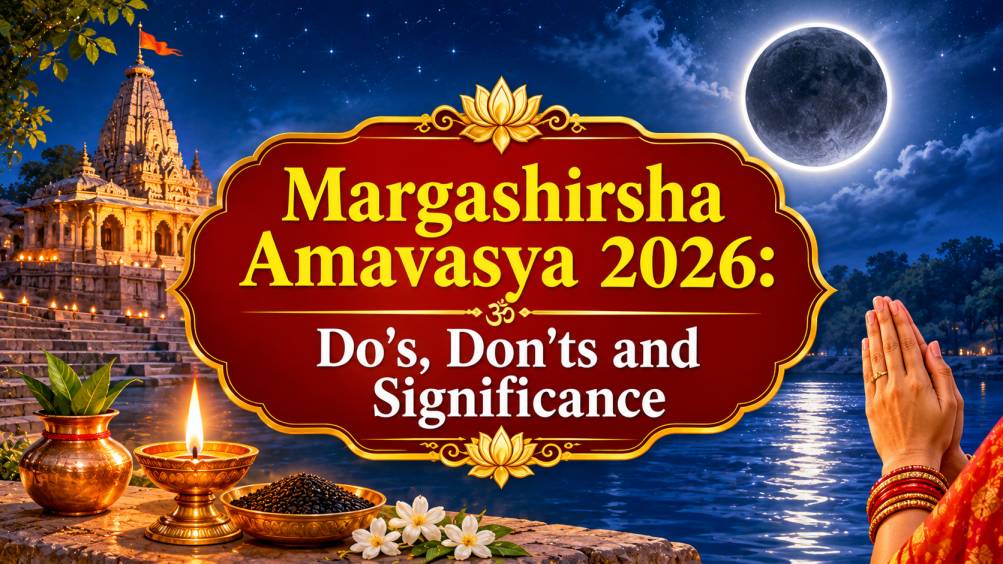
Margashirsha Amavasya, also known as Agahan Amavasya, is an important day in the Hindu lunar calendar. It falls on the new moon day (Krishna Paksha Amavasya) of Margashirsha month and is traditionally associated with ancestor worship, charity, spiritual purification and prayers for family well-being.
In 2026, Margashirsha Amavasya will be observed on Tuesday, 8 December 2026. Devotees consider this occasion suitable for performing Pitru Tarpan, offering food to the needy and worshipping Lord Vishnu and Lord Shiva.
From a Vedic astrology perspective, Amavasya represents the conjunction of the Sun and Moon. Since the Moon symbolises the mind and emotions, this lunar phase is traditionally associated with introspection, emotional discipline and spiritual practices.
1. Margashirsha Amavasya 2026: Date and Tithi Timings
Margashirsha Amavasya is observed during the Krishna Paksha of Margashirsha month according to the North Indian Purnimanta calendar.
Important Panchang Details:
- Date: Tuesday, 8 December 2026
- Tithi Begins: 4:13 AM, 8 December 2026 (IST)
- Tithi Ends: 6:21 AM, 9 December 2026 (IST)
- Day: Tuesday
- Other Name: Agahan Amavasya
The Amavasya Tithi is present at sunrise on 8 December, making that the principal observance date. Exact ritual timings, including Tarpan and Shraddha Muhurat, should be checked using a local Panchang.
Note: Margashirsha month is calculated differently under the Purnimanta and Amanta calendar systems. In some regions following the Amanta calendar, the same Amavasya may be identified with the preceding lunar month.
2. Religious Significance of Margashirsha Amavasya
Margashirsha Amavasya is particularly important for remembering ancestors and expressing gratitude towards previous generations.
Importance of Pitru Tarpan
According to Hindu traditions, performing Pitru Tarpan on Amavasya is a way of expressing respect and gratitude towards departed ancestors.
Devotees offer water, sesame seeds and prayers while remembering their forefathers. These rituals are traditionally performed to seek ancestral blessings and peace for departed family members.
Connection with Lord Vishnu
Margashirsha is considered a spiritually significant month in Hinduism. In the Bhagavad Gita (10.35), Lord Krishna declares:
मासानां मार्गशीर्षोऽहम्।
Meaning: Among the months, I am Margashirsha.
This reference highlights the special importance associated with the month.
Devotees worship Lord Vishnu, recite devotional prayers and perform charity to develop spiritual awareness.
3. What to Do on Margashirsha Amavasya 2026?
Following traditional Amavasya practices can help devotees observe the occasion with devotion and discipline.
1. Take a Holy Bath
Begin the day with an early morning bath. Traditionally, bathing in sacred rivers is considered auspicious. Those unable to visit a pilgrimage place can bathe at home while offering prayers.
2. Perform Pitru Tarpan
Offer water and black sesame seeds while remembering departed ancestors. Those following specific Shraddha traditions should perform the rituals according to their family customs.
3. Donate Food and Essential Items
Charity is an important part of Amavasya observance. Consider donating:
- Food grains and cooked meals.
- Warm clothes and blankets.
- Essential household items.
- Food or other necessities to people in need.
4. Worship Lord Vishnu and Lord Shiva
Devotees may offer flowers, water, incense and prayers to Lord Vishnu and Lord Shiva.
Chanting Om Namo Bhagavate Vasudevaya or Om Namah Shivaya can be included in the daily worship routine.
5. Practise Meditation and Self-Reflection
Amavasya is traditionally considered a suitable occasion for introspection.
Spend some time meditating, reading spiritual texts and reflecting on personal habits.
4. What Not to Do on Margashirsha Amavasya?
Along with religious observances, Hindu traditions recommend avoiding certain activities on Amavasya.
1. Avoid Disrespecting Elders and Ancestors
The day is associated with ancestral remembrance. Avoid insulting elders or neglecting family responsibilities.
2. Avoid Anger and Arguments
Unnecessary conflicts, harsh speech and dishonesty are traditionally discouraged.
3. Avoid Alcohol and Non-Vegetarian Food
Many devotees follow a simple vegetarian diet and avoid alcohol during Amavasya observance.
4. Avoid Unnecessary Negative Activities
Avoid harming animals, exploiting others or engaging in dishonest activities. The spiritual purpose of the day is to encourage compassion and responsible behaviour.
5. Avoid Extreme Fasting
Fasting is a personal religious choice. Avoid prolonged fasting or ignoring medical requirements to follow rituals.
Pregnant women, elderly individuals and people with health conditions should follow a suitable dietary routine.
5. Astrological Significance of Margashirsha Amavasya
In Vedic astrology, Amavasya occurs when the Sun and Moon come together at approximately the same celestial longitude.
The Sun represents confidence, identity, authority and vitality, while the Moon represents the mind, emotions, memory and mental comfort.
Sun-Moon Conjunction and Its Effects
The Sun-Moon conjunction is associated with Amavasya Yoga in traditional astrological interpretation.
Its results in an individual’s horoscope depend on several factors, including:
- The zodiac sign occupied by the conjunction.
- The house in which the conjunction occurs.
- The strength and dignity of the Sun and Moon.
- Planetary aspects and conjunctions.
- The operating Mahadasha and Antardasha.
Therefore, Amavasya does not automatically produce negative results for everyone.
Connection with Pitru Dosha
Some Vedic astrology traditions associate difficult ancestral combinations in a horoscope with Pitru Dosha.
However, every Sun-Moon conjunction or Amavasya birth should not automatically be interpreted as Pitru Dosha.
A complete horoscope assessment is necessary before drawing such conclusions.
6. Simple Remedies for Margashirsha Amavasya 2026
Devotees may follow these traditional practices for spiritual well-being:
- For ancestral blessings: Perform Pitru Tarpan according to family tradition.
- For mental peace: Chant the Maha Mrityunjaya Mantra or practise meditation.
- For Lord Vishnu’s blessings: Recite Vishnu Sahasranama or chant his name.
- For charity: Donate food, clothes or essential items to those in need.
- For family harmony: Offer prayers for the well-being of all family members.
These remedies are devotional practices and should not be considered guaranteed solutions to astrological or personal difficulties.
Conclusion
Margashirsha Amavasya 2026 is an important occasion for ancestral remembrance, charity, worship and spiritual reflection. Observed on 8 December, this Amavasya encourages devotees to honour their forefathers, seek divine blessings and develop positive habits.
From a Vedic astrology perspective, the Sun-Moon conjunction highlights the relationship between identity and emotions, making the occasion traditionally suitable for introspection and spiritual discipline.
Rather than focusing on fear or superstition, devotees should understand the deeper message of Amavasya: gratitude towards ancestors, compassion towards others and responsibility towards family and society. Observing the day with sincerity can make it a meaningful part of one’s spiritual routine.
Frequently Asked Questions (FAQs)
1. When is Margashirsha Amavasya in 2026?
Margashirsha Amavasya will be observed on Tuesday, 8 December 2026.
The Amavasya Tithi begins at approximately 4:13 AM on 8 December and ends at 6:21 AM on 9 December (IST). Since the Tithi prevails at sunrise on 8 December, that is the principal observance date.
Important practices:
- Perform morning bathing rituals.
- Offer prayers to ancestors.
- Donate food and essential items.
2. What is the significance of Margashirsha Amavasya?
Margashirsha Amavasya is traditionally associated with Pitru Tarpan, ancestral remembrance, charity and spiritual purification.
Devotees believe that remembering ancestors through prayers and offerings expresses gratitude towards previous generations. Worshipping Lord Vishnu and Lord Shiva is also considered auspicious.
Suggested practices:
- Perform Tarpan according to family traditions.
- Recite Vishnu mantras.
- Help people in need.
3. What should we donate on Margashirsha Amavasya?
Food grains, cooked meals, clothes, blankets and essential household items are commonly donated on Margashirsha Amavasya.
Charity is considered an important expression of compassion and gratitude in Hindu traditions. Donations should be made according to one’s financial capacity.
Suitable donations include:
- Rice, wheat and other food grains.
- Warm clothes and blankets.
- Food for needy people.
- Essential items for elderly individuals.
4. What should not be done on Margashirsha Amavasya?
Devotees traditionally avoid alcohol, non-vegetarian food, arguments, dishonesty and disrespectful behaviour on Margashirsha Amavasya.
These restrictions reflect the spiritual objective of maintaining purity, discipline and compassion during the observance.
Remember to avoid:
- Hurting others through words or actions.
- Unnecessary conflicts.
- Harmful habits and excessive indulgence.
- Extreme fasting that affects health.
5. Can we worship Lord Shiva on Margashirsha Amavasya?
Yes, devotees can worship Lord Shiva on Margashirsha Amavasya through prayers, mantra chanting and simple devotional offerings.
Chanting Om Namah Shivaya is a popular practice. Devotees may also offer water to the Shiva Lingam according to their family traditions.
Suggested practices:
- Chant Om Namah Shivaya.
- Read or listen to Shiva-related scriptures.
- Practise meditation and prayer.
6. Is Margashirsha Amavasya important for Pitru Dosha remedies?
Yes, many Hindu astrological traditions consider Amavasya suitable for ancestral prayers and rituals associated with Pitru Dosha.
However, Pitru Dosha cannot be identified merely from the presence of the Sun-Moon conjunction. A detailed horoscope analysis is necessary to understand relevant planetary combinations.
Traditional practices include:
- Performing Pitru Tarpan.
- Offering food in memory of ancestors.
- Donating food and essential items.
- Praying for the peace of departed family members.
7. Can we keep a fast on Margashirsha Amavasya?
Yes, devotees may observe a fast on Margashirsha Amavasya according to their religious beliefs and physical capacity.
Some follow a complete fast, while others consume fruits, milk or simple vegetarian food. There is no need to undertake a strict fast if it affects health.
Fasting tips:
- Drink sufficient water.
- Choose a suitable fasting routine.
- Avoid excessive physical exertion.
- Break the fast according to your family tradition.