
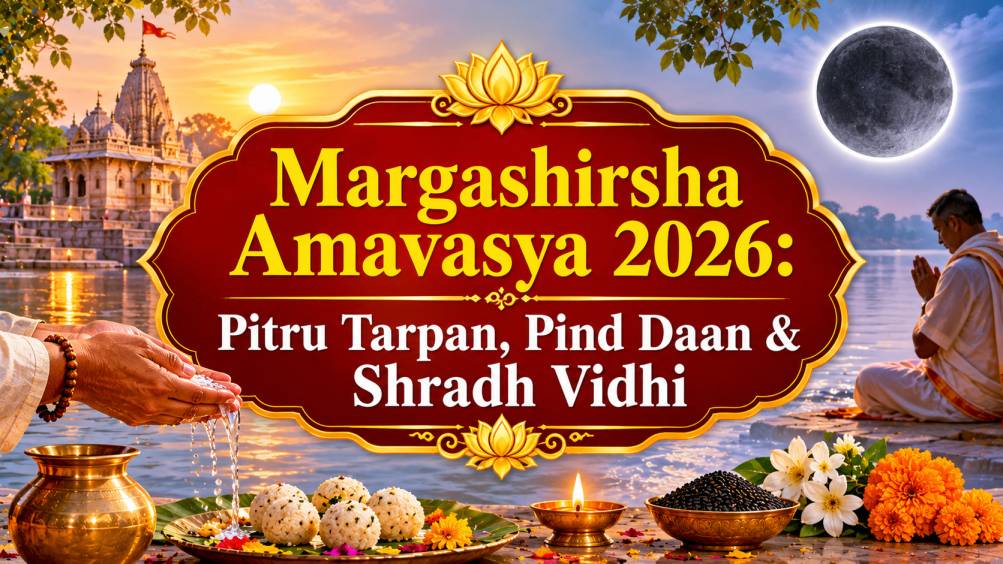
Margashirsha Amavasya, also known as Agahan Amavasya, is an important day in Hindu tradition dedicated to ancestral remembrance, Pitru Tarpan, Pind Daan and Shradh rituals. Observed during the Krishna Paksha of Margashirsha month, this Amavasya provides an opportunity to express gratitude towards departed family members and pray for their peace.
In 2026, Margashirsha Amavasya falls on Tuesday, 8 December. The day is considered suitable for performing traditional ancestral rites, offering food and water to the Pitras and engaging in charitable activities.
From a Vedic astrology perspective, Amavasya represents the conjunction of the Sun and Moon. The Moon symbolises the mind, emotions and memories, while the Sun represents the soul, identity and authority. Together, these associations make Amavasya a traditional occasion for introspection, gratitude and spiritual discipline.
1. Margashirsha Amavasya 2026: Date and Tithi Timings
According to the Hindu Panchang, Margashirsha Amavasya will be observed on:
- Date: Tuesday, 8 December 2026
- Day: Tuesday (Mangalwar)
- Tithi Begins: 4:13 AM, 8 December 2026
- Tithi Ends: 6:21 AM, 9 December 2026
- Other Name: Agahan Amavasya
All timings are in Indian Standard Time (IST), based on Ujjain/central Indian Panchang calculations. Minor differences may occur depending on the location and calculation method.
Since Amavasya Tithi prevails at sunrise on 8 December, this is the principal date for the observance.
Important: Margashirsha is calculated differently in the Purnimanta and Amanta lunar calendar systems. Therefore, regional Panchangs may use different month names for the same lunar date.
2. Why Is Margashirsha Amavasya Important for Pitru Tarpan?
In Hindu religious traditions, Pitru Tarpan is an offering made in remembrance of departed ancestors. It generally involves offering water, black sesame seeds and prayers while remembering one’s forefathers.
Amavasya is traditionally associated with Pitru-related observances because it provides a recurring monthly occasion for ancestral remembrance.
Margashirsha also has special religious importance. In the Bhagavad Gita (10.35), Lord Krishna says:
मासानां मार्गशीर्षोऽहम्।
Meaning: Among the months, I am Margashirsha.
This reference from the Gita highlights the spiritual importance of Margashirsha month.
Devotees believe that performing Tarpan, Shradh and charity with sincerity expresses gratitude towards previous generations and fulfils family traditions.
3. Pitru Tarpan Vidhi on Margashirsha Amavasya
Pitru Tarpan is one of the most commonly performed rituals on Amavasya.
Step-by-Step Tarpan Procedure
- Wake up early and take a bath.
- Wear clean clothes and prepare a clean place for the ritual.
- Keep water, black sesame seeds and Kusha grass ready if required by your tradition.
- Remember your departed ancestors and take a sankalp for Pitru Tarpan.
- Traditionally, offer water mixed with black sesame seeds while facing south.
- Recite the appropriate Pitru mantras or prayers according to family customs.
- Conclude the ritual by offering prayers for the peace of departed ancestors.
The south direction is traditionally associated with Yama and the Pitru Loka in Hindu ritual practices.
What Is Offered During Pitru Tarpan?
Common ritual materials include:
- Clean water.
- Black sesame seeds (Til).
- Kusha grass.
- Flowers, where prescribed.
- Traditional mantras and prayers.
The exact procedure may differ between regional traditions and family lineages.
4. Pind Daan on Margashirsha Amavasya 2026
Pind Daan is a traditional Hindu ancestral ritual in which offerings, commonly prepared using cooked rice, barley flour or other prescribed ingredients, are made for departed family members.
The Pinda symbolises an offering made with respect and devotion to the ancestors.
How Is Pind Daan Performed?
A traditional Pind Daan ceremony may involve:
- Taking a ritual bath before beginning.
- Performing Sankalp in the name of the departed ancestor.
- Preparing Pindas using ingredients prescribed by the family tradition.
- Offering the Pindas with water, sesame seeds and prayers.
- Performing the concluding rites according to the guidance of a qualified priest.
Some families perform Pind Daan at sacred pilgrimage locations such as Gaya, Prayagraj and Varanasi.
However, travelling to a pilgrimage centre is not compulsory for every family. Rituals may also be performed at home or at an appropriate local place according to tradition.
5. Shradh Vidhi and Important Rituals on Amavasya
Shradh is a traditional Hindu ceremony performed to honour departed ancestors.
Margashirsha Amavasya is considered an appropriate occasion for monthly ancestral remembrance and Shradh observances.
Important Shradh Practices
- Sankalp: Begin by remembering the departed family member and stating the purpose of the ritual.
- Tarpan: Offer water and sesame seeds according to the prescribed procedure.
- Pind Daan: Prepare and offer Pindas where required by the family tradition.
- Brahmin Bhojan: Some families invite Brahmins for a traditional meal as part of Shradh.
- Annadan: Donate food to needy people and support those who require assistance.
- Prayers: Recite traditional Pitru mantras and offer prayers for ancestral peace.
When Should Shradh Be Performed?
Traditional Amavasya Shradh is generally associated with Aparahna Kaal, the afternoon period of the day. However, the appropriate Muhurat depends on local Panchang calculations and the ritual being performed.
For Margashirsha Amavasya 2026, consult a local priest for the exact Shradh and Tarpan timings.
6. Astrological Significance and Pitru Dosha Remedies
In Vedic astrology, the Sun and Moon are important indicators of identity, emotional well-being and family-related experiences.
Their conjunction on Amavasya is traditionally associated with introspection and spiritual practices.
Which Houses Are Associated with Ancestors?
Astrologers commonly examine the following houses when studying ancestral connections:
- Ninth House: Father, ancestors, fortune, dharma and blessings.
- Fifth House: Purva Punya, past-life merit and lineage.
- Fourth House: Mother, family roots and emotional foundations.
- Sun: Father, authority and ancestral symbolism.
- Saturn: Karma, responsibilities and discipline.
Certain planetary combinations are traditionally interpreted as possible indicators of Pitru Dosha. However, a Sun-Moon conjunction alone does not establish Pitru Dosha. The entire horoscope, planetary strength, aspects and Dasha periods must be considered.
Simple Remedies for Margashirsha Amavasya
Devotees may consider the following traditional practices:
- Perform Pitru Tarpan with black sesame seeds and water.
- Donate food, clothes and essential items to needy people.
- Offer prayers to Lord Vishnu and Lord Shiva.
- Feed people in memory of departed family members.
- Practise meditation and maintain respectful relationships with elders.
These practices are expressions of faith and gratitude, not guaranteed astrological cures.
7. What Should Be Avoided on Margashirsha Amavasya?
Devotees traditionally observe certain restrictions to maintain the spiritual discipline of the day.
Avoid:
- Speaking disrespectfully about ancestors and elders.
- Arguments, dishonesty and unnecessary conflicts.
- Alcohol and non-vegetarian food if following traditional observance.
- Wasteful spending and harmful behaviour.
- Extreme fasting that may affect physical health.
The main objective is to practise compassion, discipline and remembrance rather than develop fear around religious restrictions.
Conclusion
Margashirsha Amavasya 2026 is an important occasion for Pitru Tarpan, Pind Daan, Shradh Vidhi and ancestral remembrance. Falling on 8 December, this day encourages devotees to honour their forefathers through traditional offerings, prayers and charitable activities.
From a Vedic astrology perspective, the Sun-Moon conjunction and the traditional association of the ninth and fifth houses with ancestors provide an additional context for understanding Pitru-related beliefs.
The deeper message of this observance is gratitude towards previous generations and responsibility towards future generations. Whether performed at home or at a sacred pilgrimage site, ancestral rituals should be approached with sincerity, understanding and respect for family traditions.
Frequently Asked Questions (FAQs)
1. When is Margashirsha Amavasya in 2026?
Margashirsha Amavasya will be observed on Tuesday, 8 December 2026.
The Amavasya Tithi begins at 4:13 AM on 8 December and ends at 6:21 AM on 9 December (IST), according to Ujjain-based Panchang calculations.
Important practices:
- Perform Pitru Tarpan.
- Remember departed ancestors.
- Donate food and essential items.
2. What is the importance of Pitru Tarpan on Margashirsha Amavasya?
Pitru Tarpan is performed to express gratitude and respect towards departed ancestors through water offerings and prayers.
According to Hindu traditions, Amavasya is an important occasion for remembering the Pitras. Devotees commonly use water, black sesame seeds and Kusha grass during the ritual.
Tips:
- Face south during the traditional offering.
- Follow the prescribed family rituals.
- Perform the ceremony with sincerity.
3. Can we perform Pind Daan on Margashirsha Amavasya?
Yes, Pind Daan can be performed on Margashirsha Amavasya according to applicable family and regional traditions.
The ritual involves offering Pindas made from prescribed ingredients, commonly rice or barley preparations, while remembering departed ancestors.
Suggested practices:
- Consult a knowledgeable priest.
- Prepare the required ritual materials.
- Follow the traditional Sankalp and offering procedure.
4. Which mantras should be chanted during Pitru Tarpan?
Devotees may recite traditional Pitru mantras and prayers dedicated to ancestral peace during Tarpan.
The appropriate mantra can vary according to family tradition, Vedic branch and regional customs. People unfamiliar with Sanskrit mantras can also offer sincere prayers in their own language.
Helpful practices:
- Chant traditional Pitru mantras.
- Recite Vishnu Sahasranama.
- Maintain concentration during the ritual.
5. Is Gaya important for Pind Daan?
Yes, Gaya in Bihar is one of the most respected pilgrimage destinations for performing Pind Daan in Hindu tradition.
The place is particularly associated with ancestral rites and the Vishnupad Temple. Many families visit Gaya to perform rituals for departed relatives.
However, visiting Gaya is not compulsory for every Amavasya observance.
Other important pilgrimage places include:
- Prayagraj.
- Varanasi.
- Haridwar.
6. What should be donated on Margashirsha Amavasya?
Food grains, cooked meals, clothes, blankets and essential household items are commonly donated on Margashirsha Amavasya.
Charity is considered an important expression of compassion and respect for ancestors. Donations should be made according to one’s financial capacity.
Recommended donations:
- Rice and wheat.
- Black sesame seeds.
- Warm clothes.
- Food for needy people.
7. Does Margashirsha Amavasya help reduce Pitru Dosha?
According to certain Vedic astrology traditions, performing ancestral rituals on Amavasya is considered a devotional remedy associated with Pitru Dosha.
However, Pitru Dosha cannot be diagnosed simply through one planetary placement. Astrologers examine the ninth house, fifth house, Sun, Saturn and other relevant planetary combinations.
Traditional remedies:
- Perform Pitru Tarpan.
- Offer food in memory of ancestors.
- Donate according to your capacity.
- Maintain respect towards parents and elders.
8. What is the best time for Pitru Tarpan on Margashirsha Amavasya?
Pitru Tarpan and Amavasya Shradh are traditionally performed during prescribed ritual periods, with Aparahna Kaal being particularly important for many Shradh ceremonies.
The exact Muhurat depends on the location, Tithi and specific ritual. Therefore, devotees should consult their local Panchang or priest for the correct timing on 8 December 2026.