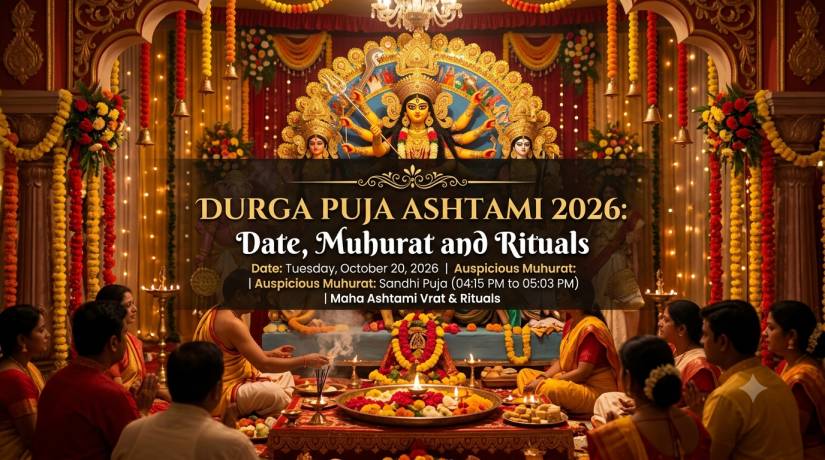
Durga Puja Ashtami, also known as Maha Ashtami, is one of the most significant days of Sharad Navratri and Durga Puja. Dedicated to Goddess Durga, this sacred occasion celebrates divine feminine energy, courage, protection, and the victory of good over evil. Devotees observe special prayers, offer flowers and bhog, recite devotional texts, and participate in rituals such as Sandhi Puja and Kanya Puja.
In 2026, Maha Ashtami falls during the October Navratri and Durga Puja celebrations. Its observance is based on the Hindu lunar calendar, particularly the Ashtami tithi. The exact puja timings depend on the location and regional traditions.
From a spiritual and astrological perspective, Maha Ashtami offers an opportunity to practise self-discipline, reflect on personal challenges, and seek inspiration from Goddess Durga. Understanding the date, muhurat, and traditional rituals can help families celebrate the festival meaningfully.
Durga Ashtami 2026 Date and Puja Muhurat
According to the New Delhi Panchang, Durga Ashtami will be observed on Monday, 19 October 2026. The Ashtami tithi begins on 18 October and ends on the morning of 19 October. The following timings are based on the New Delhi calendar and should be verified against a reliable local Panchang before performing location-sensitive rituals.
- Durga Ashtami date: Monday, 19 October 2026
- Ashtami tithi ends: 10:51 AM IST
- Sandhi Puja muhurat: 10:27 AM to 11:15 AM IST
Maha Ashtami is associated with the worship of Goddess Durga in her powerful and protective forms. In the Navadurga tradition, the eighth form is Maa Mahagauri, who symbolises purity, peace, and spiritual clarity.
The festival is particularly meaningful for devotees who wish to cultivate courage, emotional balance, family harmony, and a stronger spiritual routine. These are traditional religious associations, not guaranteed predictions of future outcomes.
Why Is Maha Ashtami Important?
Maha Ashtami commemorates the divine power of Goddess Durga and her role in overcoming destructive forces. Devotees visit temples, perform household puja, participate in community celebrations, and offer prayers for the well-being of their families.
In everyday life, the occasion can also serve as a reminder to:
- Face difficult situations with courage and patience.
- Practise kindness and respect within the family.
- Develop discipline through prayer or meditation.
- Help people in need through food donations or charitable activities.
Kanya Puja on Durga Ashtami 2026
Kanya Puja, also called Kanjak Puja, is a traditional Navratri ritual followed widely in North India. Young girls are honoured as symbolic manifestations of the Divine Mother. The ritual represents respect for feminine energy, innocence, and the importance of nurturing and protecting girls.
Some families perform Kanya Puja on Maha Ashtami, while others observe it on Maha Navami. The preferred day depends on regional customs, family traditions, and the local Panchang.
Kanya Puja Vidhi
Families can follow these traditional steps:
- Clean the puja area and prepare a comfortable place for the invited girls.
- Welcome the girls respectfully and wash their feet if this is part of the family tradition.
- Apply tilak and offer flowers or a chunari.
- Serve traditional prasad, commonly including poori, halwa, and kala chana.
- Offer dakshina or useful gifts according to your means.
- Conclude with a prayer to Goddess Durga and distribute prasad.
Some households invite nine girls to represent the Navadurga forms. Certain traditions also include a young boy representing Bhairava.
The exact practice varies between communities, so there is no need to follow every custom if it is not part of your family’s tradition.
Practical insight: The spirit of Kanya Puja extends beyond the ceremony. Teaching children to respect girls, support their education, and treat everyone equally brings the ritual’s values into everyday life.
Sandhi Puja Muhurat 2026: Date and Significance
Sandhi Puja is an important ritual of Bengali Durga Puja. It is performed at the transition between Ashtami and Navami tithis and is associated with the worship of Goddess Chamunda.
For New Delhi, the published Sandhi Puja muhurat is 10:27 AM to 11:15 AM IST on 19 October 2026. This 48-minute period traditionally consists of the final 24 minutes of Ashtami and the first 24 minutes of Navami.
Why Is Sandhi Puja Performed?
According to the traditional narrative in Hindu devotional literature, Goddess Chamunda defeated the demons Chanda and Munda. Sandhi Puja commemorates this episode and symbolises the triumph of divine power over destructive forces.
Common Sandhi Puja practices include:
- Offering flowers, incense, and lamps to Goddess Durga.
- Reciting prayers or passages from the Devi Mahatmya, also known as the Durga Saptashati.
- Performing offerings according to temple or family traditions.
- Maintaining a prayerful atmosphere during the transition between the two lunar tithis.
In some Bengali traditions, 108 lamps and 108 lotus flowers are associated with this ritual. These are customary practices rather than requirements for every household.
Because Sandhi Puja is tied to a precise lunar transition, devotees should confirm the timings for their own location instead of relying solely on a city-specific schedule.
Durga Ashtami Puja Vidhi at Home
You can observe Maha Ashtami at home with simple arrangements and sincere devotion. An elaborate ceremony is not necessary to participate in the festival.
Durga Ashtami Puja Samagri
Prepare the following items according to your family tradition:
- Picture or idol of Goddess Durga
- Fresh flowers and a clean cloth
- Kumkum, sandalwood paste, and akshat
- Diya, incense, and clean water
- Fruits, sweets, or other suitable bhog
- Aarti plate and devotional text, if available
Step-by-Step Puja Procedure
- Purification: Bathe, wear clean clothes, and clean the worship area.
- Sankalp: Set a personal intention for your prayers, such as gratitude, courage, or family well-being.
- Devi puja: Offer flowers, kumkum, water, and bhog to Goddess Durga.
- Mantra chanting: Recite a Durga mantra or read a passage from the Durga Saptashati if familiar with the text.
- Aarti: Perform aarti and offer your prayers.
- Prasad distribution: Share the offerings with family members and others.
People who observe a fast should follow a routine appropriate to their health and family customs. Fasting is not compulsory for everyone. Those with medical conditions or dietary restrictions should prioritise their health.
Astrological Significance of Maha Ashtami
In Vedic astrology, Hindu festivals are often understood through the lunar calendar, planetary symbolism, and traditional spiritual practices. Maha Ashtami occurs during the bright fortnight of Ashwin, when devotees worship Goddess Durga.
However, Maha Ashtami is primarily a religious observance, not a festival date determined by a particular planetary transit or zodiac sign.
Spiritual Lessons for Everyday Life
- Courage and discipline: Goddess Durga symbolises strength and determination. Devotees can use the occasion to reflect on personal challenges and identify practical steps towards resolving them.
- Emotional balance: Prayer, meditation, and quiet reflection may help establish a calmer daily routine.
- Family harmony: Performing puja together can encourage gratitude, cooperation, and mutual respect among family members.
- Generosity and compassion: Donating food, supporting education, or helping people in need reflects the values associated with Devi worship.
These practices can support personal reflection and positive habits, although they should not be considered guarantees of specific material or astrological outcomes.
Traditional Durga Ashtami Mantra
Devotees may chant the following mantra during their worship:
ॐ दुं दुर्गायै नमः।
Om Dum Durgayai Namah.
This traditional invocation is offered to Goddess Durga as an expression of devotion and a prayer for strength and protection. Chant it at a comfortable pace according to your personal practice.
Simple Remedies to Observe Durga Ashtami
Traditional remedies associated with Maha Ashtami are best understood as devotional practices that encourage constructive habits, rather than guaranteed methods of changing future events.
- For courage: Offer flowers to Goddess Durga and take a practical step towards addressing a challenge.
- For peace of mind: Spend a few minutes in prayer, meditation, or quiet breathing.
- For family well-being: Share food with family members or people in need.
- For prosperity: Practise gratitude, manage expenses responsibly, and donate according to your means.
- For spiritual growth: Read a passage from a respected devotional text and reflect on its message.
There is no need to purchase expensive puja materials or gemstones to observe the festival. Sincere devotion, ethical conduct, and practical action are accessible to everyone.
Conclusion
Durga Puja Ashtami 2026 will be observed on Monday, 19 October, according to the New Delhi Panchang. The Ashtami tithi is expected to end at 10:51 AM IST, while Sandhi Puja is scheduled from 10:27 AM to 11:15 AM IST. Kanya Puja may be performed on Ashtami or Navami, depending on regional customs and family traditions.
Maha Ashtami offers an opportunity to honour Goddess Durga and reflect on courage, compassion, discipline, and inner strength. Whether you attend a community celebration or perform a simple puja at home, understanding the meaning behind each ritual can make the occasion more meaningful.
Check your local Panchang for location-specific timings and follow your family’s customary practices. May this Durga Ashtami inspire peace, wisdom, and positive action in everyday life.
FAQs: Durga Puja Ashtami 2026
1. When is Durga Puja Ashtami in 2026?
Durga Puja Ashtami will be observed on Monday, 19 October 2026, according to the New Delhi Panchang.
The Ashtami tithi begins on 18 October at 8:27 AM and ends on 19 October at 10:51 AM IST. Local observance may depend on the regional Panchang and family traditions.
– Tip: Confirm your city’s Panchang before planning the puja.
2. What is the Sandhi Puja muhurat for 2026?
The Sandhi Puja muhurat for New Delhi is 10:27 AM to 11:15 AM IST on 19 October 2026.
This 48-minute period marks the transition between Ashtami and Navami. Devotees worship Goddess Chamunda during this interval according to Bengali Durga Puja traditions.
– Tip: Prepare the offerings in advance and verify the local timing.
3. When should Kanya Puja be performed in 2026?
Kanya Puja can be performed on Maha Ashtami, 19 October, or on Maha Navami, depending on family traditions and the relevant tithi.
The ritual honours young girls as symbolic forms of the Divine Mother. Families commonly offer a meal, prasad, and small gifts as an expression of respect and devotion.
– Tip: Choose the date according to your family’s customs and local Panchang.
4. Which Goddess is worshipped on Maha Ashtami?
Maa Mahagauri is worshipped as the eighth form of Navadurga during the Navratri tradition.
Mahagauri symbolises purity, peace, and spiritual clarity. Devotees may offer flowers, chant prayers, and seek inspiration to cultivate patience and overcome personal challenges.
– Tip: A simple prayer and a few minutes of reflection can make the observance meaningful.
5. Can I perform Durga Ashtami puja at home?
Yes, you can perform Durga Ashtami puja at home with a picture or idol of Goddess Durga, flowers, a diya, incense, and suitable offerings.
Begin by cleaning the worship area, offering prayers, reciting a mantra, and performing aarti. Adapt the ceremony to your family’s customs and circumstances.
– Tip: Keep the worship area clean and perform the puja with sincerity.
6. Is fasting compulsory on Durga Ashtami?
No, fasting is not compulsory for every devotee; it is a personal or family observance.
Some people observe a full fast, while others eat fruits or permitted foods according to their traditions. Religious practices should be balanced with individual health needs.
– Tip: Avoid fasting if it is unsuitable for your health and seek medical advice if dietary restrictions could affect an existing condition.
7. What should devotees donate on Maha Ashtami?
Devotees may donate food, clothing, educational supplies, or money to people in need according to their means.
Charitable giving reflects the values of compassion and service associated with Goddess Durga. No particular donation guarantees a specific spiritual or material outcome.
– Tip: Choose something useful and give respectfully, without expecting a reward.
8. What is the significance of the Ashtami tithi in Hindu tradition?
Ashtami is the eighth lunar day and holds religious significance in several Hindu festivals, including Durga Puja.
Maha Ashtami is associated with Goddess Durga’s strength and the triumph of good over evil. Devotees mark the occasion through prayer, fasting where appropriate, and charitable activities.
– Tip: Learn about the ritual’s traditional meaning and incorporate its positive values into everyday life.