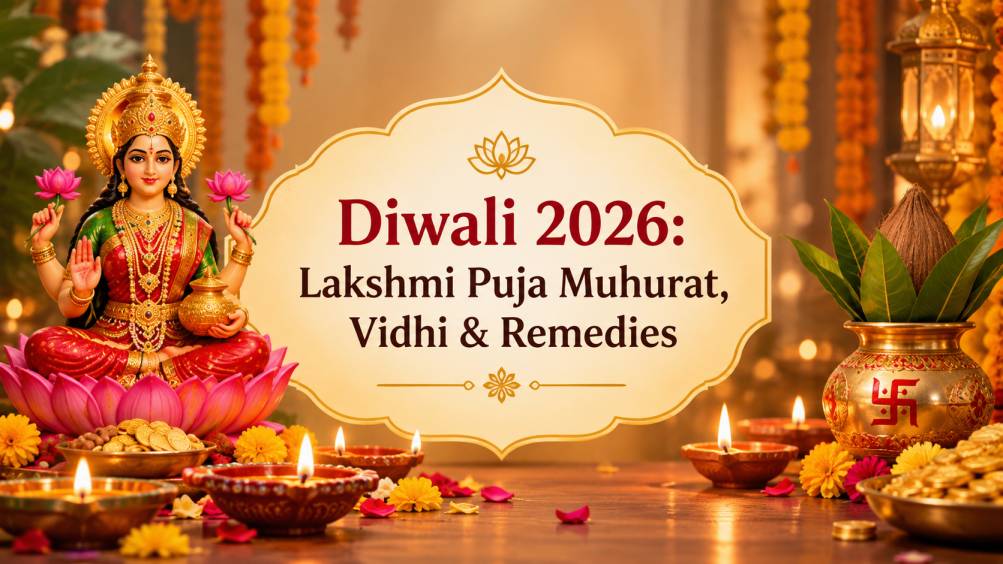
Diwali is one of the most important festivals in the Hindu calendar and is traditionally associated with light, prosperity, purification, and the worship of Goddess Lakshmi. Diwali 2026 falls in the Kartika month, with Lakshmi Puja traditionally performed on the Amavasya Tithi.
From an astrological perspective, Diwali is significant because the festival combines Amavasya, Lakshmi worship, planetary symbolism, and traditional wealth-related practices. Dhanteras, the first major day of the Diwali period, is also associated with Lord Dhanvantari, Lord Kubera, and auspicious purchases.
The exact Lakshmi Puja Muhurat depends on the location because sunrise, sunset, and Tithi timings vary from city to city. Therefore, local Panchang calculations should be checked before performing the main ritual.
Diwali 2026: Important Dates
The Diwali festival is generally observed over several days, with each day having a distinct religious and cultural purpose.
- Dhanteras: Associated with wealth, health, Lord Dhanvantari and traditional purchases.
- Naraka Chaturdashi: Also known as Choti Diwali; traditionally associated with purification and removal of negativity.
- Diwali/Deepavali: The principal day for Lakshmi Puja and lighting diyas.
- Govardhan Puja: Traditionally associated with Lord Krishna and gratitude for nature and nourishment.
- Bhai Dooj: Celebrates the bond between brothers and sisters.
For Diwali 2026, the exact dates and timings should be confirmed through a reliable local Panchang because lunar Tithi can differ in practical observance depending on location.
Lakshmi Puja Muhurat for Diwali 2026
The most commonly preferred period for Lakshmi Puja is Pradosh Kaal, particularly when it overlaps with the period considered suitable for Lakshmi worship.
The exact Muhurat should not be treated as identical across India. For example, the sunset and Tithi timings in Delhi, Mumbai, Kolkata, Bengaluru, and Madhya Pradesh can differ.
How to Choose the Puja Muhurat
Before beginning the ritual, check:
- Local sunset time in IST.
- Amavasya Tithi prevailing during the evening.
- Pradosh Kaal.
- Local Panchang recommendations.
- Whether the selected period is suitable for Lakshmi Puja.
A Muhurat is traditionally used to select a favourable period for beginning an activity. It should complement, rather than replace, practical planning and personal responsibility.
Diwali Lakshmi Puja Vidhi
Lakshmi Puja can be performed at home using a simple and organised procedure.
1. Clean the Home
Clean the entrance, prayer area, kitchen, and main living spaces. Traditionally, cleanliness represents preparation for welcoming prosperity and positive energy.
2. Prepare the Puja Area
Place a clean red or yellow cloth on the altar. Keep images or idols of Goddess Lakshmi and Lord Ganesha.
You may also keep:
- Kalash
- Rice grains
- Flowers
- Diya
- Kumkum
- Turmeric
- Incense
- Fruits
- Sweets
- Coins or account books
3. Light the Diya
Light a diya before beginning the main worship. Many families also place additional diyas around the entrance and important areas of the home.
4. Invoke Ganesha
Begin by worshipping Lord Ganesha, traditionally regarded as the remover of obstacles.
A commonly recited mantra is:
“Om Gan Ganapataye Namah.”
5. Worship Goddess Lakshmi
Offer flowers, kumkum, rice, sweets, fruits, and other traditional offerings to Goddess Lakshmi.
A simple Lakshmi mantra is:
“Om Shreem Mahalakshmyai Namah.”
The mantra can be repeated peacefully according to one’s personal practice.
6. Perform Aarti
Complete the puja with Lakshmi-Ganesha Aarti and distribute prasad among family members.
Dhanteras 2026 and Its Significance
Dhanteras marks an important beginning to the Diwali celebrations. Traditionally, the day is associated with Dhanvantari, the divine physician, and is also connected with wealth and prosperity.
Many families purchase utensils, gold, silver, household items, or other useful goods on Dhanteras. From a practical perspective, purchases should be based on genuine needs and financial planning rather than the assumption that an item will automatically bring wealth.
Traditional Dhanteras practices include:
- Lighting a diya near the entrance.
- Worshipping Dhanvantari and Lakshmi.
- Keeping the home clean.
- Purchasing useful household or financial items within one’s budget.
- Donating food or essential items to those in need.
Astrology-Based Diwali Remedies
Traditional Jyotish practices associate different planets with areas such as wealth, discipline, communication, and confidence. Diwali can therefore be used as a time for reflection and constructive habits.
For Financial Discipline
Keep financial documents, account books, and important records organised. Traditionally, Lakshmi worship is linked with responsible management of wealth.
For Mental Clarity
Spend a few minutes in quiet prayer or meditation before the main puja. This can make the festival more reflective rather than purely material.
For Saturn-Related Themes
If someone follows traditional Shani remedies, Diwali can be used as an occasion for charity, helping workers, elderly people, or those who need practical support.
For Mercury and Business
Business owners traditionally worship account books and tools of trade during Diwali. Keeping accounts updated and reviewing expenses can add a practical dimension to this custom.
For Jupiter and Prosperity
Traditional Jupiter symbolism is connected with knowledge, generosity, and ethical conduct. Donating educational materials, books, food, or useful resources can be incorporated into the festival.
Diwali Remedies to Follow Sensibly
Rather than relying on dramatic claims, consider simple practices that have cultural and practical value:
- Keep the home and puja space clean.
- Light diyas safely.
- Avoid unnecessary debt for festival purchases.
- Donate according to your means.
- Begin the new financial year or business cycle with organised accounts.
- Spend time with family and practise gratitude.
- Use astrology as a traditional framework for reflection rather than as a guarantee of financial results.
Conclusion
Diwali 2026 brings together religious observance, traditional astrology, family customs, and the symbolism of prosperity and renewal. Lakshmi Puja is traditionally performed on Diwali evening, while Dhanteras begins the festival period with its own significance.
The most important point when following Diwali Lakshmi Puja Muhurat is to use the local Panchang for your city because Tithi and evening timings can vary. Alongside traditional rituals, practical financial discipline, cleanliness, charity, gratitude, and responsible decision-making can make the festival more meaningful.
Diwali is ultimately an opportunity to reflect on what prosperity means in everyday life—not only material wealth, but also health, relationships, knowledge, and peace.
FAQs
1. When is Diwali 2026?
Diwali 2026 will be observed during the Kartika Amavasya period, with the exact local observance confirmed through a city-specific Panchang.
Because lunar Tithi and sunset times vary by location, the precise Lakshmi Puja timing should be checked for your city in IST.
Tips:
- Check the local Amavasya Tithi.
- Check the evening Pradosh period.
- Follow the local Panchang for the final Muhurat.
2. What is the Lakshmi Puja Muhurat on Diwali?
Lakshmi Puja is traditionally performed during an auspicious evening period, particularly around Pradosh Kaal when the relevant Tithi is prevailing.
There is no single universal clock time for every Indian city. Local sunset and Tithi calculations should be considered when selecting the Muhurat.
Related practice: Perform the puja after cleaning the home and preparing the altar.
3. What is the correct Lakshmi Puja Vidhi?
The basic Lakshmi Puja Vidhi includes cleaning the home, preparing the altar, invoking Ganesha, worshipping Lakshmi, making offerings, reciting mantras, and performing Aarti.
Families may follow different regional traditions, so there is no need to make the ritual unnecessarily complicated.
Essential items:
- Diya
- Flowers
- Kumkum and turmeric
- Rice
- Fruits and sweets
- Kalash
- Lakshmi-Ganesha images or idols
4. What should we buy on Dhanteras 2026?
Traditional Dhanteras purchases include useful household goods, utensils, gold, silver, or other items that fit the family’s needs and budget.
Dhanteras is also associated with Lord Dhanvantari, making health and wellbeing an important part of its symbolism.
Practical approach: Avoid unnecessary borrowing or spending simply because a purchase is considered auspicious.
5. Which remedies can be performed on Diwali for prosperity?
Traditional prosperity remedies include Lakshmi worship, lighting diyas, cleanliness, charity, gratitude, and maintaining organised financial records.
In Jyotish traditions, different planets are symbolically associated with wealth, discipline, knowledge, and communication. Remedies can therefore be combined with practical habits.
Simple remedies:
- Donate according to your ability.
- Keep financial documents organised.
- Maintain a clean puja area.
- Recite a Lakshmi mantra.
- Avoid wasteful spending.
6. Can Diwali remedies guarantee financial prosperity?
No traditional remedy should be presented as a guaranteed way to create wealth or eliminate financial difficulties.
Astrology-based remedies are better understood as traditional spiritual practices that may encourage reflection, discipline, generosity, and positive routines. Financial decisions should continue to be based on income, savings, risk, and informed planning.