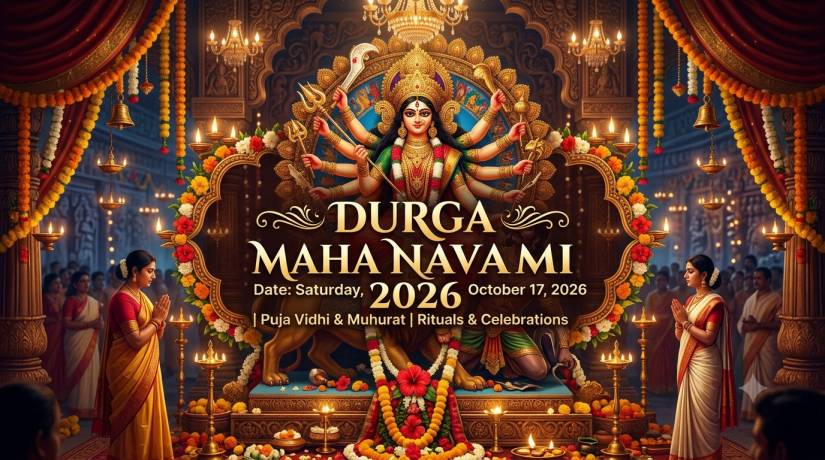
Durga Maha Navami is one of the most auspicious days of Sharad Navratri, dedicated to Goddess Durga and her divine power to overcome evil. Celebrated on the ninth lunar day, or Navami tithi, of the bright fortnight of Ashwin, this occasion marks the culmination of nine days of devotion, fasting, prayers, and spiritual reflection.
In 2026, Maha Navami falls during the October Navratri celebrations. Devotees perform Durga Puja, recite sacred mantras, offer bhog, and observe Kanya Puja according to regional and family traditions. In some communities, the day also includes Ayudha Puja, during which tools, books, vehicles, and work equipment are honoured.
From a traditional Hindu perspective, Maha Navami represents courage, discipline, compassion, and the victory of good over evil. Understanding its date, puja timings, and rituals helps devotees plan their worship meaningfully while respecting local customs.
Durga Maha Navami 2026: Date and Muhurat
According to the New Delhi Panchang, Maha Navami will be observed on Monday, 19 October 2026, with the Navami tithi beginning at 10:51 AM on 19 October and ending at 12:50 PM on 20 October 2026.
Maha Navami 2026 at a glance
Maha Navami date
Monday, 19 October 2026
Navami tithi begins
10:51 AM IST, 19 October
Navami tithi ends
12:50 PM IST, 20 October
Because Navami begins late in the morning on 19 October and continues into the following day, different communities may observe particular rituals on different dates. Bengali Durga Puja calendars, for example, may schedule Maha Navami worship and associated ceremonies on 20 October.
For the exact Durga Maha Navami puja muhurat, consult a reliable local Panchang or temple calendar. The appropriate time may depend on the ritual being performed, the location, and the tradition followed.
Durga Maha Navami Puja Vidhi
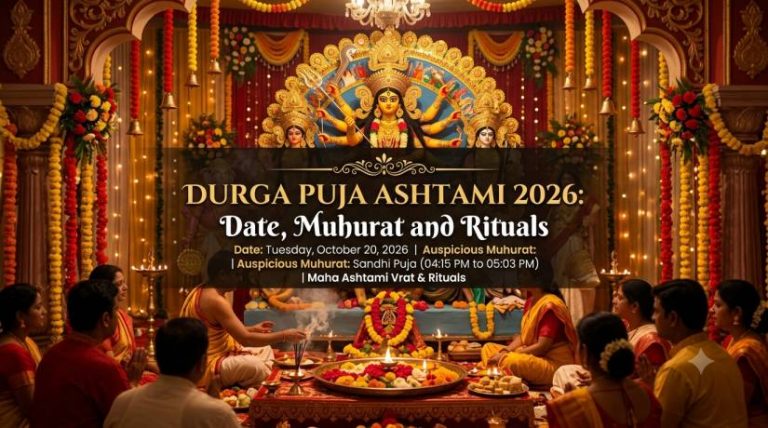
Maha Navami puja can be performed at home or in a temple. Families may follow different procedures, but the central elements include purification, prayer, offerings, mantra chanting, and aarti.
Puja samagri
Prepare these items according to your tradition:
- Picture or idol of Goddess Durga
- Fresh flowers, garland, and kumkum
- Akshat (unbroken rice) and sandalwood paste
- Diya, incense, and clean water
- Fruits, sweets, or homemade bhog
- Aarti plate and devotional text
Step-by-step puja procedure
- Prepare the puja area: Clean the space and arrange the deity’s picture or idol.
- Perform sankalp: Begin with a prayer expressing gratitude and your intention for the worship.
- Offer flowers and bhog: Present flowers, fruits, sweets, and other customary offerings.
- Chant the mantra: Recite a Durga mantra or a suitable devotional hymn.
- Perform aarti: Conclude the main worship with aarti and prayer.
- Distribute prasad: Share the offerings with family members and visitors.
Some traditions include a Navami Havan, in which offerings are made into a sacred fire while mantras are recited. Havan should be performed safely, with adequate ventilation and appropriate supervision.
Maha Navami Mantra and Its Significance
Devotees can recite a traditional mantra to express devotion to Goddess Durga.
ॐ देवी सिद्धिदात्र्यै नमः।
Om Devi Siddhidatryai Namah.
This mantra is associated with Maa Siddhidatri, the ninth form of Navadurga. In traditional belief, she represents spiritual accomplishment, wisdom, and fulfilment.
Devotees may also recite the Durga Chalisa, Durga Saptashati, or other prayers according to their familiarity and family traditions. There is no need to perform every practice to observe Maha Navami meaningfully.
Astrological Significance and Practical Remedies
In Hindu tradition, Maha Navami is associated with the ninth day of the waxing lunar fortnight. Its religious significance comes primarily from Navratri traditions and the worship of Goddess Durga, rather than from a specific planetary transit.
Devotees can connect the day’s spiritual themes with everyday life through these practices:
- For courage: Pray to Goddess Durga and identify one challenge you can address through practical action.
- For wisdom: Read a devotional passage and reflect on how its message applies to a current decision.
- For family harmony: Share a meal and make time for respectful communication.
- For generosity: Donate food, educational supplies, or other essentials according to your means.
- For discipline: Review unfinished tasks and set realistic goals for the coming week.
These practices reflect traditional spiritual values. They should not be treated as guaranteed remedies for financial, health, relationship, or career problems.
Kanya Puja and Navami Havan
Kanya Puja, also known as Kanjak Puja, is performed by many families on Ashtami or Navami. Young girls are honoured as symbolic manifestations of the Divine Mother.
The ritual commonly includes welcoming the girls, offering prasad, and giving small gifts or dakshina. Traditional foods may include poori, halwa, and kala chana. Practices vary by region and family.
Navami Havan is another important ritual, particularly in households that complete Navratri worship with a sacred fire ceremony. It is performed according to the family’s religious tradition and the guidance of a knowledgeable priest.
Practical tip: Confirm whether your family observes Kanya Puja on Ashtami or Navami, and arrange the ceremony according to your local Panchang.
Conclusion
Durga Maha Navami 2026 is an important occasion for devotees to honour Goddess Durga, complete their Navratri worship, and reflect on courage, wisdom, and compassion. According to the New Delhi Panchang, Maha Navami falls on 19 October, with the Navami tithi continuing until 12:50 PM IST on 20 October. Regional calendars may prescribe different dates for specific ceremonies.
Whether you perform a simple home puja, chant the Siddhidatri mantra, participate in Kanya Puja, or attend a temple Havan, focus on the meaning behind the rituals. Devotion does not require expensive offerings or elaborate arrangements.
Use this occasion to practise gratitude, support others, and carry the values of Navratri into daily life. Check your local Panchang before finalising puja timings and follow your family’s traditions.
SEO Tags: Durga Maha Navami 2026, Maha Navami Puja Vidhi, Navami Muhurat 2026, Maa Siddhidatri Mantra, Navratri Rituals
FAQs: Durga Maha Navami 2026
1. When is Durga Maha Navami in 2026?
Maha Navami is listed as Monday, 19 October 2026, in the New Delhi Panchang.
The Navami tithi begins at 10:51 AM IST on 19 October and ends at 12:50 PM IST on 20 October. Some regional traditions may observe particular Navami rituals on 20 October.
– Tip: Check your local Panchang for the date followed by your family or temple.
2. What is the Maha Navami puja muhurat in 2026?
The appropriate Maha Navami puja muhurat depends on your location, the ritual, and the regional calendar.
The Navami tithi in New Delhi runs from 10:51 AM on 19 October to 12:50 PM on 20 October 2026. These are tithi timings, not a universal muhurat for every ceremony.
– Tip: Confirm the specific puja or Havan timing with a reliable local Panchang.
3. Which Goddess is worshipped on Maha Navami?
Maa Siddhidatri is worshipped as the ninth form of Navadurga on Navami.
She is traditionally associated with spiritual accomplishment, wisdom, and fulfilment. Devotees may offer flowers, chant prayers, and perform aarti according to their family customs.
– Tip: Recite Om Devi Siddhidatryai Namah during your prayer.
4. What should devotees do on Maha Navami?
Devotees commonly perform Durga puja, chant mantras, offer bhog, and participate in Kanya Puja or Navami Havan.
The exact rituals differ among regions and families. A simple home puja with flowers, a diya, suitable offerings, and sincere prayer is also a meaningful way to observe the occasion.
– Tip: Prepare your puja items in advance and follow your family’s tradition.
5. Can Kanya Puja be performed on Maha Navami 2026?
Yes, many families perform Kanya Puja on Navami, while others observe it on Ashtami.
The preferred date depends on the family’s customs and local tithi calculations. Kanya Puja honours young girls as symbolic forms of the Divine Mother and encourages respect, generosity, and care.
– Tip: Confirm the date and suitable timing with your local Panchang.
6. Which mantra is suitable for Maha Navami?
The mantra Om Devi Siddhidatryai Namah is traditionally associated with Maa Siddhidatri, the ninth form of Navadurga.
Devotees may also recite the Durga Chalisa or Durga Saptashati according to their religious practice. Chanting is a devotional activity, and no particular count is compulsory for everyone.
– Tip: Choose a prayer you understand and can recite with sincerity.
7. Is fasting necessary on Maha Navami?
No, fasting is not compulsory for every devotee on Maha Navami.
Some people observe a Navratri fast until the completion of their puja, while others perform worship without fasting. Personal health and family traditions should guide the choice.
– Tip: Avoid fasting if it is unsuitable for your health, and seek medical advice when dietary restrictions could affect an existing condition.
8. What is the spiritual significance of Maha Navami?
Maha Navami represents devotion to Goddess Durga and the traditional victory of divine power over evil.
It also provides an opportunity to reflect on courage, discipline, wisdom, and compassion. These values can be applied to daily responsibilities, relationships, and community service.