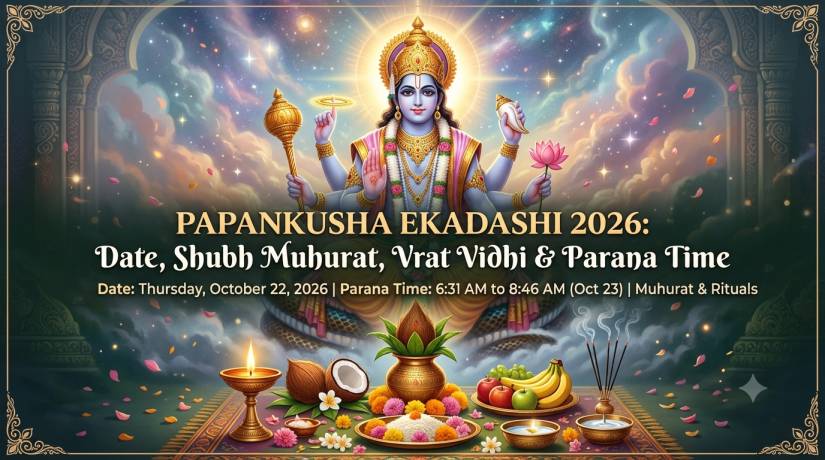
Papankusha Ekadashi is an important Hindu fasting day dedicated to Lord Vishnu. It falls on the Ekadashi tithi, or the eleventh lunar day, during the Shukla Paksha of the Ashwin month. Devotees observe this vrat to seek spiritual purification, practise self-discipline and strengthen their devotion to Lord Vishnu, also worshipped as Padmanabha.
In 2026, Papankusha Ekadashi will be observed on Thursday, 22 October. The festival is associated with prayers, fasting, charity and reflection on one’s actions. According to Hindu religious tradition, sincere observance is believed to help devotees move away from harmful habits and cultivate virtuous conduct.
Knowing the Papankusha Ekadashi 2026 date, shubh muhurat, vrat vidhi and parana time helps devotees plan their observance according to the Hindu Panchang. Exact timings may vary slightly by city and tradition, so local Panchang details should be checked before performing the rituals.
Papankusha Ekadashi 2026: Date and Shubh Muhurat
Papankusha Ekadashi occurs during Ashwin Shukla Paksha. Since Hindu calendar dates depend on the lunar tithi and local sunrise, the fasting date is not always the same as the date on which Ekadashi tithi begins.
Papankusha Ekadashi Vrat
Thursday, 22 October 2026
Ekadashi Tithi begins
21 October, approximately 2:11 PM IST
Ekadashi Tithi ends
22 October, approximately 2:47 PM IST
Parana (breaking the fast)
Friday, 23 October, approximately 6:27 AM–8:45 AM IST for Ujjain; confirm the local Panchang.
These are indicative timings based on Panchang calculations for Ujjain, Madhya Pradesh. The exact parana window can differ by location.
What is the significance of Papankusha Ekadashi?
The word Papankusha is traditionally understood as a goad that helps control or restrain wrongdoing. In the religious understanding of the vrat, devotees seek forgiveness, spiritual progress and freedom from harmful tendencies through prayer and disciplined living.
Papankusha Ekadashi is also associated with worship of Lord Vishnu in his Padmanabha form. Its central message is not simply fasting, but combining devotion with honesty, compassion, self-control and charitable actions.
Papankusha Ekadashi Vrat Vidhi
Devotees can observe the fast according to their health, family customs and spiritual capacity. A strict nirjala fast is not compulsory for everyone; a fruit-based or simpler sattvic fast may be more suitable for many people.
1. Prepare on Dashami
The day before Ekadashi, devotees traditionally eat a simple vegetarian meal and prepare for the next day’s worship.
- Keep the home and puja area clean.
- Avoid alcohol, non-vegetarian food and other items restricted by your family tradition.
- Decide on a fasting method that is safe for your health.
- Set an intention (sankalp) to observe the vrat with devotion and self-discipline.
2. Perform morning puja
On 22 October, wake up early, bathe and arrange a clean space for worship.
- Place an image or idol of Lord Vishnu or Padmanabha.
- Offer water, flowers, incense, a diya and Tulsi leaves if available and appropriate to your tradition.
- Offer seasonal fruit or sattvic food as bhog.
- Chant “Om Namo Bhagavate Vasudevaya” or recite Vishnu Sahasranama according to your ability.
- Read or listen to the Papankusha Ekadashi vrat katha and spend time in prayer.
The puja does not need to be elaborate. Sincerity, cleanliness and a calm state of mind are central to the observance.
3. Follow suitable fasting rules
Traditional Ekadashi fasting generally avoids grains and pulses. Depending on family practice, devotees may consume fruits, milk, nuts or permitted fasting foods.
- Avoid grains and pulses if following the customary Ekadashi diet.
- Drink enough water if your fasting method permits it.
- Avoid arguments, harsh speech and unnecessary distractions.
- Offer food or other useful assistance to someone in need.
People with diabetes, other medical conditions, pregnancy, or medication schedules should consult a qualified healthcare professional before fasting. Do not stop prescribed medication or undertake a waterless fast if it could put your health at risk.
Spiritual Significance and Astrological Perspective
Papankusha Ekadashi is primarily a Vaishnava religious observance, rather than a day on which one particular planetary transit determines everyone’s results. In Vedic tradition, Vishnu worship is associated with preservation, balance and dharma.
The vrat can be used as an opportunity to reflect on the connection between intention and action. For example, someone dealing with work stress might practise patience and avoid impulsive decisions, while someone facing family disagreements might focus on listening and speaking respectfully.
Some devotees also choose to:
- Donate food, clothes or essential supplies according to their means.
- Read a passage from the Bhagavad Gita or another respected religious text.
- Spend time in meditation or devotional singing.
- Resolve to reduce one harmful habit and replace it with a constructive one.
These practices may support reflection and personal discipline, but specific material outcomes should not be guaranteed on the basis of a fast or planetary position.
Papankusha Ekadashi Parana Time 2026
Parana means breaking the Ekadashi fast. It is generally performed on the following day, Dwadashi, during the prescribed time after sunrise.
For Ujjain, the indicative parana window on Friday, 23 October 2026, is approximately 6:27 AM to 8:45 AM IST. Timings can vary by city, so consult a reliable local Panchang for your exact window.
How to perform parana
- Wake up and complete your morning prayers.
- Offer a brief prayer to Lord Vishnu.
- Break the fast within the locally prescribed parana period.
- Begin with water and a light meal suitable for your health and tradition.
- If possible, share food or make a modest charitable contribution.
Avoid delaying parana without reason. Traditional observance takes the Dwadashi tithi and the end of Hari Vasara into account, so local Panchang guidance is useful when timings are close.
Conclusion
Papankusha Ekadashi 2026 will be observed on Thursday, 22 October, with parana on Friday, 23 October. Devotees traditionally worship Lord Vishnu, follow suitable fasting rules, recite prayers and practise charity on this auspicious day. The exact parana time should be confirmed for your city, as sunrise-based timings differ by location.
Beyond the rituals, the day offers an opportunity to reflect on personal choices, practise self-control and make time for spiritual well-being. Observe the vrat according to your capacity and family tradition, without compromising your health. The lasting value of the observance lies in combining devotion with kindness, responsible conduct and thoughtful action.
FAQs: Papankusha Ekadashi 2026
1. When is Papankusha Ekadashi in 2026?
Papankusha Ekadashi will be observed on Thursday, 22 October 2026.
It falls during Ashwin Shukla Paksha and is dedicated to Lord Vishnu.
Tip: Check your local Panchang for tithi and puja details.
2. What is the parana time for Papankusha Ekadashi 2026?
For Ujjain, the indicative parana time is 6:27 AM to 8:45 AM IST on 23 October 2026.
The suitable window may vary by city and local sunrise.
- Confirm your city’s Panchang before breaking the fast.
- Follow your family tradition if it uses a specific Vaishnava calendar.
3. Which deity is worshipped on Papankusha Ekadashi?
Devotees primarily worship Lord Vishnu, particularly his Padmanabha form.
Prayer, Tulsi offerings where customary, Vishnu mantras and devotional reading are common practices.
Suggested mantra: “Om Namo Bhagavate Vasudevaya.”
4. What food can be eaten during Papankusha Ekadashi vrat?
Fasting foods commonly include fruits, milk, nuts and selected ingredients permitted by one’s tradition.
Many devotees avoid grains and pulses, but fasting rules differ between households and sampradayas.
- Choose a method appropriate to your health.
- Do not discontinue medicines or ignore medical advice to maintain a strict fast.
5. Can people observe Papankusha Ekadashi without fasting?
Yes, people who cannot fast may observe the day through prayer, charity and mindful conduct.
Religious practice can be adapted to personal circumstances, and strict fasting is not appropriate for everyone.
Tip: Offer prayers, read a sacred text or help someone in need instead.
6. What are the benefits of Papankusha Ekadashi vrat?
Hindu tradition associates the vrat with spiritual purification, devotion to Lord Vishnu and the cultivation of virtuous behaviour.
These are religious beliefs rather than scientifically guaranteed outcomes.
- Practise self-discipline and compassion.
- Use the day to reflect on habits and intentions.
- Avoid treating fasting as a guaranteed way to secure wealth, health or other material results.
7. Is Papankusha Ekadashi connected with astrology?
Papankusha Ekadashi is primarily a religious observance determined by the Hindu lunar calendar, not by a single zodiac sign or planetary transit.
Devotees may include traditional prayers and spiritual practices as part of their personal beliefs.
Tip: Focus on devotion and ethical actions rather than expecting a particular planetary result from the vrat.