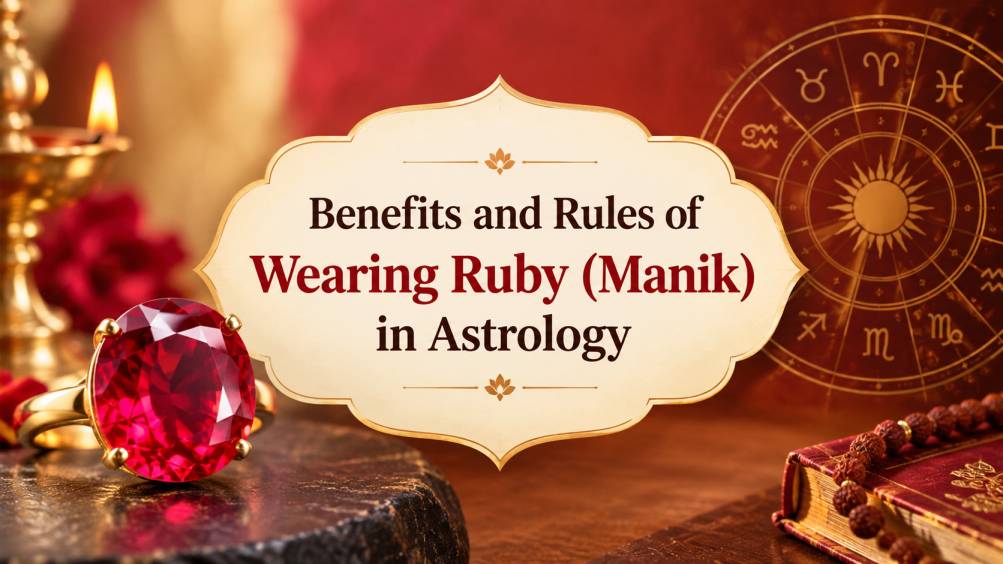
Ruby, known as Manik or Manikya in Vedic astrology, is a precious red gemstone traditionally associated with Surya, the Sun. In Hindu astrological traditions, the Sun represents confidence, leadership, authority, vitality, self-respect, and recognition. Ruby is believed to strengthen these qualities when the Sun is favourably placed in a person’s birth chart.
Ruby has long been valued in Indian jewellery and traditional gemstone practices. However, its astrological suitability depends on factors such as the ascendant (Lagna), the Sun’s house placement, planetary relationships, and the overall birth chart.
Before wearing a natural ruby for astrological purposes, it is helpful to understand its traditional benefits, recommended wearing method, suitable metals, and precautions. Astrology is a cultural and spiritual belief system, and the effects attributed to gemstones have not been established by scientific evidence.
What Is Ruby (Manik) in Vedic Astrology?
Ruby is a red variety of the mineral corundum and is valued for its colour, durability, and rarity. In Vedic astrology, it is associated with the Sun, one of the nine principal celestial bodies known as the Navagrahas.
The Sun traditionally symbolises:
- Leadership, confidence, and personal authority
- Government, administration, and public recognition
- Father figures, mentors, and authority relationships
- Self-esteem, discipline, and a sense of purpose
According to traditional Jyotish principles, ruby may be considered when the Sun has a favourable functional role in the birth chart and an astrologer believes strengthening it is appropriate.
Astrological Benefits of Wearing Ruby
1. Confidence and Leadership
Ruby is traditionally associated with courage, confidence, and leadership. Some practitioners recommend it to people who want to develop a stronger sense of responsibility or become more comfortable making decisions.
In practical terms, confidence also develops through preparation, experience, and consistent effort. A gemstone should not replace these foundations.
2. Career Growth and Professional Recognition
The Sun is associated with authority, administration, and leadership positions in Vedic astrology. Consequently, ruby is sometimes recommended for people working in management, government services, administration, politics, or leadership-oriented professions.
Its traditional significance may provide a meaningful personal reminder to act with integrity and take responsibility. However, wearing ruby does not guarantee a promotion, government job, or financial success.
3. Self-Esteem and Personal Motivation
Ruby is believed in some astrological traditions to support self-respect and a clear sense of identity. People who follow these traditions may wear it as part of a spiritual practice focused on personal discipline and motivation.
Setting realistic goals, communicating clearly, and developing professional skills remain practical ways to build self-esteem.
4. Relationships With Authority Figures
Because the Sun represents authority and the father in traditional Jyotish, ruby is sometimes associated with improving one’s approach to leadership, mentorship, and relationships with senior colleagues.
These associations are symbolic interpretations rather than proven effects. Respectful communication and clear boundaries are important regardless of one’s astrological beliefs.
5. Spiritual Significance
Ruby is also connected with Surya worship, gratitude, discipline, and the importance of maintaining a purposeful life. Some devotees combine gemstone traditions with morning prayers or the offering of water to the rising Sun.
These practices can be followed as personal or cultural rituals without assuming that a gemstone will determine future events.
Who Should Wear Ruby According to Astrology?
Ruby is not automatically suitable for everyone. Its traditional suitability depends primarily on the ascendant and the Sun’s role in the individual birth chart.
Zodiac Signs and Ascendants
| Ascendant (Lagna) | Traditional astrological consideration |
| Leo (Simha) | The Sun rules the ascendant, so ruby is often considered. |
| Aries (Mesh) | The Sun rules the fifth house and may be considered favourable in many traditional interpretations. |
| Sagittarius (Dhanu) | The Sun rules the ninth house and may be considered after chart analysis. |
| Scorpio (Vrishchik) | The Sun rules the tenth house and may be considered for professional or authority-related themes. |
| Other ascendants | Suitability varies according to house lordship, planetary relationships, and the full chart. |
These are general traditional associations, not universal recommendations. Even when the Sun rules a favourable house, its placement, conjunctions, aspects, and overall chart context may influence an astrologer’s advice.
Important: Your Sun sign alone is not enough to determine whether ruby is suitable. A complete birth chart is generally used in traditional gemstone recommendations.
Rules for Wearing Ruby (Manik)
1. Choose the Right Day
In traditional Vedic astrology, Sunday is considered an appropriate day to begin wearing ruby because it is associated with Surya. Some practitioners recommend wearing it in the morning after bathing and completing prayers.
The exact timing, or Shubh Muhurat, varies according to the date, location, and astrological tradition. There is no single universal time suitable for everyone.
2. Select a Suitable Metal
Ruby is traditionally set in gold or copper. The choice may depend on personal preference, jewellery design, and the astrologer’s recommendation.
- Gold: Commonly used for traditional ruby rings.
- Copper: Also associated with the Sun in some astrological practices.
- Alternative settings: Choose a secure, comfortable setting that protects the gemstone.
These metal preferences belong to traditional practice rather than scientifically established requirements.
3. Which Finger Should Hold a Ruby Ring?
Some Vedic astrologers recommend wearing a ruby ring on the ring finger of the right hand. Recommendations can vary depending on individual customs and astrological interpretations.
Choose a properly fitted ring that does not restrict circulation or irritate the skin.
4. How to Wear Ruby Traditionally
A traditional wearing ritual may include the following steps:
- Clean the ring gently and ensure it is comfortable to wear.
- Bathe and sit in a clean, quiet place on Sunday morning.
- Offer water to the rising Sun if this is part of your religious practice.
- Recite a Surya mantra, such as “Om Suryaya Namah.”
- Wear the ring with a positive intention, such as practising confidence, discipline, and responsibility.
Rituals vary across families and astrological schools. They should be understood as spiritual customs, not mandatory conditions for obtaining a guaranteed result.
5. Check Ruby Quality and Authenticity
Natural rubies vary in colour, clarity, treatment, and price. A genuine gemstone may also have undergone treatments to improve its appearance.
Before purchasing:
- Ask for a reliable gemological certificate where appropriate.
- Check whether the ruby is natural, synthetic, or treated.
- Request clear information about origin and treatments.
- Buy from a reputable jeweller and obtain a proper invoice.
- Choose a stone within your budget rather than relying on expensive claims.
A synthetic ruby is chemically similar to a natural ruby, but its value and origin are different. Gemstone authenticity should be checked independently of astrological claims.
Precautions Before Wearing Manik
Ruby is a relatively durable gemstone, but several practical considerations are important.
- Do not assume every person needs to strengthen the Sun.
- Avoid purchasing an expensive stone based on promises of instant wealth, success, or health improvement.
- Do not replace medical treatment or professional advice with gemstone remedies.
- Consider your budget and personal comfort before buying jewellery.
- If you experience skin irritation, remove the ring and check the metal setting.
Traditional astrologers may advise against ruby in certain chart configurations. If you follow Jyotish, consider a qualified practitioner’s explanation of your complete birth chart instead of relying on a generic zodiac-sign list.
Simple Remedies Associated With the Sun
If you wish to follow Sun-related practices without purchasing a gemstone, several traditional options are available:
- Offer water to the rising Sun as a devotional practice.
- Recite “Om Suryaya Namah” or another familiar Surya prayer.
- Maintain a consistent daily routine and honour commitments.
- Practise respectful communication with teachers, mentors, and elders.
- Develop leadership through accountability, learning, and service.
These practices can support reflection and discipline. Their spiritual significance should not be confused with a guaranteed astrological outcome.
Conclusion
Ruby (Manik) holds an important place in Vedic gemstone traditions because of its association with Surya, the Sun. It is traditionally linked with confidence, leadership, authority, self-respect, and professional recognition. However, ruby is not considered universally suitable, and traditional recommendations depend on the ascendant, the Sun’s house placement, and the overall birth chart.
Before wearing Manik, understand the gemstone’s quality, choose a comfortable setting, and avoid exaggerated claims about its powers. Sunday rituals, Surya mantras, and disciplined daily habits may also provide a meaningful way to connect with the Sun’s symbolism.
Ultimately, a gemstone can be a personal or spiritual choice, but lasting progress depends on informed decisions, consistent effort, and practical action.
Frequently Asked Questions (FAQs)
1. What are the main astrological benefits of wearing ruby?
Ruby is traditionally associated with confidence, leadership, authority, self-esteem, and professional recognition.
In Vedic astrology, these qualities are linked with the Sun. Whether ruby is recommended depends on the individual’s birth chart, and its benefits are not scientifically established.
Tip: Consider the gemstone a personal spiritual choice rather than a substitute for practical effort.
2. Which zodiac signs can wear Manik?
Ruby is often considered for Leo ascendants and may be recommended for certain other ascendants, including Aries, Sagittarius, and Scorpio, depending on the chart.
A person’s Sun sign alone does not establish suitability. Traditional Jyotish considers house lordship, planetary relationships, and the placement of the Sun.
Tip: Seek a complete chart assessment before making an expensive purchase.
3. Which day is best for wearing a ruby ring?
Sunday morning is traditionally considered suitable for beginning to wear ruby because Sunday is associated with Surya.
Some practitioners also recommend a particular Muhurat based on the person’s birth chart and local astrological calendar. No single time is universally prescribed.
Tip: Follow your family’s tradition or a trusted practitioner’s guidance if you observe these rituals.
4. Which finger and metal are recommended for ruby?
Traditional recommendations commonly include the ring finger and a gold setting, although copper is also used in some practices.
The choice can vary according to regional customs and the astrologer’s interpretation. Comfort, secure fitting, and metal sensitivity should take priority in practical matters.
Tip: Have the ring properly fitted and choose a setting that protects the stone.
5. Can everyone wear a ruby gemstone?
No, ruby is not universally recommended in traditional Vedic astrology.
Its suitability is assessed through the Sun’s role in the birth chart, including its house rulership, placement, aspects, and relationship with other planets. A generic zodiac list cannot provide a definitive answer.
Tip: Avoid wearing ruby solely because someone says it is lucky for your Sun sign.
6. How can I identify a genuine Manik stone?
A reputable jeweller or gemological laboratory can help determine whether a ruby is natural, synthetic, or treated.
Colour alone cannot reliably establish authenticity, and natural rubies may contain inclusions or undergo treatments. Certification and transparent purchase documentation are useful safeguards.
Tip: Request a reliable gemological report and invoice before buying.
7. Can I strengthen the Sun without wearing ruby?
Yes. Traditional Sun-related practices include offering water to the rising Sun, reciting Surya mantras, maintaining discipline, and showing respect to teachers and elders.
These practices can be meaningful as spiritual observances and personal reminders. They do not guarantee specific career, financial, or health outcomes.
Tip: Choose simple practices that fit your beliefs and combine them with practical steps toward your goals.