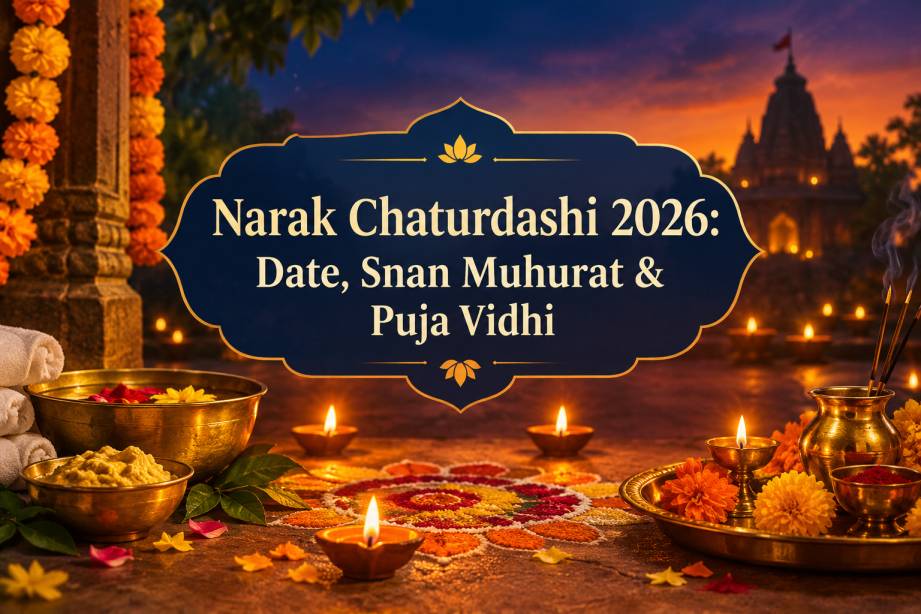
Narak Chaturdashi, also known as Choti Diwali or Roop Chaudas, is an important Hindu festival celebrated a day before the main Diwali festivities in many parts of India. It is associated with the story of Lord Krishna’s victory over the demon Narakasura and symbolises the triumph of good over evil. One of its best-known traditions is Abhyanga Snan, an early-morning ritual bath performed according to regional customs.
From a Vedic astrology perspective, the observance falls on the Chaturdashi Tithi of Krishna Paksha in the Hindu month of Kartik. Families mark the occasion through cleansing rituals, prayers, lighting diyas, and preparing their homes for Diwali. Understanding the date, local Muhurat, and puja vidhi helps devotees follow these customs meaningfully while appreciating their cultural and spiritual significance.
Narak Chaturdashi 2026: Date and Significance
Narak Chaturdashi in 2026 is expected to be observed on Sunday, 8 November 2026, according to the commonly followed Diwali calendar. However, the festival’s observance depends on the Chaturdashi Tithi, sunrise, and regional Panchang traditions. In some years, the calendar relationship between Narak Chaturdashi and Lakshmi Puja can make date selection more complex.
Before planning your Abhyanga Snan or other rituals, confirm the date using a reliable Panchang for your city.
Why Is Narak Chaturdashi Celebrated?
The festival has several traditional meanings:
- Victory over evil: The story of Narakasura’s defeat represents the triumph of righteousness over harmful forces.
- Purification: Abhyanga Snan symbolises cleansing and preparing for a fresh beginning.
- Light over darkness: Lighting diyas represents hope, knowledge, and the removal of negativity.
- Preparation for Diwali: Cleaning the home and completing personal rituals help families prepare for the main festival.
The festival is known by different names across India, including Choti Diwali, Roop Chaudas, and Kali Chaudas, depending on regional customs.
Abhyanga Snan Muhurat 2026
Abhyanga Snan is a traditional oil bath performed on Narak Chaturdashi. In many Hindu traditions, it is taken before sunrise, often during the period associated with Brahma Muhurat or the pre-sunrise ritual window prescribed by the local Panchang.
The exact Abhyanga Snan Muhurat for 2026 should be verified for your city before publication or observance. The appropriate time depends on the local sunrise, the applicable Tithi, and the regional calendar tradition. All timings should be stated in Indian Standard Time (IST).
How to Follow the Snan Tradition
- Check the local Panchang for the recommended pre-sunrise bathing period.
- Prepare bathing essentials the previous evening.
- Apply a suitable quantity of oil to the body if this is part of your family custom.
- Bathe safely and comfortably, without rushing in the dark.
- Wear clean clothes and offer prayers according to your tradition.
Do not treat a ritual timing as a reason to compromise personal safety or health. A comfortable bath and a sincere observance are more important than following a practice in an unsafe way.
Narak Chaturdashi Puja Vidhi
The exact ritual varies by region and family tradition, but a simple observance can include the following steps.
1. Prepare the Home
Clean the house, entrance, and worship area before the festival. Many families decorate the doorway with rangoli and prepare diyas for the evening.
Cleaning is both a cultural tradition and a practical way to prepare for Diwali gatherings.
2. Perform Abhyanga Snan
Take the traditional oil bath at the time recommended by your local Panchang. Some families use fragrant oils or herbal preparations as part of their customs.
Choose products suitable for your skin and avoid ingredients that cause irritation. Abhyanga Snan is a traditional wellness and purification practice, not a substitute for medical treatment.
3. Offer Prayers to Lord Krishna
The story of Narakasura’s defeat is central to the festival in many traditions. Devotees may pray to Lord Krishna and reflect on the importance of courage, justice, and overcoming harmful behaviour.
You can offer flowers, light a diya, or recite a familiar prayer according to your family’s practice.
4. Light Diyas in the Evening
Lighting small lamps is a common Narak Chaturdashi tradition. Place them in secure locations away from curtains, paper decorations, and other flammable materials.
Use stable holders, supervise children, and never leave burning lamps unattended.
5. Prepare for Diwali
Complete remaining cleaning and decorations, prepare festive food, and organise puja items for the main Diwali celebration. Many families use this day to spend time together and share sweets with neighbours.
Astrological and Spiritual Significance
In the traditional Hindu calendar, Narak Chaturdashi is linked to the Chaturdashi Tithi of Kartik Krishna Paksha. Its rituals focus on cleansing, discipline, and overcoming negative tendencies.
Although planetary interpretations vary among astrologers, the festival is generally more closely connected with religious stories, lunar-calendar observances, and ritual purification than with any one planetary remedy.
Traditional Practices for Positive Beginnings
- Prayer: Worship according to your family’s tradition.
- Cleanliness: Organise your home before the Diwali festivities.
- Charity: Share food or provide practical help to someone in need.
- Self-reflection: Use the festival as a reminder to leave behind unhelpful habits.
- Safe celebrations: Avoid hazardous lighting arrangements and unsafe firework use.
These practices can make the festival meaningful without relying on promises of guaranteed luck, wealth, or supernatural results.
Conclusion
Narak Chaturdashi 2026 is expected to be observed on 8 November, subject to confirmation through the relevant local Panchang. The festival celebrates the victory of good over evil and highlights purification, courage, and preparation for Diwali. Abhyanga Snan, prayers, lighting diyas, and cleaning the home are among its best-known traditions.
The exact Snan Muhurat should be checked for your city because sunrise and Tithi calculations influence the recommended timing. You can observe the festival simply by following your family customs, prioritising safety, and sharing kindness with others. Rather than viewing rituals as guarantees of good fortune, consider them opportunities to develop gratitude, discipline, and positive habits as you prepare for Diwali.
Frequently Asked Questions (FAQs)
1. When is Narak Chaturdashi in 2026?
Narak Chaturdashi is expected to fall on Sunday, 8 November 2026, but the date should be confirmed using a reliable local Panchang.
The festival’s observance depends on the Chaturdashi Tithi, sunrise, and regional traditions. Its relationship with the main Diwali date can vary between calendar systems.
Tip: Verify the date for your city before making ritual arrangements.
2. What is the Abhyanga Snan Muhurat for Narak Chaturdashi 2026?
Abhyanga Snan is traditionally performed before sunrise, during the period recommended by the local Panchang.
The exact Muhurat depends on the city’s sunrise and the applicable Tithi. A single nationwide time should not be assumed without checking the relevant calendar.
Tip: Consult a city-specific Panchang and keep the bathing area safely lit.
3. Why is Abhyanga Snan performed on Narak Chaturdashi?
Abhyanga Snan is a traditional oil-bath ritual associated with purification, well-being, and preparation for Diwali.
In many households, it symbolises leaving behind negativity and beginning the festival with a fresh outlook. Customs concerning oil, bathing time, and prayers differ across regions.
Tip: Use skin-friendly products and follow the ritual in a comfortable, safe manner.
4. What is the significance of Narak Chaturdashi?
Narak Chaturdashi commemorates the traditional story of Lord Krishna’s victory over Narakasura and symbolises the triumph of good over evil.
The festival also emphasises cleanliness, light, and personal renewal. Its observance helps families prepare spiritually and practically for Diwali.
Tip: Use the occasion to reflect on positive habits and acts of kindness.
5. What is the difference between Narak Chaturdashi and Choti Diwali?
Narak Chaturdashi and Choti Diwali are commonly used names for the same festival in many parts of India.
Regional practices differ, and some communities observe additional rituals or use names such as Roop Chaudas or Kali Chaudas. The exact observance can depend on local traditions and the Hindu calendar.
Tip: Follow the customs practised in your family or region.
6. Which puja is performed on Narak Chaturdashi?
Many families observe Abhyanga Snan, pray to Lord Krishna, and light diyas on Narak Chaturdashi.
Some regions follow distinctive rituals, including worship associated with Kali Chaudas. The form of worship depends on local beliefs and family customs rather than a single universal procedure.
Tip: Prepare basic offerings in advance and follow a trusted regional puja guide.
7. Can Narak Chaturdashi rituals be performed at home?
Yes, families can observe Narak Chaturdashi at home through a traditional bath, prayers, and the lighting of diyas.
A priest is not essential for a simple household observance, although people following a specific ritual tradition may seek guidance. Keep fire safety and personal comfort in mind throughout the celebration.
Tip: Choose a simple routine that suits your family and available time.
8. What should be avoided on Narak Chaturdashi?
It is sensible to avoid unsafe firework use, unattended flames, rushed bathing in dark conditions, and unnecessary financial pressure during the festivities.
Some families also follow religious restrictions based on regional customs. These practices vary, so there is no single universal list of prohibitions.
Tip: Celebrate responsibly, respect your family’s traditions, and prioritise the safety of children, older adults, and pets.