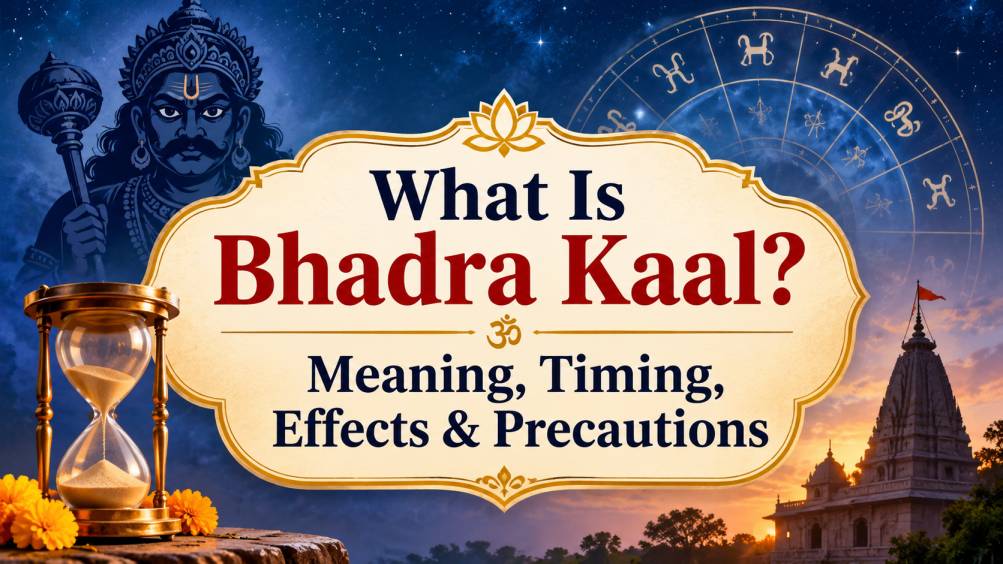
In Hindu astrology, selecting an auspicious time before starting important activities is an important part of traditional Panchang practices. Bhadra Kaal, also known as Vishti Karana, is one such period that is generally avoided for certain auspicious ceremonies and new beginnings. It is associated with Bhadra, a traditional mythological figure believed to influence the suitability of particular activities.
Bhadra Kaal does not occur at the same time every day. Its timing depends on the lunar Tithi and the calculation of Karana in the Hindu Panchang. Many people check Bhadra timings before marriage ceremonies, housewarming rituals, religious functions and important purchases. Understanding its meaning, calculation and exceptions helps individuals follow traditional Muhurat principles without unnecessary fear or confusion.
What Is Bhadra Kaal in Vedic Astrology?
Bhadra Kaal is a period associated with Vishti Karana, one of the eleven Karanas used in the Hindu Panchang.
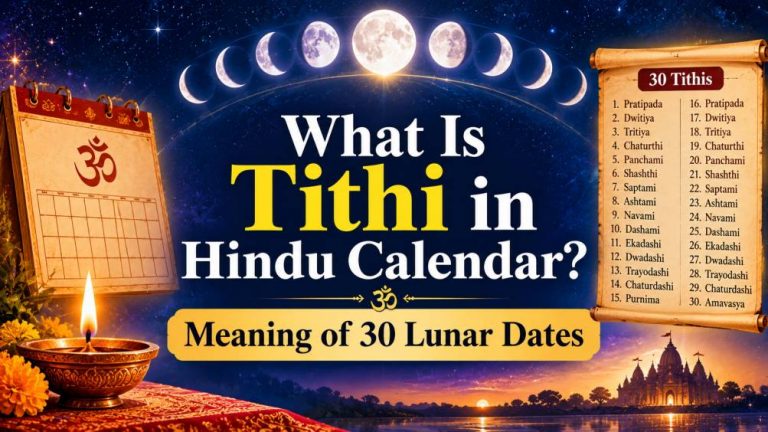
A Karana represents half of a lunar Tithi. Since a lunar month contains 30 Tithis, there are 60 Karana periods in a lunar month.
There are two broad categories of Karanas:
- Fixed Karanas: Shakuni, Chatushpada, Naga and Kimstughna.
- Movable Karanas: Bava, Balava, Kaulava, Taitila, Gara, Vanija and Vishti.
Vishti Karana is commonly called Bhadra. In traditional Muhurat astrology, it is generally considered unsuitable for auspicious beginnings.
However, it is important to understand that Bhadra is a Panchang-based timing concept, not a planetary transit or a permanent astrological condition.
Why Is Bhadra Kaal Considered Inauspicious?
According to Hindu mythology, Bhadra is associated with Bhadrakali, a powerful and fierce divine form. Traditional stories describe Bhadra as having a strong and intense nature.
Because of this association, Vishti Karana is traditionally considered unsuitable for activities that require peace, harmony and prosperity.
In Muhurat astrology, auspicious activities are generally started during periods associated with positive and harmonious influences.
Bhadra is traditionally avoided for:
- Marriage ceremonies and engagement functions.
- Griha Pravesh or housewarming ceremonies.
- Naming ceremonies and other auspicious family rituals.
- Starting a new business or undertaking.
- Important religious celebrations.
- Beginning construction or purchasing property.
These restrictions are based on traditional astrological beliefs and should not be interpreted as scientific evidence that an activity will fail.
How Is Bhadra Kaal Calculated?
Bhadra Kaal is calculated using the lunar Tithi and Karana system.
Each Tithi is divided into two equal halves, and each half is called a Karana. Vishti Karana occurs during specific portions of the lunar month.
The timing changes according to the Moon’s angular distance from the Sun.
When Does Bhadra Occur?
Vishti Karana occurs during the following traditional Tithi halves:
- First half of Shukla Paksha Ashtami.
- Second half of Shukla Paksha Chaturthi.
- First half of Shukla Paksha Ekadashi.
- Second half of Shukla Paksha Purnima.
- Second half of Krishna Paksha Ashtami.
- First half of Krishna Paksha Chaturthi.
- Second half of Krishna Paksha Ekadashi.
- First half of Krishna Paksha Chaturdashi.
Since these periods follow the lunar calendar, Bhadra timings vary throughout the month.
Important: Always check the local Panchang for accurate Bhadra Kaal timings in IST. Sunrise, sunset and location-based calculations can affect the displayed timings.
What Is Bhadra Mukha and Bhadra Puccha?
An important aspect of Bhadra Kaal is the distinction between Bhadra Mukha and Bhadra Puccha.
In traditional astrology, Bhadra is symbolically divided into different sections.
1. Bhadra Mukha
Bhadra Mukha refers to the face portion of Bhadra. It is traditionally considered particularly unsuitable for auspicious activities.
Important ceremonies and new beginnings are generally avoided during this period.
2. Bhadra Puccha
Bhadra Puccha refers to the tail portion of Bhadra.
Some traditional Muhurat practices consider certain activities permissible during this period, especially when they involve challenging situations, competition or conflict.
However, this does not mean that every auspicious activity becomes suitable during Bhadra Puccha. The complete Panchang and the nature of the activity must be considered.
What Is the Difference Between Bhadra Kaal and Rahu Kaal?
Both Bhadra Kaal and Rahu Kaal are considered unfavourable for certain auspicious beginnings, but their calculation methods are different.
| Basis | Bhadra Kaal | Rahu Kaal |
| Astrological basis | Vishti Karana | Planetary time division |
| Calculation | Lunar Tithi and Karana | Weekday and daylight duration |
| Duration | Depends on Karana | Approximately 90 minutes |
| Frequency | Occurs during specific lunar periods | Occurs every day |
| Traditional use | Avoided for auspicious beginnings | Generally avoided for new beginnings |
Rahu Kaal occurs daily at different times according to the weekday, whereas Bhadra Kaal depends on the lunar calendar.
Both should be checked separately when selecting an auspicious Muhurat.
Are There Any Exceptions During Bhadra Kaal?
Yes, traditional Muhurat astrology recognises certain exceptions depending on the activity, location and timing.
Bhadra is not considered equally unsuitable for every type of work.
For example, activities involving:
- Conflict resolution.
- Competitive situations.
- Legal disputes.
- Difficult negotiations.
- Destructive or challenging tasks.
may be evaluated differently under traditional Muhurat principles.
Another important consideration is the location of Bhadra. Some traditions distinguish between Bhadra occurring in different regions or Lokas based on the Tithi and timing.
For major ceremonies, an experienced astrologer should examine the complete Panchang rather than relying on a general Bhadra calendar.
What Should You Do During Bhadra Kaal?
If Bhadra Kaal overlaps with an important activity, there is no need to panic. You can follow practical and traditional approaches.
Some commonly followed practices include:
- Postpone non-essential auspicious beginnings until Bhadra ends.
- Perform daily prayers and meditation.
- Recite “Om Gan Ganapataye Namah” for spiritual reassurance.
- Avoid making rushed decisions.
- Continue essential responsibilities without unnecessary delay.
- Consult a knowledgeable astrologer for major ceremonies.
Remember that Bhadra Kaal is primarily a traditional Muhurat consideration. Medical emergencies, safety requirements and essential professional responsibilities should never be delayed because of it.
Conclusion
Bhadra Kaal is an important concept in Hindu Panchang and Vedic Muhurat astrology, primarily associated with Vishti Karana. It is traditionally considered unsuitable for activities such as marriage, Griha Pravesh, business inaugurations and other auspicious beginnings. Its timing changes according to the lunar Tithi, making daily Panchang consultation important.
Understanding Bhadra Mukha, Bhadra Puccha and the exceptions associated with different activities can help individuals make more informed decisions. However, Bhadra should not become a source of unnecessary fear. Use traditional Muhurat principles thoughtfully, consider the complete Panchang and balance cultural practices with practical decision-making.
Frequently Asked Questions (FAQs)
1. What is Bhadra Kaal in astrology?
Bhadra Kaal is a traditionally inauspicious period associated with Vishti Karana in the Hindu Panchang.
It is generally avoided when selecting Muhurat for important ceremonies and positive beginnings. Its timing depends on the lunar Tithi rather than a fixed daily schedule.
Remember:
- Bhadra is associated with Vishti Karana.
- It does not occur at the same time every day.
- Check the daily Panchang for accurate timings.
2. Why should auspicious activities be avoided during Bhadra Kaal?
Traditional Muhurat astrology considers Vishti Karana unsuitable for activities that require harmony, stability and positive beginnings.
For this reason, marriage ceremonies, housewarming rituals and business inaugurations are generally scheduled outside Bhadra.
Common precautions:
- Check Bhadra before finalising a Muhurat.
- Avoid unnecessary fear.
- Consider other Panchang elements.
3. Does Bhadra Kaal occur every day?
No, Bhadra Kaal does not occur every day because it depends on the occurrence of Vishti Karana in the lunar calendar.
It appears during specific portions of certain Tithis in Shukla Paksha and Krishna Paksha.
Tips:
- Check the current lunar Tithi.
- Verify the Karana.
- Use location-specific Panchang timings.
4. What is the difference between Bhadra Mukha and Bhadra Puccha?
Bhadra Mukha represents the face portion of Bhadra, while Bhadra Puccha represents its tail portion.
Traditional astrology considers Bhadra Mukha particularly unsuitable for auspicious activities. Certain traditions allow specific challenging or competitive activities during Bhadra Puccha.
Important points:
- Bhadra Mukha is generally avoided.
- Bhadra Puccha has certain traditional exceptions.
- Consult an astrologer before selecting a major Muhurat.
5. Can marriage be performed during Bhadra Kaal?
Traditional Hindu Muhurat practices generally avoid performing marriage ceremonies during Bhadra Kaal.
Marriage Muhurat selection also considers Tithi, Nakshatra, Yoga, planetary positions and other relevant factors.
Before finalising a marriage date:
- Check the complete Panchang.
- Verify Bhadra timings.
- Consider the couple’s horoscope if following Kundli-based Muhurat selection.
6. What should I do if Bhadra Kaal overlaps with important work?
If Bhadra Kaal overlaps with an auspicious activity, you may consider shifting the beginning of that activity to a suitable period after Bhadra ends.
However, essential responsibilities and emergencies should never be delayed because of traditional timing restrictions.
Practical suggestions:
- Reschedule non-essential ceremonies.
- Continue urgent responsibilities.
- Consult an astrologer for major events.
7. Is Bhadra Kaal the same as Rahu Kaal?
No, Bhadra Kaal and Rahu Kaal are two different Panchang-based timing concepts.
Bhadra is associated with Vishti Karana, whereas Rahu Kaal is calculated using the weekday and the duration between sunrise and sunset.
Key differences:
- Bhadra depends on lunar Tithi and Karana.
- Rahu Kaal occurs daily.
- Both have separate calculation methods.
8. Which mantra can be chanted during Bhadra Kaal?
Devotees may chant “Om Gan Ganapataye Namah” during Bhadra Kaal as a traditional prayer to Lord Ganesha.
Prayer, meditation and charitable activities can also be followed according to personal beliefs.
Common spiritual practices:
- Chant Ganesh Mantra.
- Perform daily prayers.
- Practise meditation.
- Donate food or essential items to people in need.