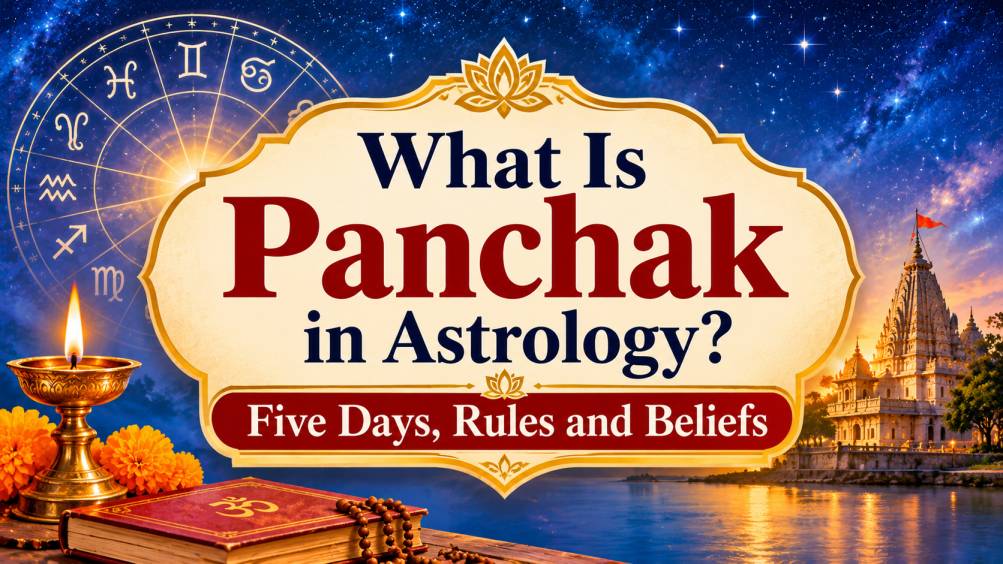
Panchak is an important concept in Vedic astrology that refers to a period of approximately five days when the Moon transits through five specific nakshatras (lunar constellations). These are Dhanishta, Shatabhisha, Purva Bhadrapada, Uttara Bhadrapada and Revati. According to traditional Hindu astrology, certain activities are considered less favourable during this period, while routine responsibilities and spiritual practices can generally continue.
The word Panchak comes from the Sanskrit word Pancha, meaning five. It is traditionally associated with specific astrological combinations and is considered while selecting auspicious timings or Shubh Muhurat for important activities. Understanding Panchak can help people follow cultural traditions with greater awareness rather than fear or confusion.
What Is Panchak in Vedic Astrology?
In Vedic astrology, Panchak occurs when the Moon moves through the final five nakshatras of the zodiac, beginning with Dhanishta and ending with Revati.
These five nakshatras fall across the zodiac signs Aquarius (Kumbha Rashi) and Pisces (Meena Rashi).
Panchak generally lasts around five days, although its exact duration depends on the Moon’s movement. It occurs approximately once every 27 days.
The Five Nakshatras of Panchak
The five nakshatras associated with Panchak are:
- Dhanishta: Associated with prosperity, music, rhythm and social connections.
- Shatabhisha: Traditionally connected with healing, research and mysterious subjects.
- Purva Bhadrapada: Associated with transformation, determination and spiritual intensity.
- Uttara Bhadrapada: Connected with wisdom, patience and deeper understanding.
- Revati: Traditionally associated with protection, compassion, travel and completion.
In traditional astrology, these nakshatras are collectively considered important when assessing Panchak and selecting Muhurat.
Why Is Panchak Considered Important?
Panchak is significant because traditional Vedic astrology associates certain activities with the lunar constellations active during this period.
Rather than considering all five days universally inauspicious, astrologers traditionally evaluate the purpose of an activity, the weekday, the individual’s horoscope and the available Muhurat.
The belief is that activities started during certain Panchak periods may require additional care or traditional precautions. However, these are cultural and astrological beliefs, not scientifically established predictions.
Five Traditional Rules to Follow During Panchak
According to traditional Hindu customs, certain activities are avoided during Panchak. These rules are primarily followed to maintain religious and astrological practices.
1. Avoid Starting Roof Construction
Traditional beliefs suggest avoiding the beginning of roof construction or installing a house’s roof during Panchak. People planning house construction often consult a priest or astrologer to select a suitable Muhurat.
2. Avoid Buying or Making a New Bed
Purchasing or manufacturing a new bed is traditionally considered unfavourable during Panchak. Some families postpone such purchases until Panchak ends.
3. Be Careful with Fire-Related Activities
Starting activities involving fire, particularly certain construction or industrial activities, is traditionally discouraged during Agni Panchak. Normal cooking and everyday household activities do not need to stop.
4. Avoid Travelling Towards the South
According to traditional astrological beliefs, travelling in the southern direction during Panchak is considered unfavourable. If travel is necessary, some families follow customary precautions after consulting an astrologer.
5. Follow Traditional Funeral Rituals
Panchak is particularly significant in traditional Hindu funeral customs. Some beliefs associate performing the last rites during Panchak with the need for additional rituals.
In certain traditions, five symbolic representations made from kusha grass are used during cremation rituals. The specific practice should be guided by the family’s religious customs and a knowledgeable priest.
What Are the Five Types of Panchak?
Traditional astrology describes different types of Panchak based on the weekday on which the period begins. These classifications are commonly associated with different areas of caution.
| Type of Panchak | Traditional Association |
| Rog Panchak | Health-related concerns |
| Raj Panchak | Authority and professional matters |
| Agni Panchak | Fire-related activities |
| Chor Panchak | Theft and financial caution |
| Mrityu Panchak | Traditional concerns around danger and death |
The weekday-based classifications and their interpretations can vary across regional Panchang traditions. Therefore, the applicable Panchak should be checked using a reliable local Panchang rather than relying on general assumptions.
What Activities Can Be Performed During Panchak?
Panchak does not mean that every activity must stop for five days. Many routine and spiritual activities can continue.
Generally, people may:
- Perform daily puja and meditation.
- Chant mantras and read religious texts.
- Continue regular household responsibilities.
- Offer prayers and perform charity.
- Visit temples and participate in spiritual activities.
- Complete routine work and professional responsibilities.
For important events such as marriage, Griha Pravesh, property registration or starting a major business, families traditionally consult an astrologer for a suitable Muhurat.
Remedies and Precautions During Panchak
In Vedic astrology, remedies are traditionally followed to maintain peace of mind and seek divine blessings. They should be understood as religious practices rather than guaranteed ways to prevent negative outcomes.
Some commonly followed practices include:
- Pray to Lord Shiva: Chanting the Maha Mrityunjaya Mantra is traditionally associated with protection and well-being.
- Perform Hanuman worship: Some devotees recite the Hanuman Chalisa for courage and mental strength.
- Donate food: Offering food, clothes or essential items to people in need is considered a positive charitable practice.
- Maintain calmness: Avoid unnecessary fear, arguments and impulsive decisions.
- Consult a Panchang: Check the beginning and ending time of Panchak before planning an important religious ceremony.
The Maha Mrityunjaya Mantra is:
Om Tryambakam Yajamahe Sugandhim Pushtivardhanam, Urvarukamiva Bandhanan Mrityor Mukshiya Maamritat.
This mantra is traditionally recited for peace, well-being and spiritual strength.
How Does Panchak Affect Daily Life?
Panchak is relevant to people who follow Hindu astrology while planning important personal and family activities.
For example, someone planning a housewarming ceremony may check Panchak dates before finalising the event. Similarly, families may consult a priest before performing certain funeral rituals.
However, it is important to understand that Panchak is not a scientifically proven predictor of accidents, financial losses or personal difficulties.
People should balance traditional beliefs with practical considerations. Necessary medical treatment, emergency travel, professional responsibilities and essential household activities should never be delayed simply because Panchak is occurring.
Conclusion
Panchak is a traditional concept in Vedic astrology associated with the Moon’s transit through five nakshatras: Dhanishta, Shatabhisha, Purva Bhadrapada, Uttara Bhadrapada and Revati. Its significance comes from religious customs, astrological interpretations and traditional rules concerning certain activities.
Understanding Panchak can help individuals make informed decisions when following cultural practices and selecting auspicious timings. However, there is no need to approach these five days with fear. Checking a reliable Panchang, following family traditions and consulting a knowledgeable astrologer when necessary are practical ways to observe Panchak.
Ultimately, astrology can serve as a cultural and spiritual guide while everyday decisions should also be based on logic, responsibility and personal circumstances.
Frequently Asked Questions (FAQs)
1. What is Panchak in astrology?
Panchak is an approximately five-day period when the Moon transits through five specific nakshatras in Vedic astrology.
These nakshatras are Dhanishta, Shatabhisha, Purva Bhadrapada, Uttara Bhadrapada and Revati.
Traditional guidance:
- Check Panchak timings in a reliable Panchang.
- Consult an astrologer before selecting important Muhurats.
2. How many days does Panchak last?
Panchak generally lasts around five days, depending on the Moon’s transit through the five nakshatras.
It occurs approximately once every 27 days. Its exact beginning and ending times vary from one occurrence to another.
Helpful tip: Always check the local Panchang for accurate IST timings rather than assuming fixed dates.
3. Which activities should be avoided during Panchak?
According to traditional Hindu astrology, certain activities are avoided during Panchak, including:
- Starting roof construction.
- Making or purchasing a new bed.
- Certain fire-related activities.
- Travelling towards the south.
- Performing funeral rites without prescribed traditional precautions.
These customs vary across communities, and necessary everyday activities can continue.
4. Can we perform Puja during Panchak?
Yes, daily Puja, mantra chanting, meditation and other spiritual activities can generally be performed during Panchak.
Devotees may worship Lord Shiva, Lord Hanuman or their preferred deity. These practices are traditionally associated with peace, devotion and spiritual well-being.
Suggested practices:
- Chant the Maha Mrityunjaya Mantra.
- Read the Hanuman Chalisa.
- Perform daily prayers.
- Donate food to people in need.
5. Is Panchak always inauspicious?
No, Panchak is not universally considered inauspicious for every activity in traditional astrology.
Its interpretation depends on the weekday, nakshatra, purpose of the activity and applicable Muhurat rules. Routine responsibilities and spiritual practices are generally not prohibited.
6. Can we travel during Panchak?
According to traditional beliefs, travelling towards the south is generally avoided during Panchak.
However, necessary journeys, work-related travel and emergencies should not be postponed because of astrological concerns. Families who follow these customs may consult an astrologer about traditional precautions.
7. What is the difference between Panchak and Panchak Dosh?
Panchak refers to the Moon’s transit through five specific nakshatras, whereas Panchak Dosh generally refers to the traditionally perceived unfavourable influence associated with this period.
The term is often used in connection with certain activities and funeral rituals. Its interpretation depends on the astrological tradition being followed, and it should not be treated as a guaranteed prediction of negative events.