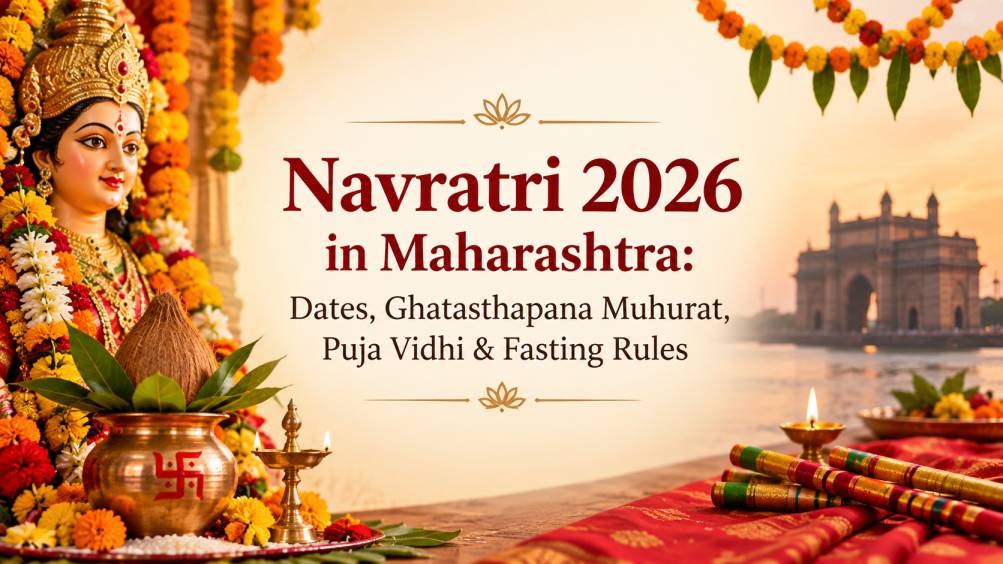
Navratri 2026 in Maharashtra will be observed from Sunday, October 11 to Monday, October 19, 2026, followed by Vijayadashami on Tuesday, October 20. Shardiya Navratri begins with Ashwin Shukla Pratipada and is traditionally dedicated to the worship of the nine forms of Goddess Durga. Ghatasthapana, fasting, daily puja, mantra recitation and charitable activities form important parts of the observance. (Drik Panchang)
In Maharashtra, Navratri has both religious and cultural importance. Along with home worship, devotees participate in temple rituals, devotional gatherings and community celebrations. From a traditional Jyotish perspective, Navratri is also a period for discipline, prayer and inner reflection rather than simply a festival associated with material outcomes.
Navratri 2026 Dates in Maharashtra
The major dates for Shardiya Navratri are:
- October 11, Sunday: Pratipada, Ghatasthapana and Shailputri Puja
- October 12, Monday: Dwitiya and Brahmacharini Puja
- October 13, Tuesday: Tritiya and Chandraghanta Puja
- October 14, Wednesday: Chaturthi and Kushmanda Puja
- October 15, Thursday: Panchami and Skandamata Puja
- October 16, Friday: Shashthi and Katyayani Puja
- October 17, Saturday: Saptami and Kalaratri Puja
- October 18, Sunday: Ashtami-related observances
- October 19, Monday: Durga Ashtami, Mahagauri Puja and Maha Navami
- October 20, Tuesday: Vijayadashami/Dussehra and Navratri conclusion
The exact observances can differ according to regional traditions and local Panchang calculations. (Drik Panchang)
Ghatasthapana Muhurat in Maharashtra 2026
Ghatasthapana will be performed on Sunday, October 11, 2026.
For Maharashtra, the morning Ghatasthapana window is approximately 6:30 AM to 10:26 AM IST in Badlapur and 6:31 AM to 10:27 AM IST in Navi Mumbai. The Abhijit Muhurat is approximately 12:00 PM to 12:48 PM IST, depending on the location. (Drik Panchang)
Because sunrise and geographical coordinates affect Panchang calculations, the exact muhurat may vary between Mumbai, Pune, Nagpur, Nashik, Kolhapur and other Maharashtra cities.
Why Ghatasthapana Is Important
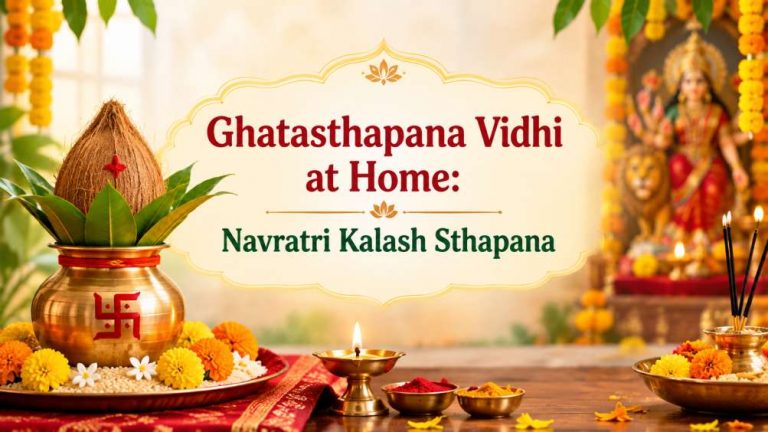
Ghatasthapana, also called Kalash Sthapana, formally marks the beginning of Navratri worship. Traditional practice recommends performing it during the early part of the day while Pratipada is prevailing. Chitra Nakshatra and Vaidhriti Yoga are traditionally considered factors to avoid when selecting the ideal time, although their presence does not necessarily make the entire day unusable. (Drik Panchang)
Ghatasthapana Puja Vidhi
A simple traditional procedure can be followed at home.
Step 1: Prepare the Puja Space
Clean the worship area and place a wooden platform or clean surface. Use red or yellow cloth if customary in your family.
Step 2: Prepare the Soil and Seeds
A wide earthen pot is filled with clean soil and traditionally used for sowing Sapta Dhanya, or seven grains. Traditional lists include barley, sesame, rice, green gram, foxtail millet, chickpea and wheat. (Drik Panchang)
Step 3: Prepare the Kalash
Fill a clean copper, brass or clay kalash with water. Add items such as rice, a coin and betel nut according to family tradition. Place mango or Ashoka leaves around the opening and cover it with a coconut wrapped in red cloth. (Drik Panchang)
Step 4: Invoke Goddess Durga
Place the kalash over the prepared grain bed and offer flowers, kumkum, akshat, incense and a diya. Devotees may recite a Durga mantra, Durga Saptashati or a simple prayer according to their practice.
A commonly recited invocation is:
“या देवी सर्वभूतेषु शक्तिरूपेण संस्थिता।
नमस्तस्यै नमस्तस्यै नमस्तस्यै नमो नमः॥”
The verse is traditionally understood as an invocation of the Divine Mother as the presence of Shakti in all beings.
Navratri Fasting Rules
Navratri fasting practices vary considerably between families and regions. Some devotees observe a strict fast, while others follow phalahar or a single permitted meal.
Commonly followed fasting foods include:
- Fruits and seasonal produce
- Milk, curd and other suitable dairy products
- Sabudana
- Singhara/water-chestnut flour
- Makhana
- Dry fruits and nuts
- Sendha namak instead of regular salt
- Certain fasting grains or millets according to family tradition
Traditional fasting guidance also emphasizes moderation, cleanliness, meditation and devotional practice. (Drik Panchang)
Those observing a fast should not compromise their health. People with diabetes, pregnancy-related nutritional needs, chronic illnesses, or medication requirements should follow appropriate medical advice rather than adopting a restrictive fast without professional guidance.
Astrological Significance of Navratri
Navratri is primarily determined through the lunar calendar and tithi, rather than by the Sun sign of an individual. Therefore, it is more appropriate to view the festival through the framework of Ashwin Shukla Paksha, Pratipada, Navami and other Panchang factors.
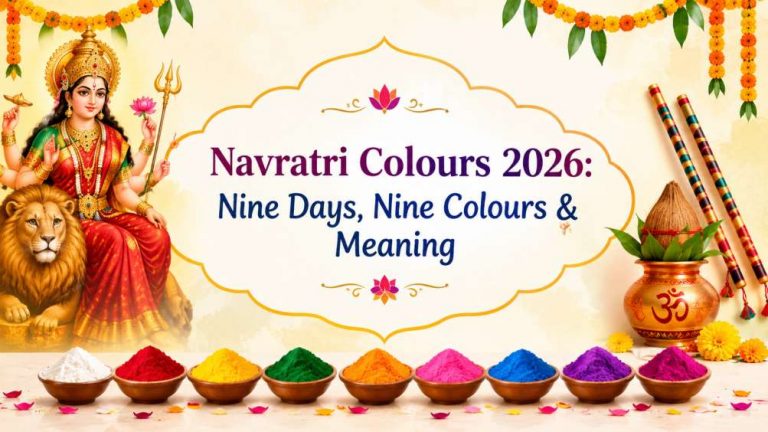
Traditional worship of the nine forms of Durga is also associated with different qualities such as courage, knowledge, discipline, protection and spiritual strength. These associations can provide a useful framework for personal reflection.
For example:
- Shailputri: grounding and stability
- Brahmacharini: discipline and determination
- Chandraghanta: courage and balance
- Kushmanda: vitality and creativity
- Skandamata: nurturing and responsibility
- Katyayani: courage and purposeful action
- Kalaratri: confronting fear and negativity
- Mahagauri: purification and clarity
- Siddhidatri: spiritual learning and completion
These are traditional religious associations, not scientifically established effects of planetary positions.
Practical Remedies During Navratri
Instead of looking for guaranteed results, Navratri remedies can be approached as practices for discipline and reflection.
For Mental Clarity
Spend a few minutes each morning in prayer or quiet meditation. Reducing unnecessary distractions can make the practice more meaningful.
For Family Harmony
Offer prayers together, maintain respectful communication and consider charitable activities during the festival.
For Spiritual Discipline
Choose one manageable practice for nine days, such as:
- Reading a short section of Durga-related scripture
- Chanting a simple mantra
- Lighting a diya
- Maintaining a vegetarian or sattvic diet according to personal tradition
- Donating food or useful items
The value of such practices lies primarily in consistency, intention and reflection rather than promises of instant results.
Vijayadashami 2026 in Maharashtra
Vijayadashami will fall on Tuesday, October 20, 2026. In Mumbai, the Vijay Muhurat is approximately 2:19 PM to 3:06 PM IST. Small differences can occur across Maharashtra because muhurat calculations are location-specific. (Drik Panchang)
Vijayadashami is associated with the traditional theme of victory of good over evil and is also observed through practices such as Shami Puja, Aparajita Puja and Seema Avalanghan in some traditions. (Drik Panchang)
Conclusion
Navratri 2026 in Maharashtra offers an opportunity to combine traditional worship with personal discipline and reflection. The festival begins with Ghatasthapana on October 11, continues through nine days of Devi worship and fasting, and concludes with Vijayadashami on October 20, 2026. (Drik Panchang)
For Ghatasthapana, remember that the exact muhurat depends on your city. A simple, sincere puja performed according to family tradition can be meaningful without making exaggerated claims about guaranteed outcomes. Before fasting or following dietary restrictions, individual health requirements should also be considered.
Navratri can therefore be approached not only as a religious festival, but also as a period to cultivate discipline, gratitude, charity and greater awareness in everyday life.