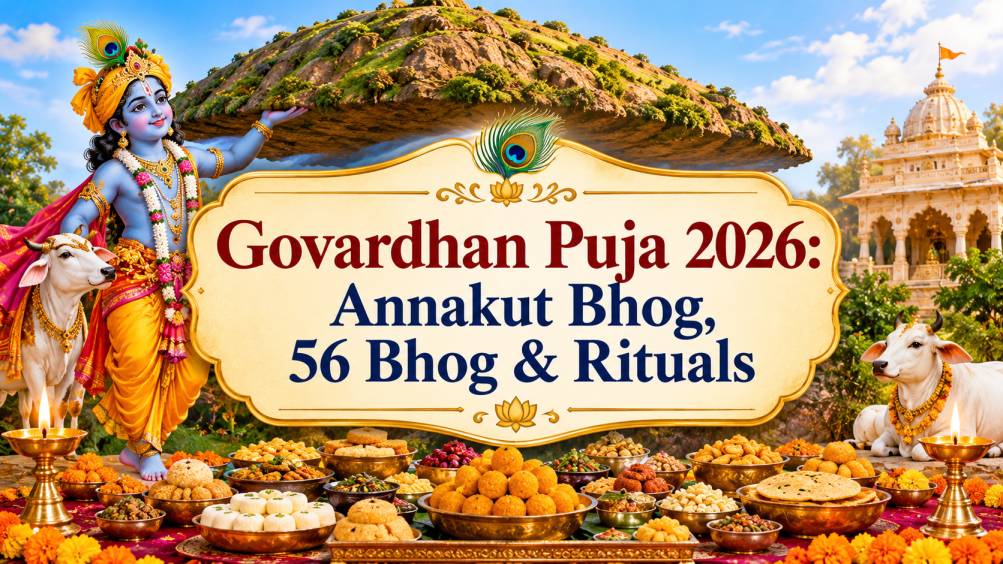
Govardhan Puja is an important Hindu festival celebrated on the fourth day of Diwali festivities, traditionally dedicated to Lord Krishna and Govardhan Hill. Also known as Annakut Utsav, the festival celebrates gratitude towards nature, agriculture, cattle, and the abundance of food. Devotees prepare a variety of vegetarian dishes and offer them to Lord Krishna as Annakut Bhog. In many temples, the offering includes the traditional Chhappan Bhog (56 Bhog), representing devotion and gratitude. Govardhan Puja also carries spiritual significance in Hindu traditions, reminding people of humility, environmental responsibility, and faith. Understanding the 2026 festival date, puja rituals, traditional recipes, and 56 Bhog list can help families celebrate this occasion with devotion and proper preparation.
Govardhan Puja 2026: Date and Shubh Muhurat
Govardhan Puja in India will be celebrated on Tuesday, 10 November 2026, on Kartik Shukla Pratipada.
| Festival Detail | Date and Timing |
| Govardhan Puja | 10 November 2026, Tuesday |
| Tithi begins | 9 November, 12:31 PM |
| Tithi ends | 10 November, 2:00 PM |
| Morning puja muhurat (New Delhi) | 6:40 AM – 8:50 AM IST |
These timings are based on the New Delhi Panchang. The exact puja muhurat can vary by city because sunrise and local Panchang calculations differ. Follow your local Panchang for the final timing.
Why Is Govardhan Puja Celebrated?
According to Hindu tradition, the people of Braj once prepared offerings to worship Lord Indra for rainfall. Lord Krishna encouraged them to honour Govardhan Hill, which provided grass, water, and natural resources that supported their lives.
Angered by this change, Indra sent heavy rainfall towards Braj. Krishna lifted Govardhan Hill on his little finger and sheltered the villagers and their cattle beneath it.
After recognising Krishna’s divine power, Indra stopped the storm. This story symbolises humility, protection, devotion, and respect for nature.
What Is Annakut Bhog and Why Is 56 Bhog Offered?
Annakut means a mountain of food. On Govardhan Puja, devotees prepare several vegetarian dishes and arrange them before Lord Krishna as an expression of gratitude.
The tradition of Chhappan Bhog (56 offerings) is associated with the belief that Krishna enjoyed eight meals daily. When he held Govardhan Hill for seven days, he could not eat his usual meals. Devotees therefore offered 56 dishes afterwards, representing eight meals multiplied by seven days.
The exact dishes differ across temples, families, and regions. There is no single compulsory 56-item menu.
Complete 56 Bhog List for Govardhan Puja 2026
Here is a traditional-style list of 56 vegetarian offerings that families can prepare according to their preferences.
| Category | Bhog Items |
| Milk and dairy | 1. Milk, 2. Curd, 3. Butter, 4. Makhan Mishri, 5. Ghee, 6. Paneer, 7. Rabri, 8. Malai |
| Sweets | 9. Peda, 10. Ladoo, 11. Barfi, 12. Kheer, 13. Halwa, 14. Jalebi, 15. Gulab Jamun, 16. Rasgulla |
| Traditional desserts | 17. Sandesh, 18. Kalakand, 19. Malpua, 20. Ghewar, 21. Shrikhand, 22. Basundi, 23. Makhana Kheer, 24. Sweet Rice |
| Grains and breads | 25. Puri, 26. Chapati, 27. Paratha, 28. Bajra Roti, 29. Rice, 30. Khichdi, 31. Dal, 32. Moong Dal |
| Savoury dishes | 33. Aloo Sabzi, 34. Paneer Sabzi, 35. Kadhi, 36. Chole, 37. Kachori, 38. Pakora, 39. Dhokla, 40. Namakpare |
| Fruits and dry fruits | 41. Banana, 42. Apple, 43. Pomegranate, 44. Grapes, 45. Coconut, 46. Almonds, 47. Cashews, 48. Raisins |
| Other offerings | 49. Sugar Candy, 50. Honey, 51. Jaggery, 52. Sugar, 53. Churma, 54. Panchamrit, 55. Tulsi Leaves, 56. Seasonal Fruit Preparation |
Devotees can adjust the menu based on availability, family customs, and dietary requirements.
Easy Annakut Bhog Recipes for Govardhan Puja
Preparing all 56 dishes can be time-consuming. Families can begin with a few traditional recipes and gradually expand their Annakut menu.
- Makhana Kheer
- Roast makhana in a little ghee.
- Boil milk and add crushed makhana.
- Add sugar, cardamom, and dry fruits.
- Cook until creamy and offer after cooling.
- Besan Ladoo
- Roast gram flour slowly in ghee.
- Add powdered sugar after cooling slightly.
- Mix cardamom powder and chopped nuts.
- Shape into small round ladoos.
- Panchamrit
- Take fresh milk and curd.
- Add honey, ghee, and sugar.
- Mix everything gently.
- Add a clean Tulsi leaf before offering.
Govardhan Puja Vidhi 2026: Step-by-Step Rituals
Devotees can perform Govardhan Puja at home by following these traditional steps.
- Clean the puja area: Decorate the worship space with flowers, rangoli, and diyas.
- Prepare Govardhan Hill: Make a symbolic hill using cow dung or arrange cooked food grains in a mountain-like shape.
- Offer prayers to Lord Krishna: Place an idol or picture of Krishna and offer flowers, incense, and a diya.
- Perform Annakut Puja: Arrange the prepared vegetarian dishes before the deity.
- Offer Panchamrit: Prepare Panchamrit using milk, curd, honey, ghee, and sugar.
- Perform Aarti: Sing Krishna Aarti and offer prayers for family happiness and prosperity.
- Perform Govardhan Parikrama: Devotees may symbolically circumambulate the Govardhan representation at home or participate in the traditional pilgrimage at Govardhan in Uttar Pradesh.
- Distribute Prasad: Share the blessed food with family members, neighbours, and people in need.
In traditions that include cow worship, devotees offer respect and suitable food to cows. The first portion of food may also be offered to a cow. Follow safe and humane practices when doing so.
Annakut Puja Vidhi
Astrological Significance and Spiritual Remedies
Govardhan Puja falls during Kartik Shukla Pratipada, a period considered spiritually significant in Hindu traditions. Although the festival primarily celebrates Lord Krishna, its message also connects with traditional ideas of gratitude, prosperity, and harmony with nature.
In Vedic astrology, Jupiter (Guru) is associated with wisdom, knowledge, and spiritual growth, while the Moon (Chandra) is connected with nourishment and emotional well-being. These are broader traditional associations rather than specific planetary remedies prescribed for Govardhan Puja.
Some meaningful practices include:
- Offer food to Lord Krishna with devotion and gratitude.
- Donate grains, fruits, or meals to people in need.
- Avoid food wastage and respect agricultural resources.
- Offer prayers for the well-being of cattle and other animals.
- Read or listen to stories from the Shrimad Bhagavatam, particularly the Govardhan Leela.
These practices emphasise compassion, generosity, and responsible living rather than promising guaranteed astrological results.
Conclusion
Govardhan Puja 2026 is an opportunity to celebrate devotion, gratitude, and the importance of nature in everyday life. The Annakut tradition and Chhappan Bhog offerings express appreciation for food and abundance, while the story of Lord Krishna lifting Govardhan Hill teaches humility, protection, and faith.
Whether you prepare all 56 offerings or a small collection of homemade dishes, the essence of the festival lies in devotion and sharing. Celebrate with your family, offer food respectfully, and remember the importance of caring for animals and the environment. Let Govardhan Puja inspire a spirit of gratitude and kindness throughout the year.
Frequently Asked Questions (FAQs)
1. When is Govardhan Puja in 2026?
Govardhan Puja will be celebrated on Tuesday, 10 November 2026, in India.
It falls on Kartik Shukla Pratipada and is traditionally associated with Lord Krishna’s Govardhan Leela. The morning puja muhurat in New Delhi is 6:40 AM to 8:50 AM IST.
Tips:
- Check your city’s local Panchang.
- Prepare Annakut offerings in advance.
2. Why are 56 dishes offered on Govardhan Puja?
The tradition of Chhappan Bhog is associated with the belief that Lord Krishna missed eight daily meals while holding Govardhan Hill for seven days.
Devotees subsequently offered 56 dishes as an expression of love and gratitude. The tradition is especially prominent in Krishna temples and Vaishnava communities.
Tips:
- Include traditional sweets and savoury dishes.
- Use fresh vegetarian ingredients.
- Follow your family’s offering traditions.
3. What are the main items in Annakut Bhog?
Annakut Bhog generally includes sweets, fruits, dairy products, grains, vegetables, and traditional preparations.
Popular offerings include kheer, peda, puri, ladoo, makhan mishri, panchamrit, and seasonal fruits.
Tips:
- Prepare food using fresh ingredients.
- Avoid unnecessary food wastage.
- Share the prasad with others.
4. Can Govardhan Puja be performed at home?
Yes, devotees can perform Govardhan Puja at home by creating a symbolic Govardhan Hill and worshipping Lord Krishna.
A small arrangement using cow dung or cooked grains can represent the hill. Devotees can offer flowers, food, incense, and a diya.
Tips:
- Keep the puja area clean.
- Prepare vegetarian bhog.
- Perform Krishna Aarti and distribute prasad.
5. What is the significance of Govardhan Parikrama?
Govardhan Parikrama is a traditional circumambulation of Govardhan Hill in Braj, Uttar Pradesh, performed as an expression of devotion to Lord Krishna.
The pilgrimage is associated with faith, humility, and the spiritual importance of Govardhan Hill.
Tips:
- Follow local pilgrimage customs.
- Carry drinking water.
- Avoid littering during the parikrama.
6. Which mantra should be chanted on Govardhan Puja?
Devotees commonly chant Krishna’s name and the mantra “Om Namo Bhagavate Vasudevaya” during Govardhan Puja.
Chanting is traditionally considered a way to focus the mind and express devotion. Families may also recite Krishna Aarti or read the Govardhan Leela.
Tips:
- Chant with concentration.
- Read a passage from the Shrimad Bhagavatam.
- Offer prayers for everyone’s well-being.
7. Is Annakut Bhog compulsory to contain exactly 56 dishes?
No, preparing exactly 56 dishes is not compulsory for every household.
The number 56 has traditional religious significance, but devotees can offer a smaller selection of homemade vegetarian dishes according to their capacity and family customs.