Utpanna Ekadashi is an important Hindu fasting festival dedicated to Lord Vishnu. Observed during the Krishna Paksha (waning phase of the Moon) in the month of Margashirsha, this sacred day is associated with devotion, self-discipline, spiritual purification, and the origin of Goddess Ekadashi. In Hindu tradition, observing this vrat with sincere devotion is believed to help devotees overcome negative tendencies and develop greater spiritual awareness.
Utpanna Ekadashi 2026 is particularly significant for devotees seeking the blessings of Lord Vishnu through mantra chanting, Tulsi Puja, charity, and meditation. The occasion also offers an opportunity to reflect on the importance of controlling desires, practising compassion, and maintaining balance in everyday life.
Utpanna Ekadashi 2026: Date and Tithi
Utpanna Ekadashi will be observed on Friday, December 4, 2026.
It falls during Margashirsha Krishna Paksha and is traditionally associated with the appearance of Goddess Ekadashi, the divine personification of the Ekadashi vrata.
Important Panchang details:
- Festival: Utpanna Ekadashi 2026
- Date: Friday, December 4, 2026
- Paksha: Krishna Paksha
- Hindu month: Margashirsha (Purnimanta calendar)
- Ekadashi Tithi begins: December 3, approximately 11:03 PM IST
- Ekadashi Tithi ends: December 4, approximately 11:44 PM IST
- Parana: Saturday, December 5, 2026
Parana means breaking the Ekadashi fast on Dwadashi. The exact Parana window varies according to the city and Panchang calculation. Devotees should check their local calendar before performing the ritual.
Spiritual Significance of Utpanna Ekadashi
According to Hindu scriptures and the traditional Utpanna Ekadashi Vrat Katha, Goddess Ekadashi appeared from the divine power of Lord Vishnu to defeat the demon Murasura.
The story describes how Lord Vishnu engaged in a prolonged battle with the demon. During a period of rest, Goddess Ekadashi emerged from His divine energy and defeated Murasura.
Pleased with her devotion and strength, Lord Vishnu blessed her and declared that devotees observing the Ekadashi fast would receive spiritual merit.
The festival therefore represents:
- Victory of righteousness over negative forces.
- Control over desires and harmful habits.
- Devotion towards Lord Vishnu.
- Spiritual discipline and purification.
- The importance of faith and self-restraint.
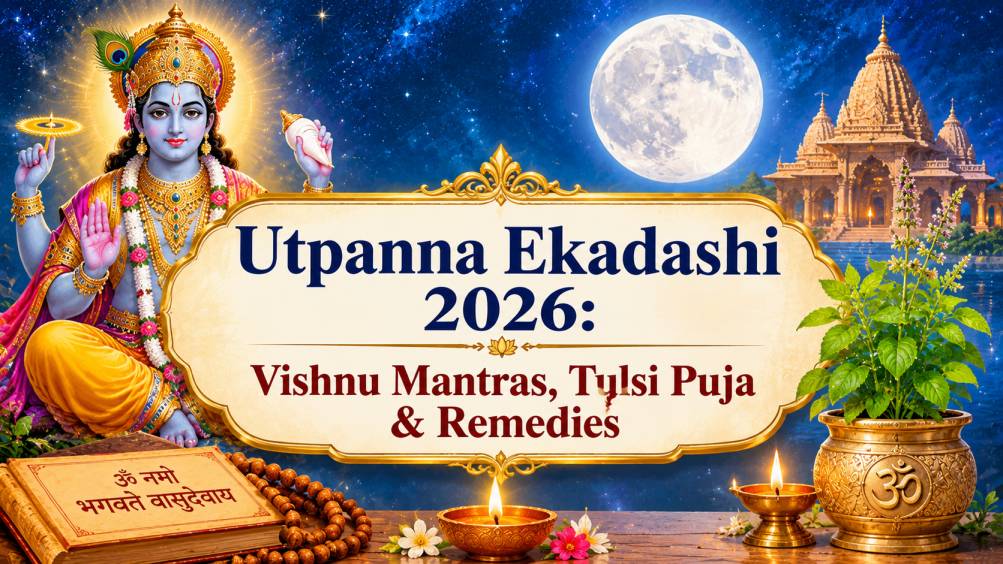
Powerful Lord Vishnu Mantras for Utpanna Ekadashi 2026
Mantra chanting is an important part of Ekadashi worship. Devotees traditionally chant Vishnu mantras to develop concentration, devotion, and inner peace.
1. Vishnu Dwadashakshari Mantra
ॐ नमो भगवते वासुदेवाय॥
Om Namo Bhagavate Vasudevaya.
Meaning: I offer my salutations to Lord Vasudeva, the Supreme Divine.
This is one of the most popular Vishnu mantras. Devotees may chant it 108 times using a Tulsi mala.
2. Narayana Mantra
ॐ नमो नारायणाय॥
Om Namo Narayanaya.
Meaning: I bow to Lord Narayana, the protector and sustainer of the universe.
This simple mantra can be recited during morning prayers, meditation, or throughout the day.
3. Vishnu Gayatri Mantra
ॐ नारायणाय विद्महे वासुदेवाय धीमहि। तन्नो विष्णुः प्रचोदयात्॥
Om Narayanaya Vidmahe Vasudevaya Dhimahi, Tanno Vishnuh Prachodayat.
Meaning: May we meditate upon Lord Narayana and Vasudeva, and may Lord Vishnu guide and illuminate our intellect.
Regular chanting is traditionally associated with devotion, clarity, and spiritual awareness.
Tulsi Puja Vidhi on Utpanna Ekadashi
Tulsi holds a special position in Hindu Vaishnava traditions. The sacred plant is closely associated with Lord Vishnu and is considered an important element of Vishnu worship.
Step-by-Step Tulsi Puja
- Wake up early and take a bath before beginning the puja.
- Clean the area around the Tulsi plant.
- Light a ghee diya near the plant, following household traditions.
- Offer water respectfully if appropriate.
- Apply a small amount of kumkum or sandalwood near the Tulsi planter, where customary.
- Chant the mantra Om Namo Bhagavate Vasudevaya.
- Offer previously collected Tulsi leaves to Lord Vishnu or Krishna.
- Perform aarti and pray for peace, wisdom, and well-being.
Important traditional practice: Many Hindu households avoid plucking Tulsi leaves on Ekadashi. It is therefore advisable to collect the required leaves beforehand and follow the customs of one’s family or sampradaya.
Spiritual Remedies to Follow on Utpanna Ekadashi
Utpanna Ekadashi is considered an appropriate occasion for devotional practices and positive lifestyle changes.
1. Offer Yellow Flowers to Lord Vishnu
Yellow is traditionally associated with Lord Vishnu and Jupiter (Guru). Offering yellow flowers during Vishnu Puja symbolises devotion, wisdom, and prosperity.
2. Donate Food to Needy People
Annadan (food donation) is considered a meaningful act of charity in Hindu tradition. Offering food to people in need encourages compassion and social responsibility.
3. Chant Vishnu Sahasranama
Devotees can recite the Vishnu Sahasranama, which contains a thousand names of Lord Vishnu. It is traditionally valued as a devotional practice.
4. Practise Meditation and Self-Control
Avoiding anger, dishonesty, excessive indulgence, and negative thoughts is an important aspect of Ekadashi observance.
5. Worship Lord Vishnu with Tulsi
Offering Tulsi leaves to Lord Vishnu is a traditional devotional practice. It symbolises purity, humility, and surrender.
6. Observe Charity and Compassion
Helping elderly people, supporting education, feeding animals responsibly, and assisting disadvantaged communities are meaningful ways to express the spiritual values of Ekadashi.
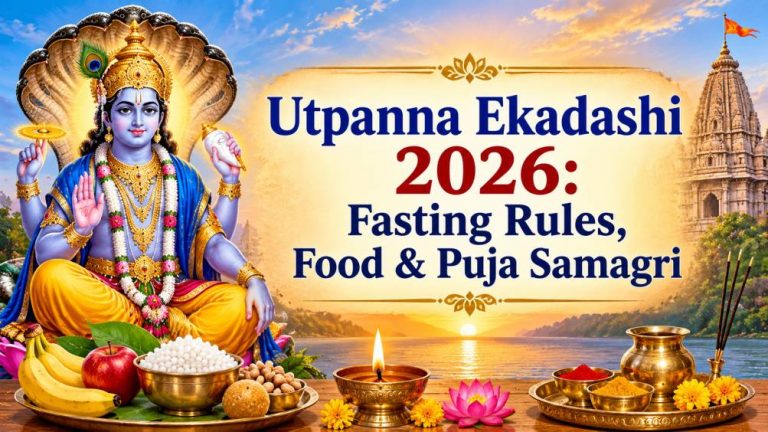
Utpanna Ekadashi Vrat: Fasting Rules and Precautions
Devotees observe Utpanna Ekadashi according to their health, capacity, and religious traditions.
Common fasting practices include:
- Nirjala Vrat: Fasting without food or water.
- Phalahar Vrat: Consuming fruits, milk, and permitted foods.
- Satvik Vrat: Eating simple fasting foods without grains and pulses.
Rice, wheat, and regular grains are traditionally avoided by many devotees.
People with medical conditions, pregnant women, elderly individuals, and those taking regular medication should avoid strict fasting without medical advice. Devotion does not require compromising health.
Conclusion
Utpanna Ekadashi 2026, observed on December 4, is a sacred occasion dedicated to Lord Vishnu and Goddess Ekadashi. The festival highlights the spiritual importance of devotion, self-discipline, mantra chanting, Tulsi worship, and charitable activities.
Chanting Vishnu mantras, offering Tulsi leaves, reciting Vishnu Sahasranama, and practising meditation can help devotees make the occasion more meaningful. Traditional remedies should be approached with faith and understanding rather than expectations of guaranteed material results.
The deeper message of Utpanna Ekadashi is to overcome negative tendencies and develop compassion, discipline, and devotion. Observing the vrat with sincerity and according to one’s capacity can make this auspicious day an opportunity for spiritual reflection and positive change.
Frequently Asked Questions (FAQs)
1. When is Utpanna Ekadashi in 2026?
Utpanna Ekadashi will be observed on Friday, December 4, 2026.
The festival falls during Margashirsha Krishna Paksha and is dedicated to Lord Vishnu and Goddess Ekadashi. Devotees observe fasting and perform Vishnu Puja on this day.
Important details:
- Date: December 4, 2026.
- Day: Friday.
- Parana: December 5, 2026.
2. Which mantra should be chanted on Utpanna Ekadashi?
The most popular mantra for Utpanna Ekadashi is Om Namo Bhagavate Vasudevaya.
It is a devotional mantra dedicated to Lord Vishnu and can be chanted during morning or evening prayers. Devotees traditionally recite it 108 times using a Tulsi mala.
Other recommended mantras:
- Om Namo Narayanaya.
- Vishnu Gayatri Mantra.
- Vishnu Sahasranama.
3. Can we offer Tulsi leaves to Lord Vishnu on Utpanna Ekadashi?
Yes, offering Tulsi leaves to Lord Vishnu is considered an auspicious devotional practice on Ekadashi.
However, many Hindu traditions prohibit plucking Tulsi leaves on Ekadashi. Devotees generally collect the leaves a day earlier and use them during worship.
Tulsi Puja tips:
- Collect Tulsi leaves beforehand.
- Offer clean leaves to Lord Vishnu.
- Chant Vishnu mantras during worship.
4. What are the benefits of observing Utpanna Ekadashi Vrat?
Utpanna Ekadashi Vrat is traditionally believed to support spiritual purification, self-discipline, devotion, and the development of positive qualities.
The fast encourages devotees to practise restraint, avoid harmful behaviour, and focus on spiritual activities.
Recommended practices:
- Chant Lord Vishnu’s mantras.
- Read the Utpanna Ekadashi Vrat Katha.
- Donate food to needy people.
- Practise meditation and prayer.
5. Can we eat fruits during Utpanna Ekadashi fasting?
Yes, devotees observing a Phalahar fast can generally consume fruits, milk, and permitted fasting foods.
Fasting rules differ among families and religious traditions. Nirjala fasting, which involves avoiding both food and water, is not compulsory for everyone.
Common fasting foods:
- Fresh fruits.
- Milk and curd.
- Makhana.
- Sabudana.
- Sendha namak preparations.
6. Why is Goddess Ekadashi worshipped on this day?
Goddess Ekadashi is worshipped because traditional Utpanna Ekadashi Vrat Katha describes her emergence from Lord Vishnu’s divine energy to defeat the demon Murasura.
Her appearance symbolises the victory of righteousness over negative forces and the spiritual power of devotion and self-control.
Devotional practices:
- Read the Utpanna Ekadashi Vrat Katha.
- Worship Lord Vishnu.
- Chant Narayana mantras.
7. Can Tulsi Puja be performed in the evening on Ekadashi?
Yes, devotees can perform Tulsi Puja in the evening according to their family traditions.
Lighting a ghee diya near the Tulsi plant and chanting Vishnu mantras are common devotional practices.
Suggested practices:
- Light a diya safely.
- Offer prayers to Tulsi Devi.
- Chant Om Namo Narayanaya.
8. When should the Utpanna Ekadashi fast be broken?
The Utpanna Ekadashi fast should traditionally be broken on Dwadashi during the prescribed Parana period.
For 2026, Parana falls on Saturday, December 5. The exact auspicious window depends on the local sunrise and Panchang calculations.