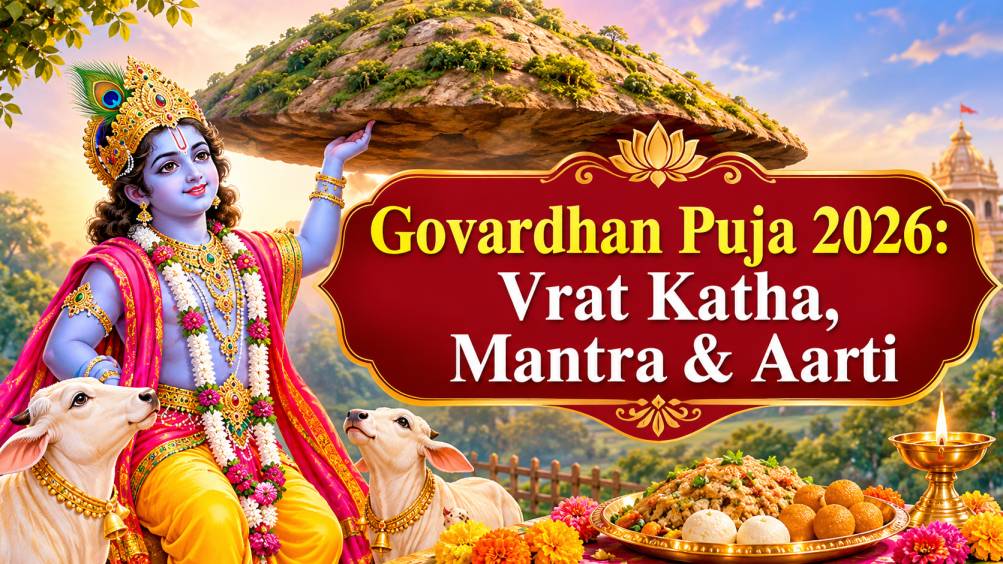
Govardhan Puja, also known as Annakut Puja, is an important Hindu festival dedicated to Lord Krishna and Govardhan Parvat. It is celebrated on the Pratipada Tithi of Shukla Paksha in the Hindu month of Kartik, usually the day after Diwali. The festival commemorates Lord Krishna’s protection of the people of Braj from the heavy rains sent by Lord Indra.
In 2026, devotees will observe Govardhan Puja with traditional rituals, the Govardhan Puja Vrat Katha, Krishna mantras, devotional songs and Annakut offerings. From a spiritual and astrological perspective, the festival encourages gratitude towards nature, humility, devotion and responsible living. Understanding the puja vidhi and its significance can help families celebrate the occasion with greater awareness and faith.
Govardhan Puja 2026: Date, Tithi and Shubh Muhurat
Govardhan Puja in India will be observed on Tuesday, 10 November 2026, according to the sunrise-based Kartik Shukla Pratipada calendar. It is also celebrated as Annakut Puja.
The Pratipada Tithi begins on 9 November and continues until 10 November afternoon. The date can sometimes differ in regional calendars because of local sunrise and traditional Panchang calculations.
For reference, the following timings are published for Ujjain, Madhya Pradesh:
| Event | Date and time (IST) |
| Govardhan Puja | 10 November 2026 |
| Pratipada begins | 9 November, 12:32 PM |
| Pratipada ends | 10 November, 2:00 PM |
| Morning Puja Muhurat | 6:41 AM – 8:53 AM |
| Evening Puja Muhurat | 3:28 PM – 5:40 PM |
Note: These are Ujjain timings, not universal timings. Check your local Panchang before performing the rituals.
Govardhan Puja Vrat Katha: The Story of Lord Krishna
According to Hindu tradition, the Govardhan Puja Vrat Katha is associated with Lord Krishna’s divine act of protecting the people of Vrindavan.
Why did Lord Krishna lift Govardhan Parvat?
The people of Vrindavan traditionally worshipped Lord Indra to seek rainfall and agricultural prosperity. However, Lord Krishna explained that their lives depended on Govardhan Parvat, forests, rivers, cattle and the natural environment.
He encouraged the villagers to express gratitude towards these natural resources instead of performing rituals out of fear.
Lord Indra became angry when the villagers followed Krishna’s advice. He sent heavy rainfall and thunderstorms over Vrindavan to punish them.
Seeing the suffering of the villagers, Lord Krishna lifted Govardhan Parvat on his little finger. He provided shelter to the people and their cattle beneath the mountain.
For seven days, Krishna protected everyone from the continuous rain. Eventually, Lord Indra understood his mistake, recognised Krishna’s divine power and stopped the rainfall.
The villagers celebrated Krishna’s protection by offering food and expressing their gratitude. This tradition became associated with Govardhan Puja and Annakut.
Spiritual significance of the Vrat Katha
The story teaches several important lessons:
- Humility: Pride and arrogance can lead to poor decisions.
- Protection: True strength is reflected in helping others.
- Gratitude: Nature, animals and food deserve respect.
- Faith: Devotion encourages courage during difficult circumstances.
Reading or listening to the Govardhan Puja Vrat Katha is considered an important part of the festival.
Govardhan Puja 2026: Step-by-Step Puja Vidhi
Devotees can perform Govardhan Puja at home with simple arrangements and traditional offerings. The main purpose is to worship Lord Krishna and express gratitude towards nature.
Puja Samagri
Arrange the following items before beginning:
- Idol or picture of Lord Krishna
- Cow dung or clay for making Govardhan Parvat
- Flowers, tulsi leaves and garlands
- Roli, kumkum, sandalwood and akshat
- Diya, incense sticks and camphor
- Seasonal fruits and sweets
- Panchamrit and water
- Annakut Bhog and other food offerings
Govardhan Puja Rituals
Follow these traditional steps:
- Clean the puja area: Take a bath and wear clean clothes. Decorate the prayer space with flowers and rangoli.
- Prepare Govardhan Parvat: Make a small symbolic hill using cow dung or clay. Decorate it with flowers, leaves and small figures representing cows and villagers.
- Install Lord Krishna: Place an idol or picture of Krishna near the Govardhan representation.
- Perform Sankalp: Take a simple prayerful resolution to perform the puja with devotion and gratitude.
- Offer prayers: Apply tilak and offer flowers, tulsi leaves, fruits and sweets to Lord Krishna.
- Prepare Annakut Bhog: Arrange different vegetarian dishes, sweets, grains and seasonal foods as an offering.
- Perform Aarti: Light a ghee diya and sing Lord Krishna’s Aarti.
- Offer Prasad: Distribute the food among family members, neighbours and those in need.
Govardhan Parikrama
Govardhan Parikrama is an important tradition, particularly in Mathura and Vrindavan. Devotees walk around Govardhan Hill as an expression of devotion.
The traditional parikrama route is approximately 21 kilometres. Those unable to visit Braj can perform symbolic circumambulation around the Govardhan representation at home, according to family tradition.
Lord Krishna Mantra for Govardhan Puja
Chanting Lord Krishna’s mantras during Govardhan Puja is considered spiritually meaningful. Devotees may chant the following mantras while offering flowers or sitting in meditation.
1. Krishna Moola Mantra
ॐ कृष्णाय नमः।
Om Krishnaya Namah.
Meaning: I bow to Lord Krishna and seek his blessings.
2. Govardhan Krishna Mantra
ॐ गोवर्धनधराय नमः।
Om Govardhanadharay Namah.
Meaning: Salutations to Lord Krishna, who lifted Govardhan Parvat to protect his devotees.
3. Hare Krishna Mahamantra
हरे कृष्ण हरे कृष्ण, कृष्ण कृष्ण हरे हरे।
हरे राम हरे राम, राम राम हरे हरे॥
This traditional devotional mantra is associated with bhakti, remembrance and surrender to the divine.
Chanting tips:
- Chant 11, 21 or 108 times according to your convenience.
- Use a tulsi mala if available.
- Maintain a peaceful environment.
- Focus on devotion rather than the number of repetitions.
Govardhan Puja Aarti: Lord Krishna Aarti
Aarti is an important part of the Govardhan Puja celebration. Devotees perform it after offering Annakut Bhog and flowers to Lord Krishna.
A commonly sung Krishna Aarti begins with:
आरती कुंज बिहारी की, श्री गिरिधर कृष्ण मुरारी की।
Devotees sing the complete traditional Aarti while moving a lit diya in a circular motion before the deity.
The Aarti honours Krishna as Giridhari, the protector who lifted Govardhan Parvat. Families can also sing their customary Govardhan Aarti according to regional traditions.
Astrological Significance of Govardhan Puja
From a Vedic astrology perspective, Govardhan Puja offers an opportunity to reflect on gratitude, discipline, protection and prosperity.
Although the festival is primarily religious rather than a planetary remedy, its traditional symbolism can be connected with important astrological principles.
1. Jupiter (Guru) and Spiritual Wisdom
Jupiter represents wisdom, knowledge, generosity and spiritual growth in Vedic astrology. Lord Krishna’s teachings encourage people to develop humility and make thoughtful decisions.
Devotees may use this occasion for prayer, charity and learning.
2. Moon and Emotional Peace
The Moon is traditionally associated with the mind, emotions and mental stability. Devotional activities, family gatherings and meditation can encourage emotional balance.
3. Venus (Shukra) and Material Prosperity
Venus represents comfort, luxury, relationships and material enjoyment. Sharing food, maintaining family harmony and practising generosity reflect a balanced approach towards material prosperity.
Practical Astrological Remedies
On Govardhan Puja, devotees may consider these traditional practices:
- Offer tulsi leaves and makhan to Lord Krishna.
- Donate food, grains or clothes to people in need.
- Feed cows with suitable food while respecting their dietary needs.
- Avoid unnecessary arguments and practise forgiveness.
- Keep the home and prayer area clean.
- Recite Krishna mantras for a peaceful devotional routine.
These practices are faith-based traditions and should not be treated as guaranteed solutions to planetary difficulties.
Annakut Bhog: Food Offerings on Govardhan Puja
Annakut means a mountain of food. It represents abundance, gratitude and the importance of food in sustaining life.
Devotees prepare several dishes and arrange them before Lord Krishna as an expression of devotion.
Common Annakut offerings include:
- Puri, kachori and traditional vegetables
- Kadhi, dal and rice
- Halwa, laddoo and peda
- Makhan and mishri
- Seasonal fruits and dry fruits
- Panchamrit and other traditional sweets
Some temples prepare 56 Bhog, known as Chhappan Bhog. The number is associated with the traditional devotional belief that Krishna was offered eight meals daily over seven days.
Food offered during the puja is later distributed as prasad.
Conclusion
Govardhan Puja 2026 is an occasion to remember Lord Krishna’s protection of the people of Vrindavan and understand the importance of humility, devotion and gratitude towards nature. The Vrat Katha, Krishna Mantras, Aarti and Annakut offerings form the central parts of this celebration.
From a spiritual and astrological perspective, the festival encourages wisdom, emotional balance, generosity and responsible living. Families can observe the rituals according to their traditions and abilities without unnecessary expenses or elaborate arrangements.
The deeper message of Govardhan Puja is simple: respect nature, share food, support others and maintain faith during challenging times.
Frequently Asked Questions (FAQs)
1. When is Govardhan Puja in 2026?
Govardhan Puja will be observed on 10 November 2026 in many Indian calendars.
It falls on Kartik Shukla Pratipada. Some regional Panchangs may prescribe different observance timings based on local sunrise and evening muhurat.
Tip: Check your city’s Panchang before deciding the puja time.
2. What is the significance of Govardhan Puja Vrat Katha?
The Vrat Katha remembers how Lord Krishna lifted Govardhan Parvat to protect the people and cattle of Vrindavan from heavy rainfall.
It teaches humility, devotion, environmental awareness and the importance of protecting others.
Tip: Read or listen to the Katha during the puja and reflect on its message.
3. Which mantra should be chanted on Govardhan Puja?
Devotees can chant Om Krishnaya Namah (ॐ कृष्णाय नमः) to express devotion to Lord Krishna.
The Govardhanadhara mantra and Hare Krishna Mahamantra are also popular devotional choices.
Tip: Chant 11, 21 or 108 times with concentration and devotion.
4. What should be offered to Lord Krishna on Govardhan Puja?
Devotees traditionally offer Annakut Bhog, including puri, sweets, fruits, vegetables, makhan and mishri.
Some temples prepare 56 different food offerings, known as Chhappan Bhog.
Tip: Prepare fresh vegetarian food and distribute the prasad among family members and others.
5. Can Govardhan Puja be performed at home?
Yes, devotees can perform Govardhan Puja at home using a Krishna idol or picture and a symbolic Govardhan hill made from cow dung or clay.
The rituals include offering flowers, tulsi leaves, food, prayers and Aarti.
Tip: Keep the arrangements simple and perform the rituals according to your family tradition.
6. What are the astrological benefits of Govardhan Puja?
Govardhan Puja is traditionally associated with gratitude, spiritual growth, generosity and family well-being.
Devotional practices, food donations and prayers can support a positive spiritual routine, although they do not guarantee specific planetary results.