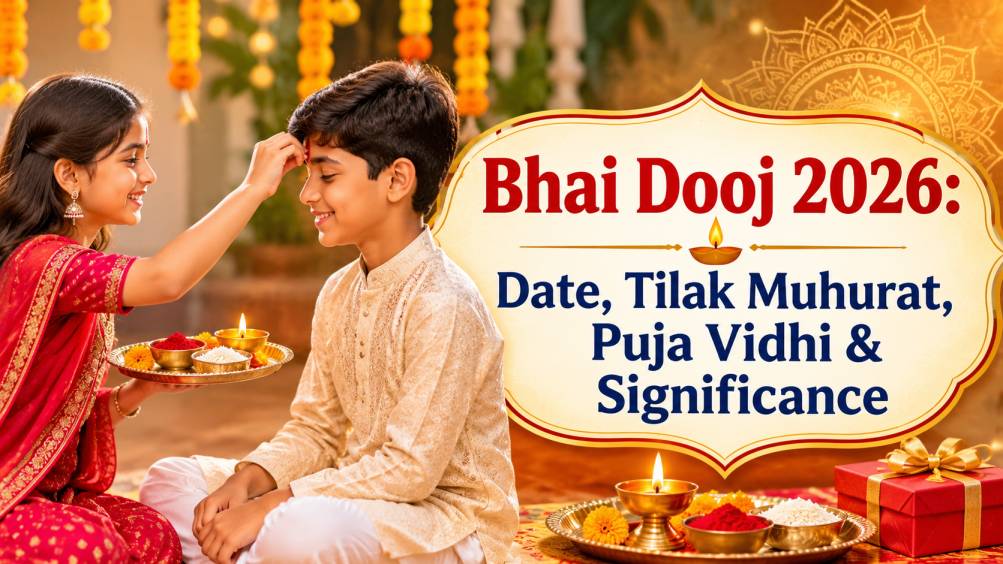
Bhai Dooj is an important Hindu festival that celebrates the special bond between brothers and sisters. Also known as Bhaiya Dooj, Yama Dwitiya and Bhau Beej, the festival is observed on the Dwitiya Tithi of Shukla Paksha in the Hindu month of Kartik. In 2026, Bhai Dooj will be celebrated on November 11, Wednesday.
On this occasion, sisters apply a ceremonial tilak to their brothers’ foreheads, perform aarti and pray for their happiness, good health and long life. From a Vedic astrology perspective, the festival also highlights the importance of family relationships, emotional harmony and blessings. Understanding its traditional rituals and significance can help families celebrate Bhai Dooj with devotion and awareness.
Bhai Dooj 2026 Date and Shubh Muhurat
According to the Hindu Panchang, Bhai Dooj 2026 will be celebrated on Wednesday, November 11.
The festival falls on Kartik Shukla Dwitiya, which is traditionally considered favourable for performing the brother-sister tilak ceremony.
Bhai Dooj 2026: Important Timings
| Event | Date and Time (IST) |
| Bhai Dooj | November 11, 2026 (Wednesday) |
| Dwitiya Tithi Begins | November 10, 2:00 PM |
| Dwitiya Tithi Ends | November 11, 3:53 PM |
| Tilak Muhurat | 1:10 PM – 3:20 PM |
| Auspicious Period | Aparahna Kala |
Note: The above timings are based on the New Delhi Panchang. The exact Aparahna muhurat may vary according to the city. Follow your local Panchang for the most accurate timings.
Why Is Bhai Dooj Celebrated?
Bhai Dooj is associated with the traditional story of Lord Yama, the deity of death, and his sister, Goddess Yamuna.
According to Hindu mythology, Goddess Yamuna welcomed her brother Yama to her home on Kartik Shukla Dwitiya. She applied tilak on his forehead, performed aarti and offered him a meal.
Pleased with her affection and hospitality, Yama granted her a boon. Yamuna requested that brothers who visit their sisters on this day and receive their blessings should enjoy happiness, prosperity and a long life.
Lord Yama accepted her wish. Since then, the day has been observed as Yama Dwitiya.
The festival represents:
- Love, affection and trust between siblings.
- Prayers for the well-being and longevity of brothers.
- The importance of family relationships.
- Mutual respect, responsibility and emotional support.
Bhai Dooj 2026 Puja Vidhi: Step-by-Step Rituals
Bhai Dooj rituals are generally simple and can be performed at home with devotion.
1. Prepare the Puja Thali
Arrange the essential puja items before beginning the ceremony.
You will need:
- Roli or kumkum.
- Akshat (uncooked rice grains).
- Diya and cotton wicks.
- Flowers and sweets.
- Kalava (sacred red thread).
- Fruits and coconut.
- Aarti plate.
2. Clean the Puja Area
Clean the worship area and decorate it with flowers or rangoli. Light a diya and remember Lord Ganesha, Goddess Yamuna and Lord Yama before beginning the rituals.
3. Apply Tilak to Your Brother
Ask your brother to sit comfortably, preferably facing an auspicious direction according to family tradition. Apply roli or kumkum tilak to his forehead and place a few akshat grains over it.
4. Perform Aarti
Perform your brother’s aarti and pray for his good health, happiness and success. Some families also tie a sacred thread around the brother’s wrist.
5. Offer Sweets and Food
Offer sweets and traditional dishes to your brother. Sharing a meal is an important part of the celebration and represents love and togetherness.
6. Exchange Gifts and Blessings
Brothers traditionally give gifts to their sisters as a gesture of affection and gratitude. Both siblings can take this opportunity to express their appreciation and strengthen their relationship.
Astrological Significance of Bhai Dooj 2026
Bhai Dooj is primarily a festival of family relationships, but its traditional symbolism can also be understood through Vedic astrology.
1. Significance of the Moon
In Vedic astrology, the Moon represents emotions, mental peace, sensitivity and relationships with family members.
Kartik Shukla Dwitiya falls during the waxing lunar phase. The growing Moon is traditionally associated with development, positivity and emotional nourishment.
The festival provides an opportunity to strengthen family bonds and encourage emotional understanding.
2. Importance of the Third House
The third house in a birth chart is associated with younger siblings, courage, communication and personal efforts.
An astrologer may examine the third house, its ruling planet and relevant planetary aspects to understand sibling relationships.
However, the overall birth chart must be considered before drawing conclusions about any relationship.
3. Role of Jupiter
Jupiter represents wisdom, blessings, generosity and traditional values. Its symbolism encourages forgiveness, mutual understanding and responsible family behaviour.
On Bhai Dooj, sharing blessings, helping siblings and expressing gratitude reflect these positive qualities.
4. Role of Venus
Venus is associated with affection, harmony, comfort and interpersonal relationships. Its traditional symbolism reminds us of the importance of kindness, appreciation and maintaining peaceful family connections.
Simple Astrological Remedies to Follow on Bhai Dooj
Apart from traditional puja rituals, families can follow these simple practices:
- Offer prayers to Lord Ganesha: Begin the day by remembering Lord Ganesha for wisdom and the removal of obstacles.
- Worship Goddess Yamuna: Offer prayers with flowers and water as a mark of devotion.
- Donate food: Offering food or essential items to someone in need is considered a positive charitable practice.
- Maintain family harmony: Avoid arguments and resolve misunderstandings through respectful communication.
- Practise gratitude: Express appreciation for your siblings and their support.
These practices are rooted in traditional religious values and should not be considered guaranteed solutions to astrological or personal difficulties.
How Different Zodiac Signs Can Celebrate Bhai Dooj
Each zodiac sign has different traditional personality associations. Bhai Dooj can be an opportunity for everyone to strengthen sibling relationships.
- Aries: Practise patience and avoid impulsive arguments.
- Taurus: Express affection through thoughtful gestures.
- Gemini: Spend time communicating and sharing experiences.
- Cancer: Focus on emotional support and family bonding.
- Leo: Show appreciation and avoid dominating conversations.
- Virgo: Offer practical help and support.
- Libra: Resolve misunderstandings and maintain balance.
- Scorpio: Build trust through honesty and understanding.
- Sagittarius: Share wisdom and encourage positive growth.
- Capricorn: Demonstrate care through responsibility and actions.
- Aquarius: Respect individual opinions and personal boundaries.
- Pisces: Practise compassion, forgiveness and emotional understanding.
These are general zodiac-based suggestions rather than individual birth-chart predictions.
Conclusion
Bhai Dooj 2026 will be celebrated on November 11, marking an important occasion to honour the relationship between brothers and sisters. The traditional tilak ceremony, aarti, prayers and exchange of gifts represent affection, protection and mutual respect.
From a Vedic astrology perspective, the festival offers an opportunity to reflect on emotional well-being, sibling relationships and family harmony. While traditional rituals hold cultural and spiritual importance, genuine care, understanding and communication are equally essential.
Celebrate Bhai Dooj with devotion, gratitude and happiness, and make an effort to strengthen the relationships that bring positivity and support into your life.
FAQs About Bhai Dooj 2026
1. When is Bhai Dooj in 2026?
Bhai Dooj will be celebrated on Wednesday, November 11, 2026.
It falls on Kartik Shukla Dwitiya and marks the traditional conclusion of the five-day Diwali festivities in many parts of India.
Tip: Check your local Panchang for city-specific observance details.
2. What is the Bhai Dooj 2026 tilak muhurat?
The Bhai Dooj tilak muhurat in New Delhi is from 1:10 PM to 3:20 PM IST on November 11, 2026.
The Aparahna period is traditionally preferred for performing the tilak ceremony.
- Prepare the puja thali in advance.
- Perform the ceremony during the local auspicious window.
- Follow your family’s traditional rituals.
3. What is the significance of Bhai Dooj in Hindu astrology?
Bhai Dooj is traditionally associated with family harmony, emotional bonding and prayers for siblings’ well-being.
In Vedic astrology, the Moon represents emotions, while the third house is associated with siblings and communication.
- Pray for family happiness.
- Encourage positive communication.
- Maintain mutual respect and understanding.
4. Which god is worshipped on Bhai Dooj?
Bhai Dooj is particularly associated with Lord Yama and Goddess Yamuna.
The festival commemorates the traditional story of Yamuna welcoming Yama and performing his tilak. Some families also worship Lord Ganesha before beginning the ceremony.
Tip: Offer flowers, light a diya and pray for the happiness and well-being of family members.
5. What items are required for Bhai Dooj puja?
The essential items include roli, kumkum, akshat, diya, flowers, sweets, fruits, kalava and an aarti thali.
Families may include additional items according to their regional and household traditions.
- Keep the puja area clean.
- Prepare the thali beforehand.
- Offer sweets after completing the tilak ceremony.
6. Can sisters celebrate Bhai Dooj if their brothers live far away?
Yes, sisters can celebrate Bhai Dooj even when their brothers live in another city or country.
They can connect through a video call, exchange blessings and perform prayers according to their family traditions. The festival’s central message is love and emotional connection rather than physical distance.
Tip: A thoughtful message, phone call or gift can make the occasion meaningful.
7. Is Bhai Dooj the same as Raksha Bandhan?
No, both festivals celebrate the sibling relationship, but their rituals and timing are different.
Raksha Bandhan is observed on Shravan Purnima, when sisters tie a rakhi around their brothers’ wrists. Bhai Dooj falls on Kartik Shukla Dwitiya, when sisters apply tilak and perform aarti.
Both festivals highlight affection, responsibility and mutual support between siblings.