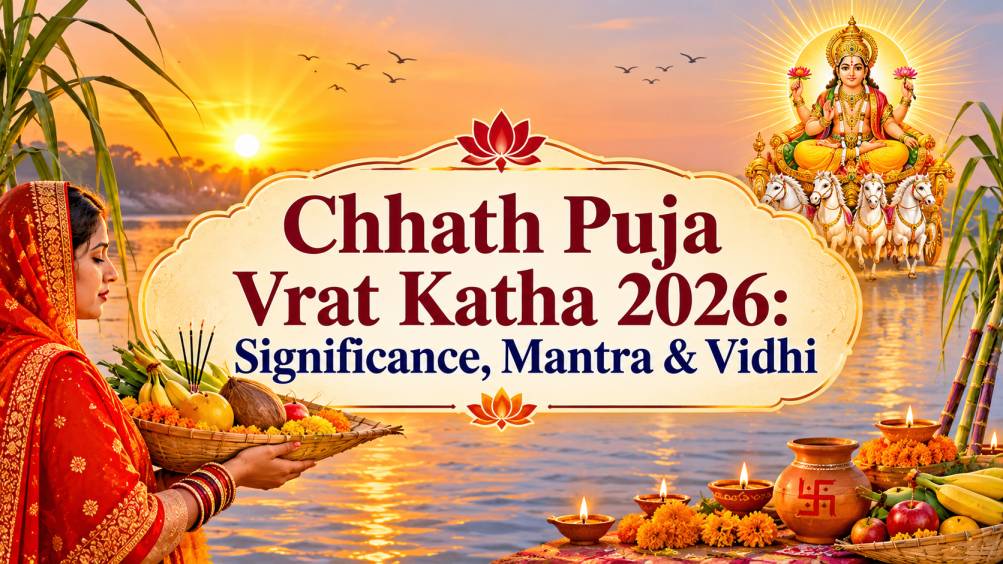
Chhath Puja is one of the most significant Hindu festivals dedicated to Surya Dev (the Sun God) and Chhathi Maiya, also known as Shashthi Devi. Celebrated with devotion, fasting and traditional offerings, this festival represents gratitude towards the Sun, which is considered the source of energy, light and life on Earth.
In Vedic astrology, the Sun represents confidence, vitality, authority, leadership and self-esteem. Worshipping Surya Dev during Chhath is traditionally believed to bring discipline, positivity and blessings for family well-being. Chhath Puja 2026 will be observed from 13 November to 16 November, with Sandhya Arghya on 15 November and Usha Arghya on 16 November. The festival also highlights purity, patience, gratitude and devotion.
Chhath Puja 2026: Date and Four-Day Schedule
Chhath Puja is observed during Kartik Shukla Paksha, particularly on Shashthi Tithi.
| Ritual | Date | Significance |
| Nahay Khay | 13 November 2026, Friday | Purification and preparation |
| Kharna | 14 November 2026, Saturday | Fasting and prasad |
| Sandhya Arghya | 15 November 2026, Sunday | Offering water to the setting Sun |
| Usha Arghya | 16 November 2026, Monday | Offering water to the rising Sun |
Important: Arghya is offered around the local sunset and sunrise. The exact time differs according to the city. Devotees should check their local Panchang for accurate timings in IST.
Chhath Puja Vrat Katha 2026: Traditional Story
One popular traditional story associated with Chhath Puja describes King Priyavrat and his wife, Queen Malini. According to this narrative, the royal couple was deeply troubled because they did not have a child.
After performing a yajna with the guidance of a sage, the queen gave birth to a child who was unfortunately born lifeless. The king and queen were overcome with grief.
At that moment, Goddess Shashthi appeared and introduced herself as the divine protector of children. Through her blessings, the child was brought back to life. The royal couple expressed their gratitude and worshipped the Goddess with devotion.
The story is traditionally associated with the importance of Shashthi Devi, who is worshipped as Chhathi Maiya. It reflects faith, motherhood, family well-being and the traditional belief in divine protection.
This is one of the popular versions of the Vrat Katha, and its narration may differ across regional traditions.
Religious and Astrological Significance of Chhath Puja
1. Importance of Surya Dev in Vedic Astrology
In Jyotish Shastra, the Sun is considered a significant planet because it represents the soul, confidence, authority, vitality and leadership.
A well-placed Sun in a birth chart is traditionally associated with:
- Self-confidence and determination.
- Leadership and administrative abilities.
- Recognition and professional growth.
- Energy and a sense of responsibility.
Chhath Puja offers devotees an opportunity to express gratitude towards Surya Dev through prayers and offerings.
2. Connection Between Surya Dev and Chhathi Maiya
Chhath Puja honours both Surya Dev and Chhathi Maiya. While Surya represents light, vitality and life energy, Chhathi Maiya is traditionally worshipped for children’s health, protection and family happiness.
The festival therefore holds special emotional and cultural significance for families.
Powerful Surya Mantra for Chhath Puja
Devotees can recite simple Surya mantras while offering Arghya.
Surya Beej Mantra:
ॐ ह्रां ह्रीं ह्रौं सः सूर्याय नमः॥
Simple Surya Mantra:
ॐ घृणिः सूर्याय नमः॥
The simple mantra may be recited peacefully during sunrise or while offering water to Surya Dev.
Traditional benefits: Surya worship is associated with confidence, discipline, positive thinking and gratitude. These are religious beliefs rather than scientifically established outcomes.
Chhath Puja Vidhi 2026: Step-by-Step Rituals
Day 1: Nahay Khay – 13 November
- Clean the house and puja area.
- Take a bath and prepare for the vrat.
- Prepare traditional sattvic food.
- Eat the prescribed meal according to family tradition.
Day 2: Kharna – 14 November
- Observe a fast during the day.
- Prepare traditional prasad, commonly jaggery kheer and roti.
- Offer the food to Chhathi Maiya.
- Consume the prasad in the evening according to the vrat tradition.
Day 3: Sandhya Arghya – 15 November
- Prepare a bamboo basket or soop with fruits, thekua, sugarcane and other offerings.
- Visit a clean riverbank, pond or designated ghat.
- Offer Arghya to the setting Sun around local sunset.
- Recite Surya Mantra and listen to the Chhath Vrat Katha.
Day 4: Usha Arghya – 16 November
- Visit the ghat before sunrise.
- Offer Arghya to the rising Sun.
- Pray for family health, happiness and prosperity.
- Complete the rituals and perform Parana according to family tradition.
Practical Precautions During Chhath Vrat
Chhath fasting can be physically demanding, particularly during the traditional nirjala fast. Devotees should avoid forcing themselves to fast if they have medical conditions, take regular medication or are otherwise advised against fasting.
- Keep the puja area and offerings hygienic.
- Avoid unsafe or polluted water bodies.
- Use safe access points at riverbanks and ghats.
- Children and elderly family members should be kept away from deep water.
- Prioritise health and follow appropriate medical advice.
Conclusion
Chhath Puja 2026 is an occasion to express gratitude towards Surya Dev and seek the blessings of Chhathi Maiya for family well-being. Its four-day observance combines traditional fasting, Surya Mantra, Vrat Katha and offerings to the setting and rising Sun.
From a Vedic astrology perspective, the Sun represents vitality, confidence, authority and self-discipline. However, the deeper message of Chhath goes beyond planetary interpretations. It teaches patience, purity, respect for nature and appreciation for life’s essential sources of energy.
This Chhath Puja, participate in the traditions with devotion, care and gratitude, and celebrate the values of family, faith and togetherness.
Frequently Asked Questions (FAQs)
1. When is Chhath Puja in 2026?
Chhath Puja 2026 will be celebrated from 13 November to 16 November.
The four important observances are Nahay Khay on 13 November, Kharna on 14 November, Sandhya Arghya on 15 November and Usha Arghya on 16 November.
Important dates: The main evening offering takes place on 15 November, while the final morning offering takes place on 16 November.
2. Which God is worshipped during Chhath Puja?
Surya Dev and Chhathi Maiya are worshipped during Chhath Puja.
Surya Dev represents light, vitality and life energy, while Chhathi Maiya is traditionally worshipped for children’s well-being and family happiness.
Tip: Devotees offer Arghya to both the setting and rising Sun as part of the four-day festival.
3. Which mantra should be chanted during Chhath Puja?
The mantra “Om Ghrini Suryaya Namah” is a commonly recited mantra dedicated to Surya Dev.
Devotees may chant it during sunrise or while offering Arghya. Regular mantra recitation is traditionally associated with devotion, discipline and positivity.
Mantra:
ॐ घृणिः सूर्याय नमः॥
4. Why is water offered to the Sun during Chhath Puja?
Offering water to the Sun, known as Arghya, is a traditional expression of gratitude towards Surya Dev.
The ritual symbolises respect for the Sun as the source of light, warmth and energy that supports life on Earth.
Traditional practice: Offer water calmly while praying during sunrise and sunset.
5. What is the significance of Chhathi Maiya?
Chhathi Maiya is traditionally worshipped as Shashthi Devi, the protector of children and a symbol of maternal blessings.
Devotees pray to her for children’s health, longevity, happiness and family well-being.
Tip: Listen to or read the Chhath Vrat Katha as part of the traditional observance.
6. Can unmarried women observe Chhath Puja?
Yes, unmarried women can participate in Chhath Puja and offer prayers according to their family and regional traditions.
The festival is not restricted exclusively to married women. Participation, fasting rules and rituals may differ between families.
Tip: Devotion and personal health should be prioritised over strict fasting practices.
7. How long is the Chhath Puja fast?
The traditional nirjala fast generally lasts around 36 hours, beginning after Kharna and ending after Usha Arghya.
During this period, devotees traditionally avoid both food and water. However, fasting practices can vary.
Important: People with medical conditions, pregnant women and those taking regular medication should seek medical advice before attempting a prolonged fast.
8. What should be offered during Chhath Puja?
Traditional Chhath offerings include thekua, seasonal fruits, sugarcane, coconut, rice-based preparations and other sattvic food items.
These offerings are arranged in bamboo baskets or soop and presented during Sandhya and Usha Arghya.
Common offerings:
- Thekua
- Coconut
- Banana and seasonal fruits
- Sugarcane
- Rice and traditional prasad