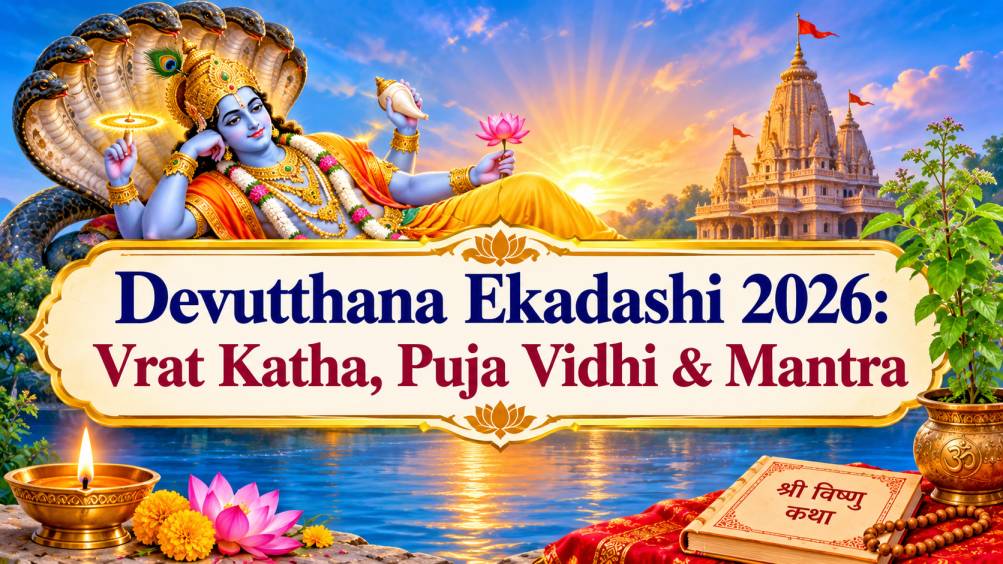
Devutthana Ekadashi, also known as Dev Uthani Ekadashi, Prabodhini Ekadashi and Devotthan Ekadashi, is an important Hindu festival dedicated to Lord Vishnu. It falls on the eleventh day (Ekadashi Tithi) of Shukla Paksha in the Hindu month of Kartik. According to Hindu tradition, Lord Vishnu awakens from his four-month-long cosmic sleep, known as Yoga Nidra, on this day. The occasion marks the traditional conclusion of Chaturmas and the beginning of an auspicious period for weddings and other religious ceremonies. Devutthana Ekadashi 2026 holds special importance for devotees who observe fasting, perform Vishnu Puja, recite sacred mantras and worship Tulsi Mata. The festival symbolises spiritual awakening, devotion, discipline and the renewal of positive energy.
Devutthana Ekadashi 2026: Date and Shubh Muhurat
Devutthana Ekadashi will be observed on Friday, 20 November 2026, according to the commonly followed Smarta calendar in India.
| Event | Date and Timing |
| Devutthana Ekadashi | Friday, 20 November 2026 |
| Ekadashi Tithi Begins | 20 November, 7:16 AM |
| Ekadashi Tithi Ends | 21 November, 6:31 AM |
| Parana | Saturday, 21 November 2026 |
| Parana Muhurat | Approximately 1:11 PM–3:18 PM |
Timings are indicative and based on New Delhi calculations in IST. Local Panchang timings may differ.
Some Vaishnava traditions observe the Gauna Ekadashi fast on 21 November instead of 20 November. Devotees should follow their family tradition and local Panchang when deciding the fasting date and Parana.
What Is the Significance of Devutthana Ekadashi?
Devutthana means awakening, while Ekadashi refers to the eleventh lunar day. According to Hindu belief, Lord Vishnu enters Yoga Nidra on Devshayani Ekadashi and awakens on Prabodhini Ekadashi.
This four-month period is known as Chaturmas. Many auspicious ceremonies, particularly traditional Hindu weddings, are generally avoided during this period.
The awakening of Lord Vishnu represents:
- Spiritual renewal: An opportunity to strengthen faith and devotion.
- End of Chaturmas: The traditional resumption of auspicious ceremonies.
- Worship of Lord Vishnu: Devotees seek blessings for peace, prosperity and well-being.
- Tulsi Vivah: The ceremonial marriage of Tulsi Mata and Lord Vishnu, celebrated around this occasion.
Devutthana Ekadashi is also considered significant in Vaishnava traditions and is associated with devotion, charity and self-discipline
Devutthana Ekadashi Vrat Katha
According to traditional Hindu belief, Lord Vishnu enters a state of cosmic sleep at the beginning of Chaturmas. During this period, he rests on Sheshnag in Ksheer Sagar, the cosmic ocean.
The story is associated with King Bali, a generous and devoted ruler. After Lord Vishnu appeared before him in the form of Vamana, he granted the king’s request to stay in his kingdom. In popular devotional traditions, Lord Vishnu’s presence in the netherworld during this period is connected with his cosmic rest.
Meanwhile, Goddess Lakshmi wished for Lord Vishnu to return to Vaikuntha. She requested King Bali to allow Lord Vishnu to return. King Bali agreed to the request, and Lord Vishnu returned to his divine abode.
On Kartik Shukla Ekadashi, devotees celebrate the awakening of Lord Vishnu. They perform special prayers, sing devotional songs and offer Tulsi leaves, flowers and sweets.
This traditional story conveys the importance of devotion, generosity, humility and maintaining faith in divine protection.
Lord Vishnu Puja Vidhi on Devutthana Ekadashi 2026
Devotees perform special prayers to Lord Vishnu on this Ekadashi to express gratitude and seek spiritual well-being. The puja can be performed at home by following simple traditional rituals.
Step-by-Step Puja Vidhi
- Morning bath: Wake up early, take a bath and wear clean clothes. Clean the prayer area.
- Sankalp: Take a vow to observe the Ekadashi fast with devotion and sincerity.
- Install Lord Vishnu’s idol: Place an idol or picture of Lord Vishnu in the puja area.
- Offerings: Offer yellow flowers, fruits, sweets, sandalwood paste, incense and a diya.
- Tulsi worship: Offer Tulsi leaves to Lord Vishnu, as Tulsi is considered especially sacred in Vaishnava worship.
- Mantra chanting: Recite Vishnu mantras, Vishnu Sahasranama or the Bhagavad Gita.
- Vrat Katha: Listen to or read the Devutthana Ekadashi Vrat Katha.
- Evening aarti: Perform Lord Vishnu’s aarti and light a diya.
- Tulsi Vivah: Some families arrange Tulsi Vivah celebrations on this occasion or the following day.
Devotees may also decorate the entrance and prayer area with rangoli, flowers and sugarcane stalks as part of regional traditions.
Devutthana Ekadashi Mantras for Lord Vishnu
Chanting Lord Vishnu’s mantras is an important part of Ekadashi worship. Devotees can repeat these mantras according to their time and devotion.
1. Vishnu Moola Mantra
ॐ नमो भगवते वासुदेवाय॥
Om Namo Bhagavate Vasudevaya.
Meaning: I offer my salutations to Lord Vasudeva, the Supreme Divine.
2. Lord Vishnu Mantra
ॐ विष्णवे नमः॥
Om Vishnave Namah.
Meaning: Salutations to Lord Vishnu, the protector and preserver of the universe.
3. Lord Vishnu Gayatri Mantra
ॐ नारायणाय विद्महे। वासुदेवाय धीमहि। तन्नो विष्णुः प्रचोदयात्॥
Om Narayanaya Vidmahe, Vasudevaya Dhimahi, Tanno Vishnuh Prachodayat.
Meaning: May we meditate upon Lord Narayana and Vasudeva. May Lord Vishnu guide and illuminate our intellect.
Devotees can chant these mantras 11, 21 or 108 times, depending on their preference. Consistency and sincere devotion are more important than a fixed count.
Devutthana Ekadashi Fasting Rules and Parana
Fasting is an important part of Devutthana Ekadashi. It is traditionally observed as a practice of self-control, devotion and purification.
What Can You Eat During the Vrat?
Depending on personal health and family traditions, devotees may choose:
- Fresh fruits and seasonal fruit juices.
- Milk, curd and other permitted dairy products.
- Sabudana preparations.
- Kuttu or singhara flour dishes.
- Nuts and dry fruits.
- Rock salt (sendha namak).
Many devotees observe a complete fast without food or water, while others follow a fruit-based or partial fast.
What Should Be Avoided?
- Rice, wheat and regular grains.
- Pulses and beans.
- Onion and garlic.
- Alcohol and non-vegetarian food.
- Excessive arguments, anger and negative behaviour.
Parana means breaking the Ekadashi fast on Dwadashi, the following lunar day. It should be performed within the prescribed Parana Muhurat, taking Hari Vasara and local Panchang calculations into consideration.
People with medical conditions, pregnant women, elderly devotees and those taking regular medication should choose a safe fasting routine rather than undertake a strict fast.
Astrological and Spiritual Significance of Devutthana Ekadashi
In Vedic tradition, Lord Vishnu is associated with preservation, balance and the maintenance of cosmic order. His worship is therefore considered spiritually meaningful for people seeking stability and harmony.
Devutthana Ekadashi also falls during Kartik Shukla Paksha, a period traditionally considered sacred for Vishnu worship.
From an astrological perspective, devotees may use this occasion for:
- Jupiter-related spiritual practices: Jupiter (Guru) represents wisdom, knowledge, dharma and spiritual guidance in Vedic astrology. Worshipping Lord Vishnu is traditionally considered beneficial for cultivating these qualities.
- Mental discipline: Fasting and mantra chanting encourage self-control and a peaceful routine.
- Family harmony: Tulsi Vivah symbolises commitment, devotion and the importance of relationships.
- Positive habits: Charity, prayer and helping others encourage compassion and responsibility.
These are religious and traditional associations, not guaranteed planetary remedies or scientifically established effects.
Auspicious Remedies to Follow on Devutthana Ekadashi
Devotees can follow simple spiritual practices to make the occasion meaningful.
- Offer yellow flowers and Tulsi leaves to Lord Vishnu.
- Chant the Vishnu Moola Mantra with concentration.
- Donate food, clothes or essential items to people in need.
- Feed those who are hungry, according to your capacity.
- Read a chapter of the Bhagavad Gita.
- Avoid harsh speech and practise forgiveness.
- Offer prayers to Tulsi Mata and participate in Tulsi Vivah rituals.
These practices emphasise charity, gratitude and devotion rather than promising instant material benefits.
Conclusion
Devutthana Ekadashi 2026 is an important occasion for devotees of Lord Vishnu, marking the traditional end of Chaturmas and the beginning of a renewed period of religious celebrations. Observing the vrat, reading the Vrat Katha, chanting Vishnu mantras and performing Tulsi Puja are among the most popular ways to celebrate this festival. Beyond its religious significance, the occasion encourages discipline, kindness, self-reflection and devotion. Whether you observe a complete fast or offer simple prayers at home, the most important aspect is sincerity. Celebrate Devutthana Ekadashi with faith and use this auspicious occasion to bring more positivity, compassion and balance into everyday life.
Frequently Asked Questions (FAQs)
1. When is Devutthana Ekadashi in 2026?
Devutthana Ekadashi will be observed on Friday, 20 November 2026, according to the commonly followed Smarta calendar.
The Ekadashi Tithi begins at approximately 7:16 AM on 20 November and ends at 6:31 AM on 21 November (IST). Some Vaishnava traditions observe the fast on 21 November.
Important tips:
- Check your local Panchang.
- Follow your family’s fasting tradition.
- Observe Parana according to the applicable Dwadashi timings.
2. Why is Devutthana Ekadashi celebrated?
Devutthana Ekadashi celebrates the traditional awakening of Lord Vishnu from his four-month-long Yoga Nidra.
It marks the conclusion of Chaturmas, a sacred period during which many auspicious ceremonies are traditionally avoided. The occasion is also associated with Tulsi Vivah.
Important practices:
- Worship Lord Vishnu.
- Offer Tulsi leaves.
- Recite Vishnu mantras.
- Perform charitable activities.
3. Which mantra should be chanted on Devutthana Ekadashi?
The Vishnu Moola Mantra, “Om Namo Bhagavate Vasudevaya”, is one of the most popular mantras chanted on Devutthana Ekadashi.
Devotees can chant it during morning or evening prayers. They may also recite Vishnu Sahasranama for devotional practice.
Tips:
- Chant with concentration.
- Repeat the mantra 108 times if convenient.
- Maintain a peaceful environment during worship.
4. Can unmarried people observe Devutthana Ekadashi Vrat?
Yes, unmarried individuals can observe Devutthana Ekadashi Vrat according to their faith and family traditions.
The fast is dedicated to Lord Vishnu and is traditionally associated with spiritual growth, discipline and devotion. There is no general restriction based on marital status.
Tips:
- Perform Vishnu Puja at home.
- Follow a suitable fasting routine.
- Participate in prayers and charity.
5. What is the significance of Tulsi Vivah after Devutthana Ekadashi?
Tulsi Vivah symbolises the ceremonial marriage of Tulsi Mata with Lord Vishnu, traditionally worshipped in the form of Shaligram.
It is generally celebrated on Kartik Shukla Dwadashi, although some regional traditions perform it on Ekadashi or other nearby dates. The ceremony symbolises devotion, commitment and the beginning of the traditional Hindu wedding season.
Important practices:
- Decorate the Tulsi plant.
- Offer flowers, sweets and fruits.
- Perform the traditional Vivah rituals.
- Recite devotional prayers.
6. What should not be eaten during Devutthana Ekadashi Vrat?
Devotees traditionally avoid grains, rice, pulses, onion and garlic during the Ekadashi fast.
Depending on their family traditions, they may consume fruits, milk, nuts, sabudana and preparations made with kuttu or singhara flour.
Tips:
- Avoid regular grains and pulses.
- Use sendha namak if permitted.
- Stay hydrated if following a partial fast.
- Prioritise health and follow medical advice when necessary.
7. Is Devutthana Ekadashi associated with astrology?
Yes, Devutthana Ekadashi has traditional spiritual associations with Lord Vishnu, Jupiter (Guru), wisdom and dharma.
Devotees interested in Vedic astrology often use this occasion for prayer, charity and spiritual practices. However, it should not be considered a guaranteed remedy for planetary problems.
Suggested practices:
- Chant Vishnu mantras.
- Read the Bhagavad Gita.
- Donate food and essential items.
- Practise patience, kindness and self-discipline.