Chhath Puja is one of the most significant Hindu festivals dedicated to Surya Dev (the Sun God) and Chhathi Maiya. Celebrated with devotion, fasting and traditional offerings, this four-day festival expresses gratitude towards the Sun, which is considered the primary source of life, energy and nourishment.
Chhath Puja holds special importance in Vedic astrology because the Sun represents confidence, vitality, leadership, authority and self-esteem. Worshipping Surya Dev is traditionally associated with seeking strength, discipline and positive energy.
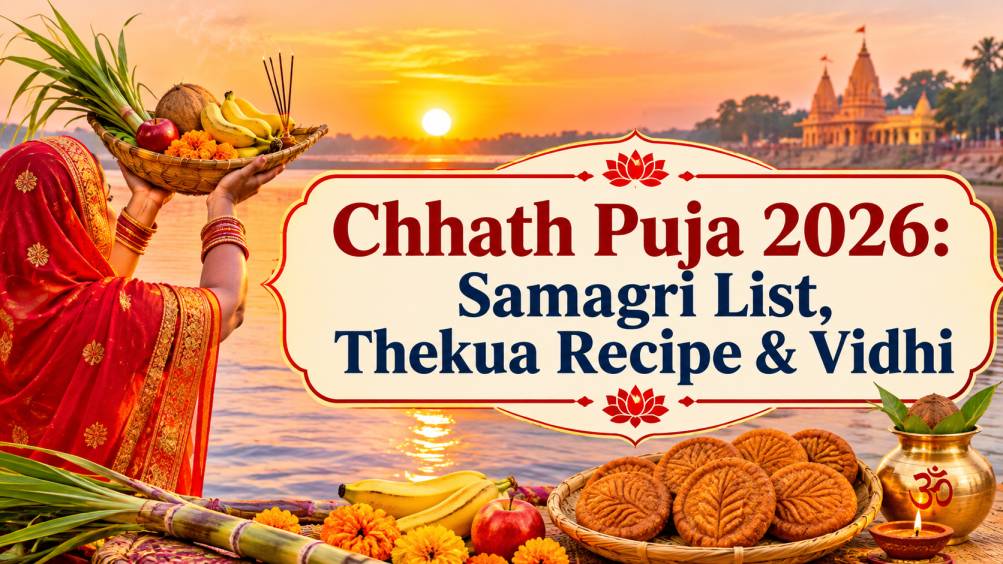
In 2026, Chhath Puja will be observed from November 13 to November 16. From Nahay Khay to Usha Arghya, every ritual has cultural and spiritual significance. Here is a complete guide to Chhath Puja samagri, the traditional thekua recipe and puja vidhi.
Chhath Puja 2026: Date and Important Timings
Chhath Puja is celebrated during Kartik Shukla Paksha, particularly on Shashthi Tithi.
| Ritual | Date | Day |
| Nahay Khay | November 13, 2026 | Friday |
| Kharna | November 14, 2026 | Saturday |
| Sandhya Arghya | November 15, 2026 | Sunday |
| Usha Arghya and Parana | November 16, 2026 | Monday |
Important timings:
- Sandhya Arghya: At sunset on November 15.
- Usha Arghya: At sunrise on November 16.
For reference, sunset in New Delhi is approximately 5:28 PM IST on November 15, and sunrise is approximately 6:44 AM IST on November 16. Actual timings vary by location. Devotees should check their local Panchang for their respective city.
Complete Chhath Puja Samagri List 2026
Preparing puja samagri in advance helps devotees perform the rituals without last-minute difficulties.
Essential Puja Items
- Bamboo soop (winnowing baskets) and daura.
- Diya, cotton wicks and ghee.
- Incense sticks and camphor.
- Turmeric, rice grains and sandalwood.
- Sacred thread and flowers.
- Kalash and clean water.
- Clean clothes for the vrat.
Fruits and Traditional Offerings
- Sugarcane.
- Coconut.
- Bananas.
- Sweet lime and seasonal fruits.
- Apple and guava.
- Sweet potato.
- Ginger and radish.
- Thekua.
- Rice laddoo (kasar).
- Jaggery and wheat flour.
- Milk and honey.
The offerings are traditionally arranged in bamboo baskets and presented during the evening and morning Arghya.
Traditional Thekua Recipe for Chhath Puja
Thekua is one of the most important prasad items prepared during Chhath Puja. This traditional Bihari sweet is made using wheat flour, jaggery and ghee.
Ingredients
- 2 cups whole wheat flour (atta).
- ¾ cup grated jaggery (gur).
- 3–4 tablespoons ghee.
- 1 tablespoon grated coconut.
- ½ teaspoon fennel seeds (saunf).
- ¼ teaspoon cardamom powder.
- Water as required.
- Ghee or oil for frying.
Preparation Method
- Heat a small amount of water and dissolve the grated jaggery. Allow it to cool.
- Take wheat flour in a mixing bowl and add ghee, coconut, fennel seeds and cardamom powder.
- Gradually add the jaggery syrup and prepare a firm dough. Avoid making it too soft.
- Divide the dough into small portions and shape them into round or oval pieces.
- Press the pieces using a traditional thekua mould or fork.
- Heat ghee or oil in a deep pan and fry the thekua on low to medium heat until golden brown.
- Allow them to cool completely before storing in an airtight container.
Tip: The dough should remain firm to achieve the traditional crisp texture. Thekua is generally prepared in a clean cooking space following family traditions.
Chhath Puja 2026: Four-Day Rituals and Their Significance
Chhath Puja is observed over four days, with each day following a specific spiritual practice.
1. Nahay Khay – November 13
The festival begins with Nahay Khay. Devotees take a ritual bath, clean their homes and prepare a traditional sattvic meal. Common dishes include lauki, chana dal and rice.
This day represents purification, discipline and preparation for the upcoming fast.
2. Kharna – November 14
On Kharna, devotees observe a fast throughout the day. After sunset, they prepare and offer traditional prasad, commonly consisting of jaggery kheer and roti.
After completing the evening rituals, devotees begin the traditional 36-hour nirjala fast, according to their family practices.
3. Sandhya Arghya – November 15
This is the main day of Chhath Puja. Devotees visit rivers, ponds or designated water bodies and offer Arghya to the setting Sun.
The offerings generally include fruits, thekua, sugarcane and other traditional prasad arranged in bamboo baskets.
4. Usha Arghya – November 16
On the final day, devotees gather early in the morning and offer Arghya to the rising Sun. After prayers and completion of the rituals, they perform Parana and conclude their fast.
The prasad is subsequently distributed among family members and relatives.
Astrological Significance of Chhath Puja
In Vedic astrology, Surya Dev represents the soul, confidence, vitality, leadership and authority. The Sun is also associated with one’s relationship with the father and ability to take responsibility.
Chhath Puja provides an opportunity to express gratitude towards the Sun through traditional worship and disciplined practices.
How Does the Sun Influence Your Kundli?
The placement of the Sun in an individual’s birth chart is traditionally examined to understand different aspects of life.
- First House: Associated with personality, confidence and self-expression.
- Fifth House: Connected with intelligence, creativity and learning.
- Ninth House: Associated with fortune, principles and spiritual inclination.
- Tenth House: Represents career, professional reputation and authority.
A well-placed Sun is traditionally associated with leadership qualities and confidence. However, astrological interpretations depend on the complete birth chart, including planetary aspects, conjunctions and dashas.
Simple Surya Remedies During Chhath Puja
Devotees can follow these traditional practices:
- Offer water to the rising Sun while chanting the Surya mantra.
- Recite Aditya Hridayam or Surya Ashtakam.
- Practise gratitude towards parents and elders.
- Maintain discipline and follow a sattvic lifestyle.
- Donate food or essential items to people in need.
A commonly recited mantra is:
ॐ घृणिः सूर्याय नमः।
These practices are traditionally associated with devotion, discipline and positive thinking. They should not be considered guaranteed solutions to personal or professional problems.
Conclusion
Chhath Puja 2026 is an opportunity to celebrate devotion, gratitude and the importance of nature in everyday life. The four-day festival combines traditional fasting, the preparation of thekua, offerings to Surya Dev and prayers for family well-being.
From an astrological perspective, the Sun represents vitality, confidence and leadership. Observing Chhath Puja can encourage discipline, self-reflection and gratitude.
Whether you follow every ritual or participate in the celebrations with your family, the festival reminds us to respect nature and appreciate the energy that sustains life.
May Surya Dev and Chhathi Maiya bless everyone with happiness, good health and prosperity.
Frequently Asked Questions (FAQs)
1. When is Chhath Puja in 2026?
Chhath Puja 2026 will be celebrated from November 13 to November 16.
The main Sandhya Arghya will take place on November 15, followed by Usha Arghya on November 16.
Important dates:
- November 13: Nahay Khay.
- November 14: Kharna.
- November 15: Sandhya Arghya.
- November 16: Usha Arghya.
2. What are the essential items required for Chhath Puja?
The essential Chhath Puja samagri includes bamboo baskets, thekua, fruits, sugarcane, coconut, diya, ghee, flowers and rice.
Devotees also prepare traditional prasad such as rice laddoo and jaggery-based sweets.
Tip: Prepare the puja items beforehand and follow your family’s traditional list.
3. Why is thekua prepared during Chhath Puja?
Thekua is prepared as a traditional offering to Surya Dev and Chhathi Maiya.
Made with wheat flour, jaggery and ghee, this traditional Bihari sweet holds cultural and religious importance during the festival.
Tip: Prepare thekua using fresh ingredients and store it in an airtight container after cooling.
4. Why do devotees offer Arghya to the Sun during Chhath Puja?
Offering Arghya to the setting and rising Sun represents gratitude towards Surya Dev, who sustains life on Earth.
In Vedic astrology, the Sun is associated with vitality, confidence, authority and self-esteem.
Traditional practice: Offer clean water to the rising Sun while chanting a Surya mantra.
5. What is the significance of the 36-hour Chhath fast?
The traditional nirjala fast represents devotion, discipline and dedication towards Surya Dev and Chhathi Maiya.
It generally begins after Kharna and concludes after Usha Arghya. Fasting practices may differ between families.
Tip: People with medical conditions, pregnancy or other health concerns should seek medical advice before attempting a prolonged or waterless fast.
6. Which mantra should be chanted during Chhath Puja?
Devotees commonly chant the Surya mantra: ॐ घृणिः सूर्याय नमः।
The mantra is traditionally recited while offering water to the rising Sun.
Other practices include:
- Reciting Aditya Hridayam.
- Praying to Surya Dev.
- Maintaining a disciplined daily routine.
7. Can Chhath Puja help strengthen the Sun in Kundli?
According to traditional Vedic astrology, worshipping Surya Dev is considered a spiritual remedy associated with the Sun.
However, the effects of planetary placements are interpreted through the complete Kundli rather than one planet alone.