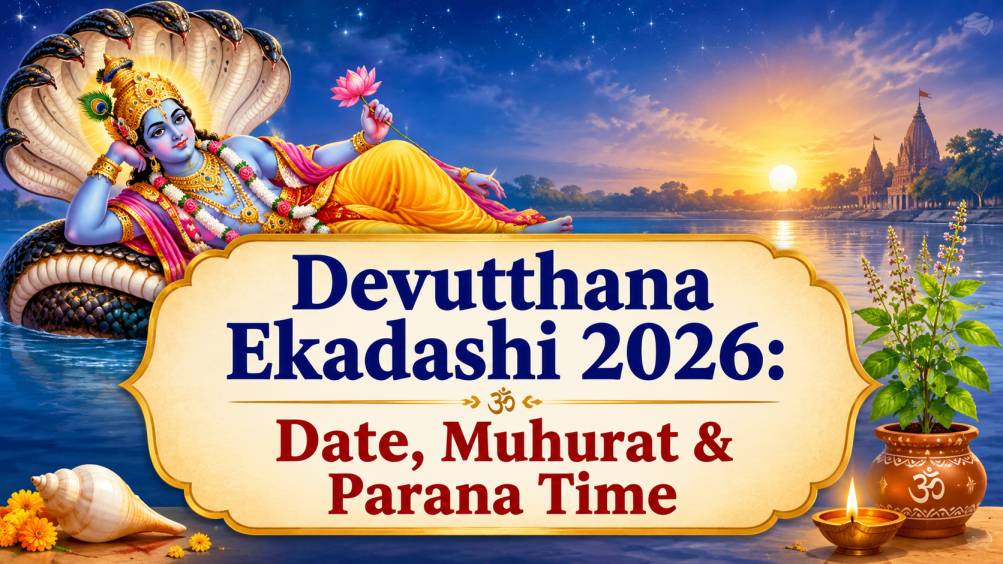
Devutthana Ekadashi, also known as Dev Uthani Ekadashi, Prabodhini Ekadashi and Devauthani Gyaras, is an important Hindu festival dedicated to Lord Vishnu. It falls on the Ekadashi Tithi of Kartik Shukla Paksha and symbolises the awakening of Lord Vishnu from his four-month-long Yoga Nidra (divine sleep).
In Hindu tradition, this day marks the end of Chaturmas and the beginning of an auspicious period for marriages and other religious ceremonies. From a Vedic astrology perspective, Lord Vishnu is associated with preservation, balance, wisdom and dharma. Devotees observe the Ekadashi vrat, perform Vishnu puja, worship Tulsi and seek blessings for peace and prosperity. In 2026, Devutthana Ekadashi will be observed on 20 November in the Smarta tradition.
Devutthana Ekadashi 2026: Date and Tithi Timings
Devutthana Ekadashi 2026 falls on Friday, 20 November 2026, according to the Smarta calendar.
| Event | Date and Time (IST) |
| Ekadashi Tithi Begins | 20 November, 7:15 AM |
| Ekadashi Tithi Ends | 21 November, 6:31 AM |
| Smarta Vrat | 20 November, Friday |
| Smarta Parana | 21 November, 1:11 PM–3:18 PM |
| Vaishnava Vrat | 21 November, Saturday |
| Vaishnava Parana | 22 November, 6:49 AM–8:56 AM |
Note: The above Parana timings are based on the New Delhi Panchang. Timings may vary by location and religious tradition. Devotees should follow their local Panchang and family or temple tradition.
Why Are There Two Ekadashi Dates in 2026?
Some calendars mention 20 November, while others mention 21 November. This difference occurs because Smarta and Vaishnava traditions follow different rules for determining the fasting day.
- Smarta devotees generally observe the fast on 20 November.
- Vaishnava and ISKCON devotees follow the Gauna Ekadashi observance on 21 November.
Devotees should follow the tradition they regularly observe rather than combining different fasting schedules.
Religious Significance of Devutthana Ekadashi
According to Hindu belief, Lord Vishnu enters Yoga Nidra on Devshayani Ekadashi, which falls during Ashadha Shukla Paksha. He awakens on Kartik Shukla Ekadashi, marking the completion of Chaturmas.
The day is associated with:
- Renewal of spiritual practices and devotion.
- The traditional beginning of the Hindu wedding season.
- Worship of Lord Vishnu and Goddess Lakshmi.
- Tulsi Vivah, celebrated around this period according to regional traditions.
- Charity, fasting and self-discipline.
Devutthana Ekadashi is also considered significant for devotees seeking mental peace, family harmony and spiritual growth.
Vedic Astrology Significance of Devutthana Ekadashi
In Vedic astrology, Lord Vishnu is traditionally associated with Jupiter (Guru), which represents wisdom, knowledge, spirituality, prosperity and guidance.
Worshipping Lord Vishnu on this Ekadashi is traditionally considered favourable for developing positive qualities and strengthening spiritual discipline.
1. Jupiter and Spiritual Growth
Jupiter represents knowledge, teachers, ethics and religious understanding. Its influence is examined when studying education, wisdom and spiritual inclinations in a birth chart.
Traditional practices include:
- Reciting Vishnu Sahasranama.
- Offering yellow flowers to Lord Vishnu.
- Respecting teachers and elders.
- Donating food or educational materials.
2. Venus and Marriage-Related Traditions
Venus represents relationships, harmony, beauty and marital happiness in Jyotish Shastra.
Since Devutthana Ekadashi marks the traditional resumption of auspicious marriage ceremonies after Chaturmas, the festival also holds cultural relevance for couples and families preparing for weddings.
However, an individual’s marriage prospects should be assessed through the complete birth chart rather than a single festival or planetary placement.
Devutthana Ekadashi 2026: Puja Vidhi
Devotees can follow these traditional rituals to worship Lord Vishnu.
Morning Rituals
- Wake up early and take a bath.
- Clean the puja area and arrange an idol or picture of Lord Vishnu.
- Take a vrat sankalp with devotion.
- Offer yellow flowers, fruits, incense and a diya.
- Offer Tulsi leaves to Lord Vishnu.
- Recite Vishnu Sahasranama or Vishnu mantras.
Evening Puja
- Light a ghee diya near the deity and Tulsi plant.
- Offer seasonal fruits and traditional prasad.
- Read or listen to Devutthana Ekadashi Vrat Katha.
- Perform aarti and offer prayers for family well-being.
Powerful Vishnu Mantra for Devutthana Ekadashi
Devotees may chant the following mantra during puja:
विष्णु मंत्र:
ॐ नमो भगवते वासुदेवाय॥
This mantra is traditionally associated with devotion to Lord Vishnu, spiritual discipline and inner peace.
Simple Remedies to Follow on Devutthana Ekadashi
Traditional Jyotish and religious practices suggest the following simple observances:
- For Jupiter: Offer yellow flowers and donate yellow food items such as chana dal.
- For family harmony: Worship Lord Vishnu and Goddess Lakshmi together.
- For peace of mind: Recite Vishnu Sahasranama or chant the Vishnu mantra.
- For prosperity: Offer prayers with Tulsi leaves and maintain gratitude.
- For spiritual growth: Donate food and help people in need.
These practices are devotional traditions, not guaranteed solutions to financial, marital or personal difficulties.
Vrat Rules and Parana Vidhi
Devotees may observe a Nirjala fast, a fruit-based fast or a fasting diet according to their health and family traditions.
Common fasting guidelines include:
- Avoid grains, rice, pulses and regular salt during the vrat.
- Consume fruits, milk and permitted vrat food if following a partial fast.
- Avoid alcohol, tobacco and non-vegetarian food.
- Maintain a calm and prayerful routine.
Parana means breaking the Ekadashi fast on Dwadashi after the prescribed Hari Vasara period has ended. Devotees should break their fast within the applicable Parana window.
People with medical conditions, pregnant women and those taking regular medicines should avoid prolonged fasting without medical guidance.
Conclusion
Devutthana Ekadashi 2026 is an important occasion for devotees of Lord Vishnu, symbolising spiritual awakening, renewal and the end of Chaturmas. Observing the vrat, chanting Vishnu mantras, worshipping Tulsi and performing charity are traditional ways of celebrating this sacred day.
From a Vedic astrology perspective, Jupiter’s association with wisdom, spirituality and dharma adds another dimension to the festival. However, its deeper message lies in self-discipline, devotion and positive actions. Celebrate Devutthana Ekadashi with faith and simplicity, and use this occasion to bring greater gratitude, harmony and spiritual awareness into everyday life.
Frequently Asked Questions (FAQs)
1. When is Devutthana Ekadashi in 2026?
Devutthana Ekadashi will be observed on 20 November 2026 in the Smarta tradition and 21 November in the Vaishnava tradition.
The Ekadashi Tithi begins at 7:15 AM on 20 November and ends at 6:31 AM on 21 November (IST).
Tip: Follow the fasting date prescribed by your family or temple tradition.
2. What is the Parana time for Devutthana Ekadashi 2026?
For the Smarta observance, Parana is on 21 November from 1:11 PM to 3:18 PM (New Delhi IST).
Vaishnava devotees observing the fast on 21 November can perform Parana on 22 November from 6:49 AM to 8:56 AM (New Delhi IST).
Important: Check your city’s Panchang before breaking the fast.
3. Why is Devutthana Ekadashi also called Prabodhini Ekadashi?
It is called Prabodhini Ekadashi because it symbolises the awakening of Lord Vishnu from Yoga Nidra.
According to Hindu tradition, Lord Vishnu awakens after four months of Chaturmas, marking the return of auspicious religious and marriage ceremonies.
Related practice: Worship Lord Vishnu, offer Tulsi leaves and light a diya.
4. Which God should be worshipped on Devutthana Ekadashi?
Lord Vishnu is the principal deity worshipped on Devutthana Ekadashi, along with Goddess Lakshmi.
Devotees offer flowers, fruits, Tulsi leaves and prayers while seeking blessings for peace, prosperity and family well-being.
Mantra: ॐ नमो भगवते वासुदेवाय॥
5. Can we eat fruits during Devutthana Ekadashi vrat?
Yes, devotees observing a partial or Phalahari fast can consume fruits, milk and permitted fasting foods.
Fasting rules differ according to family traditions and individual health conditions.
Tip: Stay hydrated if your fasting tradition permits water, and avoid strict fasting if it may affect your health.
6. Is Tulsi Vivah celebrated on Devutthana Ekadashi?
Tulsi Vivah is traditionally celebrated around Devutthana Ekadashi, although its exact date varies according to regional Panchang and customs.
The ceremony symbolises the marriage of Goddess Tulsi with Lord Vishnu in his Shaligram form.
Traditional practice: Decorate the Tulsi plant, offer prayers and perform the ceremonial rituals according to family tradition.
7. What is the astrological significance of Devutthana Ekadashi?
In Vedic astrology, Jupiter (Guru) represents wisdom, spirituality, knowledge and dharma. Lord Vishnu is traditionally associated with these qualities.
Worshipping Lord Vishnu on this day is considered a devotional practice for cultivating wisdom, discipline and positive thinking.
Simple remedy: Chant the Vishnu mantra, respect teachers and donate food or educational materials.