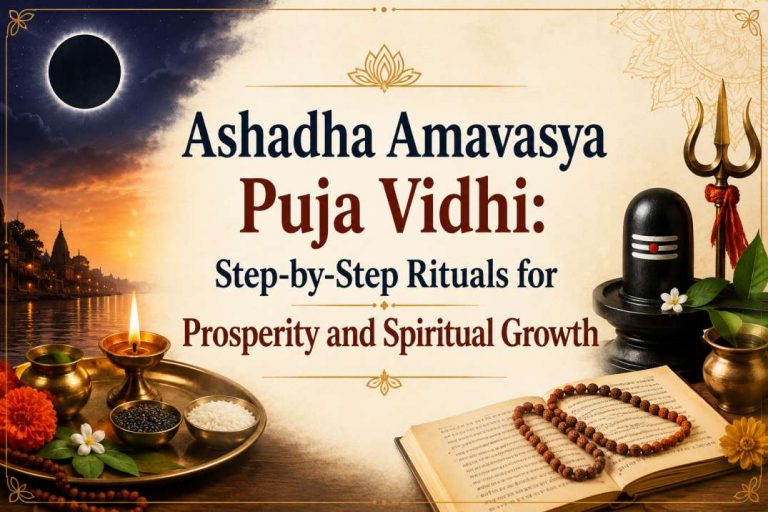

Rudraksha is traditionally regarded as a sacred bead associated with Lord Shiva and has an important place in Hindu spiritual practices and some schools of Vedic astrology. The word Rudraksha is commonly interpreted as “Rudra’s eye,” connecting it with Shiva and traditions of meditation, prayer, and spiritual discipline.
Many people wear a Rudraksha mala or individual bead for japa, meditation, mental focus, and spiritual practice. In astrology, different Rudraksha mukhis are traditionally associated with particular deities and planetary influences.
However, Rudraksha should not be treated as a guaranteed solution for planetary problems. Its use is better understood as a traditional spiritual remedy that can complement prayer, meditation, and disciplined habits.
What Is Rudraksha and Why Is It Worn?
Rudraksha beads come from the seeds of the Elaeocarpus ganitrus tree. The bead has natural lines or faces known as mukhi. Rudraksha varieties range from one mukhi to multiple mukhis, with different traditional associations.
In spiritual practice, Rudraksha is commonly worn to:
- Support meditation and concentration
- Encourage a disciplined spiritual routine
- Use during mantra chanting and japa
- Maintain a symbolic connection with Shiva
- Promote calm and mindful daily habits
The traditional significance depends on the mukhi, purpose, and individual practice.
Which Day Is Best to Wear Rudraksha?
Monday is traditionally considered an auspicious day to begin wearing Rudraksha because Monday is associated with Lord Shiva and the Moon (Chandra) in Hindu tradition.
Another commonly selected occasion is Mahashivratri, especially for devotees beginning a Shiva-oriented spiritual practice.
If you plan to wear Rudraksha on Monday, you can follow a simple morning routine:
- Bathe and wear clean clothes.
- Clean the bead gently with clean water.
- Sit in a quiet place facing a suitable direction.
- Offer a short prayer to Lord Shiva.
- Chant an appropriate Shiva mantra.
- Wear the Rudraksha respectfully.
There is no universal requirement that everyone must follow exactly the same ritual. Family traditions, spiritual teachers, and the specific Rudraksha being used may influence the practice.
Which Direction Should You Face While Wearing Rudraksha?
For a simple traditional practice, facing east or north while praying and wearing Rudraksha is commonly preferred.
East Direction
East is traditionally associated with sunrise, knowledge, and spiritual beginnings. Facing east can therefore be suitable for morning meditation and mantra practice.
North Direction
North is traditionally connected with stability, prosperity, and spiritual orientation in several Hindu traditions.
The direction itself should not be considered a magical requirement. A clean, peaceful environment and consistent spiritual practice are generally more important for maintaining the routine.
Which Mantra Should You Chant?
The most widely used Shiva mantra with Rudraksha is:
ॐ नमः शिवाय
Om Namah Shivaya
This Panchakshara mantra is traditionally associated with Lord Shiva and can be used during meditation or while performing japa with a Rudraksha mala.
You can chant it according to your personal routine rather than focusing only on a specific number of repetitions.
For example:
- 11 repetitions for a short daily practice
- 27 repetitions for a moderate routine
- 108 repetitions using a traditional japa mala
Consistency is more practical than setting an unrealistic target.
Rudraksha and Vedic Astrology
In some traditions of Vedic astrology, Rudraksha is selected according to the mukhi and its association with particular deities or planetary principles.
For example, traditional associations commonly include:
| Rudraksha | Traditional Association |
| 1 Mukhi | Shiva / higher spiritual awareness |
| 2 Mukhi | Ardhanarishvara / harmony |
| 3 Mukhi | Agni / transformation |
| 4 Mukhi | Brahma / knowledge |
| 5 Mukhi | Kalagni Rudra / spiritual discipline |
| 6 Mukhi | Kartikeya / discipline |
| 7 Mukhi | Lakshmi / prosperity traditions |
| 8 Mukhi | Ganesha / obstacle-related symbolism |
| 9 Mukhi | Durga / Shakti |
| 10 Mukhi | Vishnu / protection traditions |
These associations come from traditional religious and astrological practices and can vary between sources.
For an astrological remedy, the complete birth chart, planetary condition, ascendant, Moon sign, and purpose of the remedy should ideally be considered rather than choosing a bead solely from one’s zodiac sign.
Basic Rules for Wearing Rudraksha
Rudraksha is traditionally treated with respect. Some practical guidelines include:
- Keep the bead clean and dry.
- Avoid handling it unnecessarily with dirty hands.
- Store it in a clean place when not wearing it.
- Inspect the thread or metal setting regularly.
- Avoid harsh chemicals, perfumes, and prolonged exposure to water.
- Follow your family’s or spiritual teacher’s tradition where applicable.
- Do not treat Rudraksha as a substitute for medical, financial, or professional advice.
Some traditions recommend removing Rudraksha during bathing, sleeping, or certain activities, while others permit continuous wearing. There is no single universally followed rule, so the practice may differ according to lineage.
How to Choose the Right Rudraksha
Choosing a Rudraksha should depend on the purpose of wearing it.
Consider:
- Spiritual practice: A 5 Mukhi Rudraksha is widely used for japa and everyday spiritual routines.
- Specific astrological purpose: Consult a knowledgeable astrologer who can examine the complete Kundli.
- Mala for meditation: Choose a comfortable, authentic bead and maintain it properly.
- First-time users: A simple Rudraksha is generally easier to incorporate into a daily routine.
Authenticity is important because artificially altered or poorly sourced beads may not correspond to their claimed mukhi.
Conclusion
Rudraksha has a long-standing place in Hindu spiritual traditions and is commonly connected with Lord Shiva, meditation, mantra chanting, and devotional practice. Monday, morning prayer, east or north-facing orientation, and the mantra “Om Namah Shivaya” are commonly followed traditions when beginning to wear Rudraksha.
From an astrological perspective, the appropriate mukhi should be considered carefully rather than selected solely because of a zodiac sign. Rudraksha can be approached as a tool for spiritual discipline and mindful living rather than as a guaranteed remedy for every problem.
A consistent routine, respectful use, and informed choice can make the practice more meaningful in everyday life.
FAQs
1. Which day is best to wear Rudraksha?
Monday is traditionally considered an auspicious day to begin wearing Rudraksha.
Monday is associated with Lord Shiva, making it especially relevant for Shiva-oriented spiritual practices. Some devotees also choose Mahashivratri or another personally significant religious occasion.
Tips:
- Prefer a clean morning routine.
- Pray to Lord Shiva before wearing it.
- Chant Om Namah Shivaya.
2. Which direction should I face while wearing Rudraksha?
East or north is traditionally preferred while praying or performing the ritual of wearing Rudraksha.
Facing east is associated with sunrise and spiritual beginnings, while north has several traditional associations with stability and spiritual orientation.
Related practice:
- Sit in a clean and peaceful place.
- Avoid distractions during mantra chanting.
- Focus on consistency rather than direction alone.
3. Can Rudraksha be worn every day?
Yes, many traditional practitioners wear Rudraksha every day as part of their spiritual routine.
Daily wearing can make Rudraksha part of meditation, prayer, or mantra practice. However, rules regarding bathing, sleeping, or removing the bead differ between traditions.
Practical tips:
- Keep the bead clean.
- Avoid harsh chemicals and perfumes.
- Follow the customs of your spiritual tradition.
4. Which mantra should be chanted while wearing Rudraksha?
“Om Namah Shivaya” is one of the most widely used mantras with Rudraksha.
The mantra is traditionally dedicated to Lord Shiva and can be recited while wearing the bead or during japa. The number of repetitions can be adapted to your daily routine.
Simple options:
- 11 repetitions for a short practice
- 27 repetitions for a moderate practice
- 108 repetitions for traditional japa
5. Which Rudraksha is suitable according to astrology?
The suitable Rudraksha depends on the traditional mukhi association and the purpose for which it is being used.
For specific astrological remedies, practitioners may consider the birth chart, ascendant, Moon sign, planetary placements, and relevant houses before recommending a particular mukhi.
Keep in mind:
- Don’t select solely by zodiac sign.
- Consider the complete Kundli for an astrological remedy.
- Verify the authenticity and source of the bead.
6. Can anyone wear Rudraksha?
Rudraksha is traditionally worn by people from different backgrounds as part of spiritual and devotional practices.
There are different customs regarding food, bathing, sleeping, and other activities while wearing it. These practices vary across families and spiritual lineages.
A balanced approach:
- Follow a tradition you understand.
- Maintain personal cleanliness.
- Treat the bead as a spiritual aid rather than a guaranteed solution.