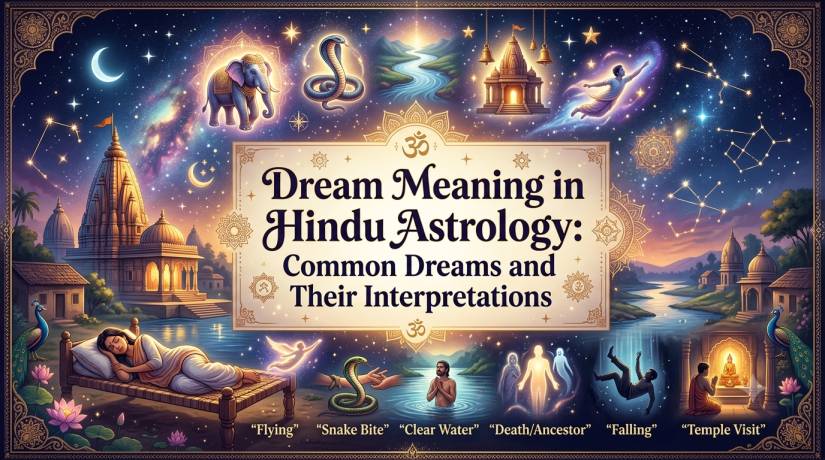
Dreams have been discussed in Indian philosophical and spiritual traditions for centuries. In Hindu astrology and related traditions, certain dreams are sometimes interpreted symbolically, with their meaning considered in relation to the dreamer’s mental state, planetary influences, spiritual practices and life circumstances.
A dream meaning in Hindu astrology is therefore not necessarily a prediction of a future event. Traditional interpretations can provide a symbolic framework for reflection, while modern understanding recognises that dreams can also be influenced by memories, emotions, stress, experiences and sleep patterns.
In Jyotish, the Moon has an important connection with the mind, emotions and subconscious impressions. The 4th, 8th and 12th houses may also be considered when studying mental patterns, hidden experiences and sleep-related themes. Understanding these factors can make dream interpretation more balanced and meaningful.
What Do Dreams Mean in Hindu Astrology?
Traditional Indian dream interpretation, sometimes discussed as Swapna Shastra, treats certain dream images as symbolic rather than literal.
In Vedic astrology, the Moon is particularly important because it represents Manas, or the mind. A disturbed or strongly activated Moon is traditionally associated with emotional fluctuations and vivid mental experiences.
Other astrological factors may also be considered:
- Moon: Emotions, thoughts and mental impressions
- 12th house: Sleep, subconscious experiences, isolation and dreams
- 8th house: Hidden matters, transformation and deep psychological themes
- 4th house: Emotional security, inner peace and mental comfort
- Rahu: Unusual, confusing or highly vivid experiences
- Ketu: Detachment, spiritual themes and symbolic experiences
These associations do not mean that every dream has a planetary cause. Personal experiences and psychological factors remain important.
Common Dreams and Their Traditional Interpretations
1. Dreaming of Water
Water is one of the most common dream symbols.
In traditional interpretations, calm and clear water may be associated with emotional clarity, peace or renewal, while turbulent water can symbolically reflect emotional uncertainty.
The context matters greatly.
Consider:
- Clear water: calmness or clarity
- Dirty water: emotional confusion
- Swimming: navigating circumstances
- Flooding: feeling overwhelmed
Rather than treating the dream as a prediction, consider what “water” represents in your current emotional life.
2. Dreaming of Snakes
Snakes have several meanings in Hindu symbolism. They can be associated with transformation, hidden energy, protection or spiritual symbolism.
A snake dream does not automatically indicate something negative. Its interpretation can depend on the setting, the snake’s behaviour and the emotions experienced during the dream.
Reflect on:
- Was the snake threatening or peaceful?
- Did you feel fear or curiosity?
- Was it appearing repeatedly?
3. Dreaming of Temples or Deities
Dreams involving temples, religious symbols or deities can have strong personal and cultural significance.
Traditionally, such dreams may be viewed as symbols of devotion, spiritual reflection or a desire for guidance. However, they should not automatically be interpreted as a divine prediction.
For many people, religious imagery may naturally appear in dreams when spiritual practices, festivals or devotional thoughts occupy their waking life.
4. Dreaming of Falling
Dreams of falling are commonly associated with uncertainty, loss of control or anxiety in modern psychological interpretations.
From an astrological perspective, the broader condition of the Moon and relevant houses may be considered when someone experiences repeated unsettling dreams.
Practical response: Examine whether you are currently experiencing major changes, uncertainty or excessive mental pressure.
5. Dreaming of Flying
Flying dreams can symbolically represent freedom, ambition, confidence or the desire to move beyond limitations.
In an astrological reading, the dream may be considered alongside Jupiter, Rahu, the Moon and relevant houses, depending on the overall chart.
The emotional experience matters: flying joyfully is different from flying while feeling frightened or out of control.
6. Dreaming of Death
Dreams involving death can be particularly disturbing, but they should not automatically be interpreted as predicting an actual death.
Symbolically, death in dreams may represent an ending, transition, transformation or the closing of one phase of life.
For example, changing careers, ending a relationship, moving cities or leaving behind an old habit can sometimes coincide with dreams involving endings.
7. Dreaming of Fire
Fire has important symbolism in Hindu traditions and may represent purification, energy, transformation or destruction depending on the context.
A peaceful sacred fire may carry a very different symbolic meaning from a destructive fire.
Ask yourself:
- Was the fire controlled?
- Was it associated with a ritual?
- Was something being destroyed?
- What emotions did you experience?
Planetary Influences and Dream Patterns
Moon and Dreams
The Moon is the primary planet considered in Jyotish when discussing the mind and emotional impressions. Its sign, house, aspects and strength can be considered when examining recurring emotional themes.
Rahu and Unusual Dreams
Rahu is traditionally associated with illusion, unconventional experiences and unusual imagery. Some astrologers therefore examine Rahu when a person reports highly vivid, strange or confusing dreams.
Ketu and Spiritual Imagery
Ketu is traditionally associated with detachment and spiritual introspection. Some Jyotish practitioners consider its influence when dreams repeatedly involve meditation, temples, mystical imagery or withdrawal.
The 12th House
The 12th house is associated with sleep, isolation, retreat and subconscious experiences. Its lord and planetary influences may therefore be examined in a detailed Kundli interpretation.
How to Interpret a Dream More Responsibly
A useful approach combines traditional symbolism with personal context.
Keep a Dream Journal
Write down the dream soon after waking. Record:
- Main symbols
- People present
- Location
- Emotions
- Important colours or objects
- Whether the dream repeats
- Major events happening in your waking life
Consider Your Emotional State
A stressful week can influence dream content. A dream about losing something may simply reflect anxiety about work, relationships or responsibilities.
Avoid Literal Predictions
A dream should not be treated as definite evidence that an event will happen. Traditional interpretations are symbolic and can vary between texts and schools of thought.
Traditional Remedies for Disturbing Dreams
If dreams are repeatedly unsettling, simple spiritual and lifestyle practices may be helpful.
- Maintain a regular sleep schedule.
- Reduce stimulating content before bedtime.
- Practise meditation or quiet breathing.
- Keep the sleeping environment comfortable and peaceful.
- Follow a personal prayer or devotional routine if meaningful to you.
- Avoid making major decisions solely because of a dream.
For persistent nightmares or significant sleep disruption, discussing the issue with an appropriate healthcare professional is more useful than relying only on astrological remedies.
Conclusion
Dream meaning in Hindu astrology combines traditional symbolism with ideas about the Moon, houses and planetary influences. Dreams involving water, snakes, temples, falling, flying, fire or death can carry different symbolic interpretations depending on their context.
The most balanced approach is to treat dreams as opportunities for reflection rather than guaranteed predictions. Your emotions, recent experiences and sleep patterns can be just as relevant as traditional astrological symbolism. A detailed Kundli may provide additional context for recurring themes, but it should not replace practical or professional guidance when dreams significantly affect sleep or daily life.
Ultimately, understanding a dream begins with asking a simple question:
What might this experience be reflecting about my thoughts, emotions or current circumstances?
FAQs
1. What is the meaning of dreams in Hindu astrology?
In Hindu astrological traditions, dreams are generally interpreted symbolically and may be considered alongside the Moon, relevant houses and planetary influences.
Dream interpretation is also discussed in Indian traditions associated with Swapna Shastra, although interpretations can differ between texts and schools. A dream should not automatically be treated as a prediction.
Helpful approach:
- Record recurring dreams.
- Note your emotions.
- Consider recent life events.
- Avoid literal interpretations.
2. Which planet is associated with dreams in Vedic astrology?
The Moon is the primary planet associated with the mind, emotions and mental impressions in Vedic astrology, making it particularly relevant when discussing dreams.
Astrologers may additionally consider Rahu, Ketu and the 12th house when unusual, spiritual or recurring dream patterns are reported.
For a broader analysis:
- Examine the Moon’s sign and house.
- Consider planetary aspects.
- Check the 12th house and its lord.
- Review relevant Dashas.
3. What does dreaming of a snake mean in Hindu astrology?
A snake dream can have several symbolic interpretations and does not necessarily indicate something negative.
In Hindu symbolism, snakes can be associated with transformation, protection, hidden energy and spiritual themes. The dream’s circumstances and the dreamer’s emotions are important.
Consider:
- Whether the snake was aggressive.
- Whether it appeared repeatedly.
- How you felt during the dream.
- What changes are occurring in your life.
4. Does dreaming about death mean someone will die?
No, a dream about death should not be treated as a definite prediction of someone’s death.
Death in dreams can symbolically represent endings, transitions or major changes. Personal experiences, anxiety and recent events can also influence such dreams.
If the dream is disturbing:
- Avoid assuming the worst.
- Record the dream.
- Look for current sources of stress.
- Focus on healthy sleep and emotional wellbeing.
5. What does seeing a temple or deity in a dream mean?
Dreaming of a temple or deity may symbolise devotion, spiritual reflection or personal feelings connected with faith.
Such dreams can also occur naturally when religious practices, festivals or devotional thoughts are prominent in waking life. Traditional symbolism should therefore be considered alongside personal context.
You can:
- Reflect on the emotions in the dream.
- Continue meaningful devotional practices.
- Avoid treating the dream as an absolute prediction.
6. Can astrology predict what I will dream about?
Astrology is traditionally used by some practitioners to interpret patterns associated with dreams, but it cannot reliably guarantee the exact content of a future dream.
Dreams are influenced by many factors, including memories, emotions, experiences, sleep quality and mental activity.
For a balanced understanding:
- Use astrology as a symbolic framework.
- Maintain a dream journal.
- Pay attention to sleep habits.
- Seek professional help if recurring nightmares disrupt daily life.