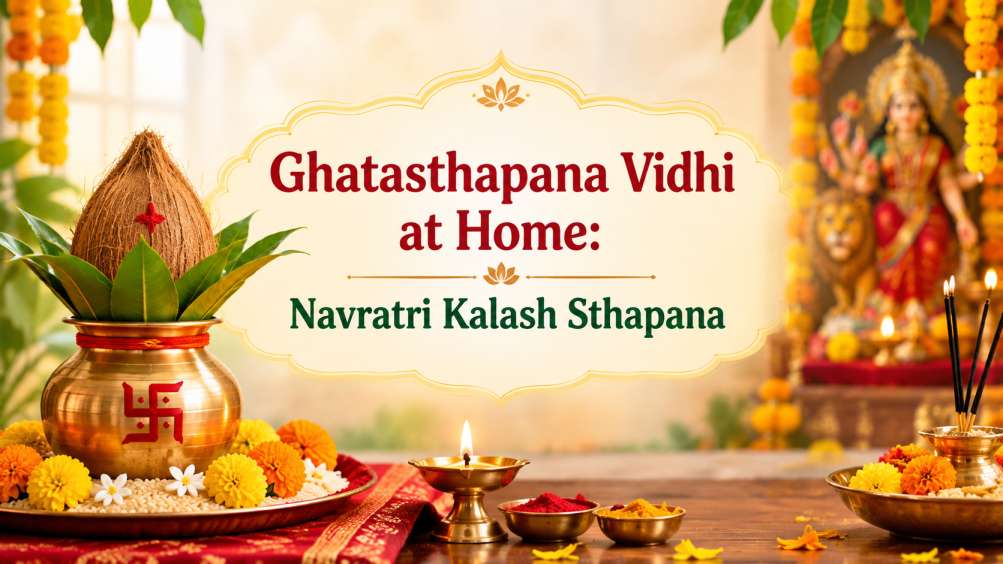
Ghatasthapana, also known as Kalash Sthapana, is one of the most important rituals performed at the beginning of Navratri. It symbolically invites Devi Shakti into the home and marks the start of nine days dedicated to Goddess Durga and her different forms.
In traditional Hindu practice, the Kalash represents abundance, purity, life and divine presence. The ritual also includes sowing barley or other grains, which adds a strong symbolism of growth and renewal.
For Shardiya Navratri 2026, Ghatasthapana falls on Sunday, October 11, 2026. For Delhi, the listed Ghatasthapana Muhurat is 6:19 AM to 10:12 AM IST, with an Abhijit Muhurat from 11:44 AM to 12:31 PM IST. Muhurat can vary by location, so devotees should check their local Panchang before performing the ritual.
What Is Ghatasthapana in Navratri?
Ghatasthapana literally refers to establishing the sacred ghata or Kalash. In the Navratri tradition, it is performed during Shukla Pratipada, the first lunar day of the waxing fortnight.
Traditional Panchang calculations give importance to performing the ritual during the first part of the day while Pratipada is prevailing. Afternoon and night are generally avoided for Ghatasthapana.
From an astrological perspective, the ritual brings together several symbolic elements:
- Kalash: Represents life, prosperity and divine consciousness.
- Water: Symbolises purity and the sustaining force of life.
- Coconut: Represents completeness and auspiciousness.
- Leaves: Represent vitality and natural abundance.
- Barley or grains: Symbolise growth, fertility and renewal.
- Devi worship: Represents Shakti, or the dynamic divine energy.
These meanings make Ghatasthapana relevant not only as a religious ritual but also as a reminder to begin a new phase with discipline and positive intention.
Ghatasthapana Samagri: What You Need
Before starting the ritual, keep the required items ready. The exact list may vary according to regional traditions.
Essential Puja Items
- Clean earthen pot for sowing grains
- Clean Kalash, preferably copper or brass
- Barley seeds or Navratri sowing grains
- Clean soil
- Water or Gangajal
- Akshat (unbroken rice)
- Supari
- Coins
- Durva grass, where traditionally used
- Five leaves, commonly Ashoka or mango leaves depending on tradition
- One unpeeled coconut
- Red cloth
- Kalava or sacred thread
- Roli and turmeric
- Flowers
- Incense
- Diya and ghee/oil
- Fruits and sweets for Naivedya
A traditional Ghatasthapana procedure describes preparing the grain-filled earthen pot first, followed by preparing the Kalash with water, supari, scent, akshat, coins and leaves before placing the coconut on top.
Step-by-Step Ghatasthapana Vidhi at Home
Step 1: Clean the Puja Area
Clean the room and select a peaceful place for the Navratri puja. Traditionally, the northeast or a clean dedicated puja space is preferred in many households.
Take a bath and wear clean clothes before beginning the ritual.
Step 2: Prepare the Grain Pot
Take a wide earthen pot and spread a layer of clean soil inside it.
Spread barley seeds over the soil. Add another layer of soil and place more seeds, particularly around the sides. Finally, cover them with a thin layer of soil and sprinkle a small amount of water.
The growing barley during Navratri is traditionally associated with growth and prosperity.
Step 3: Prepare the Kalash
Tie Kalava around the neck of the Kalash.
Fill it with clean water up to an appropriate level. Add items such as:
- Akshat
- Supari
- A coin
- Durva, where customary
- Fragrance or a few drops of traditional perfume
Place five leaves around the opening of the Kalash.
Step 4: Prepare the Coconut
Take an unpeeled coconut and wrap it in a clean red cloth. Secure it with Kalava or sacred thread.
Place the coconut carefully on top of the Kalash. Then position the Kalash in the centre of the prepared grain pot. This sequence is consistent with traditional Ghatasthapana instructions.
Step 5: Invoke Goddess Durga
Sit comfortably before the Kalash and mentally invite Goddess Durga and divine Shakti into the sacred setup.
You may chant a simple invocation such as:
ॐ दुं दुर्गायै नमः।
Om Dum Durgayai Namah.
The purpose is not merely repetition of a mantra but creating a focused devotional atmosphere.
Step 6: Perform Panchopachara Puja
Offer the basic five forms of worship:
- Deepa – light
- Dhoop – incense
- Gandha – fragrance
- Pushpa – flowers
- Naivedya – food offering
Traditional Puja Vidhi also describes these five offerings as part of the worship following Kalash preparation.
Step 7: Maintain the Kalash for Nine Days
After Ghatasthapana, maintain the puja space clean throughout Navratri.
Offer flowers and Naivedya according to your family tradition. If you have started barley germination, provide only enough water to keep the soil appropriately moist.
Astrological Significance of Ghatasthapana
Navratri is traditionally associated with the worship of Shakti, while astrology views the nine planetary forces, or Navagrahas, as important influences in human life.
Ghatasthapana itself should not be presented as a guaranteed method of changing planetary results. Rather, it can be viewed as a structured spiritual practice that encourages discipline, prayer and self-reflection.
During Navratri, devotees may use the period to work on areas traditionally associated with different planetary themes:
- Sun: confidence, leadership and self-discipline
- Moon: emotional balance and family relationships
- Mars: courage and controlled action
- Mercury: communication and learning
- Jupiter: wisdom and ethical decisions
- Venus: relationships and harmony
- Saturn: patience and responsibility
- Rahu: managing excessive desires and distractions
- Ketu: introspection and detachment
These associations are useful as reflective themes rather than promises of specific outcomes.
Simple Navratri Remedies After Kalash Sthapana
Along with regular Devi worship, you can adopt simple practices during the nine days:
- Light a diya during your daily prayer.
- Recite Durga Kavach, Durga Saptashati or a simple Devi mantra according to your tradition.
- Donate food or essential items to someone in need.
- Avoid unnecessary arguments and harsh speech.
- Keep the puja area clean.
- Practise moderation in food and daily habits.
- Spend a few minutes each day in prayer or meditation.
- If following a specific planetary remedy, consult a knowledgeable astrologer rather than applying gemstones or intensive remedies without a complete horoscope analysis.
Important Things to Avoid
Ghatasthapana is a time-sensitive ritual, so planning beforehand is useful.
Avoid:
- Performing it casually at night.
- Ignoring the local Panchang.
- Using a damaged Kalash or broken coconut.
- Overwatering the barley.
- Leaving the puja area unhygienic.
- Treating ritual practices as substitutes for practical action in health, finance, career or relationships.
Traditional sources particularly emphasise performing Ghatasthapana during the appropriate daytime period while Pratipada is prevailing.
Conclusion
Ghatasthapana is more than simply placing a Kalash at home. It marks the beginning of Navratri with a combination of devotion, symbolism and disciplined daily practice. The Kalash represents life and abundance, while the growing grains remind devotees of renewal and steady progress.
For Navratri 2026, remember that the exact Ghatasthapana Muhurat depends on location. For example, Delhi’s Panchang gives 6:19 AM–10:12 AM IST on October 11, 2026, with an Abhijit option of 11:44 AM–12:31 PM IST.
The most meaningful approach is to perform the ritual with cleanliness, sincerity and understanding rather than fear. Navratri can also become an opportunity to reflect on personal habits, relationships, responsibilities and spiritual goals.
FAQs
1. What is Ghatasthapana in Navratri?
Ghatasthapana is the ritual of establishing a sacred Kalash at the beginning of Navratri as a symbolic invocation of Goddess Shakti.
The Kalash is prepared with water, sacred items, leaves and a coconut, while grains are traditionally sown in an earthen pot underneath it. The ritual establishes the spiritual focus for the nine-day festival.
Related tips:
- Perform it during an appropriate daytime Muhurat.
- Check the local Panchang.
- Keep the puja area clean.
2. When is Ghatasthapana 2026?
Shardiya Navratri Ghatasthapana 2026 is on Sunday, October 11, 2026.
For Delhi, the published Ghatasthapana Muhurat is 6:19 AM to 10:12 AM IST, while Abhijit Muhurat is 11:44 AM to 12:31 PM IST. Local timings can differ because Panchang calculations depend on location.
Related tips:
- Check your city’s Panchang.
- Give priority to Pratipada timing.
- Avoid selecting a time solely from another city’s calendar.
3. Can Ghatasthapana be performed at home?
Yes, Ghatasthapana can be performed at home by following your family or regional Navratri tradition.
The basic process involves preparing the grain pot, setting up the Kalash, placing leaves and coconut, invoking Devi and performing simple offerings. Traditional instructions provide a structured home Puja Vidhi.
At-home essentials:
- Kalash
- Coconut
- Leaves
- Soil and barley
- Water
- Akshat
- Flowers and Naivedya
4. Which direction is suitable for Ghatasthapana?
A clean and dedicated puja area is generally preferred, with northeast traditionally considered auspicious in many household practices.
However, different regional traditions may follow different arrangements. Cleanliness, stability and maintaining the sacred setup respectfully are more practical considerations than becoming overly anxious about direction.
Tips:
- Keep the Kalash on a stable surface.
- Avoid placing it in a high-traffic area.
- Maintain cleanliness throughout Navratri.
5. What should be kept inside the Navratri Kalash?
The Kalash is traditionally filled with clean water and may contain items such as akshat, supari, a coin and other regionally prescribed sacred materials.
Five leaves are generally arranged around the opening, followed by a coconut wrapped in red cloth. Specific ingredients can vary between regional and family traditions.
Common items include:
- Water
- Akshat
- Supari
- Coin
- Durva, where customary
- Leaves
- Coconut
6. What is the significance of barley in Ghatasthapana?
Barley represents growth, renewal and prosperity in the traditional symbolism of Navratri Ghatasthapana.
The seeds are planted in soil at the beginning of Navratri and allowed to grow during the nine-day period. Their development provides a simple visual reminder of nurturing, patience and gradual progress.
Practical tip: Keep the soil lightly moist rather than excessively wet.
7. Can Ghatasthapana be performed without a priest?
Yes, a devotee can perform a simple home Ghatasthapana according to their family tradition, provided the ritual is approached respectfully and the appropriate Muhurat is followed.
If your family follows an elaborate Durga Puja, Shakta or regional tradition, a qualified priest can guide you through the specific mantras and procedures.
For a simple home ritual:
- Prepare the Kalash correctly.
- Invoke Devi with devotion.
- Offer flowers, diya, dhoop and Naivedya.
- Maintain the setup throughout Navratri.